
The True Cost of Joining: Welding & Soldering in 2026
When designing custom battery packs, fabricating chassis, or repairing heavy-gauge electronics, makers and small shops face a critical joining decision. The debate between welding & soldering often centers on joint strength, but the financial implications are just as critical. This comprehensive cost analysis breaks down the capital expenditure (CapEx), operational expenditure (OpEx), and hidden failure costs of both methods to help you optimize your 2026 fabrication budget.
Capital Expenditure (CapEx): Equipment Costs Breakdown
The barrier to entry varies wildly depending on the thermal process you choose. While a basic soldering setup can be acquired for under $100, precision welding requires a significantly higher upfront investment. Below is a comparative matrix of standard 2026 market pricing for prosumer and light-industrial equipment.
| Equipment Category | Prosumer Model Example | Average Cost (USD) | Primary Use Case |
|---|---|---|---|
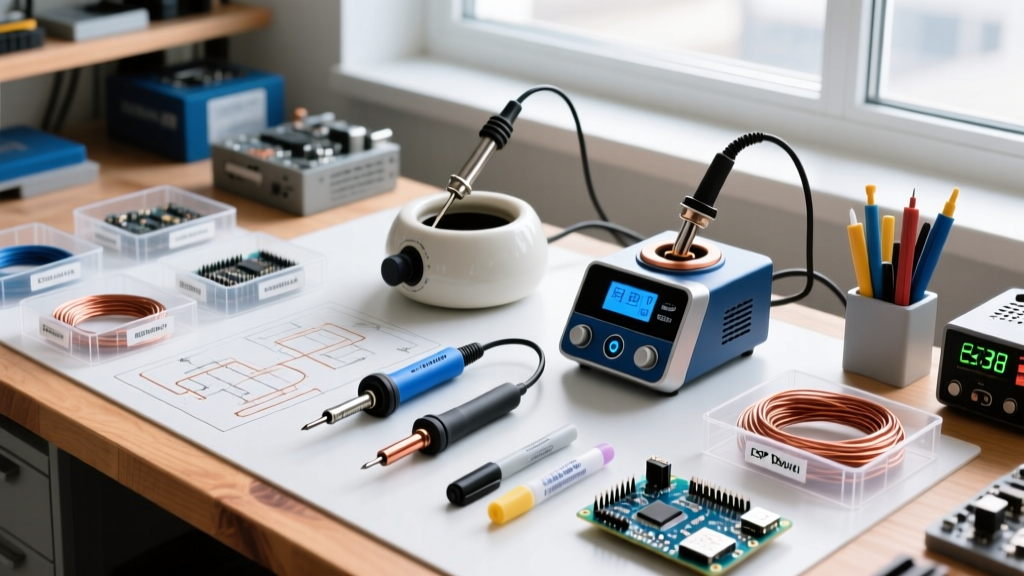
| Precision Soldering Station | Weller WE1010NA (70W) | $115 - $130 | PCBs, light wiring, delicate components |
| Heavy-Duty Soldering / Brazing | Hakko FX-801 (150W) or Blazer Torch | $250 - $320 | 4 AWG - 8 AWG wire, large ground planes |
| Capacitive Spot Welder | KWeld (Standard Kit) | $160 - $210 | 18650 / 21700 battery pack assembly |
| TIG Welder (Inverter) | YesWelder TIG-205DS | $350 - $420 | Aluminum/Steel chassis, structural tabs |
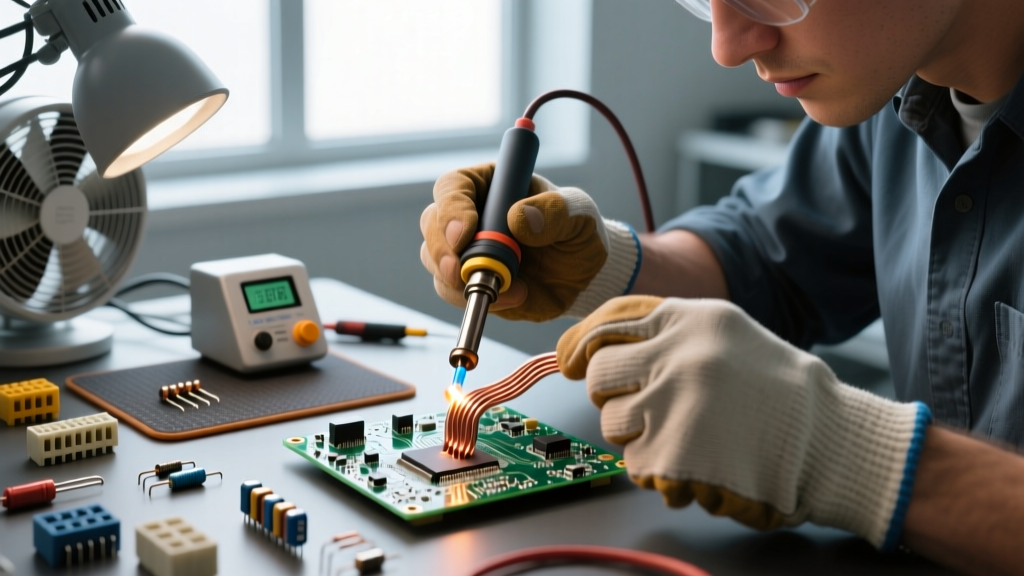
According to the American Welding Society, the initial setup for arc or resistance welding also mandates strict safety compliance. You must factor in the cost of auto-darkening helmets ($80-$200), ventilation fume extractors ($150-$400), and fire-retardant gear. Soldering requires minimal PPE—typically just basic safety glasses and a $40 activated carbon fume extractor.
Operational Expenditure (OpEx): Consumables and Energy
Equipment is a one-time cost; consumables dictate your long-term runway. The financial footprint of welding & soldering diverges sharply when analyzing material waste and energy draw.
Consumable Costs per 1,000 Joints
Let us compare the cost of joining 1,000 standard battery cell tabs (using 0.15mm pure nickel) versus soldering 1,000 heavy-duty 12 AWG wire terminals.
- Spot Welding Consumables: A 100-foot roll of 0.15mm pure nickel strip costs roughly $35 in 2026. This yields approximately 4,000 standard battery tabs. Cost per 1,000 joints: ~$8.75.
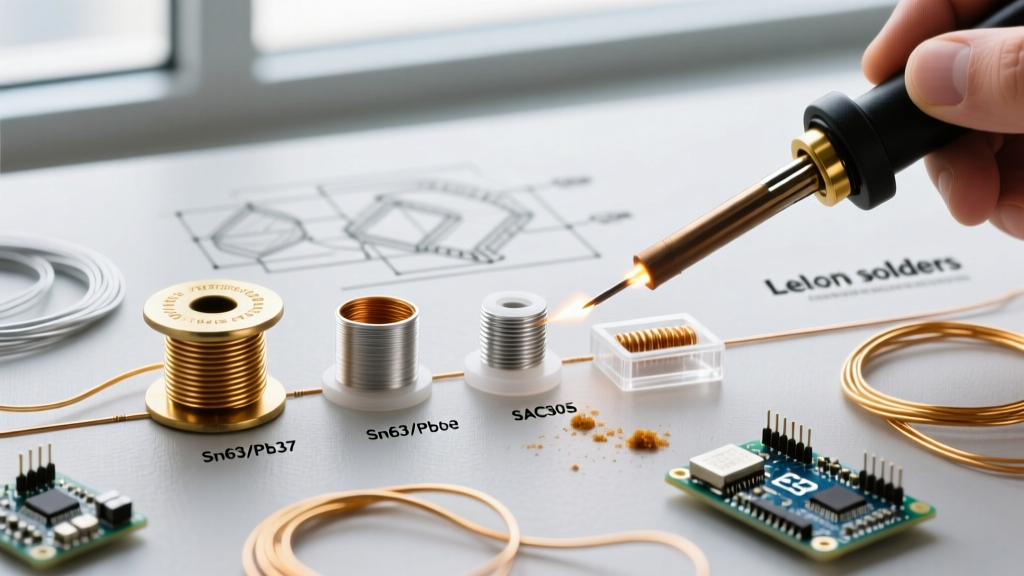
- Soldering Consumables: A 1lb spool of Kester 245 (Sn63/Pb37) costs about $40. Soldering thick wires requires heavy flux application and pre-tinning. Assuming 2 grams of solder and 1ml of liquid flux per joint, you will consume 2kg of solder and 1 liter of flux. Cost per 1,000 joints: ~$115.00.
Energy consumption heavily favors pulsed resistance welding. A spot welder draws massive instantaneous current (e.g., 1,500 Amps for 20 milliseconds) but uses negligible total kilowatt-hours (kWh). Conversely, a 150W heavy-duty soldering iron running continuously for a 4-hour fabrication session consumes 0.6 kWh, plus the thermal inefficiency of heating the surrounding air and workpiece.
Hidden Costs: Rework, Failures, and Skill Acquisition
The most expensive joint is the one that fails in the field. The IPC standards for soldering outline strict criteria for acceptable wetting and fillet shapes, highlighting the precision required to avoid latent defects.
Failure Mode Cost Analysis
Soldering Failure Modes
- Cold Joints: Caused by insufficient heat transfer. Results in high electrical resistance and eventual thermal runaway in high-current applications.
- Thermal Damage: Applying a 400°C iron to a lithium cell terminal to bypass spot welding will melt the internal separator, destroying a $6 battery cell and risking catastrophic fire.
- Rework Cost: Desoldering braided wick and replacement components add $2-$5 per reworked joint in materials alone, excluding labor.
Welding Failure Modes
- Brittle Weld Spots: Over-pulsing causes the nickel strip to anneal or burn through, creating a mechanically weak joint that snaps under vibration.
- Cell Piercing: Incorrect kA settings on a spot welder can puncture the battery can, resulting in immediate venting and total loss of the cell.
- Rework Cost: Spot welds cannot be easily 'unsoldered'. Removing a welded nickel strip often tears the battery terminal, requiring the entire cell to be scrapped and recycled.
Application-Specific Cost Scenarios
To determine whether welding & soldering is more cost-effective, we must apply them to their correct domains. Cross-applying these methods is where budgets are destroyed.
Scenario A: 14S 50A E-Bike Battery Pack
The Soldering Approach (Not Recommended): Attempting to solder 18650 cells requires massive flux, high-wattage irons, and prolonged heat exposure. You risk destroying 10% of your cells ($60 loss) due to thermal damage. The solder joints will also suffer from high resistance, causing voltage sag under a 50A load.
The Spot Welding Approach (Optimal): Using a KWeld spot welder and 0.15mm nickel strips, the entire pack is assembled in under two hours with zero thermal damage to the cells. The CapEx of the welder ($180) pays for itself on the very first battery pack build by preventing cell destruction and ensuring low-resistance current flow.
Scenario B: 4 AWG Inverter Cables to Copper Busbars
The Welding Approach (Not Recommended): TIG welding copper to copper requires pre-heating the busbar to 400°F to prevent the heat from sinking away, plus expensive argon gas shielding ($150 per cylinder fill). The setup time and gas costs make this financially unviable for a one-off DIY inverter build.
The Brazing/Soldering Approach (Optimal): Using a MAP-Pro torch ($55) and high-silver content brazing alloy (e.g., Harris Safety-Silv 45%, $80 for 1oz), you can achieve a joint with tensile strength exceeding the copper wire itself. The total consumable cost per joint is under $3, with zero need for shielding gas.
Regulatory and Safety Compliance Costs
For small businesses scaling up from hobbyist to commercial production, compliance costs must be factored into the welding & soldering equation. The Occupational Safety and Health Administration (OSHA) mandates stringent ventilation and PPE requirements for welding operations due to hexavalent chromium and ozone generation. Installing a compliant source-capture fume extraction system can cost upwards of $2,500. Soldering operations, particularly with lead-free SAC305 alloys, require basic localized extraction (e.g., Hakko FA-400 at $150), keeping compliance overhead exceptionally low.
Verdict: How to Allocate Your Joining Budget
The financial winner between welding & soldering depends entirely on the metallurgical requirements of your project:
- Choose Resistance Spot Welding when: You are joining thin battery tabs, require ultra-low electrical resistance, and need to avoid thermal transfer to sensitive internal cell chemistries. The high CapEx is offset by incredibly low per-joint OpEx.
- Choose Precision Soldering when: You are terminating PCBs, joining dissimilar metals (like copper to tinned brass), or working on low-current signal wires where capillary action and flux chemistry are more critical than brute mechanical strength.
- Choose TIG/Arc Welding when: You are fabricating structural chassis, aluminum enclosures, or heavy steel mounts where the base metal itself must fuse to bear physical loads.
Frequently Asked Questions
Is it ever cheaper to solder battery tabs instead of spot welding?
Only if you are building a single, low-drain 1S or 2S pack and already own a high-wattage soldering station. However, the risk of thermal damage to the cells and the high electrical resistance of the solder joint makes it a false economy for any high-current application.
Does lead-free solder increase operational costs?
Yes. SAC305 (lead-free) solder costs roughly 20-30% more than Sn63/Pb37 eutectic solder. Furthermore, lead-free alloys require higher operating temperatures (250°C+), which accelerates the oxidation and degradation of your soldering iron tips, increasing replacement tip costs by nearly 40% annually.
Can I use a cheap Amazon spot welder instead of a KWeld?
Budget $50 MOSFET-based spot welders often lack the precise microsecond pulse control required for pure nickel strips. They frequently cause 'stuck probes' or burn through the battery casing, resulting in scrapped cells that quickly erase the initial equipment savings. Investing in a capacitive-discharge or well-calibrated MOSFET unit like the KWeld is vastly more cost-effective long-term.