
The Metallurgical Reality of Material Compatibility
When engineers and technicians discuss the complexities of soldering, soldering dissimilar base metals is consistently the most challenging hurdle. Soldering is not merely a mechanical adhesion process like gluing; it is a complex metallurgical bonding event. A reliable solder joint requires the molten alloy to 'wet' the base metal, dissolving a microscopic layer of the substrate and forming an Intermetallic Compound (IMC). If the base metal and the solder alloy are metallurgically incompatible, wetting fails, resulting in cold joints, pad lifting, or catastrophic mechanical failure under thermal cycling.
According to the IPC J-STD-001 Requirements for Soldered Electrical and Electronic Assemblies, understanding the metallurgical limits of your substrate is mandatory for Class 2 and Class 3 high-reliability electronics. This guide breaks down the material compatibility matrix, alloy selection, and specific failure modes you must navigate in modern electronics manufacturing and advanced DIY prototyping.
Comprehensive Material Compatibility Matrix
Different base metals react uniquely to standard tin-based solders. Below is a compatibility matrix detailing solderability ratings, recommended alloys, and common failure modes for the most frequently encountered substrates in electrical engineering.
| Base Metal | Solderability | Recommended Alloy | Flux / Prep Required | Primary Failure Mode |
|---|---|---|---|---|
| Bare Copper (Cu) | Excellent | SAC305, Sn63/Pb37 | ROL0 or ROL1 (Rosin) | Copper dissolution (pad lifting) if dwell time exceeds 3 seconds. |
| ENIG (Ni/Au) | Very Good | SAC305, Sn96.5/Ag3.5 | ROL0 (Mildly Activated) | Black pad syndrome; brittle fracture if Au concentration exceeds 3 wt%. |
| Immersion Silver (ImAg) | Good | SAC305, Sn42/Bi58 | ROL0 or ORL0 (Organic) | Micro-voiding (Kirkendall voids) in the Cu3Sn IMC layer. |
| Nickel (Ni) | Poor to Fair | Sn/Ag or Sn/Pb with Ni barrier | ORH1 (Highly Activated) | Non-wetting due to rapid surface oxidation at soldering temperatures. |
| Aluminum (Al) | Extremely Poor | Sn/Zn or Specialized Alloys | Specialized Zn-Flux or Ultrasonic | Complete non-wetting due to the Al2O3 passivation layer. |
| Stainless Steel | Poor | Sn63/Pb37, Sn/Ag | Acid-based (Must be cleaned) | Chromium oxide barrier prevents wetting; severe flux corrosion. |
2026 Solder Alloy Market and Selection Guide
Choosing the right solder wire or paste is heavily dictated by the base metal and the thermal budget of your components. As of early 2026, global precious metal markets have shifted alloy pricing significantly, making material selection a financial decision as much as a technical one.
SAC305 (Sn96.5 / Ag3.0 / Cu0.5)
SAC305 remains the industry standard for lead-free commercial and aerospace electronics. It forms a robust Cu6Sn5 IMC layer with bare copper and ENIG finishes. However, with silver spot prices remaining elevated in 2026, SAC305 wire costs have climbed to approximately $65 to $75 per pound. Its liquidus temperature is 217°C, requiring typical iron tip temperatures of 340°C to 360°C. Best for: Standard PCB assembly, ENIG boards, and high-reliability automotive electronics.
Sn42 / Bi58 (Eutectic Bismuth)
For temperature-sensitive components or flexible substrates, Bismuth-based alloys are invaluable. Melting at just 138°C, Sn42/Bi58 prevents thermal damage to delicate sensors and plastic connectors. It wets reasonably well to copper and nickel but suffers from extreme mechanical brittleness. It must never be used in high-vibration environments without underfill or conformal coating. Pricing is stable around $40 to $45 per pound. Best for: Wearables, flexible PCBs, and rework on multi-layer boards where trace lifting is a risk.
Sn96.5 / Ag3.5 (Silver-Tin)
When soldering to gold-plated connectors or thick gold pads, standard SAC alloys can suffer from rapid gold leaching. Sn96.5/Ag3.5 (without copper) is frequently specified to slow the dissolution rate of gold into the solder matrix. Best for: RF shielding, aerospace gold-plated contacts, and thick-film ceramic substrates.
Flux Chemistry and IPC J-STD-004 Compliance
Flux is the chemical key to material compatibility. It removes metal oxides and prevents re-oxidation during the heating phase. The Kester Flux Solutions catalog and IPC J-STD-004 classify fluxes by composition and activity level. Selecting the wrong flux for a stubborn metal like nickel or stainless steel will guarantee a failed joint.
- ROL0 / ROL1 (Rosin, Low Activity): The standard for bare copper, ENIG, and ImAg. ROL0 contains no halides, making it safe for 'no-clean' processes where residues are left on the board. ROL1 contains trace halides for slightly better wetting on mildly oxidized pads.
- ORH1 (Organic, High Activity, Halides): Required for difficult-to-solder metals like bare nickel, Kovar, or heavily oxidized copper. These water-soluble fluxes are highly corrosive and must be cleaned with deionized water immediately after soldering to prevent dendritic growth and electrochemical migration.
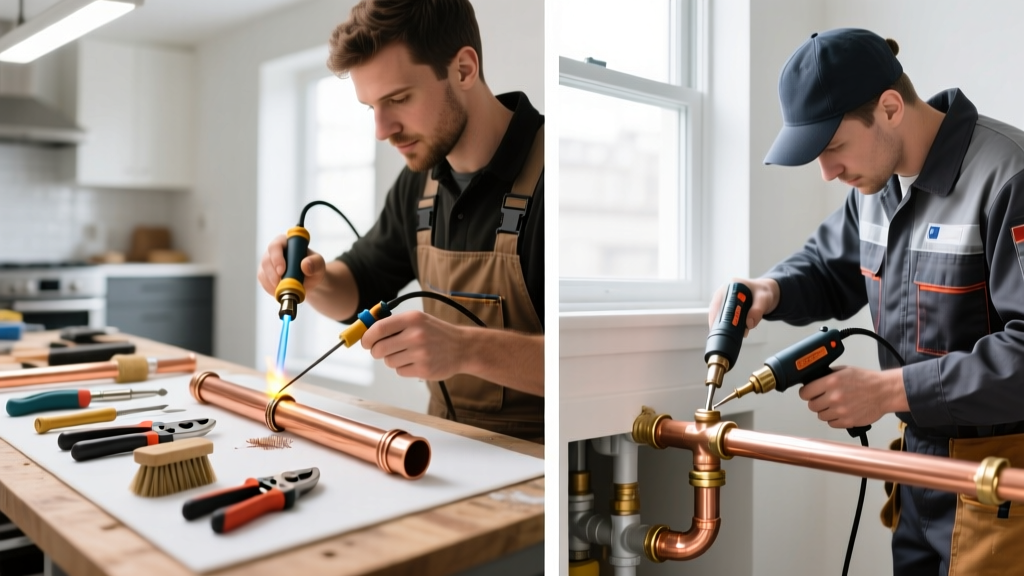
- Specialty Zinc/Acid Fluxes: Used strictly for non-electronic structural soldering (e.g., galvanized steel, copper plumbing). Never use plumbing acid flux on PCBs; the chloride ions will destroy copper traces within weeks.
Extreme Edge Cases: Troubleshooting Incompatible Metals
When standard protocols fail, you are likely dealing with a metallurgical barrier. Here is how to solve the two most notorious material compatibility issues in advanced soldering.
The Gold Embrittlement Threshold
Gold is highly soluble in molten tin. When soldering to ENIG or hard gold contacts, the gold rapidly leaches into the solder, forming the intermetallic compound AuSn4. If the gold concentration in the solder joint exceeds 3% to 4% by weight, the joint becomes severely embrittled and will fracture under minimal mechanical shock.
Expert Mitigation: If you must solder to thick gold (greater than 0.5µm), perform a 'tinning and wiping' step first. Apply fresh solder to the gold pad, let the gold leach into this sacrificial solder, and then use a solder wick to remove it. Finally, apply a fresh drop of solder and attach your component. This keeps the final Au concentration well below the 3% embrittlement threshold.
The Aluminum Oxide (Al2O3) Barrier
Aluminum forms an oxide layer (Al2O3) almost instantly upon exposure to air. This oxide layer has a melting point of over 2,000°C, making it entirely impervious to standard 350°C soldering irons and rosin fluxes. To solder aluminum, you must mechanically disrupt the oxide layer in the absence of oxygen, or use specialized chemistry.
- Ultrasonic Soldering: Tools like the MST Ultrasonic Soldering Iron (priced around $2,500 to $3,000) use high-frequency acoustic cavitation to shatter the Al2O3 layer at the microscopic level while the molten solder wets the bare aluminum beneath. This requires no flux and is the preferred method for aerospace and EV battery tab soldering.
- Specialized Fluxes: Products containing zinc chloride and fluoroborates can etch through the aluminum oxide, but they leave highly corrosive residues that require aggressive ultrasonic cleaning post-solder.
Buyer's Decision Framework for 2026
Before purchasing solder wire or upgrading your station, map your primary substrate materials using this framework:
- Identify the Substrate: Are you working with standard FR-4/Copper (Use SAC305 + ROL0), or exotic ceramics/metals (Requires Sn/Ag + ORH1)?
- Assess Thermal Limits: If components cannot withstand 217°C liquidus for more than 10 seconds, pivot to Sn42/Bi58 (138°C) and design the joint for mechanical support (e.g., strain relief or underfill).
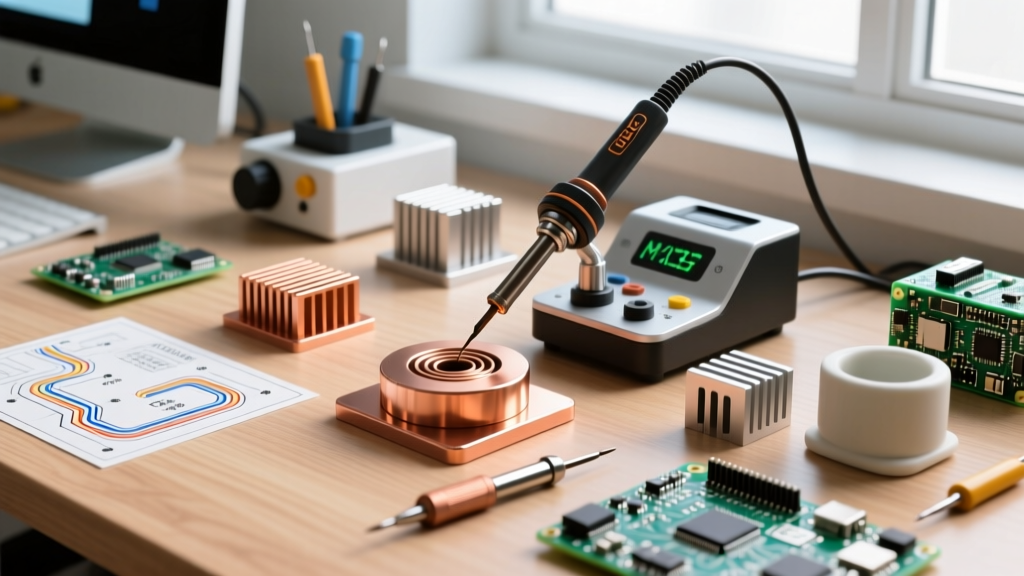
- Calculate Dwell Time: For heavy ground planes that act as heat sinks, use a high-thermal-mass iron tip (e.g., Hakko T18-D24 or Weller RT4) rather than increasing the temperature dial. Excessive temperatures (above 400°C) will destroy the flux activators before they can clean the metal, resulting in a non-wetted ball of solder.
For comprehensive data on specific alloy melting ranges and wetting angles, consult the Indium Corporation Solder Alloys database, which remains an indispensable resource for materials engineers navigating the transition to lead-free and bismuth-based electronics manufacturing.