
The Economics of Modern PCB Assembly in 2026
As component footprints shrink to 0201 and QFN pitches tighten to 0.4mm, the barrier to entry for manual assembly has shifted dramatically. For hardware startups, university research labs, and serious hobbyists, the decision between establishing an in-house surface mount device soldering workstation and outsourcing to a professional Printed Circuit Board Assembly (PCBA) house is no longer just about skill—it is a strict financial calculation. In 2026, with global supply chains stabilized and turnkey assembly fees highly competitive, understanding the true cost of ownership for SMD equipment versus the per-unit economics of outsourced manufacturing is critical for project budgeting.
Capital Expenditure: Building a DIY SMD Lab
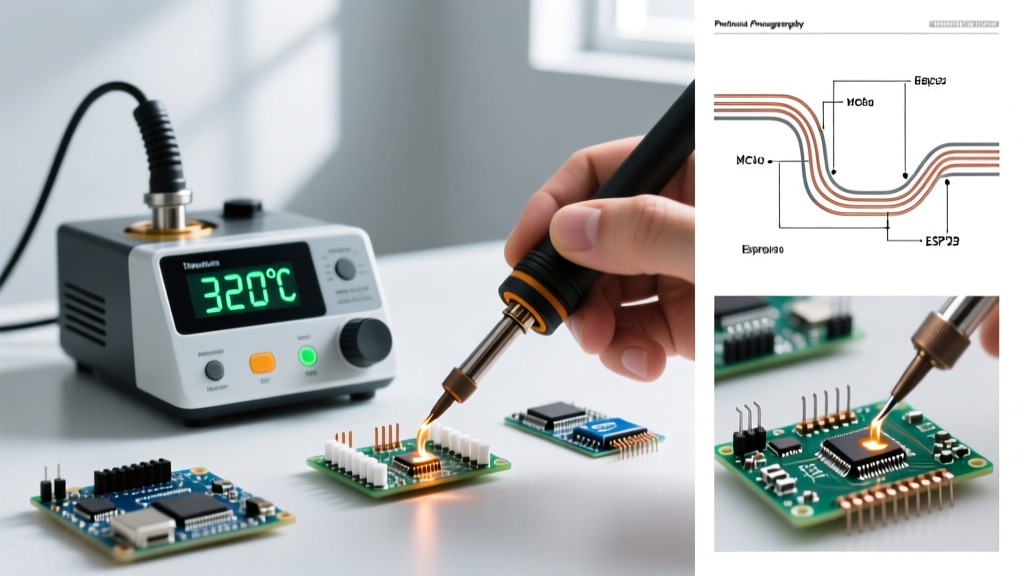
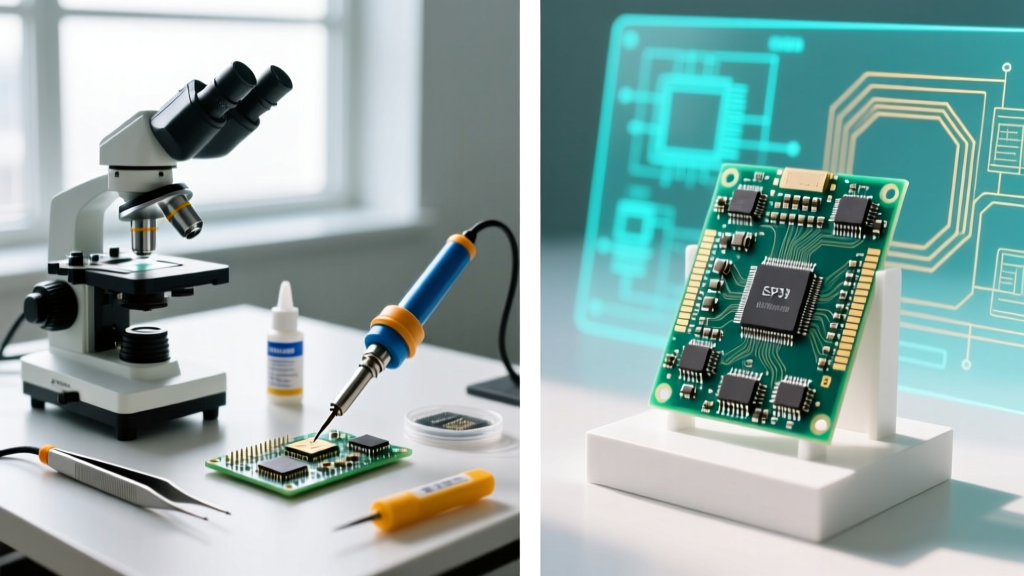
Transitioning from through-hole to surface mount device soldering requires a fundamental upgrade in thermal management, precision tooling, and optical magnification. You cannot reliably hand-solder 0402 resistors or 48-pin TQFP microcontrollers with a standard 60W iron and the naked eye. Below is the realistic capital expenditure (CapEx) required to build a capable, mid-tier DIY SMD lab in 2026.
| Equipment Category | Recommended Model (2026) | Estimated Cost | Technical Notes |
|---|---|---|---|
| Hot Air Rework Station | Quick 861DW (1000W, 3-Channel) | $265.00 | Essential for QFNs, SOICs, and multi-layer board preheating. Closed-loop temperature control prevents pad lifting. |
| Stereo Microscope | AmScope SM-4TP Trinocular (7x-45x) | $215.00 | Trinocular head allows for camera integration. Boom stand is mandatory for PCB clearance. |
| Solder Paste (Sn63/Pb37) | Chip Quik SMD291AX (Type 4, 35g) | $28.50 | Type 4 powder size is required for 0402 and fine-pitch QFNs. Requires refrigeration; 6-month shelf life. |
| Custom Stainless Stencil | Electrolube / Local Laser Cutting | $18.00 | Framed stencils cost more; frameless requires a tensioning jig (add $40 for jig). |
| Precision Tweezers & Tools | Vetus 11-SA (ESD) + Brass Tips | $35.00 | Anti-magnetic, ESD-safe tweezers prevent component 'jumping' due to static discharge. |
| Total Initial CapEx | $561.50 | Excludes fume extraction (e.g., Hakko FA-400, ~$180) and silicone work mats. |
The Consumable Reality
Solder paste is a perishable chemical compound. If your lab does not run boards weekly, the $28.50 jar of Chip Quik Type 4 paste will oxidize and lose its flux activity within six months, even when refrigerated. Furthermore, Kapton tape, isopropyl alcohol (99%), and brass tip cleaners add roughly $15 per month in operational consumables.
Operational Costs: The Hidden Price of Rework and Yield Loss
The most frequently ignored variable in DIY surface mount device soldering is the cost of failure. When manually applying paste and using hot air, common defects include tombstoning (where one end of a capacitor lifts due to uneven wetting), solder balling under BGAs, and insufficient fillet formation on thermal pads.
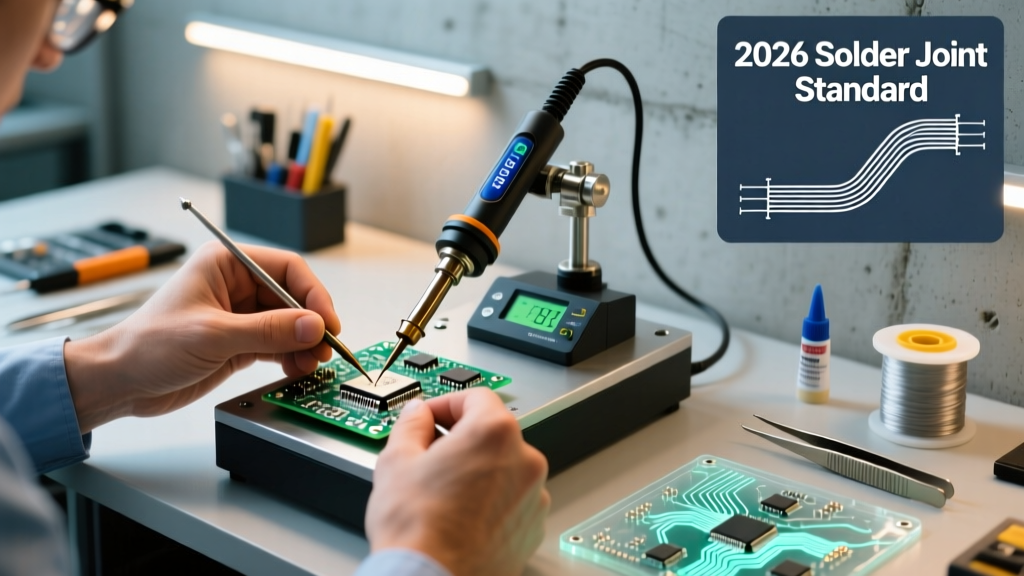
Industry Standard Reference: According to the NASA Workmanship Standards (NASA-STD-8739.3) and IPC-A-610 Class 2 guidelines, solder fillets must exhibit proper wetting and a smooth, concave profile. Voids in bottom-termination components (BTCs) like QFNs must not exceed 25% of the total pad area to ensure adequate thermal dissipation.
For a DIY operator, achieving IPC Class 2 compliance on a 50-component board takes practice. Let us assign a realistic labor cost to rework. If your hourly rate is $50/hour, and it takes 15 minutes to diagnose and rework a shorted 0402 capacitor or a bridged SOIC pin, that is $12.50 in hidden labor cost per defective board. If your first-pass yield is 80%, your true cost per board increases significantly when factoring in the time spent under the microscope with solder wick (e.g., Chemtronics 80-10-50).
The PCBA Outsourcing Model: Turnkey vs. Consigned
Outsourcing to PCBA services like JLCPCB, PCBWay, or MacroFab shifts the cost structure from CapEx to pure OpEx. In 2026, turnkey assembly (where the factory sources and places all components) is the dominant model for prototyping.
Break-Even Analysis: Where Do the Lines Cross?
To understand the financial crossover point, we must compare the DIY marginal cost against PCBA pricing. Assume a moderately complex 4-layer board with 45 unique SMD parts (including one 48-pin TQFP and several 0402 passives).
| Cost Variable | DIY Assembly (Per Board) | Turnkey PCBA (Per Board) |
|---|---|---|
| Setup / Stencil Fees | $18.00 (Amortized over 10 boards) | $12.00 (Base engineering/setup fee) |
| Component Cost | $14.50 (Retail markup via Mouser/DigiKey) | $11.20 (Factory reel pricing + 10% attrition) |
| Labor / Assembly Fee | $25.00 (30 mins @ $50/hr DIY rate) | $18.00 (Machine placement & reflow) |
| Rework / Yield Loss | $12.50 (Assuming 20% rework rate) | $0.00 (Factory guarantees 99%+ yield) |
| Total Cost (10 Units) | $70.00 / board | $41.20 / board |
| Total Cost (50 Units) | $55.60 / board | $34.50 / board |
As the data illustrates, DIY surface mount device soldering is almost always more expensive on a per-unit basis for runs greater than 3 boards, primarily due to retail component markups and the high value of your own engineering time. The PCBA model leverages economies of scale, utilizing automated pick-and-place machines and reflow ovens that guarantee consistent thermal profiles.
Decision Matrix: When to Solder vs. When to Outsource
Cost is not the only metric; time-to-market and design iteration speed are equally vital. Use this framework to decide your assembly route:
- Choose DIY SMD Soldering When:
- You are iterating on a daily basis and cannot wait the 5-7 day lead time for PCBA manufacturing and shipping.
- You are modifying an existing commercial board (rework/hacking) rather than assembling from scratch.
- Your design utilizes highly specialized, long-lead-time, or obsolete components that PCBA houses cannot source via their automated BOM tools.
- Choose Turnkey PCBA When:
- Your board features dense 0402/0201 passives, fine-pitch QFPs, or hidden thermal vias that require precise reflow profiles.
- You are producing a pilot run of 20+ units for beta testing or crowdfunding fulfillment.
- Your design includes BGAs or LGA components (manual BGA rework stations cost upwards of $3,000 and require X-ray inspection for voiding).
Final Verdict for Hardware Engineers
Mastering surface mount device soldering is an invaluable skill for debugging, prototyping, and emergency rework. The $560 CapEx for a Quick 861DW and a quality microscope will pay for itself the first time you need to swap a bricked microcontroller on a Friday night. However, from a strict cost-analysis perspective, treating DIY SMD assembly as a scalable manufacturing strategy is a financial trap. For any production run exceeding a handful of prototypes, the turnkey PCBA model offers superior yield, lower per-unit costs, and frees up your most expensive resource—your engineering time—to focus on firmware and system architecture rather than tweezers and flux.
For further reading on manual SMD techniques and stencil alignment, the Adafruit Surface Mount Soldering Guide provides excellent visual references for paste application and hot-air airflow management, which remain foundational skills regardless of your ultimate manufacturing volume.