
Why Standard Irons Fail at Heavy-Duty Soldering
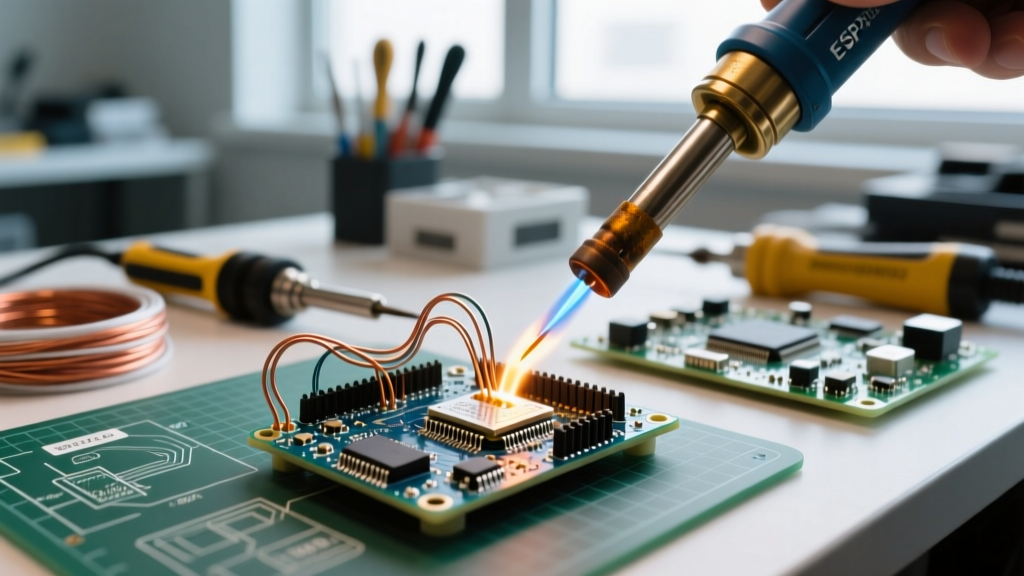
When working with heavy-gauge electrical cables (2 AWG to 4/0 AWG), large copper grounding lugs, or thick-walled plumbing, standard 60W to 80W soldering irons simply lack the thermal recovery rate required. The massive thermal mass of thick copper acts as a heat sink, pulling thermal energy away from the joint faster than an electric iron can replenish it. This results in cold, brittle joints or incomplete capillary action. This is where soldering with propane torch setups becomes mandatory. By delivering up to 20,000 BTUs of direct, convective heat, a torch allows you to bring massive copper assemblies up to the 450°F–550°F flow temperature of silver-bearing solders in seconds.
Essential Gear & 2026 Pricing Matrix
Before troubleshooting, ensure your baseline equipment is up to par. The market has shifted slightly as of 2026, with MAP-Pro becoming the standard for high-heat applications, while standard propane remains king for general electrical lugs and plumbing.
| Equipment Category | Recommended Model / Brand | Avg. 2026 Price | Best Use Case |
|---|---|---|---|
| High-Heat Torch | Bernzomatic TS8000 Trigger-Start | $58 - $65 | 4/0 AWG battery cables, thick busbars |
| Precision Torch | Worthington 336036 Pencil Flame | $22 - $28 | 6 AWG to 2 AWG wire, small copper pipes |
| Heavy-Duty Flux | Oatey #5 Tinning Flux (Paste) | $14 / pint | Oxidized copper, outdoor grounding lugs |
| Silver-Bearing Solder | Harris Stay-Brite #8 (with Stay-Clean) | $35 / kit | High-vibration electrical, structural joints |
| Thermal Protection | Copper Heat Sink Clips (Alligator) | $8 / pair | Preventing insulation meltdown |
Troubleshooting Matrix: Fixing Common Propane Soldering Defects
Even experienced technicians encounter issues when managing the intense, broad heat profile of an open flame. Below are the most frequent failure modes and their exact corrective actions.
1. Solder Beading and Rolling Off the Joint
The Symptom: You touch the solder wire to the heated copper lug, but instead of wicking into the strands, it forms a tight ball and rolls off onto the floor.
The Root Cause: Severe surface oxidation or inadequate flux activation. Propane torches heat metal so rapidly that flash-oxidation occurs before standard rosin flux can clean the surface.
The Fix:
- Cool the joint completely. Use 120-grit sandpaper or a Scotch-Brite pad to mechanically remove the outer layer of oxidation until the copper shines.
- Switch from standard rosin paste to an aggressive, acid-based tinning flux like Oatey #5. Apply a generous bead inside the lug and on the wire strands.
- Reheat using the outer envelope of the flame (not the inner blue cone) to prevent flash-burning the flux before it can activate.
2. Wire Insulation Melting and Charring
The Symptom: The PVC or Teflon insulation shrinks, melts, or chars several inches away from the actual solder joint, exposing bare wire and creating a short-circuit hazard.
The Root Cause: Copper is an exceptional thermal conductor. Heat travels down the wire strands via conduction faster than you can complete the solder flow.
The Fix:
- Use Heat Sinks: Clamp a brass or copper alligator clip (specifically designed as a heat sink) onto the bare wire between the joint and the insulation. This intercepts the conductive heat.
- The Wet Rag Method: Wrap a thoroughly wet rag around the insulation. The water's high specific heat capacity and latent heat of vaporization will absorb the conductive thermal energy, keeping the jacket well below its melting point.
- Pre-tin the Wire: Tin the wire strands before inserting them into the lug. This cuts the required dwell time on the final assembly in half.
3. Black Soot Accumulation on the Copper
The Symptom: The joint becomes coated in a thick, greasy black soot, and the solder refuses to adhere to the soot-covered areas.
The Root Cause: You are using a 'reducing flame' (too much fuel, not enough oxygen) or holding the inner blue cone directly against the metal, causing incomplete combustion.
The Fix:
- Adjust the gas flow. If using an adjustable torch, increase the air intake or reduce the gas valve slightly until the inner blue cone becomes sharply defined and audibly 'hisses'.
- Maintain a distance of at least 1 to 1.5 inches between the tip of the inner blue cone and the workpiece. Let the broader, cooler outer flame do the pre-heating, and only bring the inner cone close when testing the melting point of the solder.
4. Flux Flash-Boiling and Leaving Crusty Residue
The Symptom: The flux violently pops, spits, and boils away before the copper reaches soldering temperature, leaving a hard, glassy residue that blocks solder flow.
The Root Cause: Applying direct, concentrated heat to the flux rather than heating the copper mass. The flux reaches its vaporization point (around 600°F for some rosins) while the core of the copper wire is still only at 300°F.
The Fix:
Pro-Tip: Always heat the metal, never the solder or the flux directly. Apply the flame to the opposite side of the lug from where you intend to feed the solder. Capillary action will pull the molten solder through the joint only when the entire mass reaches the correct thermal equilibrium.
Propane vs. MAP-Pro: Fuel Selection for Electrical Work
A common point of confusion in 2026 is whether to use standard blue-cylinder Propane or yellow-cylinder MAP-Pro. True MAPP gas was discontinued years ago; MAP-Pro is a propylene-based alternative that burns significantly hotter.
- Standard Propane (Blue): Burns at roughly 1,980°F in air. Ideal for standard electrical lugs (up to 2/0 AWG) and 1/2-inch plumbing. It provides a softer, wider flame that is forgiving on PVC insulation.
- MAP-Pro (Yellow): Burns at roughly 2,500°F in air. Necessary for 3/0 AWG to 4/0 AWG battery cables, thick busbars, or silver-soldering (brazing) applications where temperatures must exceed 1,100°F. Warning: MAP-Pro can easily melt thin-gauge copper wire and vaporize flux instantly if the operator lacks torch control.
Frequently Asked Questions (FAQ)
Can I use a propane torch for delicate PCB through-hole components?
No. Soldering with a propane torch is strictly for heavy-duty wire-to-wire, wire-to-lug, and plumbing applications. The convective heat profile of a torch will cause severe thermal shock to fiberglass PCBs, delaminate the copper traces, and instantly destroy sensitive semiconductor junctions. Stick to temperature-controlled soldering stations (like the Hakko FX-951 or Weller WE1010) for electronics.
How do I know when the copper is hot enough to apply solder?
Never use the torch to melt the solder and 'paint' it onto the wire. Instead, keep the torch on the copper lug and periodically tap the solid solder wire against the joint. When the copper reaches the exact flow temperature (e.g., 535°F for Stay-Brite #8), the solder will instantly flash-melt and wick into the strands via capillary action. If the solder bends or smears like clay, the copper is not yet hot enough.
What are the safety protocols for using an open flame near wiring harnesses?
Open-flame soldering poses severe fire risks, especially when working near vehicle fuel lines, wooden framing, or insulated walls. According to the Occupational Safety and Health Administration (OSHA), all hot work requires a dedicated fire watch and the removal of combustibles within a 35-foot radius. Furthermore, the National Fire Protection Association (NFPA 51B) mandates the use of flame-retardant blankets to shield adjacent materials. Always keep a Class ABC fire extinguisher within arm's reach, and wait at least 30 minutes after the final solder joint is completed to monitor for smoldering insulation before leaving the site.
Is silver-bearing solder worth the extra cost for electrical connections?
Yes, for high-vibration or high-temperature environments. Standard 60/40 tin-lead or lead-free SAC305 solders can suffer from tin whiskers or fatigue cracking under constant mechanical vibration (e.g., automotive engine bays or heavy machinery). Silver-bearing solders like Harris Stay-Brite #8 (which contains 8% silver) offer vastly superior tensile strength and a slightly higher melting point, ensuring the joint survives harsh mechanical stress. For standard residential grounding, however, standard 95/5 tin-antimony is perfectly adequate and much cheaper.
Final Thoughts on Torch Technique
Mastering the art of soldering with a propane torch comes down to thermal management and surface preparation. The flame is simply a tool to deliver BTUs; the actual bond is created by the metallurgical interaction between the flux, the base copper, and the molten alloy. By respecting the thermal mass of your workpiece, utilizing heat sinks to protect insulation, and referencing authoritative guidelines from the Copper Development Association (CDA) regarding proper capillary flow, you will produce heavy-duty electrical joints that outlast the equipment they are connected to.