
The 5,000-Year Journey of Soldering Crafts
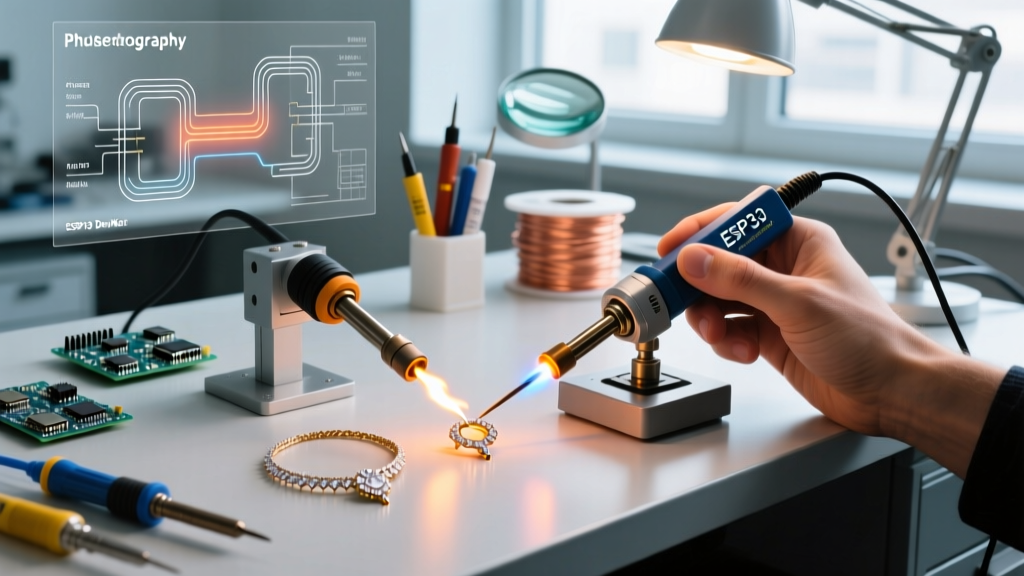
When we think of soldering today, we often picture microchips, PCBs, and robotic reflow ovens. Yet, the foundation of modern soldering crafts was laid millennia before the discovery of electricity. From the gold ornaments of ancient Mesopotamia to the RISC-V-powered smart irons of 2026, the art of joining metals with a lower-melting-point filler has undergone a radical evolution. For modern makers, jewelers, and stained-glass artists, understanding this historical metallurgy is not just an academic exercise—it is the key to selecting the right alloys, fluxes, and thermal tools for today's demanding projects.
Ancient Origins: From Mesopotamia to Roman Aqueducts
According to historical metallurgy archives documented by Britannica, the earliest evidence of soldering dates back to roughly 4000 BC in Mesopotamia and ancient Egypt. Artisans used primitive blowpipes to direct the heat of charcoal forges onto gold and copper joints, utilizing naturally occurring tin-lead alloys to create intricate jewelry and weapons.
The Romans later industrialized the craft. They developed fistulae (lead pipes) for their vast aqueduct networks, sealing the joints with a lead-tin solder. Interestingly, the Roman ratio of lead to tin was remarkably close to the 60/40 eutectic alloy that would dominate electronics manufacturing 2,000 years later. However, these early soldering crafts relied entirely on visual cues and the artisan's intuition to judge temperature, often resulting in brittle joints if the lead oxidized before the flux (typically tree resin or animal fat) could reduce it.
The Metallurgical Shift: How Alloys Redefined the Craft
The evolution of soldering is fundamentally a story of alloy engineering. The transition from artisanal guesswork to precise metallurgical science changed how craftspeople approach their work. Below is a breakdown of how solder alloys have evolved across different eras and disciplines.
| Era / Milestone | Primary Alloy Composition | Melting Point | Primary Craft Application |
|---|---|---|---|
| Ancient / Medieval | Pb70/Sn30 (Non-eutectic) | 183°C - 250°C | Armor repair, early plumbing, stained glass |
| Industrial Revolution | Sn60/Pb40 (Eutectic) | 188°C (370°F) | Tin roofing, early radio electronics, copper foil glass |
| Late 20th Century | Sn63/Pb37 (Eutectic) | 183°C (361°F) | Wave soldering, PCB assembly, fine jewelry repair |
| Post-2006 (RoHS Era) | SAC305 (Sn96.5/Ag3.0/Cu0.5) | 217°C (423°F) | Modern electronics, lead-free stained glass, eco-crafts |
| Specialty Jewelry | Silver Solder (Hard/Med/Easy) | 671°C - 788°C | Silversmithing, enameling, chainmaille |
The most disruptive shift in modern soldering crafts was the implementation of the RoHS (Restriction of Hazardous Substances) directive. The mandate to eliminate lead forced a transition to SAC305 (Tin-Silver-Copper). While safer, SAC305 requires higher operating temperatures and possesses a narrower plastic range, meaning modern crafters must use irons with significantly higher thermal recovery rates to avoid cold, grainy joints.
Tool Evolution: From Forge Heated Bits to Smart Microprocessors
For centuries, soldering coppers were simply heavy pieces of copper heated in a forge or over a gas flame. The artisan had to constantly reheat the tool, making consistent heat delivery impossible. The invention of the electric soldering iron by Ernst Sachs in 1921 revolutionized the craft, but true temperature control did not arrive until the 1960s.
Weller's Magnastat stations utilized the Curie point of ferromagnetic materials—a brilliant piece of mid-century physics where a magnetic tip loses its magnetism at a specific temperature, breaking the circuit and cooling down. Today, in 2026, we have entered the era of smart microprocessors. Tools like the Pinecil V2 (priced around $26) utilize a RISC-V chip to sample tip temperature 50 times per second, adjusting PWM power delivery instantly. For high-end studio crafts, stations like the JBC CD-2BQF ($450+) heat from room temperature to 350°C in under two seconds, completely eliminating the thermal lag that plagued 20th-century crafters.
Modern Soldering Crafts: A Buyer's Breakdown by Discipline
Because soldering crafts encompass vastly different material sciences, a one-size-fits-all buyer's guide is useless. Here is how to equip your workbench based on your specific craft discipline today.
1. Stained Glass & The Tiffany Copper Foil Method
Louis Comfort Tiffany popularized the copper foil method in the late 1800s, allowing for intricate 3D glass sculptures. The craft requires laying down thick, smooth beads of solder over adhesive-backed copper tape.
- The Alloy: Traditionalists still use 60/40 Sn/Pb for its low melting point (188°C) and superior flow. However, for pieces destined for schools or public spaces, lead-free 96.5/3/0.5 (SAC) or 97/3 (Tin/Silver) is mandatory. Note that SAC alloys require specialized high-temperature fluxes to prevent scorching.
- The Flux: Avoid water-soluble zinc chloride for foil work; it causes the adhesive to fail. Use an oleic acid-based paste flux or a dedicated gel flux like Novacan Super Pro.
- The Tool: You need high thermal mass. The Hakko FX-601 ($75) is the industry standard for glass artists. Its ceramic heater and large chisel tips (like the 900M-T-D24) hold enough thermal energy to melt thick beads without stalling.
- Failure Mode: Overheating the copper foil. If your iron lingers too long, the adhesive boils, causing the foil to lift from the glass. Always keep the iron moving and use a rheostat to dial back power during delicate inside curves.
2. Jewelry Making & Silversmithing
Jewelry soldering is less about melting a filler over a joint and more about capillary action drawing molten metal into a microscopic seam. Because silver and gold have high thermal conductivity, standard electric irons are useless here.
- The Alloy: Silver solders are categorized by their flow temperatures: Hard (approx. 1450°F/788°C), Medium (1325°F/718°C), and Easy (1240°F/671°C). Crafters use "step soldering," starting with Hard solder for the first joint, then Medium and Easy for subsequent joints, ensuring earlier seams do not remelt.
- The Flux: Borax-based fluxes (like Cupronil or Prip's) are essential. They form a glassy shield at high temperatures, preventing fire-scale (copper oxide) from ruining the precious metal.
- The Tool: The Smith Little Torch ($120) running on oxygen and propane (or acetylene) is the undisputed king of the jeweler's bench. Its micro-tips allow pinpoint flame control for soldering 0.5mm jump rings without melting the surrounding wire.
3. Fine Electronics & PCB Art
Modern electronic crafting involves everything from repairing vintage synthesizers to building custom mechanical keyboards and SMD (Surface Mount Device) jewelry.
- The Alloy: Sn63/Pb37 remains the favorite for hobbyists due to its eutectic nature (it transitions instantly from solid to liquid, preventing disturbed joints). For commercial or eco-friendly crafts, SAC305 or Sn99/Cu1 is required.
- The Flux: No-clean rosin flux (RMA) in a syringe is mandatory for 0402 or 0603 SMD components. Liquid flux pens often flood tiny pads, causing solder bridging.
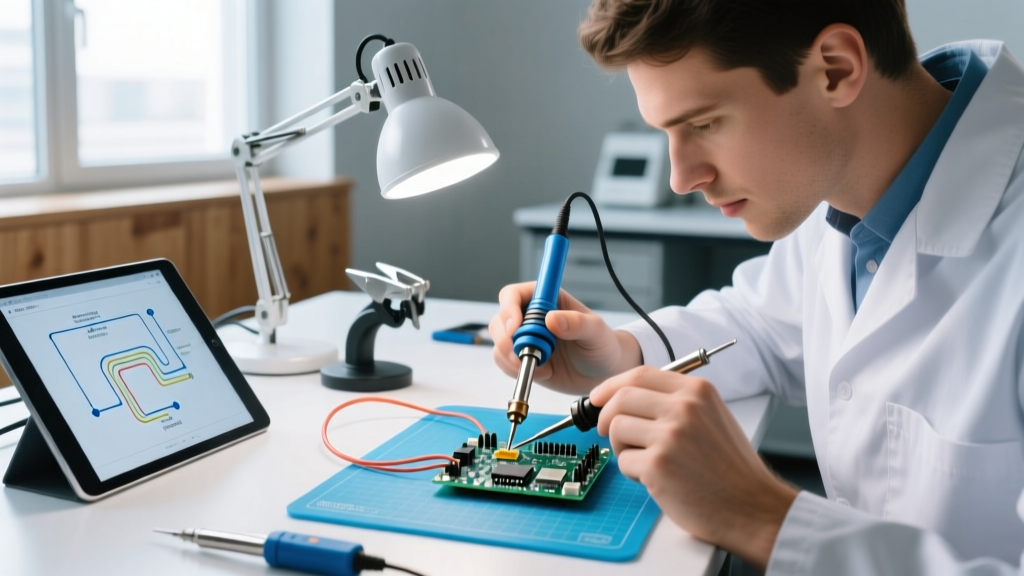
- The Tool: For precision SMD work, the Hakko FX-951 or a high-end Pinecil V2 with micro-pencil tips (e.g., TS100/Pinecil I-tip) is ideal. Pair this with a stereo trinocular microscope for placing components under 1mm.
Health, Safety, and the Modern Crafter's Responsibility
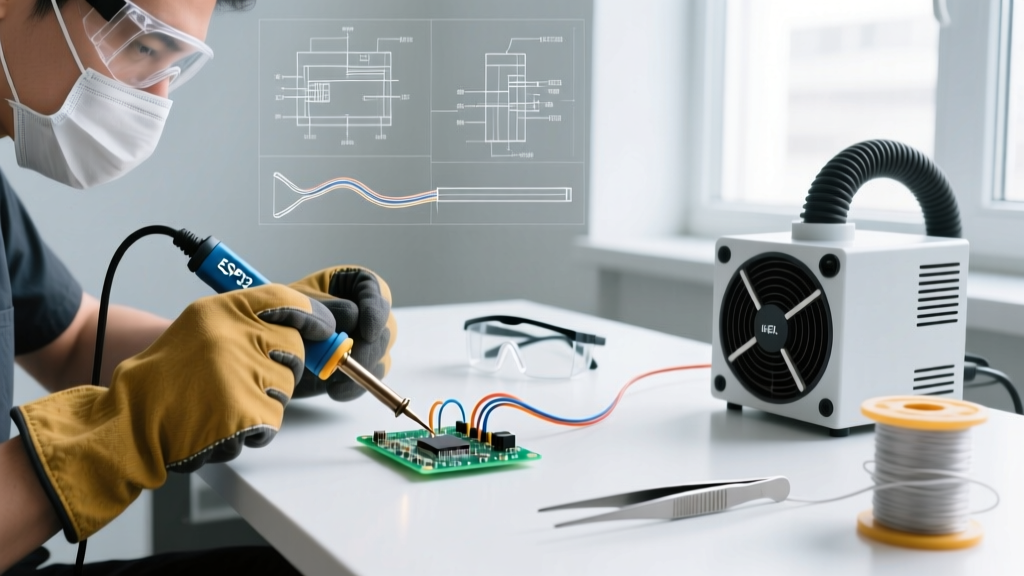
The romanticization of vintage soldering crafts often ignores the severe health risks of historical practices. Lead absorption through skin contact and inhalation of toxic flux vapors (like rosin colophony or acidic fumes) are well-documented hazards. The CDC's NIOSH guidelines explicitly warn against the handling of lead-based solders without proper hygiene and ventilation protocols.
"The mastery of soldering crafts relies not just on heat, but on the precise chemical reduction of metal oxides and the rigorous protection of the artisan's respiratory system."
In 2026, no professional studio or serious home crafter should operate without localized fume extraction. While cheap carbon-filter fans merely redirect smoke, true HEPA and activated carbon extractors (like the BOFA PrintPro or Hakko FA-400) actively trap sub-micron particulates and volatile organic compounds (VOCs). Furthermore, always wash hands with cold water and specialized lead-removal soap (like D-Lead) before eating or touching your face when working with traditional stained glass or plumbing alloys.
Conclusion
The evolution of soldering crafts is a testament to human ingenuity. We have moved from blowing on charcoal embers to joining ancient gold, to sealing Roman aqueducts, and finally to programming RISC-V microprocessors to lay down perfect SAC305 micro-joints. Whether you are wrapping Tiffany copper foil, step-soldering a silver pendant, or reflowing a BGA chip, respecting the metallurgy and investing in precise thermal control will elevate your craft from amateur assembly to masterful artistry.