
The Metallurgical Crossroads: Soldering vs Welding
When makers, fabricators, and electronics hobbyists search for soldering welding techniques, they are usually standing at a fundamental metallurgical crossroads. While both are thermal joining processes, confusing the two can lead to catastrophic structural failures or destroyed microchips. In 2026, with the rise of multi-material DIY robotics and high-current EV battery pack building at home, understanding the exact boundary between these processes is no longer optional—it is a strict requirement for safety and reliability.
The core distinction lies in the base metal. Welding melts the base metals themselves, fusing them into a single continuous piece (often with a melted filler). Soldering never melts the base metal; it relies on capillary action and metallurgical wetting to bond a lower-melting-point filler alloy to the surface of the workpieces.
This guide provides a rigorous, engineering-backed decision framework to help you choose the correct process, specific alloys, and equipment for your next project.
The Ultimate Joining Decision Matrix
Before picking up a torch or an iron, map your project requirements against this matrix. This framework separates processes by thermal input and mechanical yield.
| Process | Base Metal Melts? | Typical Temp Range | Tensile/Shear Strength | Primary DIY Use Case |
|---|---|---|---|---|
| Soft Soldering | No | 183°C – 250°C (361°F – 482°F) | ~3,000 – 5,000 psi (Shear) | PCB assembly, low-stress copper plumbing, wire splicing. |
| Brazing | No | 620°C – 850°C (1148°F – 1562°F) | ~40,000 – 60,000 psi | HVAC refrigeration lines, bicycle frames, heavy-gauge busbars. |
| Fusion Welding | Yes | 1,370°C – 1,500°C+ (2500°F+) | ~60,000 – 90,000+ psi | Chassis fabrication, structural steel, automotive repair. |
Deep Dive: When to Choose Soldering
Soldering is strictly for electrical conductivity, hermetic sealing, and low-stress mechanical retention. If your joint will bear structural loads (like a drone frame or a trailer hitch), soldering is fundamentally the wrong choice.
Alloy Selection in 2026
- Leaded (63/37 Sn/Pb): The eutectic standard (e.g., Kester 245). Melts at exactly 183°C. It remains the undisputed king for DIY through-hole and heavy wire splicing due to its glossy finish, low wetting angle, and resistance to thermal fatigue. However, it is restricted in commercial manufacturing by RoHS directives.
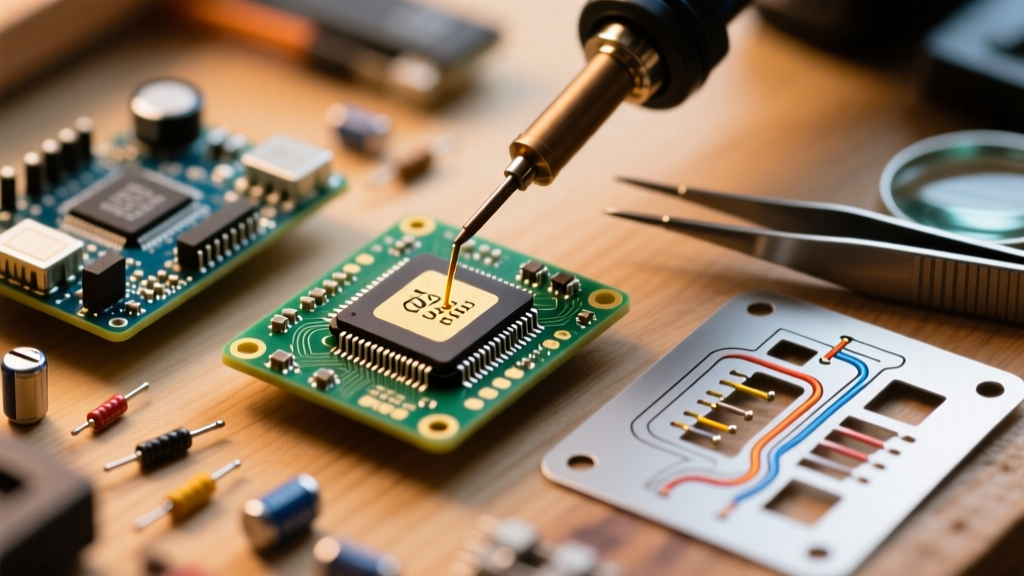
- Lead-Free (SAC305): Composed of 96.5% Tin, 3% Silver, and 0.5% Copper. Melts at ~217°C. Mandatory for commercial PCBs. It requires higher iron temperatures (350°C - 380°C) and highly active fluxes to overcome tin's natural oxidation. Expect to pay $45–$65 per 500g spool in 2026 due to silver commodity pricing.
Equipment & Edge Cases
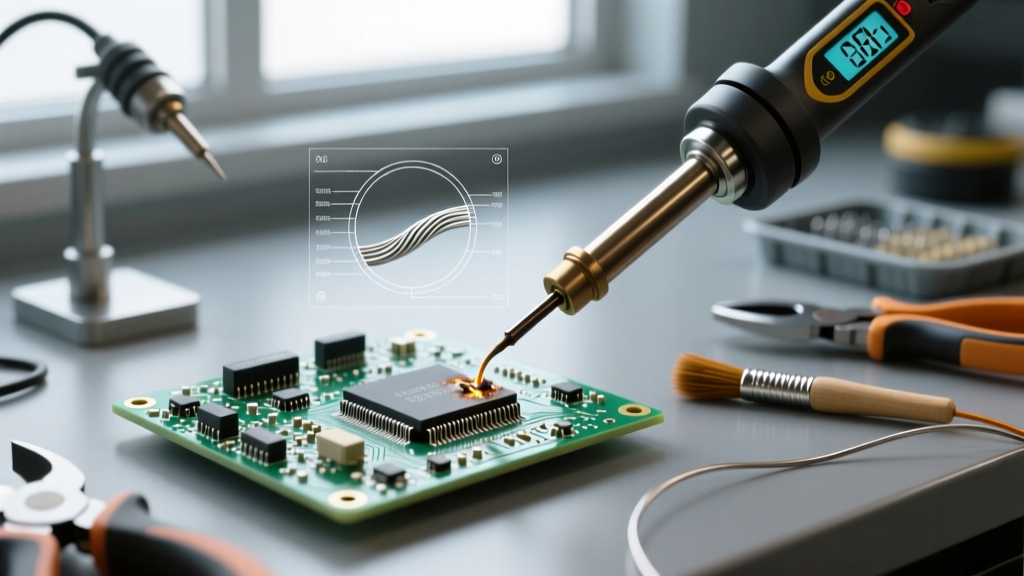
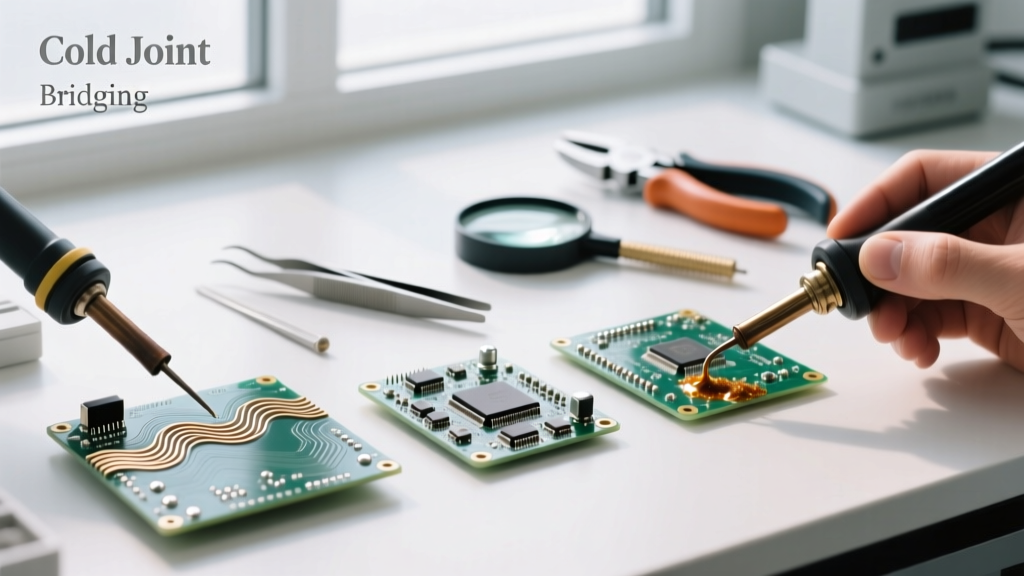
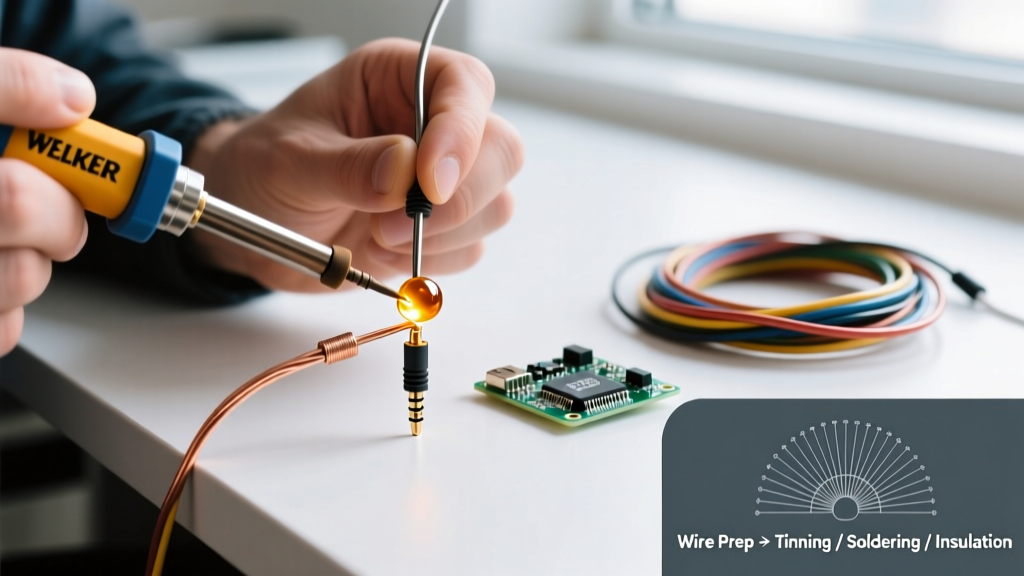
For heavy-gauge wire soldering (e.g., 4 AWG battery cables), a standard 60W iron will fail due to thermal mass sink. You need a high-thermal-capacity station like the Hakko FX-951 or a butane-powered Weller PyroPen to maintain a 380°C tip temperature under load. According to the IPC-A-610 standard, a proper soldered wire joint must exhibit a smooth, concave fillet with visible wetting; a dull, grainy appearance indicates a 'cold joint' caused by movement during the phase-change solidification window.
Deep Dive: When to Choose Welding
Welding creates a monolithic structure. The Heat-Affected Zone (HAZ) alters the grain structure of the base metal, meaning the joint is often as strong as, or stronger than, the parent material.
MIG vs. TIG for the DIY Fabricator
- MIG (GMAW): The high-deposition workhorse. Using a machine like the Lincoln Electric LE31MP or Hobart Handler 140, you feed an ER70S-6 consumable wire through a C25 (75% Argon / 25% CO2) shielding gas. It is ideal for mild steel chassis work from 18-gauge up to 1/4-inch thick.
- TIG (GTAW): The precision scalpel. Using a non-consumable tungsten electrode, you manually dip filler rod into the puddle. TIG is mandatory for aluminum (using 4043 filler and 100% Argon) and stainless steel tubing. The American Welding Society (AWS) notes that TIG offers superior control over heat input, minimizing distortion on thin-gauge aerospace or automotive sheet metal.
Expert Insight: If you are welding high-carbon steel or tool steel, standard MIG wire will result in severe HAZ cracking due to rapid martensite formation. You must pre-heat the metal to 200°C and use low-hydrogen stick electrodes (like E7018) or specialized TIG filler to slow the cooling rate.
The 'Gray Area': Plastic Soldering vs. Plastic Welding
A frequent point of confusion in the maker community is 'plastic soldering welding.' When repairing a cracked ABS drone arm or a PLA 3D-printed bracket, are you soldering or welding?
Technically, melting two pieces of the same thermoplastic together to form a monolithic bond is plastic welding. However, DIYers often use a standard electronics soldering iron equipped with a flat chisel tip (or a specialized Teflon-coated smoothing tip) to perform this.
- The Soldering Iron Hack: Using a Weller W60P with a flat tip at 230°C works for temporary PLA/ABS tacking, but it leaves a messy, oxidized bead and risks embedding metal oxides into the plastic.
- The Proper Welding Method: Use a dedicated hot-air plastic welder (like the Bak Rion RK) or a 3D pen modified with a PTFE tube to feed matching plastic welding rod (e.g., 3mm ABS rod) into a hot-air stream at 270°C. This creates a true, structurally sound fused weld with up to 80% of the parent material's tensile strength.
Failure Mode Analysis: What Goes Wrong?
Understanding how joints fail is the cornerstone of our decision framework. Choose your process based on the failure mode you can afford to mitigate.
Soldering Failures
- Thermal Pad Lift: Applying 400°C to a 2oz copper PCB pad for more than 3 seconds will delaminate the epoxy resin, ripping the trace off the board.
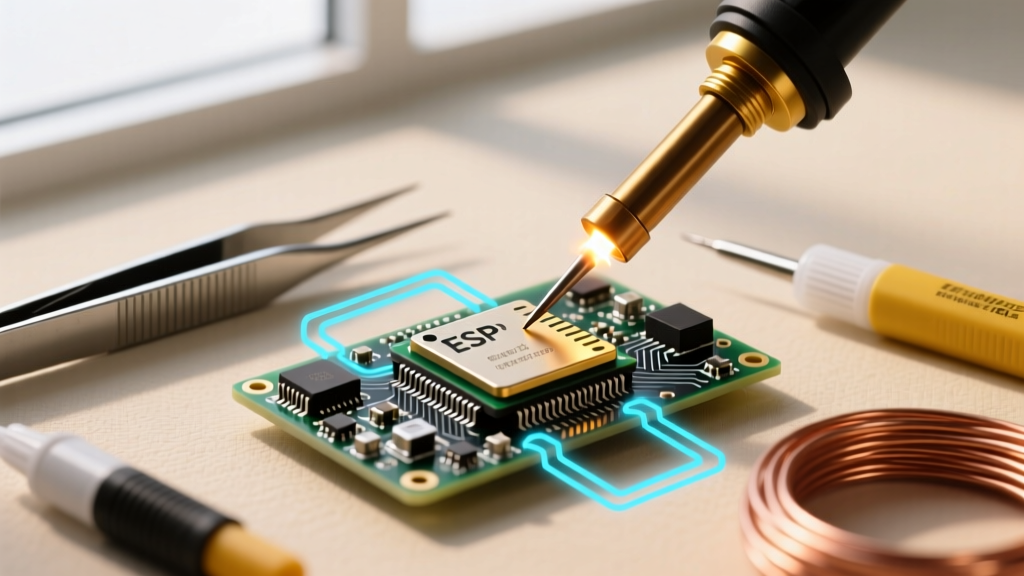
- Tombstoning: In SMD components, uneven heating causes one side of the solder paste to reflow first, pulling the component upright like a tombstone.
- Flux Entrapment: Failing to clean water-soluble fluxes leaves conductive ionic residues that cause dendritic growth and short circuits over time.
Welding Failures
- Porosity: Caused by contaminated base metal (rust, paint, oil) or inadequate shielding gas coverage. The resulting gas pockets act as stress concentrators, leading to fatigue cracking under vibration.
- Undercut: Running the amperage too high or travel speed too fast melts away the toe of the weld, creating a groove that severely weakens the joint's cross-sectional area.
- Lack of Fusion: The filler metal melts and sits on top of the base metal like a cold drop of wax, rather than alloying with it. This is a catastrophic structural defect.
The 4-Step Decision Flowchart
Run your project through this sequential framework before purchasing materials:
- Is the primary requirement electrical conductivity or structural load-bearing?
If Electrical/Sealing: Proceed to Soldering. If Load-Bearing: Proceed to Step 2. - Can the base metal withstand 1,400°C+ without warping or losing its temper?
If Yes: Fusion Welding (MIG/TIG). If No (e.g., thin copper pipes, brass fittings): Proceed to Step 3. - Does the joint require >10,000 psi of tensile strength?
If Yes: Silver Brazing (e.g., Harris Safety-Silv 45). If No: Soft Soldering is sufficient. - What is your thermal budget?
Verify that adjacent components (wire insulation, plastic housings, microchips) will not melt or off-gas at your chosen process temperature.
Cost & ROI Analysis for the DIY Shop
Setting up a joining station requires capital. As of 2026, here is the realistic entry cost for reliable, non-frustrating equipment:
- Prosumer Soldering Station: $120 – $180 (e.g., Pine64 Pinecil V2 or Hakko FX-888D). Add $40 for high-quality flux and fume extraction.
- Brazing Torch Setup: $80 – $150 (Oxy-Acetylene or Map-Pro/Air torch with Turbo-Tip) plus $50 for silver-bearing filler rods.
- Entry-Level MIG Welder: $350 – $500 (e.g., YesWelder MP200 or Hobart 140). Add $250 for a C25 gas cylinder, regulator, and auto-darkening helmet.
Final Verdict
There is no universal 'best' joining method—only the correct metallurgical solution for your specific constraints. By respecting the thermal boundaries of your base materials and matching the filler alloy to the mechanical demands of the joint, you will eliminate guesswork. Whether you are flowing SAC305 onto a 0402 capacitor or laying down a stringer bead on a 1/4-inch steel bumper, rely on the physics of the puddle, not the marketing on the box.