
The Taxonomy of Soldering Types and Material Science
When engineers and technicians discuss joining metals, the term 'soldering types' is often mistakenly used as a monolith. In reality, soldering encompasses a highly specific spectrum of thermal joining processes defined by their liquidus temperatures and the resulting metallurgical bonds. Choosing the correct process is not merely a matter of melting point; it is a complex exercise in material compatibility, thermal mass management, and flux chemistry.
According to the American Welding Society (AWS), the dividing line between soldering and brazing is strictly set at 450°C (842°F). However, within the sub-450°C realm, the interaction between the filler metal and the base substrate dictates the joint's mechanical strength, electrical conductivity, and long-term reliability. A joint that is perfectly optimized for a FR-4 printed circuit board will catastrophically fail if applied to a stainless steel chassis or an aluminum heat sink.
This guide provides a definitive material compatibility matrix for modern soldering types, detailing the exact alloys, flux requirements, and thermal profiles necessary for success in 2026's demanding electronics and electromechanical landscapes.
Defining the Core Soldering Types
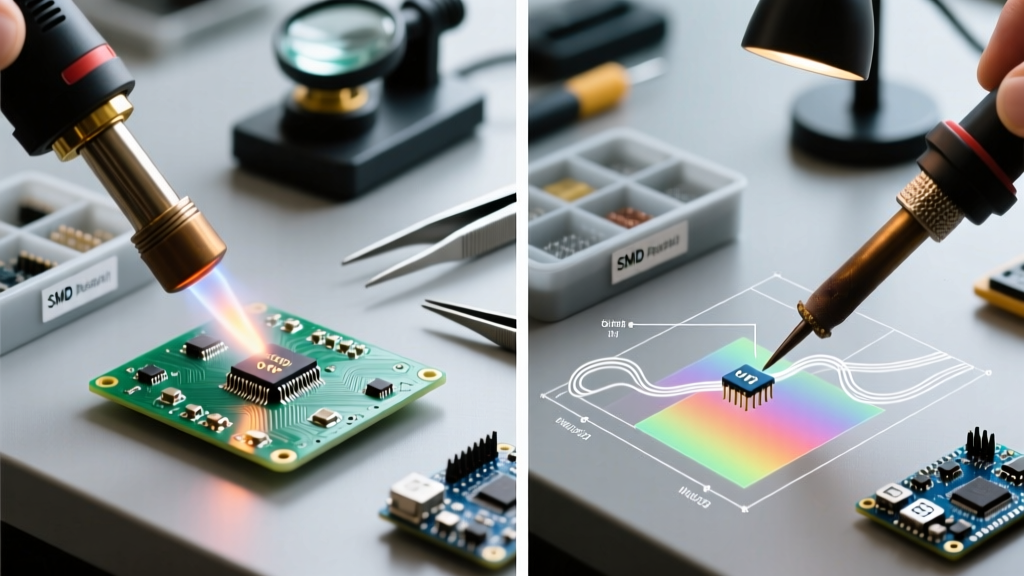
Before mapping materials, we must categorize the thermal processes. Each type dictates a specific range of filler metals and base material reactions.
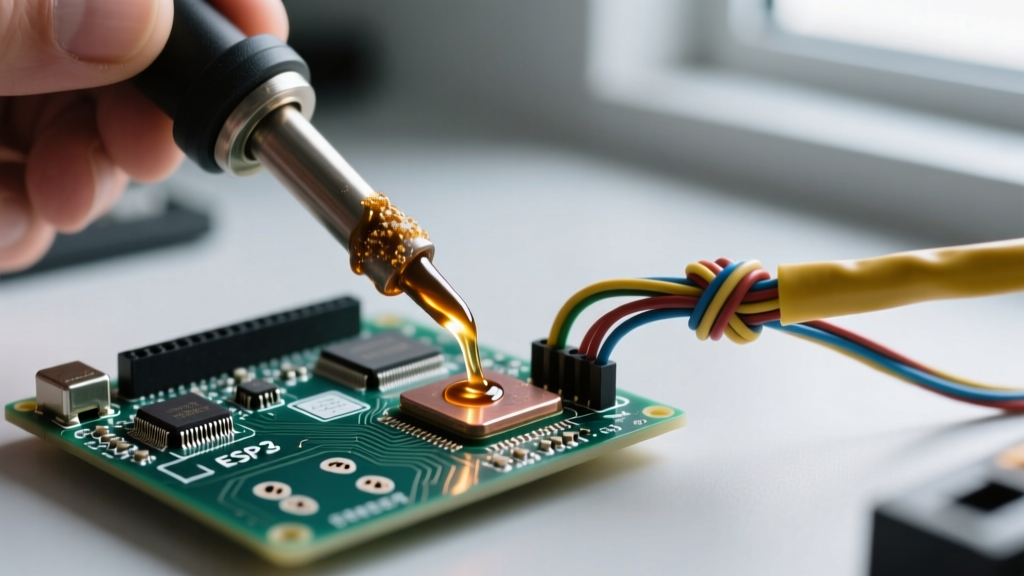
- Soft Soldering (Below 450°C): The most common type for electronics and plumbing. It relies on capillary action and the formation of thin intermetallic compounds (IMCs) like Cu6Sn5. Typical alloys include Tin-Lead (Sn63/Pb37) and Lead-Free SAC (Sn96.5/Ag3.0/Cu0.5).
- Hard Soldering / Silver Soldering (450°C - 800°C): Often used in HVAC, jewelry, and high-stress mechanical linkages. It utilizes silver-bearing alloys (e.g., BAg-24) and requires aggressive fluxes or inert atmospheres to prevent base metal oxidation at elevated temperatures.
- Brazing (Above 800°C): While technically outside the strict definition of soft soldering, brazing is the necessary alternative when base materials like high-carbon steel or specialized aerospace alloys cannot be wetted by low-temperature tin or silver alloys.
Material Compatibility Matrix
The following table serves as a quick-reference framework for matching base materials to the optimal soldering type, alloy, and flux chemistry. Data reflects current industry standards and IPC J-STD-001 compliance requirements for electronic assemblies.
| Base Material | Recommended Soldering Type | Optimal Alloy (2026 Standard) | Required Flux Chemistry | Liquidus Temp |
|---|---|---|---|---|
| Copper (Bare) | Soft Soldering | SAC305 (Sn96.5/Ag3.0/Cu0.5) | Rosin (RMA) or Water-Soluble (OA) | 217°C |
| Brass / Bronze | Soft / Hard Soldering | Sn63/Pb37 or BAg-34 (Silver) | Mild Acid or Rosin (Soft); Borax (Hard) | 183°C / 700°C |
| Aluminum (Alloys) | Specialized Soft Soldering | Indalloy 157 (95Sn/5Ag) or Zn-Al | Fluoroaluminate or Reactive Organic | 224°C / 380°C |
| Stainless Steel | Hard Soldering / Aggressive Soft | Sn62/Pb36/Ag2 or High-Tin/Silver | Zinc Chloride / Ammonium Chloride Acid | 179°C / 600°C+ |
| Nickel / Kovar | Hard Soldering | Sn95/Ag5 or Gold-Tin (Au80/Sn20) | Highly Activated Rosin (RA) or Formic Acid | 221°C / 278°C |
Deep Dive: Soldering Difficult Substrates
While copper and brass are forgiving, modern electromechanical designs frequently require joining to substrates that actively resist wetting. Understanding the metallurgical barriers of these materials is critical for selecting the right soldering types.
Aluminum and the Oxide Barrier
Aluminum instantly forms a microscopic layer of aluminum oxide (Al2O3) when exposed to air. This oxide layer melts at over 2,000°C, far exceeding the melting point of the aluminum base (approx. 660°C) and any soft solder. Standard rosin fluxes are entirely ineffective here.
The Solution: To soft-solder aluminum, you must use a specialized reactive flux (often containing fluoroaluminate complexes) or employ mechanical abrasion *beneath* a pool of molten solder to physically break the oxide layer while excluding oxygen. According to technical data from Indium Corporation's solder alloy database, utilizing a Zinc-based filler or a specialized Tin-Silver alloy like Indalloy 157 provides the best wetting action on aluminum substrates without causing severe galvanic degradation.
Stainless Steel and Chromium Oxide
Similar to aluminum, stainless steel owes its corrosion resistance to a passive layer of chromium oxide. This layer prevents standard solder from forming the necessary intermetallic bonds. Attempting to solder stainless steel with standard electronics flux will result in a classic 'cold joint' where the solder simply balls up and rolls off.
The Solution: You must deploy a highly active, inorganic acid flux (typically a Zinc Chloride and Ammonium Chloride blend). These fluxes chemically strip the chromium oxide at elevated temperatures. However, because these fluxes are highly corrosive, post-solder cleaning with deionized water and a neutralizing agent is absolutely mandatory to prevent long-term chemical corrosion of the joint.
PCB Copper Pads and Thermal Shock
When dealing with standard FR-4 PCBs, the challenge is not wetting, but thermal management. The transition to lead-free soldering types (like SAC305) increased the required liquidus temperature from 183°C to 217°C, pushing peak reflow temperatures to 245°C - 260°C. This narrow process window increases the risk of pad lift and delamination if the thermal profile is not strictly controlled.
Pro-Tip for High Thermal Mass Hand Soldering: When hand-soldering a thick copper ground plane to a standard component lead, do not simply turn up the temperature on your iron to 400°C. This oxidizes the tip and burns the flux. Instead, use a high-wattage station (e.g., a 150W JBC CD-2BQE or Weller WXD 2) with a massive chisel tip set to 350°C. The high thermal recovery rate will transfer the necessary joules into the copper plane instantly, achieving wetting before the flux is depleted.
Flux Chemistry: The True Bridge Between Soldering Types
The soldering type you choose is only as effective as the flux that accompanies it. Flux is not merely a cleaning agent; it is a chemical bridge that reduces surface tension and prevents re-oxidation during the critical liquidus phase.
- Rosin (R, RMA, RA): Derived from pine sap. RMA (Rosin Mildly Activated) is the standard for commercial electronics. It is non-corrosive at room temperature and leaves a benign residue.
- Water-Soluble (OA - Organic Acid): Highly active and designed for automated wave soldering or reflow. It must be washed off post-assembly to prevent electrochemical migration (dendrite growth) which can short high-impedance circuits.
- Inorganic Acid (IA): Used exclusively for plumbing, HVAC, and difficult metals like stainless steel. Never use IA flux on printed circuit boards, as the halide residues will rapidly destroy copper traces.
Real-World Failure Modes and Edge Cases
Even when the correct soldering types and materials are matched, field failures occur due to environmental and mechanical edge cases.
Galvanic Corrosion in Dissimilar Metal Joints
When using soft soldering types to join copper to aluminum (such as in automotive wiring harness transitions), the tin-based solder acts as a cathode to the aluminum anode. If moisture penetrates the joint, rapid galvanic corrosion will turn the aluminum into a powdery oxide, leading to high-resistance open circuits. Mitigation: The joint must be hermetically sealed using adhesive-lined polyolefin heat shrink tubing immediately after soldering and cleaning.
Intermetallic Compound (IMC) Overgrowth
In soft soldering, the IMC layer (e.g., Cu6Sn5) is what actually creates the bond. However, if a joint is subjected to prolonged high-temperature exposure (common in automotive under-hood electronics), this IMC layer continues to grow. Over time, the IMC layer becomes too thick, transitioning from a ductile bridge to a brittle, glass-like fault line that will fracture under mechanical vibration.
Gold Embrittlement
Soldering to gold-plated surfaces using standard Tin-Lead or SAC alloys results in the tin rapidly dissolving the gold, forming a brittle AuSn4 intermetallic compound. If the gold layer is thick (over 50 microinches), the joint will suffer from 'gold embrittlement' and fail under minimal mechanical stress. For reliable gold soldering, specialized soldering types utilizing Indium-based alloys or precise thermal profiling to limit dwell time are required.
Conclusion
Mastering the various soldering types requires looking beyond the soldering iron and understanding the metallurgical reality of the base materials. Whether you are navigating the chromium oxide barrier of stainless steel, managing the thermal mass of heavy copper planes, or preventing galvanic corrosion in dissimilar metal transitions, the correct pairing of alloy, flux, and thermal profile is non-negotiable. By adhering to the compatibility matrices and chemical principles outlined above, technicians and engineers can ensure robust, long-lasting joints that meet the rigorous demands of modern electrical systems.