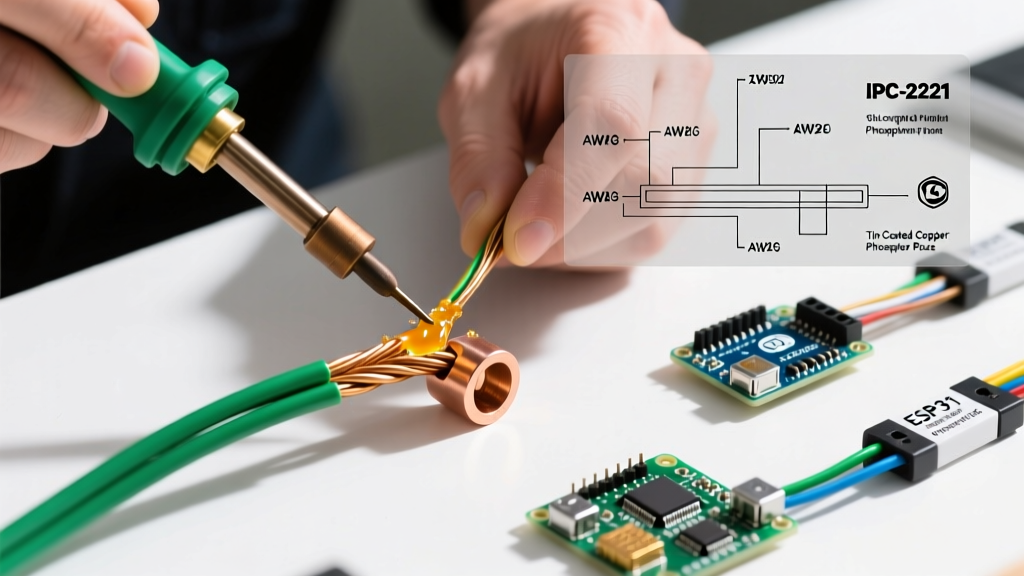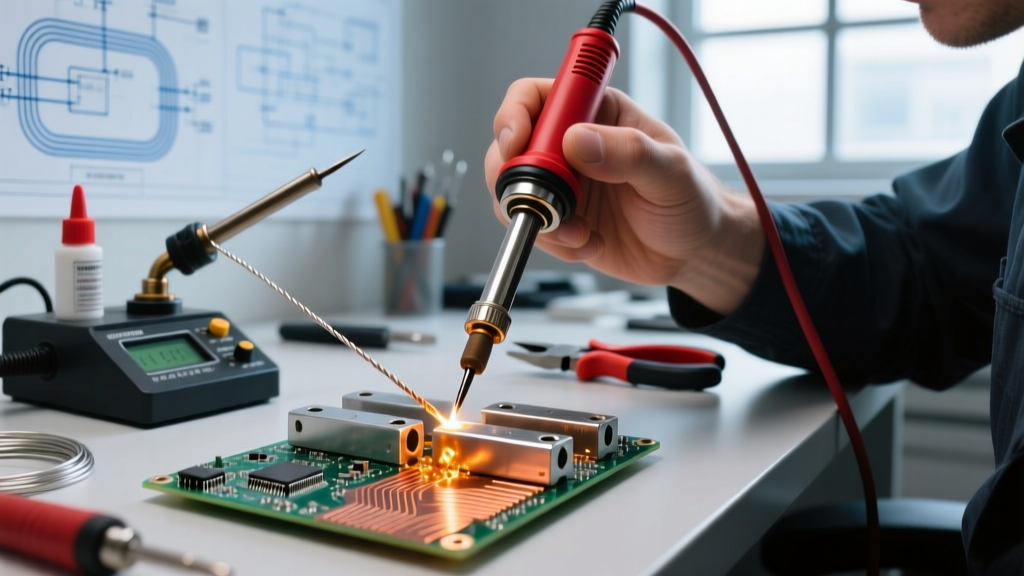

The Core Question: Why Is My Soldering Not Sticking?
Every electronics hobbyist, repair technician, and production engineer eventually encounters the same maddening scenario: the iron is hot, the solder is melting, but the joint refuses to form. Instead of flowing smoothly across the copper pad and component lead, the solder beads up, rolls off, or forms a dull, grainy lump. If you have ever found yourself asking, why is my soldering not sticking, you are dealing with a metallurgical failure known in the industry as non-wetting or dewetting.
Soldering is not a mechanical bonding process like glue; it is a complex metallurgical reaction where molten alloy dissolves into the base metal to form an intermetallic compound (IMC) layer, typically Cu6Sn5 (copper-tin). When this reaction fails, the joint lacks both electrical conductivity and mechanical strength. To provide the most accurate, actionable solutions for 2026, we have synthesized insights from IPC-A-610 certified master instructors, metallurgical engineers, and professional board-level repair technicians.
The Metallurgy of Solder Rejection: Non-Wetting vs. Dewetting
Before reaching for a hotter iron, it is critical to distinguish between the two primary failure modes of solder rejection. According to the NASA Workmanship Training Standards and IPC guidelines, these defects have distinct visual signatures and root causes:
- Non-Wetting: The molten solder fails to adhere to the base metal entirely. It forms a high-contact-angle ball (like water on a freshly waxed car) and leaves the copper pad exposed. This is almost always caused by severe oxidation or an impenetrable contamination barrier on the pad or iron tip.
- Dewetting: The solder initially coats the surface but then violently pulls back into isolated islands or beads as it remains molten, exposing the underlying metallic finish. This typically indicates a degraded PCB surface finish (such as expired ENIG) or a localized thermal imbalance.
Expert Panel Insights: Diagnosing the 'Ball-Up' Effect
We consulted three distinct domains of soldering expertise to break down the exact reasons your solder refuses to stick, along with the specific tools and parameters required to fix them.
1. The IPC Master Instructor on Thermal Profiling
A common beginner mistake is assuming that a hotter iron solves all wetting issues. 'When a student asks why their solder is balling up on the tip and not transferring to the board, they are usually using a 0.8mm conical tip on a massive ground plane,' explains an IPC-A-610 Certified Trainer. 'The tip lacks the thermal mass to overcome the heat dissipation of the copper pour. The flux burns off before the pad reaches the alloy liquidus temperature, resulting in instant non-wetting.'
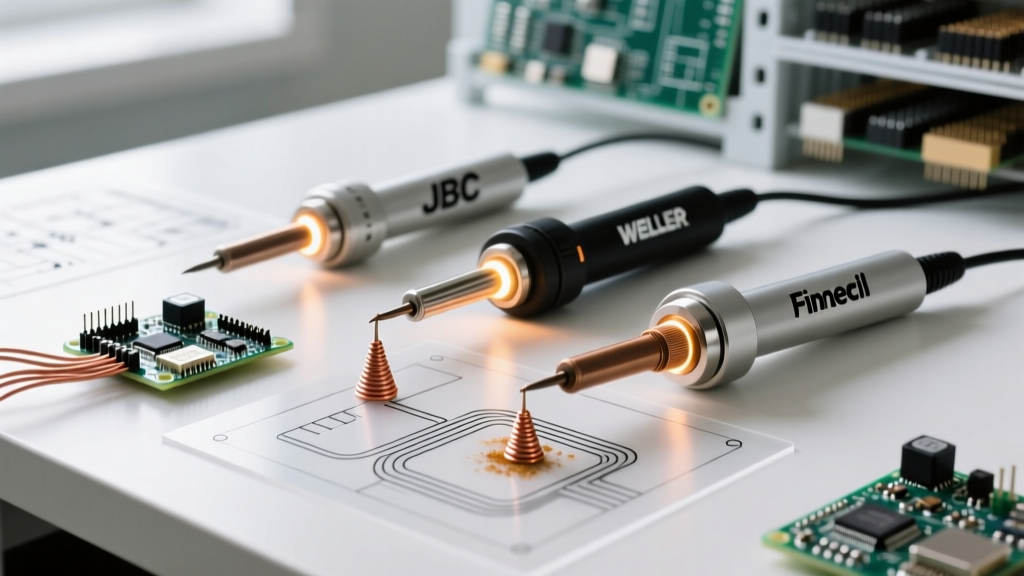
Expert Fix: Match the tip geometry to the thermal mass of the joint. For through-hole components or heavy ground planes, switch to a wide chisel tip (e.g., Hakko T18-D24 or Weller RTW2). If using a standard station like the Hakko FX-888D ($100-$120), increase the temperature by 20°C to 30°C to compensate for thermal drop-off, but never exceed 380°C for standard Sn63/Pb37 eutectic solder, as this will instantly carbonize rosin flux.
2. The Flux Chemist on Activation and Burnout
Flux is the unsung hero of the soldering process. The primary active ingredient in traditional rosin flux is abietic acid, which only becomes chemically reactive at specific temperatures. 'Solder will not stick to oxidized copper without flux,' notes a formulation engineer. 'But if your iron is set to 400°C, the flux activates and burns away into a useless, glassy carbon residue before the copper pad even reaches the 183°C melting point of leaded solder.'
Expert Fix: Use an external, high-activity flux for difficult joints. While no-clean fluxes (like Kester 245) are excellent for production environments with pristine boards, they lack the aggressive activators needed for repair work or older, oxidized PCBs. For stubborn joints, apply a liquid or gel Rosin Mildly Activated (RMA) flux, such as Kester 186 or MG Chemicals 8341 ($15-$20). These contain halide activators that strip heavy oxidation, allowing the solder to wet the surface immediately.
3. The Repair Technician on Tip Degradation
Modern soldering iron tips are not solid copper; they are copper cores plated with a thin layer of iron to prevent the molten solder from dissolving the copper away. When this iron plating oxidizes, it turns black or blue, and solder will absolutely not stick to it. Furthermore, the widespread adoption of lead-free alloys like SAC305 (which melts at 217°C-220°C and requires higher operating temperatures) has drastically accelerated tip oxidation rates in repair shops.
Expert Fix: Stop using wet cellulose sponges to clean your tip. The rapid thermal shock of a wet sponge drops the tip temperature by up to 50°C instantly, causing micro-fractures in the iron plating and accelerating oxidation. Switch to a dry brass wire sponge (e.g., Hakko 599B, $8). If your tip is already blackened and refusing to wet, do not sand it—sanding will destroy the iron plating and ruin the tip permanently.
Troubleshooting Matrix: Symptom to Solution
Use this diagnostic matrix to quickly identify why your solder is not sticking and apply the correct metallurgical fix.
| Visual Symptom | Technical Defect | Primary Root Cause | Expert Solution & Product Recommendation |
|---|---|---|---|
| Solder forms a perfect sphere on the iron tip and falls off | Non-Wetting (Tip) | Severe tip oxidation or iron plating degradation | Clean with brass wool; reactivate using MG Chemicals 4901 Tip Tinner ($12) |
| Solder coats the pad initially, then pulls back into islands | Dewetting | Contaminated PCB surface or expired ENIG finish | Clean pad with 99% IPA; apply aggressive RMA flux (Kester 186) before reheating |
| Solder melts but rolls off the component lead like water | Non-Wetting (Lead) | Oxidized component leads (common with old NOS parts) | Pre-tin leads with liquid flux and a solder pot, or scrape gently with a scalpel |
| Joint is dull, grainy, and easily fractures | Cold Joint | Insufficient thermal transfer; movement during cooling | Upgrade to a high-wattage cartridge station (e.g., JBC CD-2BQE); use wider chisel tip |
Surface Finish Variables: ENIG vs. HASL in 2026
When working with modern printed circuit boards, the surface finish heavily dictates wetting behavior. According to industry data referenced by the IPC (Association Connecting Electronics Industries), the two most common finishes behave very differently:
- HASL (Hot Air Solder Leveling): The board is pre-coated in solder. Wetting is usually instant because you are simply melting existing solder. If solder won't stick to HASL, the board is likely heavily oxidized or contaminated with conformal coating residue.
- ENIG (Electroless Nickel Immersion Gold): Features a microscopic layer of gold over nickel. The gold is meant to dissolve instantly into the molten solder, allowing the solder to bond to the nickel. However, ENIG has a strict shelf life (typically 12 months). If the board is expired, the gold layer degrades, leading to 'black pad syndrome' where solder will flat-out refuse to stick. In these cases, you must carefully strip the degraded surface with a fiberglass scratch pen before applying heavy RMA flux.
Step-by-Step Recovery: Rescuing a 'Dead' Soldering Tip
If your iron tip is black, crusty, and solder is not sticking to it, follow this exact recovery protocol recommended by Kester technical engineers and master technicians:
- Cool Down: Turn off the station and let the tip cool to room temperature. Do not attempt to scrape it while hot.
- Mechanical Cleaning (Gentle): Use a specialized tip cleaning file or a dry brass sponge to gently remove the thick, crusty carbonized flux buildup. Never use sandpaper, a Dremel, or a steel file, as these will strip the protective iron plating.
- Chemical Reactivation: Turn the iron on to a low temperature (250°C). As it heats up, plunge the tip into a pot of Tip Tinner (a mixture of mild acid and solder powder, such as MG Chemicals 4901).
- Wipe and Re-tin: Wipe the tip on a dry brass sponge. It should emerge shiny and silver. Immediately apply a thick layer of fresh, flux-cored solder (e.g., Kester 245 or Sn63/Pb37) to coat the entire working surface, protecting it from instant re-oxidation.
Final Thoughts on Solder Wetting
Understanding why your soldering is not sticking requires looking past the iron and examining the entire metallurgical system: the alloy, the flux chemistry, the thermal mass, and the surface finish. By abandoning the 'hotter is better' myth, utilizing the correct flux activators for the specific oxidation level, and maintaining your tip's iron plating, you can eliminate non-wetting defects entirely. Whether you are soldering a simple Arduino header or executing a complex BGA rework, respecting the chemistry of the Cu6Sn5 intermetallic layer is the key to flawless, reliable joints.