
Beyond the Smoke: The Hidden Realities of Soldering Safety
When most makers and electronics technicians think about soldering safety, they focus on the obvious: avoiding the 380°C iron tip. However, the most insidious threats in the modern electronics workspace are invisible. Sub-micron flux particulates, volatile organic compounds (VOCs), and heavy metal dust pose severe long-term respiratory and neurological risks if not managed correctly. As the industry continues its shift toward complex lead-free alloys and high-temperature rosin-based fluxes, understanding comprehensive soldering safety is no longer optional—it is a baseline requirement for anyone spending more than a few hours a week at the bench.
This guide moves past generic advice to provide exact specifications, equipment comparisons, and actionable protocols aligned with modern occupational health standards.
The Real Hazards: Exposure Limits and Vectors
To build a safe workspace, you must first understand what you are fighting. The table below breaks down the primary hazards associated with hand soldering, their exposure routes, and regulatory limits.
| Hazard | Primary Vector | Regulatory Limit (PEL/WEL) | Primary Mitigation |
|---|---|---|---|
| Lead (Pb) | Ingestion (Hand-to-Mouth) | 50 µg/m³ (OSHA) | Nitrile gloves, strict handwashing, zero food/drink at bench. |
| Colophony (Rosin) | Inhalation (Fumes) | 0.05 mg/m³ (UK HSE WEL) | Source-capture HEPA/Carbon extraction. |
| Flux Splatter | Corneal Contact | N/A (Physical Injury) | ANSI Z87.1 safety glasses. |
| Thermal Burns | Dermal Contact | N/A (Physical Injury) | Kevlar finger cots, proper iron holsters. |
Note: For detailed regulatory frameworks on heavy metals, refer to the OSHA Lead in General Industry standards. For respiratory sensitizers like colophony, the UK Health and Safety Executive (HSE) provides the most stringent and well-researched occupational exposure limits globally.
Fume Extraction Systems: A 2026 Buyer's Matrix
The days of relying on an open window or a cheap USB fan are over. Rosin (colophony) is a known respiratory sensitizer; repeated exposure can trigger occupational asthma, a condition that is permanent and irreversible. Effective extraction requires capturing the plume at the source before it enters the operator's breathing zone.
1. Hobbyist Benchtop (Ambient Carbon)
- Example Model: Hakko FA-400
- Price Range: $60 - $90
- Filtration: Activated carbon foam.
- The Verdict: Adequate for occasional weekend hobbyists soldering less than 2 hours a week. Carbon absorbs VOC odors but does not capture the sub-micron solid particulate matter of vaporized rosin. It must be positioned within 2 inches of the solder joint to be effective.
2. Professional Source-Capture (HEPA + Carbon)
- Example Model: Metcal MX-AIR or Hakko FA-430
- Price Range: $450 - $850
- Filtration: True HEPA (99.97% of 0.3µm particles) + Deep-bed activated carbon.
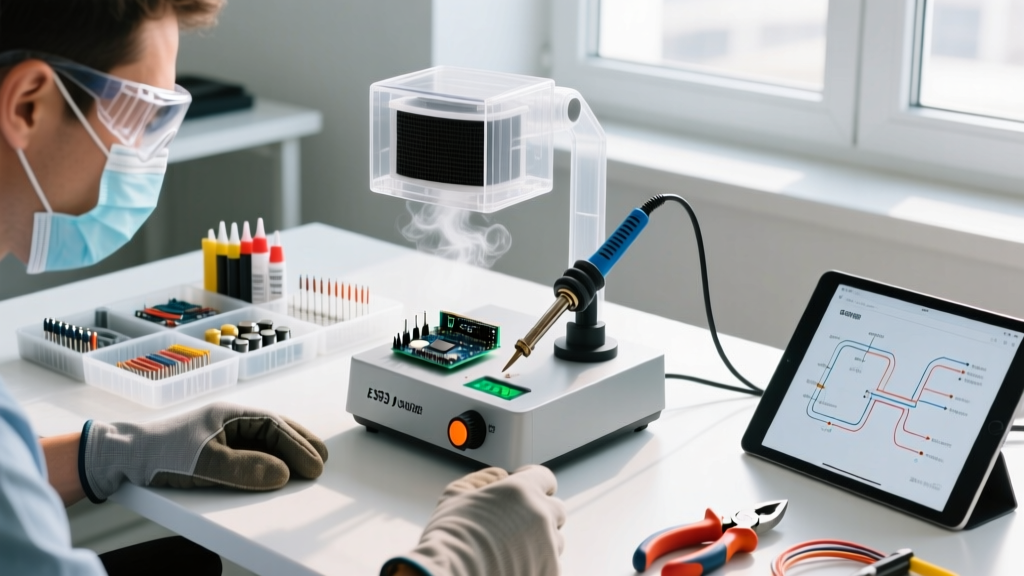
- The Verdict: The mandatory standard for daily professional use, repair shops, and prototyping labs. The HEPA filter physically traps the solid rosin particulates, while the carbon bed handles the chemical off-gassing. Look for models with adjustable articulating arms to keep the capture hood exactly 1.5 to 2 inches from the iron tip.
3. Industrial Multi-Station (Ducted/Recirculating)
- Example Model: BOFA AD Oracle 250
- Price Range: $2,500 - $4,000+
- Filtration: Reverse-flow HEPA and massive chemical bed, often ducted externally.
- The Verdict: Required for manufacturing floors, wave soldering environments, or high-volume rework stations where continuous 8-hour exposure is guaranteed.
⚠️ The Desk Fan Misconception: Many hobbyists use a standard desk fan to blow soldering smoke away. This is a critical safety failure. Blowing fumes simply disperses sub-micron rosin particles and VOCs into the wider room environment, increasing the inhalation risk for everyone in the space. You must capture and filter or duct outside, never disperse.
The Lead-Free Safety Paradox
A common and dangerous misconception in the electronics community is that switching from leaded solder (Sn63/Pb37) to lead-free solder (like SAC305) makes the workspace 'safer.' From a respiratory standpoint, the exact opposite is true.
Leaded solder melts at roughly 183°C, allowing you to set your iron to 300°C–320°C. Lead-free alloys like SAC305 melt at 217°C–220°C and possess poor wetting characteristics, forcing technicians to crank their soldering stations up to 350°C–380°C to achieve reliable joints. Higher tip temperatures cause flux to vaporize much more rapidly and violently. Consequently, a lead-free workspace generates significantly higher volumes of hazardous colophony fumes and flux splatter. If you are soldering lead-free, upgrading to a True HEPA extraction system is non-negotiable.
Personal Protective Equipment (PPE) Specifics
Generic 'wear gloves and glasses' advice is insufficient. The chemical solvents in modern no-clean and water-soluble fluxes can degrade certain materials, and high-temperature splatter requires specific optical ratings.
Hand Protection
- Material: Use Nitrile gloves. Never use latex, as the solvents in liquid fluxes and cleaning agents (like isopropyl alcohol) break down latex rapidly, allowing lead dust and chemicals to contact the skin.
- Thickness: Minimum 4-mil to 6-mil thickness. Thinner 'food service' nitrile gloves tear easily when handling sharp PCB edges or component leads.
- Protocol: Lead is not absorbed through intact skin; the danger is ingestion. If you handle leaded solder or clean vintage boards, remove gloves before touching your phone, keyboard, or face, and wash hands with cold water and soap (hot water opens pores, potentially trapping lead dust).
Eye Protection
When flux hits a 350°C iron tip, it boils instantly and can eject microscopic droplets of boiling resin and acid activators. Standard prescription glasses are not sufficient due to side-gaps and non-impact-rated lenses.
- Standard: Must be rated ANSI Z87.1 (or EN166 in Europe) for high-impact and liquid splash resistance.
- Recommended Gear: 3M Virtua CCS or Uvex Stealth OTG (which fit comfortably over prescription eyewear). Anti-fog coatings are highly recommended, as the heat from bench lamps and extraction units can cause standard lenses to fog, tempting technicians to remove them.
Workspace Ergonomics and Fire Safety
A safe soldering environment extends beyond PPE into the physical setup of the bench. Poor ergonomics lead to repetitive strain injuries (RSI), while poor material management leads to fires.
The Modern Soldering Station Setup
- ESD Matting: Use a high-quality, multi-layer ESD mat (e.g., Desco 19200 series). Ensure it is grounded via a 1-megohm resistor to prevent shock hazards while safely dissipating static that could damage sensitive CMOS components.
- Iron Holsters: Never use the cheap, lightweight wire stands included with budget irons. They tip easily. Invest in a heavy, weighted base holster with an integrated brass wire tip cleaner. Brass wool cleans the tip without the thermal shock and steam-burn risk associated with wet cellulose sponges.
- Lighting: Use a magnifying LED ring light with a color temperature of 5000K (daylight). This reduces eye strain and ensures you can visually inspect solder joints for cold joints or micro-bridges without leaning your face directly into the fume plume.
- Fire Mitigation: Keep a Class C (electrical) fire extinguisher or a specialized lithium-ion fire blanket within arm's reach, especially if your bench is also used for drone battery repair or EV electronics.
Summary Checklist for Daily Operations
Before powering on your soldering station, run through this 30-second mental checklist:
- Is the fume extractor powered on and positioned within 2 inches of the workpiece?
- Are ANSI-rated safety glasses on?
- Is the iron holster stable and clear of flammable materials (datasheets, wire insulation)?
- Is the brass tip cleaner dry and free of excess solder dross?
By treating soldering safety as a rigorous engineering discipline rather than an afterthought, you protect your long-term health, improve your focus, and ultimately produce higher-quality, more reliable electronic assemblies.