
The Metallurgical Clash: Understanding the Core Problem
In fabrication, plumbing, and structural repair, joining methods are often dictated by thermal requirements and base material properties. However, a dangerous misconception occasionally surfaces in 2026 repair shops: the idea that you can simply strike an arc over a previously joined seam to "reinforce" it. The reality is that welding over brazed or soldered joints is a catastrophic metallurgical error that compromises structural integrity and introduces severe health hazards.
To understand why this practice fails, we must look at the fundamental differences in thermal thresholds. Welding (such as GTAW/TIG or SMAW/Stick) relies on melting the base metal, typically requiring temperatures exceeding 2,500°F (1,370°C) for mild steel. Brazing operates below the base metal's melting point but above 840°F (450°C), while soldering occurs below 840°F. When the extreme heat of a welding arc hits a low-temperature filler metal, the result is violent vaporization, alloy contamination, and joint failure.
Thermal and Metallurgical Thresholds
The following table illustrates the massive thermal gap between common joining fillers and the welding arc environment.
| Process / Filler Type | Common Alloy Designation | Melting / Flow Point | Result Under Welding Arc (10,000°F+) |
|---|---|---|---|
| Tin-Lead Solder | Sn60Pb40 | 370°F (188°C) | Instant vaporization; lead fume toxicity; hot cracking. |
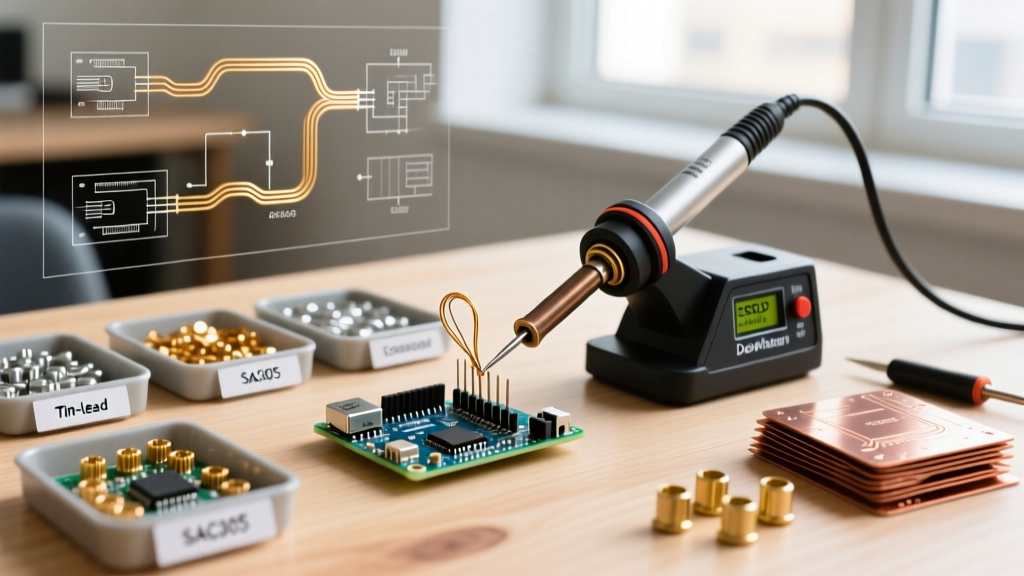
| Lead-Free Solder | SAC305 (Sn/Ag/Cu) | 430°F (221°C) | Tin contamination; liquid metal embrittlement in steel. |
| Silver Braze (Cadmium) | BAg-1 (45% Ag, 24% Cd) | 1,225°F (663°C) | Lethal cadmium oxide fume generation; severe porosity. |
| Copper-Phosphorus Braze | BCuP-5 (Sil-Fos 15%) | 1,325°F (718°C) | Phosphorus outgassing; weld pool embrittlement. |
| Steel Welding Wire | ER70S-6 (TIG/MIG) | ~2,700°F (1,482°C) | Standard fusion; stable arc and metallurgy. |
What Happens When You Arc Weld Over Solder or Braze?
When a welder attempts to fuse over a joint containing residual solder or braze, three primary failure modes occur simultaneously:
- Liquid Metal Embrittlement (LME): Elements like zinc, tin, and copper have lower melting points than steel. In their liquid state, they penetrate the solid grain boundaries of the steel base metal under arc heat. This causes spontaneous, brittle micro-cracking in the heat-affected zone (HAZ), effectively destroying the tensile strength of the joint.
- Severe Porosity and Outgassing: Soldering and brazing rely on chemical fluxes (like rosin or borax) to prevent oxidation. When subjected to arc temperatures, these fluxes and the metallic binders instantly vaporize. The expanding gases become trapped in the freezing weld pool, resulting in a sponge-like, porous weld that will fail under any mechanical load or vibration.
- Arc Blow and Instability: Residual non-ferromagnetic metals (like copper or silver) and baked-on flux slag alter the magnetic field around the arc. This causes severe arc blow, making it nearly impossible to maintain a stable puddle, leading to lack of fusion and undercut.
CRITICAL SAFETY WARNING: Welding over silver-brazed joints containing cadmium (such as legacy BAg-1 alloys) vaporizes the cadmium, creating cadmium oxide fumes. According to the National Institute for Occupational Safety and Health (NIOSH), inhalation of these fumes can cause metal fume fever, chemical pneumonitis, and fatal pulmonary edema within hours. Always verify the filler metal composition before applying arc heat.
Method Comparison: When to Weld, Braze, or Solder
Rather than attempting to combine incompatible methods, fabricators must select the correct process for the specific application. Below is a decision matrix for common shop scenarios in modern manufacturing and repair.
| Application Scenario | Recommended Method | Why Not the Alternatives? |
|---|---|---|
| High-Pressure Steel Hydraulics | TIG (GTAW) Welding | Brazing lacks the sheer strength for 3,000+ PSI dynamic loads; soldering will melt under hydraulic fluid heat. |
| Copper Refrigeration Lines (HVAC) | Silver Brazing (BCuP) | Welding copper requires extreme preheat and risks burning through thin tubing; soldering cannot withstand high-compressor discharge temperatures. |
| Cast Iron Block Repair | Nickel Brazing / Brazing | Arc welding cast iron requires complex pre-heating (1000°F+) to prevent cracking. Brazing operates at lower temps, preserving the casting's integrity. |
| Low-Voltage Electronics / PCB | Soft Soldering (SAC305) | Welding and brazing will instantly destroy electronic components and substrate materials via thermal overload. |
Proper Remediation: Prepping a Previously Soldered/Brazed Joint for Welding
If a structural repair absolutely requires welding over an area that was previously brazed or soldered, the joint must be completely remediated to bare, uncontaminated base metal. The American Welding Society (AWS) Z49.1 Safety in Welding guidelines emphasize the removal of all toxic and incompatible coatings prior to arc initiation.
Step-by-Step Remediation Protocol
- Mechanical Removal: Use a carbide burr in a rotary tool or an angle grinder equipped with a 60-grit ceramic flap disc. Grind out the entire joint groove until you reach bright, shiny base metal. Do not rely on a wire wheel; it will simply smear the soft solder or braze into the microscopic pores of the steel.
- Thermal Sweating: For porous materials like cast iron or powdered metal, mechanical grinding is insufficient. Use an oxy-acetylene torch with a neutral flame to gently heat the area to 600°F (315°C). This "sweats" the residual solder out of the pores. Wipe it away with a heavy cotton rag while hot.
- Chemical Etching: Apply a commercial flux-removing acid or a specialized metallic solvent to dissolve baked-on borax or rosin residues. Neutralize with a baking soda solution and rinse with acetone.
- Dye Penetrant Inspection (DPI): Before striking your first arc, apply a dye penetrant test to the cleaned groove. This will reveal any hidden micro-cracks or trapped pockets of low-melt filler metal that grinding missed.
Real-World Edge Cases: Copper Piping and ProPress
A frequent point of confusion arises in commercial plumbing with the advent of press-fit technologies. Can you weld or braze over a ProPress fitting? The answer is an absolute no. ProPress fittings rely on an internal EPDM or HNBR rubber O-ring for the watertight seal. Applying a brazing torch or welding arc to the copper tube adjacent to the fitting will instantly melt the O-ring and anneal the copper, causing catastrophic system failure. The OSHA standard 1910.252 for Welding, Cutting, and Brazing strictly mandates the removal of combustible and incompatible materials from the heat-affected zone. If a ProPress joint fails, it must be cut out entirely and replaced with a dedicated solder, braze, or weld fitting.
Expert Verdict
Welding over brazed or soldered joints is never an acceptable shortcut. The metallurgical incompatibilities guarantee a weak, porous, and brittle weld, while the vaporization of heavy metals and fluxes poses a lethal respiratory threat to the operator. True craftsmanship and adherence to modern structural codes require complete removal of low-temperature fillers before any fusion welding takes place. Always respect the thermal hierarchy of joining methods: fusion welding demands absolute purity in the weld pool.