
Introduction to Soldering Rod Safety in Modern Electronics
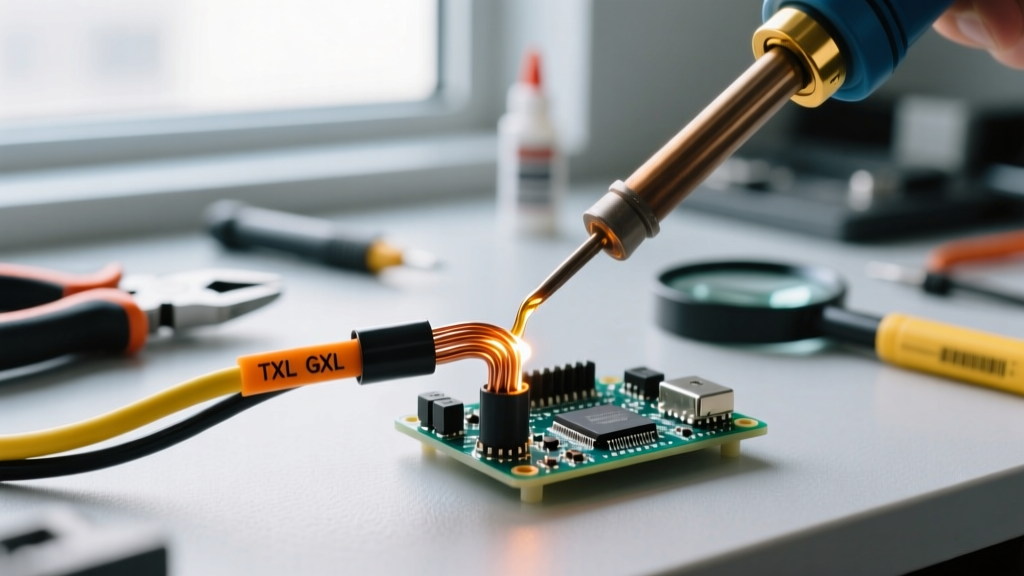
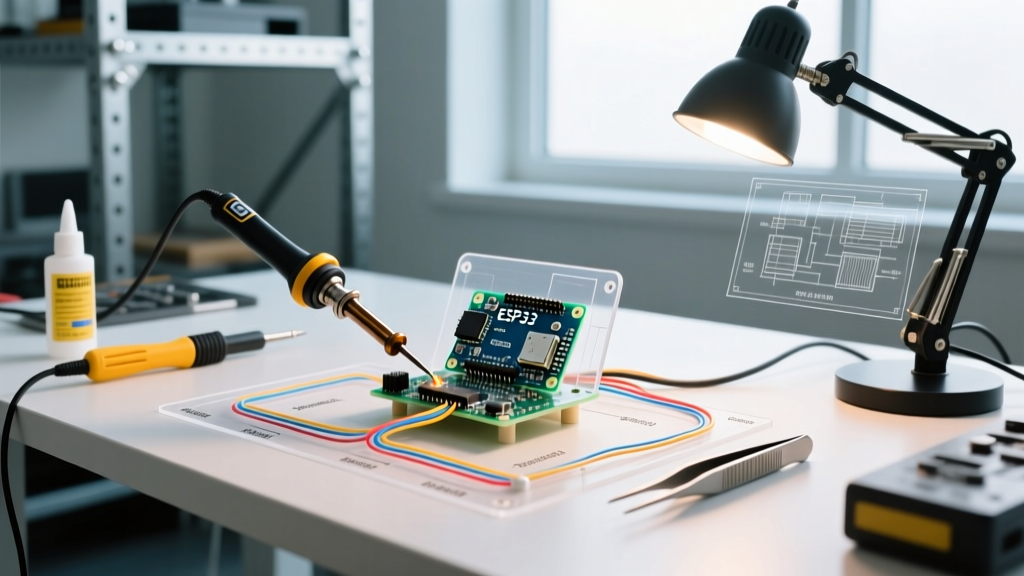
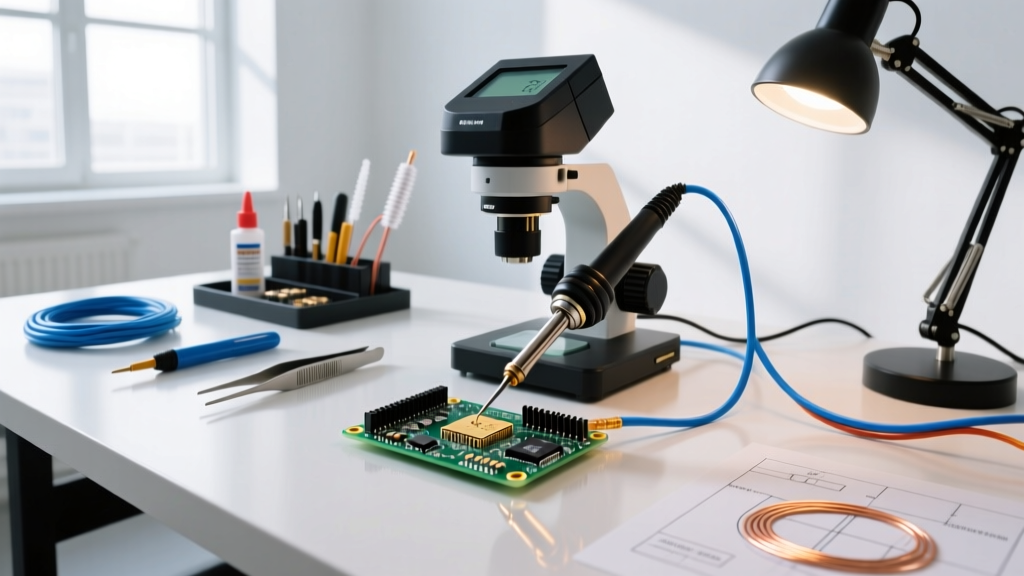
In professional electronics assembly and DIY workshops, the term soldering rod typically refers to the handheld wand assembly—comprising the ergonomic handle, the internal heating element, and the interchangeable metallic tip. While modern smart stations have vastly improved temperature stability, the fundamental hazards of handling a 380°C metallic rod remain unchanged. As we navigate the 2026 landscape of high-density PCB rework and strict lead-free compliance, mastering soldering rod safety is no longer optional; it is a critical baseline for operational longevity and personal health.
This guide provides an in-depth, expert-level breakdown of thermal management, respiratory protection, electrical isolation, and ergonomic handling protocols designed to mitigate the severe risks associated with soldering rod operation.
Thermal Hazard Mitigation: Managing the 380°C Zone
The transition to lead-free alloys, particularly SAC305 (Tin-Silver-Copper) and SAC405, has forced workshop temperatures upward. While traditional 63/37 tin-lead solder melts at 183°C, modern lead-free pastes and wires require tip temperatures between 340°C and 380°C to maintain proper wetting and thermal transfer. At these extremes, accidental contact causes instantaneous third-degree burns.
Silicone Matting and Holster Geometry
Never rest a hot soldering rod directly on a workbench or standard ESD mat. Standard ESD mats are typically rated for only 200°C to 250°C and will melt, off-gas toxic fumes, and potentially catch fire when exposed to a 380°C tip.
- Work Surface Protection: Use a dedicated high-temperature silicone repair mat (rated for at least 500°C), such as the Hakko 599B or generic aerospace-grade silicone mats. These provide a non-slip, thermally inert barrier.
- Holster Center of Gravity: The rod holster must be weighted. Lightweight, unweighted holsters (often bundled with sub-$40 clone stations) are a severe tipping hazard. When the heavy silicone cable pulls on the wand, the holster can flip, sending the 380°C rod rolling across your desk. Always use a weighted steel or cast-iron base holster.
- Brass vs. Cellulose Sponges: When cleaning the rod tip, avoid wet cellulose sponges. The sudden thermal shock of a 380°C tip hitting a wet sponge causes micro-fractures in the tip's iron plating, leading to premature corrosion and copper core degradation. Furthermore, the steam burst can carry microscopic solder splatter onto your skin. Use dry brass wire sponges (like the Hakko 599B tip cleaner) for safer, thermally stable oxidation removal.
Respiratory Protection: Capturing Rosin and Flux Fumes
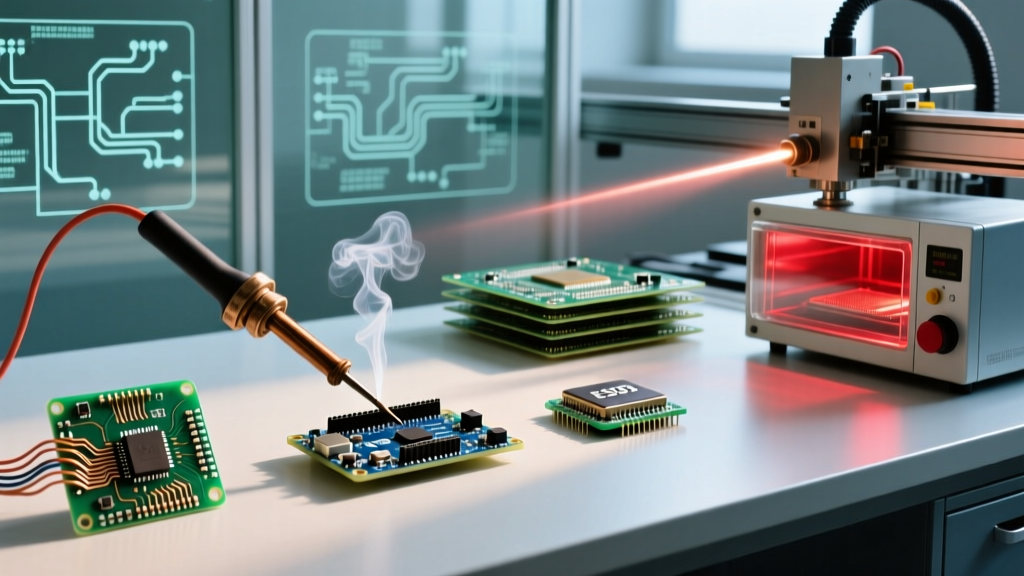
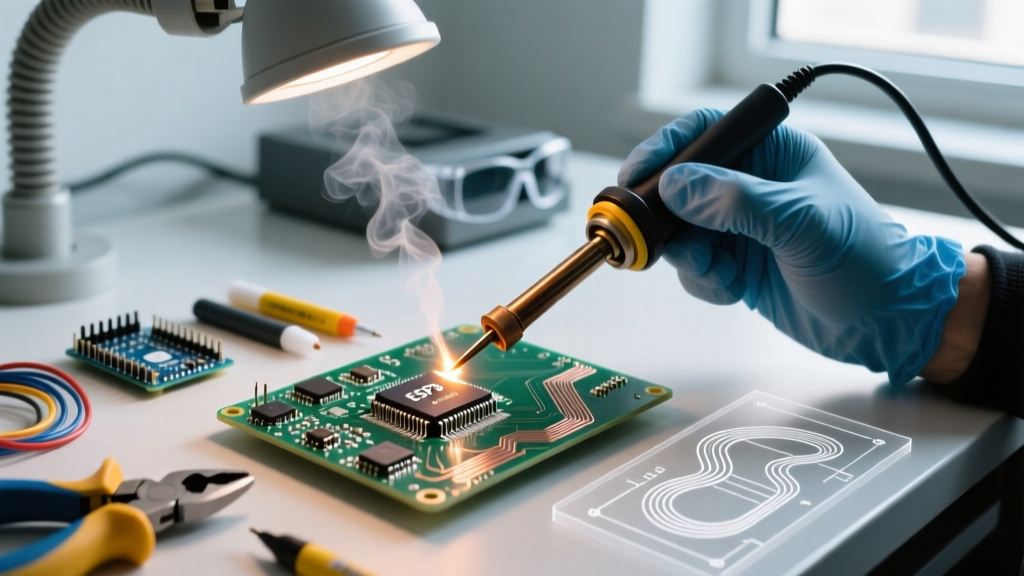
The most insidious hazard of the soldering rod is not the heat, but the invisible plume of flux vapor. When the rosin-based or synthetic flux inside the solder wire hits the hot rod tip, it vaporizes into a complex aerosol of aliphatic aldehydes and colophony particles.
Occupational Health Warning: According to the UK Health and Safety Executive (HSE), prolonged inhalation of rosin flux fumes is a leading cause of occupational asthma in electronics manufacturing. Once sensitized, even trace exposures can trigger severe respiratory distress. Always consult authoritative safety guidelines, such as the HSE INDG249 Soldering at Work publication, to understand legal and health compliance.
Positioning Your Fume Extractor
A desktop fume extractor is useless if placed incorrectly. The capture velocity of a standard benchtop HEPA/Carbon unit drops exponentially beyond 12 inches. For optimal safety, position the intake nozzle of your extractor (such as the Metcal BTX-204 or Hakko FA-400) exactly 6 to 8 inches away from the soldering rod tip, angled at 45 degrees to intercept the natural thermal updraft of the fumes without pulling them past your face.
Electrical Isolation and ESD-Safe Handling
The soldering rod is electrically connected to the mains power supply via the station's transformer or switching circuit. A fault in the heating element or a compromised ground wire can cause the metallic rod tip to become electrically "live," presenting a lethal shock hazard and instantly destroying sensitive microcontrollers via Electrostatic Discharge (ESD) or Electrical Overstress (EOS).
- Leakage Current Specs: When working on sensitive MOSFETs or modern 3.3V/1.2V logic ICs, your soldering rod must have a tip-to-ground leakage current of less than 2 millivolts (mV) and a resistance of under 5 ohms. Professional rods like the Weller WSP80 or JBC C245 handles guarantee these specifications.
- Grounding Verification: Do not assume your station is grounded. Use a multimeter to verify continuity between the soldering rod tip and the earth ground pin of your wall outlet weekly. For comprehensive lab safety protocols, reference the Cornell University Environmental Health and Safety (EHS) Soldering Guidelines, which mandate regular grounding verification for all academic and professional labs.
Soldering Rod Safety Feature Comparison Matrix
Not all soldering rods are engineered with the same safety tolerances. Below is a comparison of safety features across three popular tiers of soldering wands available in 2026.
| Soldering Rod / Wand Model | Tier / Price Range | ESD Grounding | Sleep / Auto-Off Safety | Tip Retention Mechanism |
|---|---|---|---|---|
| Pine64 Pinecil V2 (Wand) | Entry / $25 - $35 | Basic (via USB-C ground) | Software-based (Motion sensor) | Friction fit (Can slip if bumped) |
| Hakko FX-888D (T18 Wand) | Mid-Range / $110 - $130 | Hardwired 3-pin ground | None (Manual shutoff required) | Screw-lock collar (Highly secure) |
| Weller WE1010NA (WSP80) | Professional / $350 - $400 | Mil-spec ESD elastomer grip | Hardware standby (0-99 mins) | Push-button latch (Secure & fast) |
| JBC CD-2BQE (T245 Handle) | Industrial / $450 - $550 | Ultra-low mV leakage | Instant sleep on holster drop | Quick-change cartridge lock |
Ergonomic Grip and Cable Management
Fatigue leads to sloppy handling, and sloppy handling leads to burns. The physical design of the soldering rod handle and its trailing cable directly impact your safety over a long rework session.
The Pen Grip vs. Palm Grip
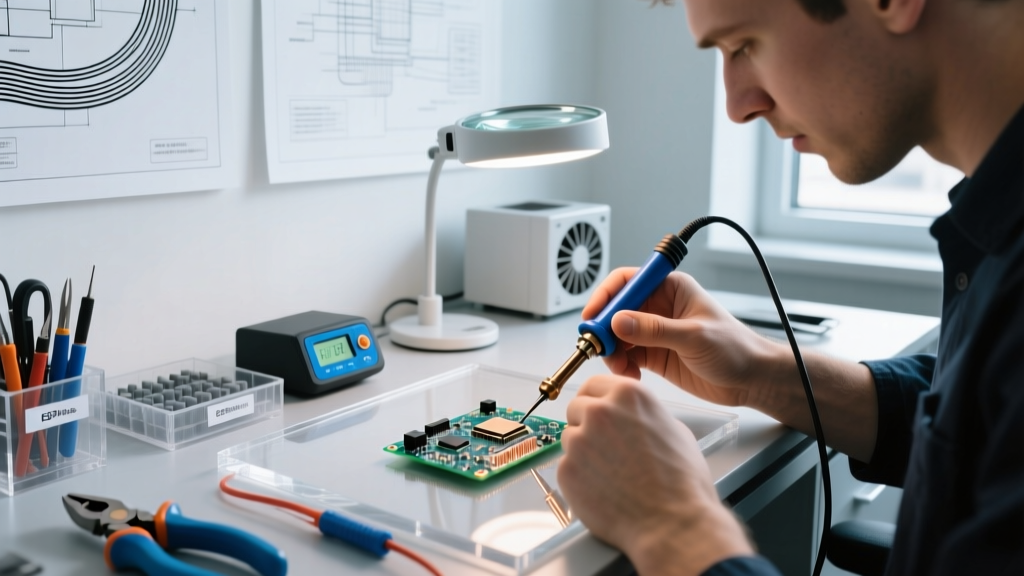
For precision PCB work (0402 components, SOIC-8 pins), always use the pen grip. Holding the rod like a pen keeps your fingers at least 3 inches away from the thermal zone and allows for micro-adjustments using your wrist and fingers rather than your entire arm. Reserve the palm grip exclusively for heavy-duty chassis grounding or thick 10 AWG wire tinning, where high downward pressure is required.
Silicone Cable Sleeving
Standard PVC cables will melt if the hot soldering rod drops onto them, exposing live mains voltage and creating a severe shock/fire hazard. Ensure your rod utilizes a high-strand-count, burn-resistant silicone sleeve cable. Silicone withstands temperatures up to 300°C without degrading, providing a critical fail-safe if the wand rests against the cord.
Emergency Response: Thermal and Chemical Exposure
Despite rigorous safety protocols, accidents occur. Proper immediate response minimizes tissue damage and long-term injury.
Thermal Burn First Aid
- Immediate Cooling: If the soldering rod burns your skin, immediately place the affected area under cool (not cold) running water for a minimum of 20 minutes. This halts the thermal cascade in the deeper tissue layers.
- No Ice or Ointments: Never apply ice, butter, or commercial burn creams immediately. Ice causes vasoconstriction, worsening tissue death, while ointments trap the heat inside the wound.
- Solder Adhesion: If molten solder adheres to the skin, do not attempt to peel it off. Cool the area with water, cover it with a sterile, non-fluffy dressing, and seek emergency medical attention. Peeling it will avulse (tear off) the underlying skin.
Flux Splatter in the Eyes
Boiling flux can occasionally pop and splatter. If flux enters the eye, do not rub it. Immediately flush the eye with a sterile saline solution or lukewarm water at an eyewash station for 15 minutes. The rosin and activator acids (like adipic or succinic acid) can cause severe corneal abrasions and chemical burns if not diluted promptly.
Conclusion
Treating the soldering rod with the respect demanded by a 380°C, electrically live precision instrument is the hallmark of a professional. By investing in weighted holsters, properly positioned HEPA extraction, verified ESD grounding, and high-temperature silicone matting, you transform your workbench from a hazard zone into a safe, highly productive environment. Prioritize your health and safety, and your solder joints will reflect the care put into your craft.