
The Hidden Costs of Inadequate Soldering Protection
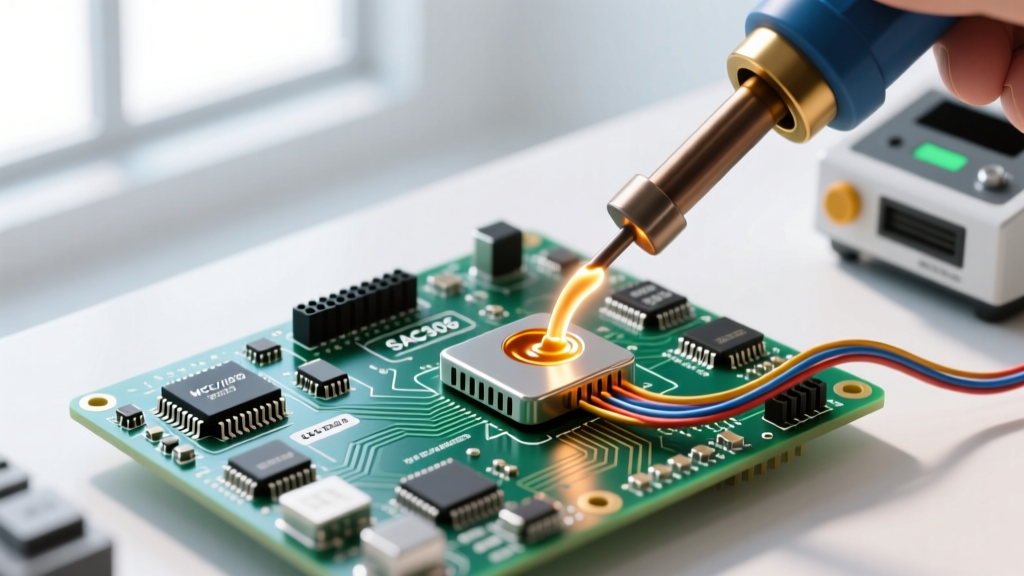
When building a DIY electronics lab or upgrading a professional repair bench, it is easy to obsess over the precision of a soldering station while neglecting the environment around it. However, comprehensive soldering protection is not merely a regulatory checkbox; it is a critical investment in your long-term respiratory health, the longevity of your work surfaces, and the survival of static-sensitive microcontrollers. In 2026, with the widespread adoption of lead-free SAC305 alloys requiring higher tip temperatures (often exceeding 350°C), the volume of vaporized flux particulates and the risk of thermal damage to surrounding components have increased significantly.
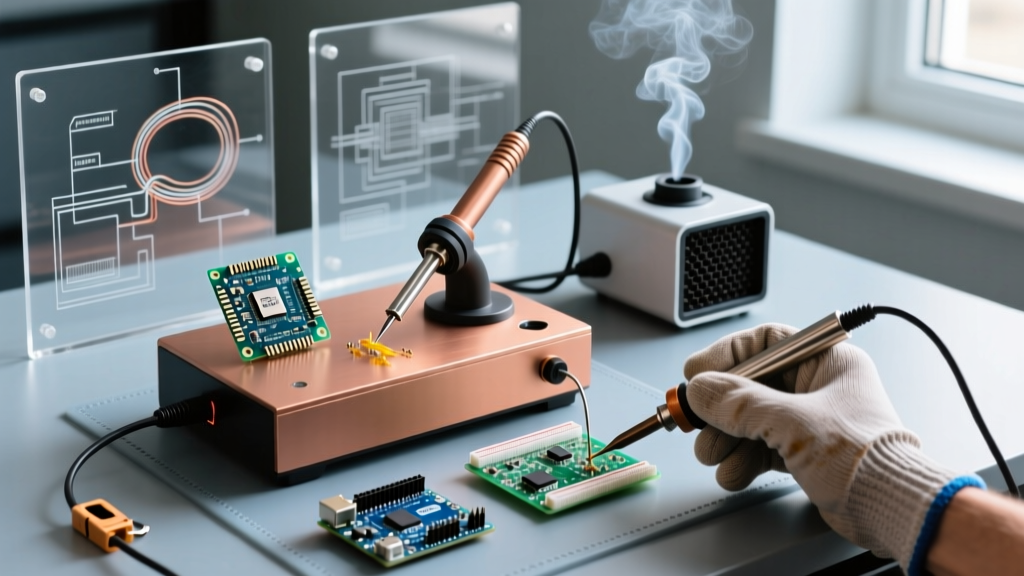
This comprehensive guide breaks down the three pillars of bench safety: respiratory defense, electrostatic discharge (ESD) mitigation, and thermal shielding. We will examine specific product categories, real-world pricing, and the exact technical specifications you need to build a fully compliant and safe soldering environment.
Respiratory Defense: Fume Extraction Systems Compared
The most insidious hazard in soldering is invisible. When rosin-based or synthetic fluxes are heated, they release colophony fumes and volatile organic compounds (VOCs). According to the UK Health and Safety Executive (HSE), colophony is a known respiratory sensitizer that can cause occupational asthma. Simply pointing a desk fan at your work area is dangerous—it dilutes the fumes but blows them directly into your breathing zone. True soldering protection requires source capture extraction.
Capture Velocity and Filtration Stages
Effective extraction relies on capture velocity—the speed at which air is drawn into the hood at the exact point where fumes are generated. For soldering, a capture velocity of at least 100 feet per minute (fpm) at a distance of 6 inches from the iron tip is recommended. Furthermore, filtration must be dual-stage: a pre-filter for large particulates, a HEPA filter for sub-micron smoke particles, and an activated carbon bed to adsorb VOC gases.
| Model | Avg. Price | Airflow (CFM) | Filtration Type | Best Use Case |
|---|---|---|---|---|
| Hakko FA-400 | $85 | 43 CFM | Basic Carbon/HEPA | Light hobbyist (1-2 hrs/week) |
| Metcal MX-AFE3 | $895 | 115 CFM | Dual-Stage HEPA/Gas | Prosumer / Small repair shops |
| Weller WFE 2X | $1,350 | 130 CFM | H13 HEPA / Activated Carbon | Heavy daily professional use |
| BOFA AD Oracle 250 | $2,600+ | 170 CFM | Deep-bed Carbon / HEPA | Industrial / High-volume rework |
Expert Tip: If you are using a budget unit like the Hakko FA-400, you must position the extraction nozzle no more than 2 inches from the solder joint. Beyond 4 inches, its 43 CFM motor cannot overcome the thermal updraft of the soldering iron, allowing fumes to escape into the room.
Electrostatic Discharge (ESD) Protection for Sensitive ICs
Modern microcontrollers, such as the STM32H7 or high-density FPGAs, feature transistor gates that can be destroyed by an ESD event as low as 20 volts—far below the 3,000 volts required for a human to even feel a shock. Implementing proper ESD soldering protection is mandatory when handling Moisture Sensitivity Level (MSL) 3 components or bare die assemblies.
Grounding Mats and Wrist Straps
A compliant ESD workstation requires a dissipative worksurface and a personal grounding mechanism. The ESD Association's ANSI/ESD S20.20 standard dictates that worksurface mats should have a point-to-point resistance between 1.0 x 10^6 and 1.0 x 10^9 ohms. This "static dissipative" range ensures that charges bleed off slowly, preventing a rapid discharge that could damage a component.
- Dissipative Mats: The Desco Statfree T2 Plus (approx. $85 for a 24" x 36" mat) features a durable polyurethane top layer that resists flux burns and provides the exact 10^7 ohm resistance required for sensitive PCB rework.
- Wrist Straps: Always use a wrist strap equipped with a built-in 1 Megohm resistor. This resistor is a critical safety feature; it limits current flow to safe levels in the event you accidentally touch a live 120V/240V mains circuit while grounded.
- Ionizers: For environments with low humidity (below 30% RH), insulative materials like plastic component trays cannot be grounded. Benchtop ionizers (e.g., Hakko FX-791, ~$450) emit balanced positive and negative ions to neutralize static charges on non-conductive surfaces.
"Never rely on the grounding pin of your soldering iron's power cord to protect sensitive components. The iron tip must be physically bonded to the same common ground point as your ESD mat and wrist strap to prevent ground loops and potential differences."
Thermal Protection: Shielding Components and Worksurfaces
With lead-free soldering requiring tip temperatures between 350°C and 400°C (662°F - 752°F), the risk of collateral thermal damage to adjacent SMD components, plastic connectors, and your workbench is high. Thermal soldering protection involves both physical barriers and heat-sinking techniques.
High-Temperature Polyimide (Kapton) Tape
Kapton tape is the unsung hero of PCB rework. Genuine polyimide tape with silicone adhesive can withstand continuous temperatures up to 260°C (500°F) and short spikes up to 400°C. When desoldering a multi-layer board, wrap adjacent plastic connectors (like USB-C ports or JST headers) in two layers of 1/2-inch Kapton tape. This prevents accidental melting from iron glances and protects the connectors from flux spatter.
Silicone Soldering Mats and Thermal Guards
Standard rubber or PVC desk mats will melt and release toxic gas if touched by a stray soldering iron. Upgrade to a fiberglass-reinforced silicone mat rated for 500°C (932°F). Brands like Q-MAT or generic 500°C silicone repair mats (typically $25 to $45) provide a non-slip, heat-proof surface. For localized thermal protection on the PCB itself, use aluminum thermal tweezers or copper alligator clips to act as heat sinks on component legs, drawing heat away from sensitive IC bodies during prolonged soldering.
Step-by-Step: Building a Fully Compliant Protection Station
Upgrading your bench doesn't have to happen all at once. Follow this phased approach to achieve maximum soldering protection on a realistic budget.
- Phase 1: Personal & Respiratory Safety (Budget: $150 - $300)
Purchase a high-quality N95/P100 mask if a fume extractor is out of reach, but prioritize saving for a localized carbon/HEPA extractor like the Hakko FA-400. Add a pair of Kevlar finger cots ($12) to prevent burns from hot solder splash-back. - Phase 2: ESD Mitigation (Budget: $120 - $200)
Lay down a 24x36 static-dissipative polyurethane mat. Connect the mat's ground snap to your electrical outlet's earth ground using a 1 Megohm grounding cord. Wear a matching wrist strap whenever handling bare ICs. - Phase 3: Thermal & Optical Defense (Budget: $100 - $400)
Install a 500°C silicone bench protector. Invest in an LED magnifying lamp with a glass lens (acrylic lenses can warp and distort under high-heat rework lamps) and apply Kapton tape to your PCB holding fixtures.
Frequently Asked Questions (FAQ)
Do I need fume extraction if I only use lead-free, rosin-free (no-clean) flux?
Yes. While "no-clean" fluxes leave minimal residue, they still contain organic acids and solvents that vaporize at soldering temperatures. The IPC standards and occupational health guidelines emphasize that the visible smoke is primarily vaporized flux, not lead. Inhaling these VOCs can still cause respiratory irritation and long-term sensitization, regardless of the alloy's lead content.
Can I use a standard anti-static mat from a computer repair shop for soldering?
It is not recommended. Many standard ESD mats are made of vinyl or basic rubber that will melt, scorch, or emit toxic fumes if a 400°C soldering iron is dropped on them. You must use a mat specifically rated for high-temperature electronics rework, typically constructed from polyurethane or silicone with a dissipative carbon loading.
How often should I replace the carbon filter in my fume extractor?
Carbon filters do not have a fixed lifespan; they depend on usage volume and flux type. A general rule for professional use is every 6 to 12 months, or 300-500 hours of active soldering. If you begin to smell the sweet, pine-like scent of rosin or the sharp tang of synthetic flux near the exhaust port, the carbon bed is saturated and must be replaced immediately to maintain effective soldering protection.