
The Global Workbench: Why Soldering in Spanish Matters
Whether you are an expatriate engineer setting up a lab in Mexico City, a DIYer sourcing components from MercadoLibre in Argentina, or a procurement specialist dealing with manufacturers in Spain, knowing how to navigate soldering in Spanish is a critical professional skill. The terminology for electronics assembly varies wildly between regions, and confusing a plumbing solder with an electronics-grade alloy can destroy a printed circuit board (PCB). Furthermore, Spain is home to some of the world's most advanced soldering equipment manufacturers, making the Spanish language deeply intertwined with high-end thermal engineering.
This comprehensive guide bridges the linguistic and technical gap. We will cover exact bilingual terminology, regional market nuances for 2026, and deep-dive reviews of soldering stations that dominate the Spanish-speaking market.
Core Terminology: How to Say Soldering in Spanish
Direct translation often fails in technical contexts. The English word 'soldering' translates broadly to soldadura, but in Spanish, soldadura is heavily associated with heavy metal welding (MIG/TIG/Arc). When referring to electronics, the terminology shifts to focus on the primary alloy used: tin (estaño).
| English Term | Standard Spanish | Regional / Contextual Variations |
|---|---|---|
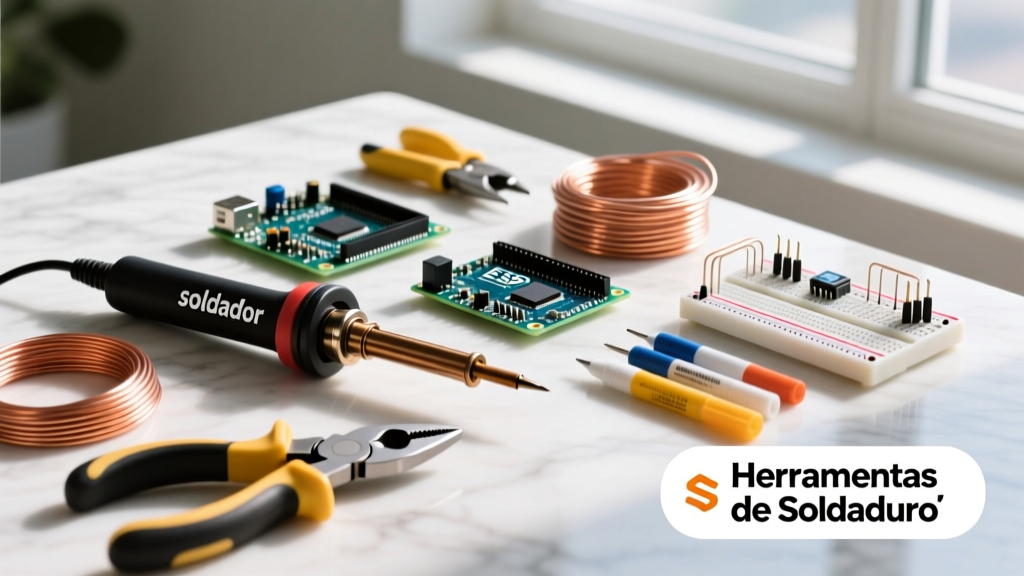
| Soldering Iron | Cautín | Soldador (Spain), Pistola de soldar (if gun-style) |
| Soldering Station | Estación de soldadura | Estación de soldado, Cautín digital |
| Solder Wire | Estaño | Hilo de estaño (Spain), Alambre para soldar |
| Flux | Flux / Pasta | Pasta para soldar, Resina (Rosin) |
| Desoldering Pump | Desoldador | Bomba de succión, Chupadora (Mexico) |
| Desoldering Wick | Malla desoldadora | Trenza desoldadora, Malla de cobre |
| Heat Shrink Tubing | Termocontraíble | Funda termorretráctil (Spain), Espagueti (Slang) |
| Lead-Free Solder | Estaño sin plomo | Estaño ecológico, Libre de plomo |
Navigating Spanish-Language Electronics Markets
Sourcing components in Latin America and Spain requires understanding local distribution channels. While global giants like Mouser and Digi-Key ship to these regions, local sourcing is often necessary for immediate prototyping or production repairs.
Spain and the European Market
In Spain, procurement is highly regulated by European RoHS (Restriction of Hazardous Substances) directives. Lead-based solder (60/40 Sn/Pb) is largely restricted to industrial exemptions or hobbyist gray markets. When browsing Spanish distributors like RS Components España, you will predominantly find SAC305 (Tin/Silver/Copper) lead-free alloys. Expect to pay around €40-€60 for a 500g spool of high-quality SAC305 with a no-clean flux core.
Latin America (LATAM)
In Mexico, Colombia, and Argentina, the market is bifurcated. Professional repair shops and maquiladoras use lead-free alloys to comply with export standards, but local hardware stores (ferreterías) and electronics markets (like Plaza de la Tecnología in Mexico City) still heavily stock 60/40 and 63/37 leaded solder. Leaded solder remains popular in LATAM for DIY and repair due to its lower melting point (183°C) and superior wetting characteristics, which are forgiving on older, oxidized boards.
Top Bilingual-Friendly Soldering Stations
When buying equipment in Spanish-speaking regions, you must consider local availability of replacement tips and cartridges. A cheap station is useless if you cannot source replacement puntas (tips) locally.
1. JBC CD-2BE (The Spanish Powerhouse)
It is impossible to discuss soldering in Spanish without highlighting JBC Tools. Headquartered in Murcia, Spain, JBC is arguably the most innovative thermal engineering company in the world today. Their CD-2BE station is the gold standard for professional labs in Spain and is increasingly available through specialized distributors in LATAM.
- Power: 130W (Peak)
- Handle: T245 (Ergonomic, lightweight, cartridge-integrated)
- Cartridge System: C245 series. The heating element is built directly into the tip, achieving 350°C in under 2 seconds.
- Smart Features: Auto-sleep and hibernation modes that extend tip life by up to 5x.
- Price Range: $420 - $480 USD (varies by import taxes in LATAM).
Expert Insight: If you are buying a JBC station in Mexico or South America, ensure you are getting the genuine C245 cartridges. The market is currently flooded with counterfeit 'clones' that lack the internal thermocouple calibration, leading to severe thermal overshoot that will lift PCB pads.
2. Hakko FX-888D & The '936' Clones
The Hakko FX-888D is a global staple, but in LATAM, it is most frequently encountered via its cloned counterparts, often sold under generic brands as Estación de Soldadura Digital 90W. While genuine Hakko units use the T18 tip series and cost around $110 USD, the clones (often priced between $25 and $40 USD on MercadoLibre) use cheaper ceramic heaters and uncalibrated thermistors.
Buying Advice: If you must buy a clone station in a Spanish-speaking market, immediately replace the included generic solder wire. The 'free' estaño bundled with these kits is often high-impurity, acid-core plumbing solder that will corrode your joints. Buy a separate spool of Alpha Metals or Kester rosin-core solder.
Survival Guide: Ordering Supplies at a Local Ferretería
If you run out of supplies mid-project and need to visit a local hardware store (ferretería), you must be highly specific. Many local stores only carry plumbing supplies. If you ask simply for estaño, they will hand you a thick, 3mm diameter, acid-core wire meant for copper pipes. Using acid-core flux on a PCB will cause rapid galvanic corrosion and short circuits.
Use this exact script:
- 'Busco estaño para electrónica.' (I am looking for electronics solder.)
- '¿Tienen hilo de estaño con resina?' o '¿con flux no corrosivo?' (Do you have tin wire with rosin? or with non-corrosive flux?)
- 'Necesito un calibre delgado, máximo un milímetro.' (I need a thin gauge, maximum one millimeter.)
If they do not have estaño con resina, you can buy solid wire (estaño sólido) and purchase a separate syringe of liquid or gel flux (flux en jeringa), which is often kept near the automotive or electrical wiring aisles.
Safety, Datasheets, and IPC Standards
When reading Spanish-language safety manuals or setting up ventilation for a manufacturing line, you must align with international standards. The IPC Standards (specifically IPC-A-610 for acceptability of electronic assemblies) are widely used in Spanish-speaking maquiladoras. Key Spanish safety and quality phrases to recognize include:
- Precaución: Superficie caliente (Caution: Hot surface)
- Extracción de humos (Fume extraction)
- Junta fría (Cold solder joint - a critical defect)
- Puente de soldadura (Solder bridge / short circuit)
- Mojado deficiente (Poor wetting)
In 2026, proper fume extraction (extractores de humo con filtro HEPA y carbón activado) is no longer optional. Even with lead-free estaño sin plomo, the vaporized colophony (rosin) flux is a known respiratory sensitizer that can cause occupational asthma. Always ensure your workstation includes a localized extraction arm (brazo de extracción).
Frequently Asked Questions (FAQ)
How do you say 'soldering iron' in Mexico vs. Spain?
In Mexico and most of Latin America, a soldering iron is called a cautín. In Spain, it is almost exclusively referred to as a soldador or soldador de estaño. If you ask for a cautín in Madrid, you might be met with confusion, as the term is largely absent from Iberian Spanish technical vocabulary.
Is 'pasta para soldar' safe for PCBs?
Be very careful. In many Spanish-speaking hardware stores, pasta para soldar refers to zinc chloride-based plumbing paste (acid flux). This is highly corrosive and will destroy electronic traces. You must specifically ask for flux para electrónica, resina, or flux no-clean.
Where can I buy genuine JBC cartridges in Latin America?
Genuine JBC C245 cartridges should be purchased through authorized industrial distributors like Farnell (Newark LATAM), RS Components, or direct regional JBC representatives. Avoid buying from unauthorized marketplace vendors, as counterfeit cartridges lack the precise internal thermocouple mapping required for JBC's proprietary heating algorithms.