
The Metallurgy of Soldering Metal Wire
Soldering metal wire seems straightforward until you move beyond standard tinned copper. The reality of electronics assembly, automotive repair, and DIY electrical work is that every metal alloy presents a unique metallurgical barrier. Unlike welding, which melts the base metals to fuse them, soldering relies entirely on 'wetting'—the ability of a molten filler metal to flow across a solid surface and form a microscopic Intermetallic Compound (IMC) layer.
The primary enemy of wetting is oxidation. When exposed to air, most metals instantly form an oxide layer that repels molten solder. The success of soldering metal wire depends entirely on your ability to mechanically or chemically remove this oxide layer and prevent it from reforming before the solder cools. In 2026, with the industry's continued shift toward lead-free alloys and higher-temperature applications, understanding material compatibility is no longer optional; it is the difference between a reliable electrical connection and a catastrophic field failure.
Material Compatibility Matrix
Not all wires are created equal. The table below outlines the baseline compatibility of common wire metals with standard soft-soldering techniques (below 400°C).
| Base Metal | Solderability | Oxide Barrier | Required Flux Type | Recommended Solder Alloy |
|---|---|---|---|---|
| Copper (Bare) | Excellent | CuO / Cu2O (Mild) | Rosin (RMA / RA) | Sn63Pb37 or SAC305 |
| Tinned Copper | Superior | SnO2 (Very Weak) | No-Clean or Mild Rosin | Sn63Pb37 or SAC305 |
| Brass / Bronze | Good | ZnO / SnO2 | Activated Rosin (RA) | SAC305 or Sn96.5Ag3.5 |
| Aluminum | Poor / Difficult | Al2O3 (Extremely Hard) | Fluoroaluminate / Zinc Chloride | Sn-Zn or Sn-Ag with Al flux |
| Stainless Steel | Very Poor | Cr2O3 (Highly Stable) | Strong Acid (Zinc Chloride) | Sn-Ag or Sn-Pb (with acid) |
| Nichrome (NiCr) | Extremely Poor | Cr2O3 (Thermally Stable) | Acid Flux or Ultrasonic | High-Ag alloys (brittle joints) |
Deep Dive: Soldering Specific Metal Wires
Copper and Tinned Copper: The Gold Standard
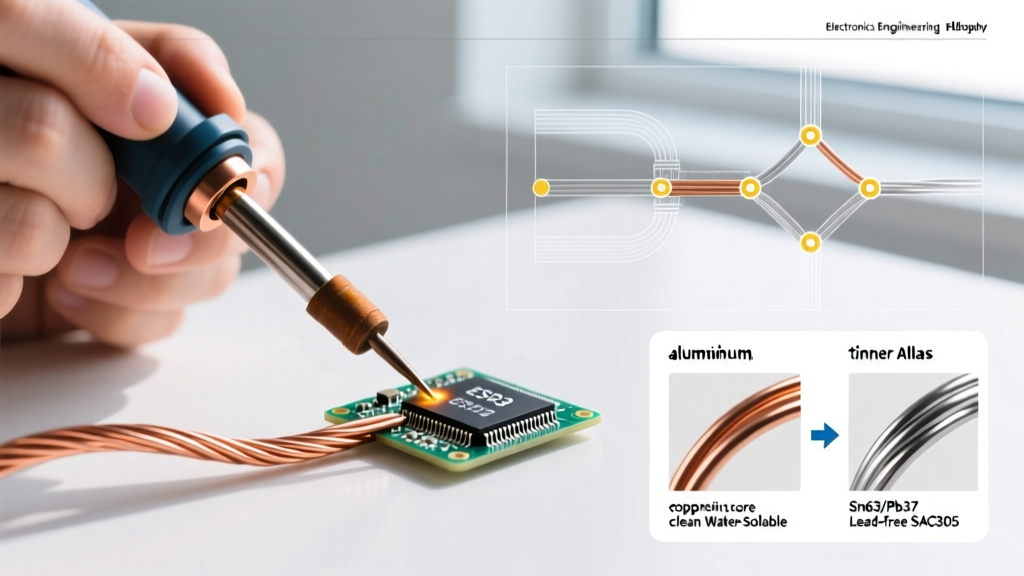
Copper is the baseline for electrical conductivity and solderability. Bare copper oxidizes relatively slowly at room temperature, making it highly receptive to mild rosin fluxes like Kester 44 (priced around $15 to $25 per 1lb spool). For standard electronics, a eutectic Sn63Pb37 alloy (melting at 183°C) provides the best wetting and a shiny, reliable fillet. If your application requires RoHS compliance, SAC305 (Sn96.5/Ag3.0/Cu0.5) is the 2026 industry standard, though it requires a higher iron tip temperature (320°C to 350°C) and melts at 217°C.
Pro Tip: When soldering thick gauge copper wire (e.g., 10 AWG or larger for automotive or solar applications), thermal droop is a major issue. A standard 40W iron will fail to bring the wire to temperature, resulting in a 'cold joint'. Use a high-thermal-mass station like the Weller WE1010 (70W) or Hakko FX-888D (70W) with a chisel tip to maximize surface area contact.
Aluminum Wire: The Oxide Nightmare
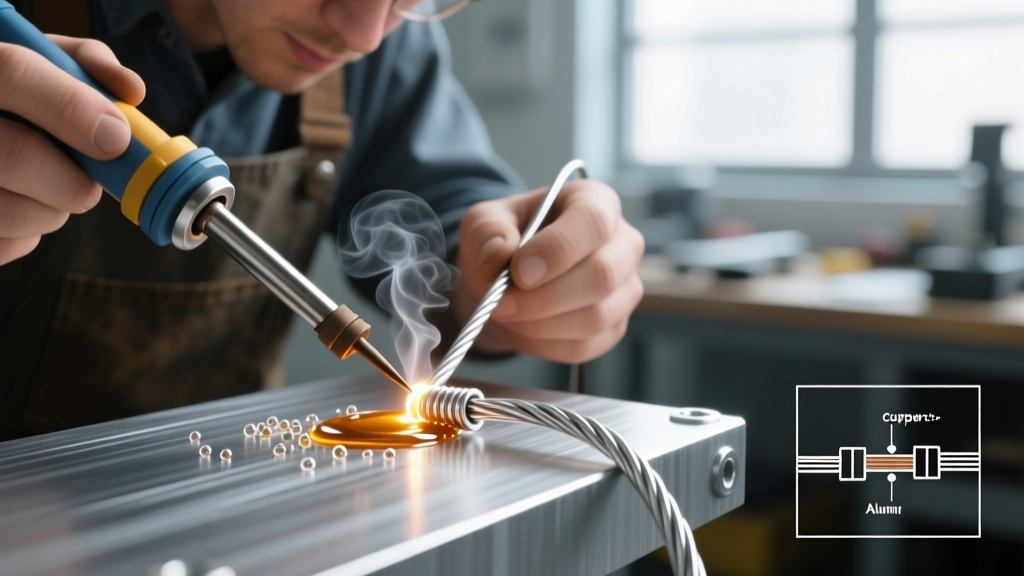
Soldering aluminum metal wire is notoriously difficult because aluminum oxide (Al2O3) forms within milliseconds of exposure to air. This oxide layer is electrically insulating, thermally conductive, and chemically impervious to standard rosin fluxes. If you attempt to solder aluminum with Kester 44, the solder will simply ball up and roll off.
To successfully solder aluminum wire, you must use a specialized flux containing fluoroaluminate or heavy zinc chloride, such as Superior Flux #3020 or specialized aluminum soldering pastes. These fluxes chemically etch the oxide layer away. However, they are highly corrosive and must be cleaned with isopropyl alcohol and a stiff brush immediately after the joint cools. For high-reliability aerospace or EV battery tab applications in 2026, manufacturers have largely abandoned chemical fluxing in favor of ultrasonic soldering, which uses high-frequency acoustic waves to cavitate and shatter the oxide layer in real-time.
Stainless Steel and Nichrome: High-Oxidation Alloys
Stainless steel and Nichrome (an alloy of 80% nickel and 20% chromium) owe their corrosion and heat resistance to a dense layer of chromium oxide. This same layer makes them nearly impossible to solder with electronics-grade fluxes.
- Stainless Steel Wire: Requires a highly active, corrosive acid flux (often labeled as 'plumber's flux' or Stay-Clean). You must mechanically abrade the wire with sandpaper, apply the acid flux, and use a high-temperature iron. Warning: Acid flux residues will rapidly corrode the surrounding area and must be neutralized with a baking soda solution post-soldering.
- Nichrome Heating Wire: Soldering Nichrome is generally discouraged. The thermal expansion mismatch between the solder and the Nichrome wire, combined with the brittle IMC layer formed by acid fluxes, leads to joints that crack under thermal cycling. For heating elements, always prefer mechanical crimping (using nickel-plated steel crimps) or spot welding. If soldering is absolutely mandatory for a low-heat prototype, use a silver-bearing solder (like Sn95/Ag5) with a zinc chloride flux, but expect a limited lifespan.
Flux Chemistry and IPC Standards
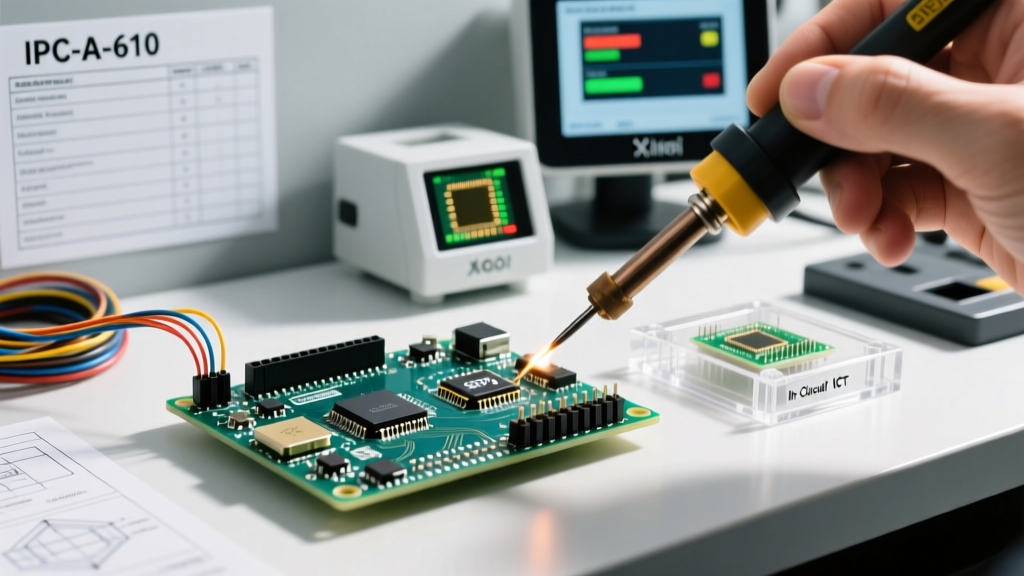
Understanding flux is just as critical as selecting the right solder. The IPC (Association Connecting Electronics Industries) categorizes fluxes under the J-STD-004B standard, which classifies them by composition and activity level:
- RO (Rosin): Derived from pine sap. Safe for electronics, leaves a benign residue. Ideal for copper and brass.
- OR (Organic Acid): Water-soluble organic acids. More active than rosin, used for slightly oxidized surfaces. Must be washed off.
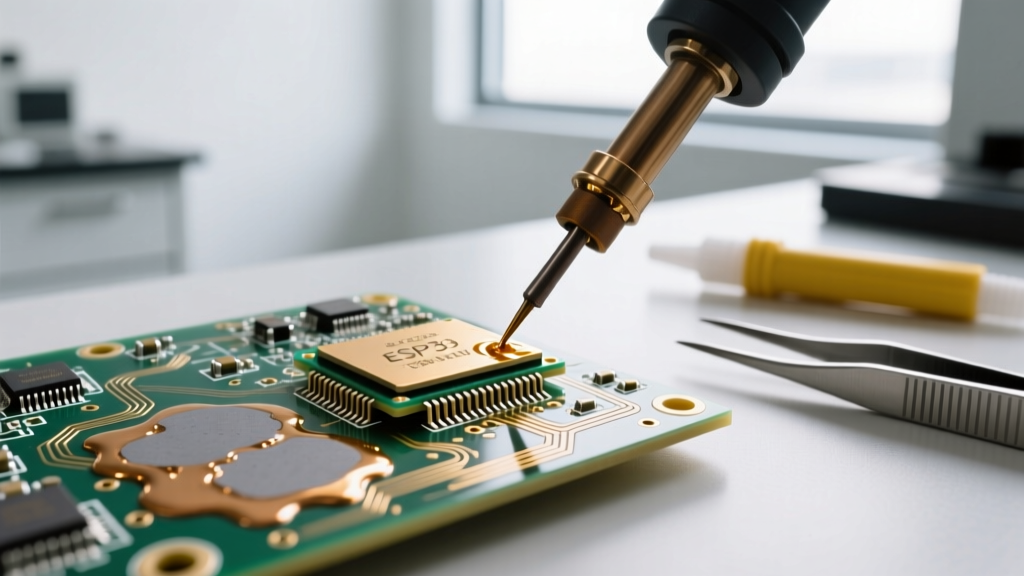
- IN (Inorganic Acid): Contains zinc chloride or ammonium chloride. Extremely aggressive. Used for steel, aluminum, and heavy-duty structural soldering. Never use on PCBs.
- RE (Resin): Synthetic resins, similar to rosin but engineered for specific thermal profiles.
Safety Warning: When using IN (Inorganic Acid) fluxes on aluminum or steel wire, the vaporized flux contains highly corrosive and toxic hydrochloric acid gas. Always use a localized fume extractor. Refer to OSHA guidelines on chemical hazards to ensure your workspace ventilation meets safety standards for acid vapor extraction.
Step-by-Step Workflow for Difficult Alloys
When soldering metal wire composed of high-oxidation alloys (like aluminum or steel), follow this rigorous preparation workflow to ensure a solid metallurgical bond:
- Mechanical Abrasion: Use 400-grit sandpaper or a fiberglass scratch pen to remove the bulk oxide layer from the wire tip. Do this immediately before applying flux.
- Chemical Pre-Treatment: Submerge the abraded wire tip in the specialized acid or aluminum flux. The liquid acts as a barrier to prevent instant re-oxidation.
- Pre-Tinning (Crucial Step): Do not attempt to join two bare wires at once. Apply your soldering iron to the fluxed wire and feed the solder directly into the joint. The flux will boil and smoke as it etches the metal; push the solder through the boiling flux to touch the bare metal. Once the wire is fully coated (tinned), wipe off the excess flux.
- Final Joining: Now that both wires are pre-tinned with a compatible solder alloy, you can join them together using standard electronics-grade rosin flux and a clean iron tip. This prevents the corrosive acid flux from being trapped inside the final electrical joint.
Troubleshooting Common Failure Modes
Even with the right materials, poor technique leads to compromised joints. Here is how to diagnose the most common issues when soldering metal wire:
Dewetting vs. Non-Wetting
Non-wetting occurs when the solder refuses to stick to the wire at all, forming a perfect sphere that rolls off. This means the flux failed to remove the oxide layer, or the wire temperature never reached the solder's liquidus point. Solution: Increase mechanical abrasion, switch to a higher-activity flux, or increase your iron's thermal mass.
Dewetting occurs when the solder initially flows over the wire but then pulls back into islands or droplets as it heats further, leaving a patchy, uneven coating. This is often caused by overheating the flux, destroying its chemical activity before the solder can form a stable IMC layer. Solution: Lower the iron temperature, apply fresh flux, and reduce the dwell time on the joint.
Thermal Runaway and Insulation Melt
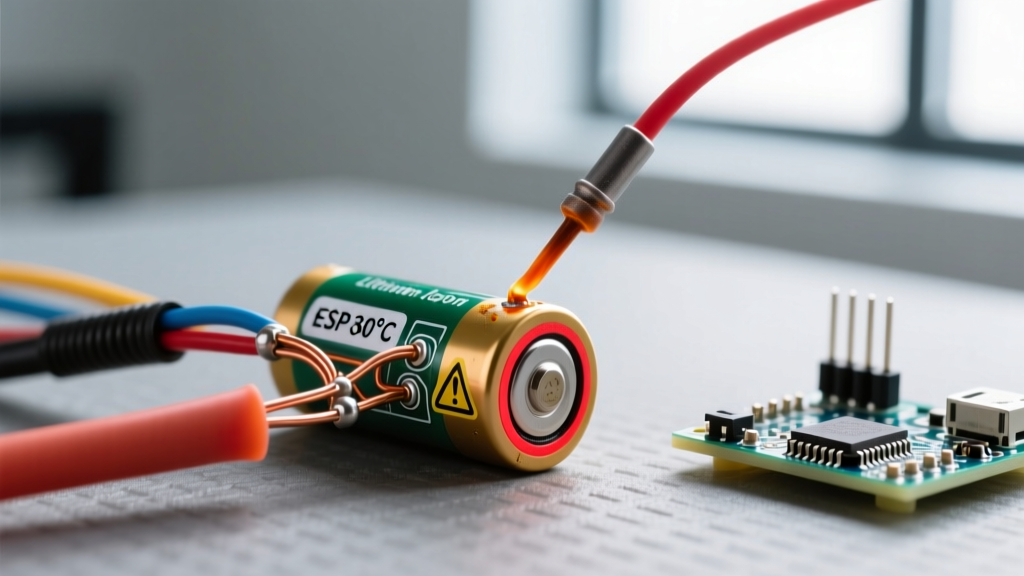
When soldering thick gauge wires, amateurs often crank their iron to 450°C to force heat into the copper. This causes thermal runaway: the extreme heat travels down the wire, melting the PVC or Teflon insulation inches away from the joint and degrading the copper's temper. According to NASA's Workmanship Standards for soldering, heat sinks (like aluminum clips or damp sponges) should be applied between the joint and the sensitive components or insulation to absorb excess thermal energy. Always use the lowest temperature that allows the solder to flow within 2 to 3 seconds of iron contact.
Final Verdict on Material Compatibility
Successfully soldering metal wire requires matching the flux chemistry to the metal's oxide barrier. Stick to mild rosin fluxes and SAC305/Sn63Pb37 for copper and brass. Reserve aggressive, water-soluble acid fluxes strictly for aluminum and stainless steel, and always follow up with rigorous chemical cleaning. For extreme high-temperature alloys like Nichrome, abandon the soldering iron entirely in favor of mechanical crimps or spot welding to ensure long-term reliability.