
Redefining the Basics of Soldering in 2026
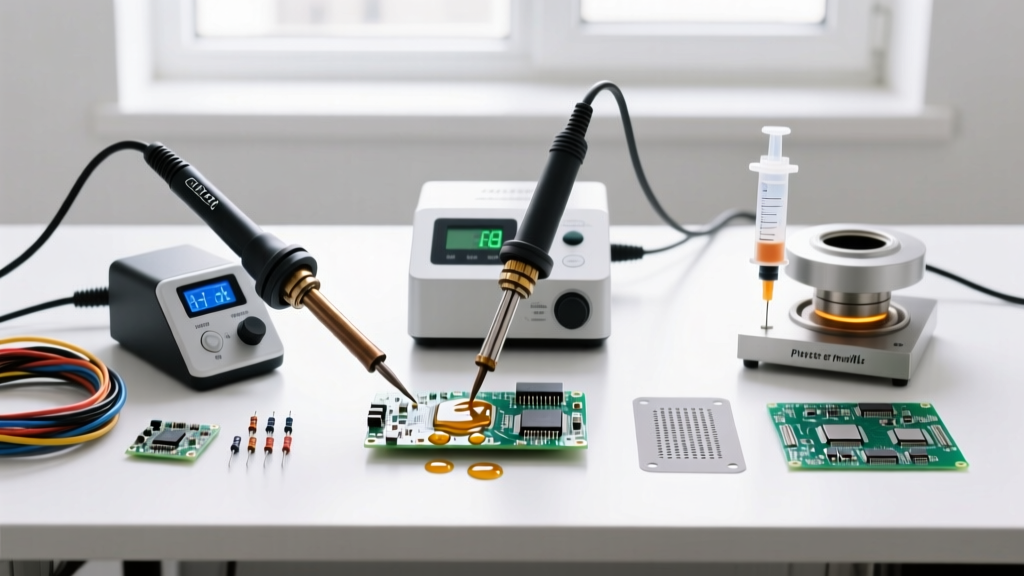
When most beginners search for the basics of soldering, they picture a heavy, transformer-based iron melting thick leaded wire onto a through-hole resistor. However, the electronics landscape has shifted dramatically. With surface-mount devices (SMD) as small as 0201 (0.6mm x 0.3mm) becoming standard even in hobbyist modules, mastering the basics now requires understanding three distinct thermal transfer methods: conduction (hand irons), convection (hot air), and bulk thermal profiling (paste reflow).
Choosing the wrong method for your specific project leads to destroyed PCB pads, tombstoned components, and wasted money. This guide compares these three foundational methods, detailing exact equipment costs, thermal profiles, and real-world failure modes to help you build the right workbench.
Method 1: Conduction via Smart Hand Irons
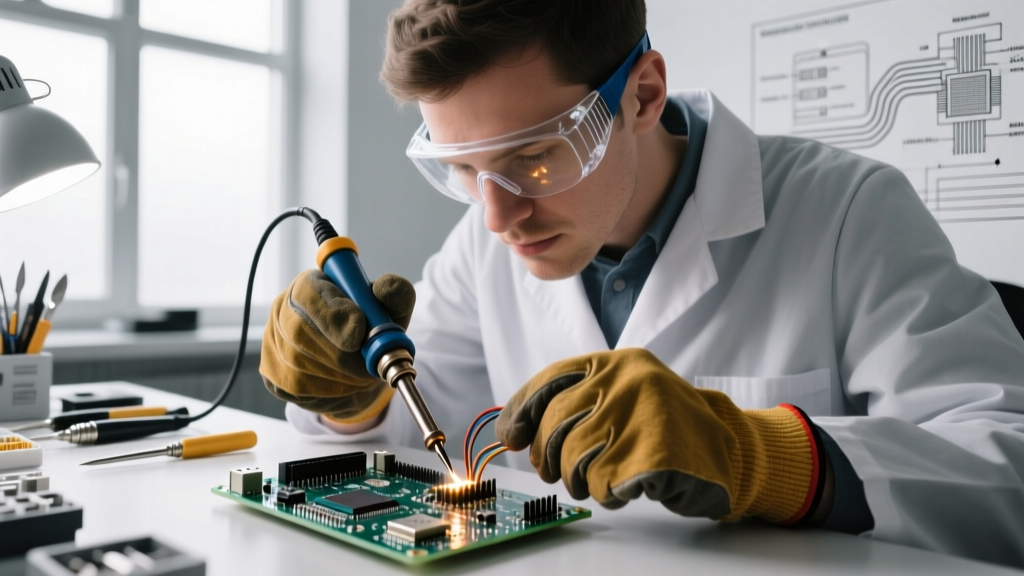
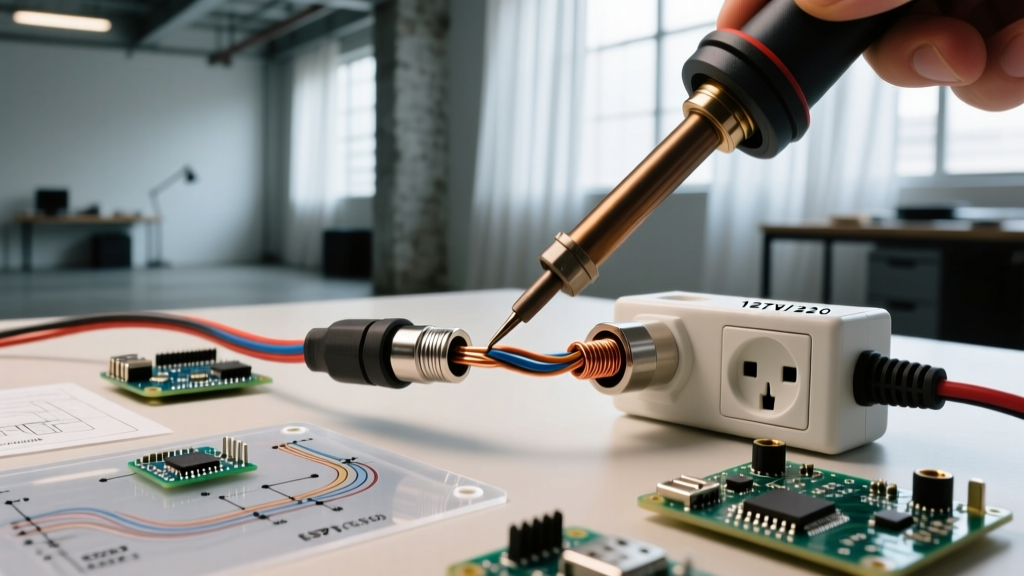
Hand soldering remains the undisputed king for through-hole technology (THT) and basic SMD rework. The 'basics' here revolve around thermal mass and wetting. You are not melting the component; you are heating the pad and lead simultaneously so the solder can flow via capillary action.
The 2026 Equipment Landscape
The era of the $45 Weller WLC100 is ending for serious hobbyists. Today, USB-C Power Delivery (PD) smart irons dominate the entry-to-mid tier. The Pinecil V2 ($26) utilizes a RISC-V chip to sample tip temperature 50 times per second, recovering from thermal drops instantly. For professional bench use, the Hakko FX-888D ($108) remains the industry standard for its rugged T18 tip ecosystem and analog reliability.
Critical Parameters & Failure Modes
- Tip Selection: Beginners often default to micro-pencil tips. This is a mistake. A pencil tip lacks the thermal mass to heat a ground plane, leading to dwell times over 4 seconds. Use a 2.4mm Chisel (e.g., Hakko T18-D24) to maximize surface contact and transfer joules efficiently.
- Temperature: For Sn63/Pb37 (leaded), set your iron to 320°C (608°F). For SAC305 (lead-free), bump it to 360°C (680°F).
- Primary Failure Mode - Cold Joints: Caused by insufficient heat transfer or moving the joint before the solder crystallizes. According to the IPC-A-610 standard, a cold joint exhibits a dull, grainy, or disturbed surface and is an immediate reject.
- Primary Failure Mode - Pad Delamination: Dwelling the iron on a pad for more than 3-5 seconds breaks down the epoxy bond, lifting the copper trace off the FR4 substrate.
Method 2: Convection via Hot Air Rework
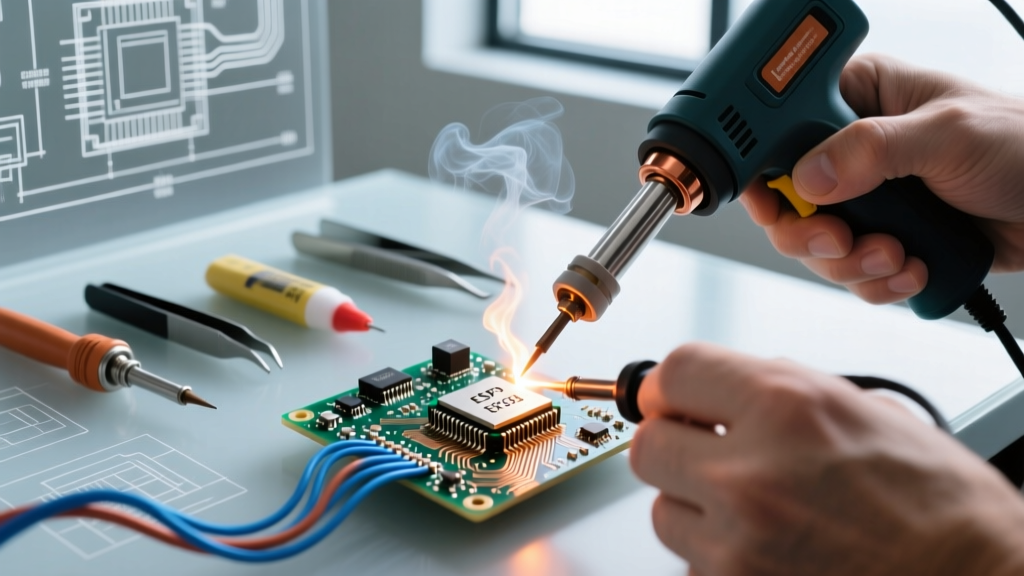
You cannot hand-solder a QFN (Quad Flat No-leads) chip with a hidden thermal pad using an iron. Hot air uses forced convection to heat all pins and the ground pad simultaneously. Understanding the basics of soldering with hot air requires mastering the relationship between airflow volume (L/min) and temperature.
Equipment & Airflow Dynamics
Cheap 858D clones ($40) suffer from severe airflow surging and inaccurate thermocouples, often blowing 0402 resistors across the room. The benchmark for serious DIYers and repair techs is the Quick 861DW ($260). It provides brushless fan stability and precise thermal readouts.
The Rework Process
- Flux Application: Never use hot air without flux. Apply a generous layer of tacky flux (e.g., Amtech NC-559-V2-TF) to activate the oxides and promote surface tension.
- Preheat: Set airflow to 40% and temperature to 150°C to gently warm the board, preventing thermal shock.
- Removal/Placement: Increase to 360°C at 60% airflow. Use a 4mm nozzle for SOIC chips and an 8mm nozzle for larger BGA/QFN components. Keep the nozzle 10mm above the board, moving in tight circles.
Expert Insight: The surface tension of molten solder is your best friend. When reflowing a multi-pin IC with hot air, the liquid solder will naturally 'snap' the chip into perfect alignment on the pads. Do not nudge the chip with tweezers while the solder is liquid, or you will bridge the pins.
Method 3: Solder Paste & DIY Reflow
For building custom PCBs with dozens of 0603 capacitors and microcontrollers, hand soldering is inefficient. Solder paste (a suspension of microscopic solder spheres in flux) combined with a reflow profile is the ultimate production shortcut.
Paste Selection & Stencils
For most hobbyist boards, Type 4 (T4) solder paste like ChipQuik SMD291AX10 ($28 per 10cc syringe) offers the best balance. T4 particles (20-38 microns) print cleanly through standard 4-mil laser-cut stainless steel stencils. You must use a stencil; dispensing paste with a syringe for anything smaller than an SOIC-8 is a recipe for solder bridges.
Thermal Profiling (Ramp-Soak-Spike)
Reflow is not just 'melting solder.' It requires a specific thermal curve to allow flux volatiles to evaporate before the solder liquefies. If you heat too fast, the flux boils, causing solder splatter (tiny spheres shorting adjacent pins).
- Ramp: 1°C to 2°C per second up to 150°C.
- Soak: Hold at 150°C - 175°C for 60-90 seconds to activate the flux and equalize board temperature.
- Spike: Push past the liquidus point (183°C for leaded, 217°C for lead-free) to a peak of 235°C - 245°C for 30 seconds.
- Cool: Natural convection cooling to form a fine-grain crystalline structure.
While a T-962 reflow oven ($160) is an option, many DIYers achieve excellent results using a $30 induction hotplate or a modified toaster oven monitored by a K-type thermocouple.
Head-to-Head Comparison Matrix
| Feature | Hand Iron (Conduction) | Hot Air (Convection) | Paste Reflow (Bulk Thermal) |
|---|---|---|---|
| Best Application | THT, wires, basic SMD repair | QFN/BGA rework, connector replacement | Full custom PCB assembly |
| Entry Cost (2026) | $26 (Pinecil V2) - $108 (Hakko) | $45 (Generic) - $260 (Quick) | $60 (Paste + Stencil + Hotplate) |
| Learning Curve | Low (Hours to master basics) | Medium (Weeks to master airflow) | High (Requires profile tuning) |
| Primary Risk | Pad lifting, cold joints | Melting plastics, blowing away parts | Solder bridges, tombstoning |
| Flux Requirement | Core flux (rosin) usually sufficient | Mandatory external tacky flux | Flux is pre-mixed in paste |
Building Your 2026 Workbench: Budget Tiers
Do not buy everything at once. Scale your toolkit based on your current project complexity.
Tier 1: The $75 THT & Basic SMD Starter
Start with a Pinecil V2 ($26), a 65W USB-C laptop charger ($15), a spool of 0.8mm Sn63/Pb37 Kester 44 ($18), and a brass tip sponge ($4). This setup handles 90% of through-hole soldering tutorials and basic wire harnesses perfectly. Add a $12 syringe of MG Chemicals 8341 water-soluble flux for stubborn joints.
Tier 2: The $200 SMD Rework Upgrade
When you need to replace a USB-C port or a blown MOSFET, add the Quick 861DW ($260) or, on a tighter budget, the Sugon 8620DX ($140). Pair this with Kapton tape ($8) to shield adjacent plastic connectors from convective heat, and a high-quality tweezers set (e.g., Vetus ESD-safe, $15).
Tier 3: The $350 Prototyping Lab
For designing and assembling your own SMD boards, invest in a custom laser-cut stencil service (usually $15 per board via JLCPCB or PCBWay), a 10cc syringe of ChipQuik SMD291AX T4 paste ($28), and a dedicated PCB hotplate like the PNP-100 ($80) for controlled bottom-side heating.
Advanced Troubleshooting: Wetting and Flux Chemistry
The most misunderstood concept in the basics of soldering is wetting. Wetting is the metallurgical bond between the liquid solder and the copper pad. If solder balls up and rolls off the pad like water on a waxed car, you have a wetting failure.
How to fix wetting failures:
- Clean the substrate: Use 99% Isopropyl Alcohol (IPA) and a lint-free wipe to remove finger oils.
- Check oxidation: If the PCB pad is dark or dull, it is oxidized. Scrub it gently with a fiberglass scratch pen, or apply a highly active water-soluble flux to strip the oxides chemically.
- Verify tip tinning: A black, crusty iron tip will not transfer heat. Never use sandpaper or a file on a modern iron tip; you will destroy the iron plating. Instead, use a tip tinner compound (a mix of aggressive flux and solder powder) to chemically restore the tinning layer.
Final Verdict
Mastering the basics of soldering is no longer a single-skill endeavor. Hand irons provide the tactile control needed for prototyping and THT work, hot air is non-negotiable for modern SMD repair, and paste reflow is the gateway to small-batch manufacturing. By understanding the thermal dynamics and failure modes of each method, you can assemble a targeted, cost-effective workbench that will serve your electronics journey well into the future.