
The Economics of the Jeweler's Bench: A 2026 Perspective
When evaluating the cost of soldering in jewelry, most beginners only consider the price of a basic torch kit. However, professional jewelry fabrication and repair require a nuanced understanding of both Capital Expenditure (CapEx) and Operational Expenditure (OpEx). In 2026, with precious metal spot prices remaining at historic highs and workshop safety regulations becoming stricter, optimizing your soldering setup is no longer just about convenience—it is a critical factor in your profit margins.
This comprehensive cost analysis breaks down the financial realities of torch, induction, and laser technologies, alongside the hidden costs of consumables, safety infrastructure, and costly failure modes. Whether you are outfitting a new studio or upgrading an established bench, understanding these variables will dictate your return on investment.
Capital Expenditure (CapEx): Heat Source Comparison
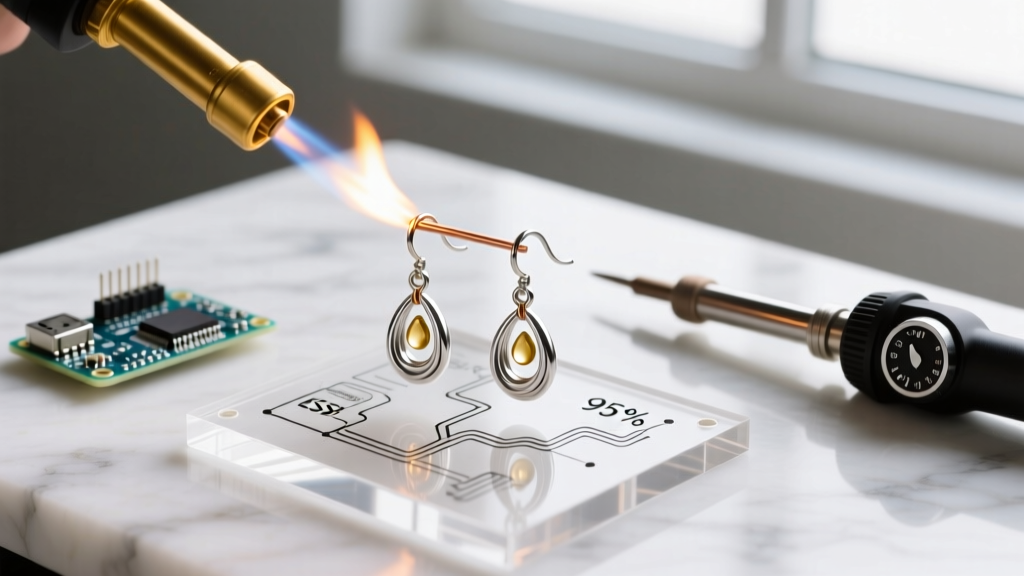
The primary decision for any jeweler is the heat delivery system. While traditional gas torches remain the industry standard, induction soldering and laser welding have carved out significant market share due to their precision and long-term operational savings.
| Technology | Popular 2026 Model | Upfront Cost (USD) | Lifespan & Maintenance | Best Application |
|---|---|---|---|---|
| Gas Torch (Oxy-Acetylene) | Smith Little Torch (Model 23-500C) | $450 - $600 | 10+ years; requires hose/regulator replacement every 5-7 years. | Heavy fabrication, large casting sprue removal, general sizing. |
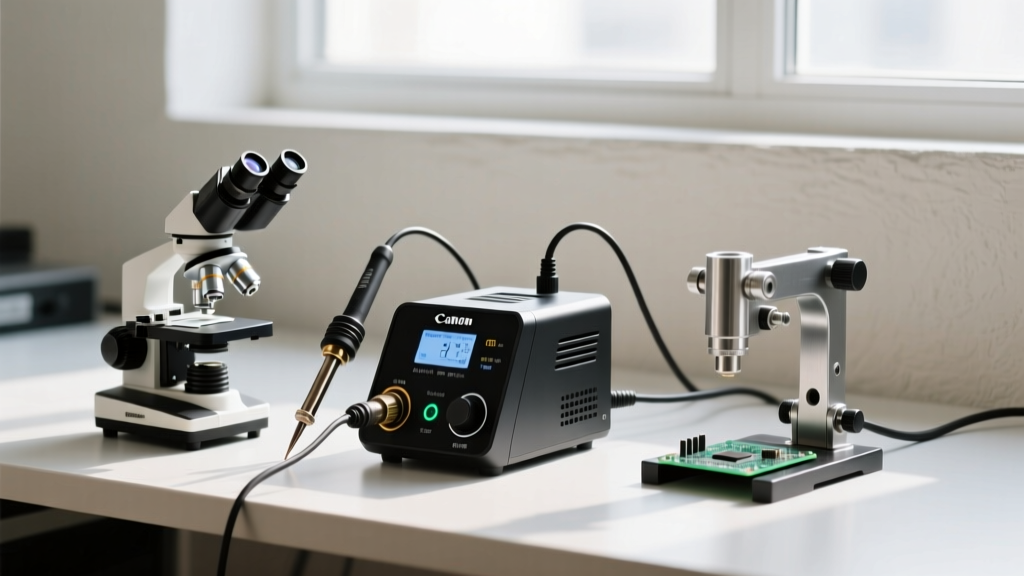
| Induction Soldering | Indutherm MU 20 | $3,600 - $4,200 | 15+ years; solid-state electronics, zero gas plumbing. | Chain sizing, jump ring closing, precise localized heating. |
| Laser Welder (Pulse Arc) | Sunstone Orion 150s | $11,500 - $13,000 | 20+ years; flashlamp replacement every 1M-2M pulses (~$400). | Stone-in-place repairs, porosity filling, micro-welding. |
Note: While laser welding technically fuses base metals rather than using a lower-melting-point solder alloy, it is universally categorized under jewelry soldering workflows for repair and sizing.
Operational Expenditure (OpEx): Consumables & Utilities
The ongoing costs of soldering in jewelry often eclipse the initial equipment investment within the first three years of active production. OpEx is divided into three main categories: precious metal solders, chemical fluxes/pickles, and utility consumption.
1. Precious Metal Solders and Karat Matching
In 2026, gold prices heavily influence solder costs. Jewelers must choose between standard solders and plumb solders (which match the exact karat of the base metal). According to benchmark data from Rio Grande, a leading jewelry supplier, 14k Yellow Gold Hard Solder (cadmium-free) costs approximately $75 to $95 per pennyweight (dwt), depending on market fluctuations.
- Hard Solder (Melting point ~1,450°F): Used for the first joint. Highest gold content, most expensive.
- Medium Solder (Melting point ~1,350°F): Used for secondary joints.
- Easy Solder (Melting point ~1,250°F): Used for final attachments or sizing. Lowest gold content, but highest risk of visible color mismatch.
Cost-Saving Strategy: Buy solder in pre-cut pallions (chips) rather than wire. While wire seems cheaper per ounce, filing wire into pallions results in 10-15% material loss as dust, which is difficult to recover without a professional refining sweep system.
2. Fluxes and Pickling Solutions
Flux prevents oxidation during heating, while pickle removes the resulting firescale. A busy repair bench will consume roughly one pint of liquid flux and five pounds of dry pickle compound per month.
- Batterns Self-Pickling Flux: ~$25/pint. Excellent for hard solders and platinum.
- Handy Flux (Borax-based paste): ~$35/half-pound. The workhorse for gold and silver.
- Sparex #2 (Sodium Bisulfate): ~$30/5lbs. The industry standard pickle, though it requires careful neutralization before disposal.
- Citric Acid (Food Grade): ~$15/5lbs. A slower, eco-friendly alternative gaining traction in 2026 for home studios.
3. Utility Costs: Gas vs. Electricity
An oxy-acetylene setup requires leasing B-size or M-size cylinders. In 2026, cylinder leasing and refills average $40-$60 per month per gas type. Conversely, an induction soldering unit like the Indutherm MU 20 draws roughly 2kW to 3kW under peak load. Running an induction unit for 8 hours a day costs less than $2.50 per day in most US municipalities, eliminating the logistical nightmare and recurring cost of gas deliveries.
Hidden Costs: Bench Infrastructure & Safety Compliance
Failing to budget for safety and bench infrastructure is a primary reason new jewelry studios face unexpected financial strain. Soldering generates toxic fumes, particularly from fluoride-based fluxes and zinc/cadmium vapors.
Expert Insight: Relying on a standard desk fan to blow soldering fumes away from your face is a severe health hazard and violates OSHA workplace standards. Proper source-capture extraction is non-negotiable for professional environments.
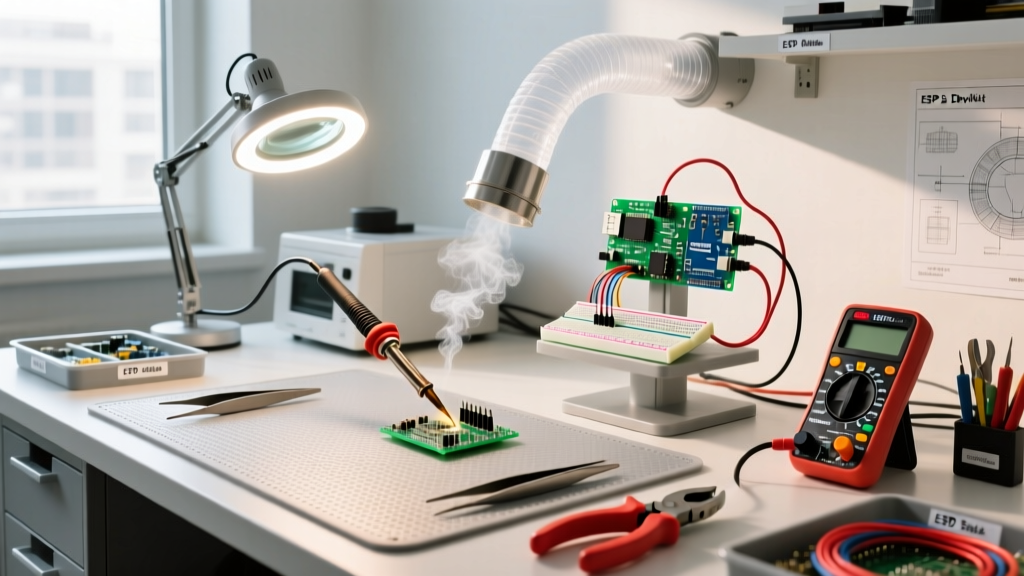
To maintain a safe environment and comply with occupational health standards—such as those outlined by the NIOSH Cadmium Safety Guidelines regarding heavy metal inhalation—you must invest in dedicated fume extraction. A benchtop HEPA/Carbon fume extractor (e.g., BOFA PrintPRO 3 or Hakko FA-400) costs between $600 and $1,500. Furthermore, you must budget for specialized soldering surfaces: Solderite pads ($35 each, lasting ~6 months under heavy use) and charcoal blocks ($25 each, highly flammable but excellent for reflecting heat back into the workpiece).
Break-Even Analysis: Torch vs. Induction
Is the $3,800 premium for an induction soldering machine justifiable? Let us calculate the break-even point based on ring sizing repairs.
Assume a jeweler performs 15 ring sizings per week. Using a torch, the jeweler consumes roughly $150/month in acetylene and oxygen, plus $40/month in flux degradation due to open-flame oxidation. The induction system uses negligible electricity ($20/month) and virtually eliminates flux burning because the heat is generated directly within the metal via electromagnetic induction, not applied externally.
Monthly Savings with Induction: ~$170 in gases and consumed chemicals.
Break-Even Timeline: $3,800 / $170 = 22.3 months.
After roughly two years, the induction system pays for itself, while also offering superior joint consistency and eliminating the fire risk associated to open acetylene flames.
Costly Failure Modes to Avoid
When soldering in jewelry, mistakes do not just cost time; they cost precious metal weight and potentially ruin client heirlooms. Understanding these failure modes is crucial for protecting your bottom line.
1. Firescale and Metal Loss
Firescale is a deep layer of cuprous oxide that forms when copper in gold or silver alloys reacts with oxygen during heating. If a jeweler overheats a sterling silver piece, firescale can penetrate deep into the metal. Removing it requires aggressive polishing, which strips away precious metal weight. According to GIA News & Research, maintaining strict temperature control and using boron-based anti-firescale coatings (like Prips) can save a high-volume studio hundreds of dollars annually in lost metal dust.
2. The "Easy Solder" Trap
Beginners often default to Easy Solder because it flows at a lower temperature, reducing the risk of melting the base piece. However, Easy Solder has a significantly lower gold content and a different color profile. If a piece requires future repair or resizing, the existing Easy Solder will melt and run into the seams before the new joint reaches flow temperature, resulting in a catastrophic structural failure. Always use Hard or Medium solder for primary structural joints to preserve the piece's long-term integrity and assay value.
3. Cadmium Toxicity and Liability
Historically, cadmium was added to gold solders to lower the melting point and improve flow. Today, cadmium-free solders are the global standard. Using legacy cadmium-based solders not only poses severe respiratory and renal health risks but also opens a commercial jeweler to massive liability and violates modern assay standards for nickel and heavy metal restrictions in consumer goods. The marginal cost savings of buying cheap, unrefined solder from unverified overseas suppliers is never worth the health and legal risks.
Final Verdict: Optimizing Your 2026 Setup
The cost of soldering in jewelry is a multi-layered equation. For hobbyists and low-volume custom fabricators, a Smith Little Torch setup remains the most cost-effective entry point, requiring under $600 in CapEx. However, for high-volume repair shops and sizing specialists, transitioning to Induction Soldering offers a definitive ROI within 24 months through eliminated gas costs, reduced flux consumption, and superior joint precision. Regardless of the heat source chosen, investing heavily in source-capture ventilation and high-quality, cadmium-free plumb solders will ultimately protect both the jeweler's health and the studio's profit margins.