
Why Avoid Soldering on Rings and Circular Assemblies?
The explosive growth of wearable electronics, smart rings, and high-density robotics has pushed DIYers and engineers to ask a critical question: how to keep rings together without soldering? Whether you are assembling a flexible PCB inside a smart ring housing, securing heavy-gauge ring terminals in a motor controller, or building conductive jewelry, applying a 350°C soldering iron can be disastrous. Excessive heat melts lithium-polymer batteries, warps titanium bands, degrades heat-sensitive biometric sensors, and compromises the structural integrity of precious metals.
To solve this, we convened a panel of electrical engineers, industrial wiring specialists, and wearable tech experts to outline the most reliable non-thermal assembly methods available in 2026. From silver-filled conductive epoxies to precision micro-crimping, this expert roundup provides actionable, data-backed alternatives to traditional soldering.
Meet the Expert Panel
- Dr. Aris Thorne – Wearable Electronics Engineer specializing in flexible circuits and smart ring telemetry.
- Sarah Jenkins – Master Jeweler and Conductive Crafts Specialist focusing on e-textiles and wearable tech.
- Mike Rossi – Industrial Wiring Technician with 15 years of experience in high-vibration motor terminations.
Method 1: Silver-Filled Conductive Epoxies (The Wearable Tech Standard)
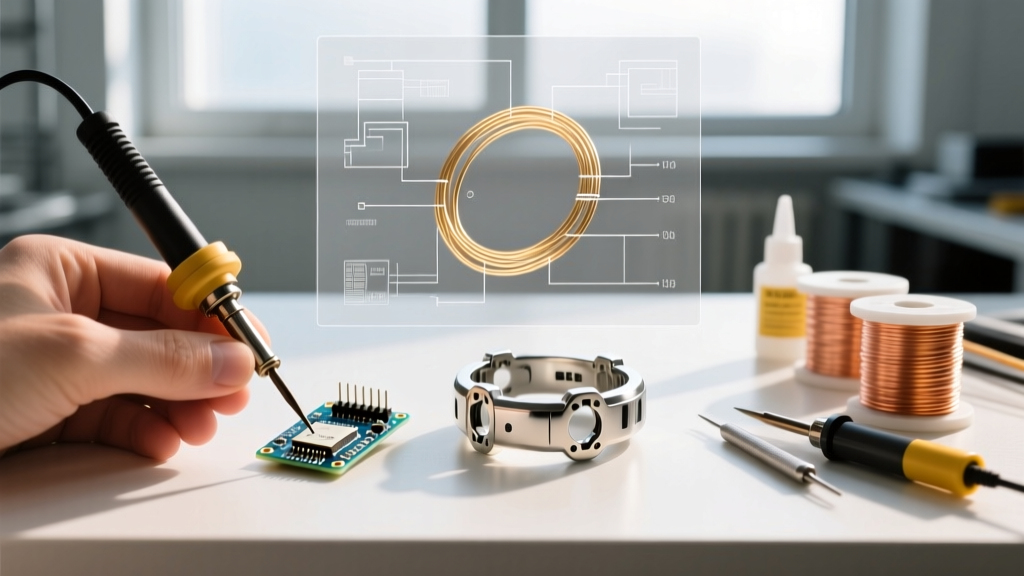
For smart ring assemblies and conductive jewelry, thermal adhesives are the industry standard. Dr. Aris Thorne notes that modern smart rings, including recent 2026 teardowns of leading health trackers, rely heavily on conductive epoxies to bond the inner charging coil ring to the main logic board without risking heat damage to the micro-battery.
"When working with flexible PCBs wrapped into a ring topology, you cannot use a soldering iron. The localized heat will delaminate the polyimide layers. Instead, we use a two-part silver conductive epoxy. It cures at room temperature or with gentle 60°C heat, providing both structural bonding and electrical continuity."
— Dr. Aris Thorne, Wearable Electronics Engineer
Recommended Product: MG Chemicals 8331
The MG Chemicals 8331 Silver Conductive Epoxy is the gold standard for this application. It features a volume resistivity of 0.0008 ohm-cm, which is sufficient for low-current data and charging lines (typically under 2A in wearable rings).
- Cost: ~$65 for a 50mL dual-cartridge kit.
- Cure Time: 24 hours at 25°C, or 15 minutes at 60°C.
- Application Tip: Use a 0.5mm syringe tip to apply a continuous 1mm bead along the ring contact pad. Clamp the ring components using a silicone tension band while curing to prevent shifting.
For more technical specifications on conductive adhesives, refer to the MG Chemicals Conductive Adhesives Database.
Method 2: Precision Micro-Crimping for Ring Terminals
If your project involves keeping electrical ring terminals together on a bus bar or motor shaft without soldering, mechanical crimping is the only code-compliant alternative. Soldering ring terminals can actually be dangerous in high-vibration environments because solder is prone to "creep" and fatigue cracking under mechanical stress.
"Soldering a ring terminal fills the wire strands with a rigid alloy. When the wire vibrates, the stress concentrates at the edge of the solder wick, leading to a catastrophic snap. A proper pneumatic or precision hand crimp creates a cold weld that is gas-tight and vastly superior in tensile strength."
— Mike Rossi, Industrial Wiring Technician
The Cold-Weld Crimping Process
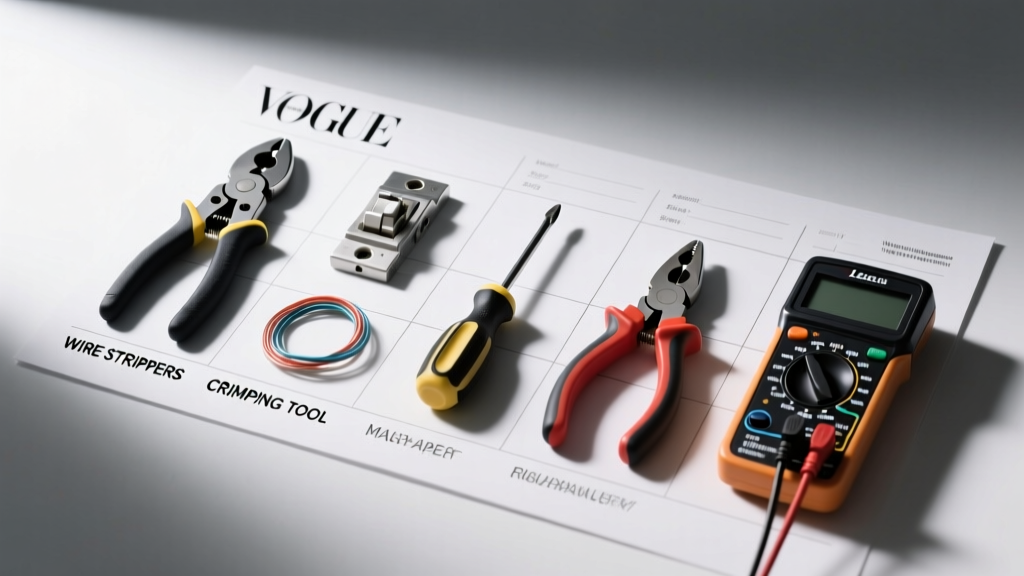
- Strip the Wire: Use a precision stripper (e.g., Knipex MultiStrip 10) to remove exactly 6mm of insulation from a 16 AWG wire.
- Insert the Terminal: Slide the wire into an insulated, brazed-seam ring terminal (e.g., Panduit PV14-8R).
- Crimp: Use a ratcheting micro-crimper like the Panduit CT-950 (~$180). The ratchet ensures the exact compression force is applied, meeting strict NASA Workmanship Standards for crimped connections.
- Pull Test: A proper 16 AWG crimp should withstand over 50 lbs of pull force without the wire slipping.
Method 3: Adhesive-Lined Heat Shrink and Tension Mounting
For keeping wire loop rings or slip-ring assemblies together in low-stress, low-current DIY applications, adhesive-lined heat shrink tubing offers a waterproof, solder-free seal. Sarah Jenkins frequently uses this method when integrating conductive threads and wire rings into e-textile garments.
By using 3M MDT Adhesive-Lined Heat Shrink, the inner thermoplastic lining melts and flows around the wire ring connection, creating a waterproof, strain-relieved mechanical bond. While this does not replace the electrical conductivity of solder, it keeps mechanically joined wire rings from pulling apart, ensuring that a twisted wire-loop connection remains stable over years of wear.
Performance Comparison Matrix
| Method | Tensile Strength | Electrical Conductivity | Estimated Cost | Best Use Case |
|---|---|---|---|---|
| Silver Conductive Epoxy | High (Structural) | Moderate (Low Current) | $65 / 50mL | Smart rings, flexible PCBs, sensors |
| Precision Micro-Crimping | Very High (Gas-Tight) | Excellent (High Current) | $180 (Tooling) | Ring terminals, bus bars, motors |
| Adhesive-Lined Heat Shrink | Moderate (Strain Relief) | Relies on Mechanical Twist | $15 / Pack | E-textiles, wire loops, slip rings |
| Laser Welding (Jewelry) | Extreme | Perfect (Metal Fusion) | $3,000+ (Equipment) | Precious metals, high-end wearables |
Real-World Failure Modes to Avoid
When abandoning the soldering iron, you must account for the physics of alternative joining methods. Our experts highlight three common failure modes:
1. Galvanic Corrosion in Conductive Epoxies
If you use a silver-based epoxy to bond a copper ring to an aluminum contact pad, the dissimilar metals will create a galvanic cell in the presence of humidity. This leads to rapid oxidation and increased resistance. Solution: Always use nickel or gold-plated contact pads when bonding with silver epoxy.
2. Thermal Expansion Mismatch
Even though epoxies cure without a soldering iron, they are still subject to environmental temperature swings. If a rigid epoxy is used to bond a silicone smart ring band to a titanium inner ring, the differing coefficients of thermal expansion (CTE) will cause the bond to shear in extreme cold. Solution: Use a flexible, silicone-based conductive adhesive like Dupont 5028 for stretchable components.
3. Improper Crimp Die Selection
Using the wrong die on a ring terminal will either slice the copper strands (over-crimping) or leave a loose connection that arcs under load (under-crimping). Always refer to IPC Standards for Electrical Assemblies to verify your crimp profile matches the wire gauge.
Frequently Asked Questions
Can I use super glue (Cyanoacrylate) to keep electrical rings together?
Standard cyanoacrylate (super glue) is an electrical insulator. While it will provide excellent structural bonding to keep a plastic or metal ring housing together, it will block electrical current. If you need both structural and electrical bonding, you must use a specialized conductive adhesive or mechanical crimp.
Is it safe to crimp ring terminals for high-amperage EV battery rings?
Yes, crimping is actually preferred over soldering for high-amperage applications like EV battery lugs. Solder can melt under high continuous current loads (e.g., 100A+), whereas a properly executed hex-crimp creates a cold-weld that maintains its integrity far beyond the melting point of solder.
How do I test the reliability of a non-soldered ring connection?
For conductive epoxies, use a milliohm meter to verify the joint resistance is under 0.1 ohms. For crimped ring terminals, perform a destructive pull-test on a sample batch using a digital force gauge to ensure the wire breaks before the terminal slips.