
The Hidden Hazards: Why Material Compatibility Matters
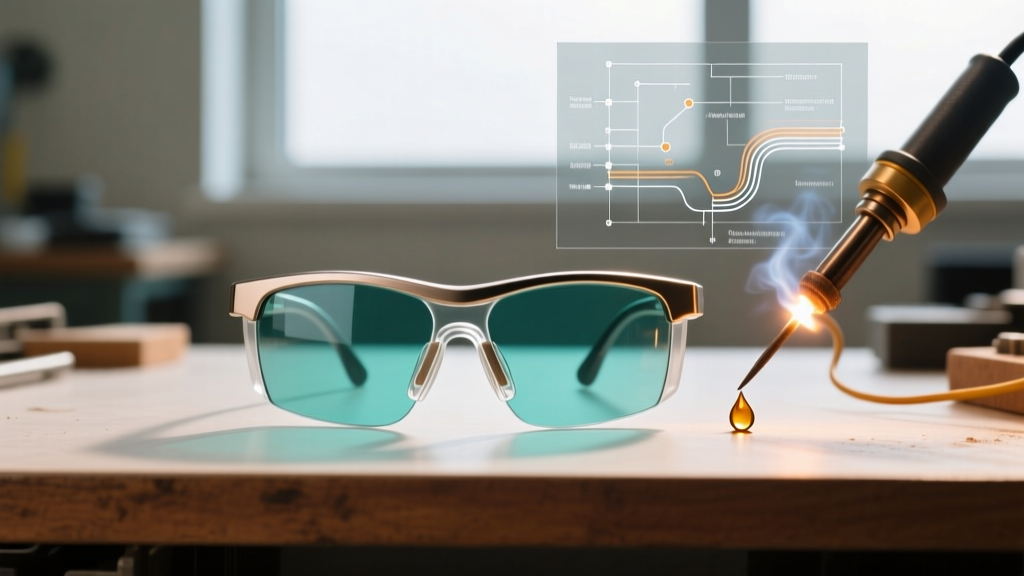
When purchasing soldering glasses, most electronics technicians and hobbyists focus exclusively on magnification power and field of view. However, the modern soldering workbench is a hostile chemical and thermal environment. Between acidic flux splatter, aggressive cleaning solvents, and ambient heat from reflow ovens and preheaters, the physical materials of your eyewear dictate its lifespan and optical clarity.
Choosing the wrong lens polymer or frame composite can result in catastrophic optical failure—such as lens crazing, coating delamination, or frame warping—within months. This guide provides a deep-dive material compatibility analysis to help you select eyewear that survives the realities of professional PCB rework and micro-soldering.
Soldering Environment Hazard Matrix
Before analyzing specific materials, it is critical to understand the environmental stressors present in electronics manufacturing and repair. The following matrix outlines how common soldering byproducts interact with safety eyewear.
| Environmental Stressor | Source / Example | Primary Damage Mechanism |
|---|---|---|
| Organic Acids | Water-Soluble Flux (e.g., Kester 245) | Etches anti-reflective (AR) coatings; degrades polycarbonate over time. |
| Rosin & Activators | RMA and No-Clean Fluxes | Leaves sticky residue requiring harsh solvents; causes micro-scratching during wiping. |
| Isopropyl Alcohol (IPA) | 99% IPA Flux Cleaning | Induces 'crazing' (micro-fractures) in standard polycarbonate lenses. |
| Thermal Proximity | PCB Preheaters (100°C - 150°C) | Warping of acetate frames; melting of low-grade acrylic visors. |
| Impact / Debris | Clipped component leads, wire snips | Shattering of mineral glass; pitting of uncoated soft polymers. |
Lens Materials: Optical Clarity vs. Chemical Resistance
The lens is the most critical component of your soldering glasses. According to OSHA standard 1910.133 for eye and face protection, lenses must meet specific impact resistance criteria, but OSHA does not regulate chemical degradation. Here is how the big three lens materials perform on the soldering bench.
1. Polycarbonate (PC)
Polycarbonate is the industry standard for safety glasses due to its exceptional impact resistance and lightweight nature. It easily passes the ANSI Z87.1 high-velocity impact test. However, PC has a major vulnerability in electronics repair: solvent sensitivity.
- The IPA Problem: Technicians routinely use 99% Isopropyl Alcohol to clean flux residue. Prolonged or repeated exposure to IPA causes polycarbonate to 'craze'—developing a web of microscopic internal fractures that permanently cloud the lens.
- Flux Interaction: Rosin flux does not chemically attack PC, but the mechanical action of scrubbing hardened rosin off PC lenses (which have a relatively soft surface) leads to severe micro-scratching unless a hard-coat is applied.
- Verdict: Ideal for general wire tinning and through-hole soldering where solvent use is minimal. Poor choice for heavy SMD rework requiring constant IPA cleaning.
2. Trivex (Urethane-Based Monomer)
Trivex is a premium alternative to polycarbonate. Originally developed for military helicopter windshields, it offers similar impact resistance to PC but with vastly superior chemical stability.
- Chemical Resilience: Trivex is highly resistant to IPA, acetone, and the organic acids found in water-soluble fluxes. You can aggressively clean Trivex lenses with solvent-soaked lint-free wipes without fear of crazing.
- Optical Quality: It features a higher Abbe value (45) compared to PC (30), meaning significantly less chromatic aberration (color fringing) at the edges of the lens—a crucial factor when inspecting fine-pitch BGA pads.
- Verdict: The ultimate material for professional micro-solderers and rework technicians. Expect to pay a $30 to $60 premium over standard PC safety glasses.
3. Mineral Glass
Glass lenses are optically flawless, highly scratch-resistant, and completely chemically inert. As noted in optical material guides by Edmund Optics, mineral glass provides unmatched transmission and environmental stability.
- The Weight & Safety Trade-off: Glass is heavy, causing fatigue during long rework sessions. Furthermore, unless specially tempered and thickened, glass can shatter upon impact from a flying component lead, posing a severe laceration risk to the eye.
- Verdict: Best reserved for stationary, bench-mounted magnifying visors (like the SE MZ109) rather than wearable safety frames.
Frame Materials: Surviving the Workbench
Frames must endure accidental contact with 350°C soldering iron tips, resting on hot PCB preheaters, and exposure to aerosolized contact cleaners.
TR-90 (Grilamid Nylon)
TR-90 is a thermoplastic polyamide that is currently the gold standard for premium safety frames. It possesses a 'memory-flex' quality, allowing it to bend under stress and return to its original shape. More importantly, it has a high heat deflection temperature. If you accidentally drop TR-90 frames onto a 120°C PCB preheater, they will not melt or permanently warp. They are also highly resistant to skin oils and acidic sweat.
Cellulose Acetate
Common in vintage-style or high-end designer safety glasses, acetate is a plant-derived plastic. While beautiful and rigid, acetate has a low glass transition temperature ($T_g$) of roughly 160°C. Proximity to a hot air rework station (like a Quick 861DW) can soften the frame, causing the lens retention grooves to expand and drop the lenses onto your workbench. Additionally, acetate is highly susceptible to acetone and strong flux thinners, which will strip its polish and cause a chalky white oxidation.
Standard ABS and Polycarbonate Blends
Found in budget-friendly models (under $20), these frames offer decent impact resistance but poor thermal stability. They are prone to becoming brittle over time when exposed to the UV output of certain curing lamps and the ozone generated by fume extractors.
Visors and Magnifiers: Model-Specific Vulnerabilities
Many technicians opt for headband-mounted magnifiers instead of traditional glasses. These devices introduce unique material compatibility challenges.
Donegan OptiVISOR (Leather / Canvas / Acetate)
The Donegan OptiVISOR is a legendary tool in the maker space, featuring interchangeable glass or acrylic lens plates. However, the standard headband uses leather and canvas. In high-humidity environments or when exposed to the acidic fumes of vaporized rosin flux, the leather degrades, stiffens, and cracks. Pro Tip: If you use an OptiVISOR for daily SMD soldering, upgrade to the vinyl or plastic headband variants, and stick to the glass lens plates (#4, #5, or #7) to avoid the acrylic plates melting if left near a hot air gun.
SE MZ109 (ABS Frame / Glass Lenses)
The SE MZ109 is a popular budget bench visor featuring a heavy-duty ABS plastic headband and dual glass lenses. While the glass lenses are impervious to flux and IPA, the ABS pivot joints are a weak point. If you spray aerosol flux remover or brake cleaner near the visor, the solvents will seep into the metal pivot pins and ABS housing, causing the plastic to seize or crack. Always remove the visor from the bench before using aerosolized solvents.
Solvent Cleaning Protocols by Material
To maximize the lifespan of your soldering glasses, you must match your cleaning solvent to the lens material. Using the wrong cleaner is the number one cause of premature eyewear failure.
Golden Rule of Optics: Never wipe a dry lens. Always use a solvent or surfactant to lift abrasive flux particles and silica dust before applying friction with a microfiber cloth.
- For Polycarbonate Lenses: Avoid IPA and Acetone entirely. Use a dedicated lens spray (like Zeiss Pre-Moistened Wipes) or a mild dish soap (Dawn) and distilled water solution. Dry with a clean, lint-free microfiber cloth.
- For Trivex and Mineral Glass: 99% IPA is safe for cutting through stubborn no-clean flux residue. For heavy rosin buildup, a specialized electronics cleaner like HFE (Hydrofluoroether) can be used without damaging the lens substrate or AR coatings.
- For Anti-Reflective (AR) Coatings: Water-soluble fluxes contain activators like adipic acid. If left on AR-coated lenses overnight, these acids will permanently etch the coating, creating a 'smudge' that cannot be polished out. Always rinse AR lenses with distilled water immediately after exposure to water-soluble flux.
Final Purchasing Framework
When buying your next pair of soldering glasses, use this quick decision matrix based on your specific workflow:
- The Heavy Rework Technician (Daily BGA/SMD): Choose Trivex lenses with a TR-90 frame. You need IPA resistance and thermal stability. Budget: $80 - $150.
- The Hobbyist / Through-Hole Builder: Choose Polycarbonate lenses with a standard nylon frame. Clean with mild soap only. Budget: $20 - $40.
- The Stationary Bench Inspector: Choose a glass-lens visor (like the SE MZ109). Weight is irrelevant, and glass offers the highest scratch resistance against aggressive scrubbing. Budget: $15 - $30.
By aligning your eyewear materials with the specific chemical and thermal realities of your soldering processes, you ensure both the safety of your vision and the longevity of your optical investment.