
The Metallurgical Barrier: Why Aluminum Rejects Solder
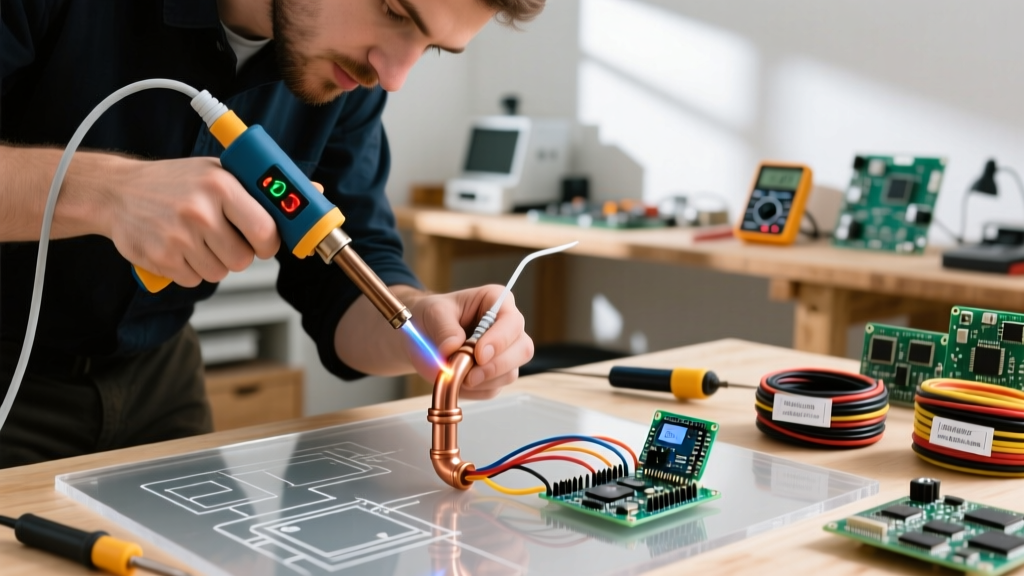
Aluminum soldering remains one of the most notoriously frustrating tasks in electrical and HVAC DIY projects. The core issue is not the aluminum itself, but its immediate reaction with oxygen. The moment bare aluminum is exposed to air, it forms a microscopic layer of aluminum oxide (Al2O3). While the base aluminum metal melts at roughly 1,220°F (660°C), this oxide layer has a melting point of over 3,700°F (2,037°C). Standard soft solders (melting around 360°F to 450°F) and even hard silver solders cannot penetrate this ceramic-like shield without aggressive chemical or mechanical intervention.
Expert Insight: If you attempt to solder aluminum using standard rosin-core electronics solder or standard plumbing paste, the solder will simply ball up and roll off. You must use specialized zinc-chloride or fluoroaluminate fluxes paired with zinc-aluminum or tin-zinc filler alloys to break the oxide barrier.
Aluminum Soldering Troubleshooting Matrix
Below is a diagnostic matrix for the most common failure modes encountered when joining aluminum wires, automotive AC lines, or marine battery terminals.
| Symptom | Root Cause | Actionable Fix |
|---|---|---|
| Solder balls up and refuses to wet the surface | Oxide layer is intact; flux is either wrong type or exhausted. | Switch to a dedicated aluminum flux (e.g., Superior Flux #4000). Mechanically abrade the metal underneath the molten flux pool. |
| Joint looks spongy, grainy, or dull gray | Oxide inclusions trapped in the joint; insufficient heat transfer. | Increase thermal input (switch from propane to MAP-Pro). Ensure the base metal reaches 700°F+ before introducing the filler rod. |
| Base metal warps or melts through | Applying excessive direct flame to overcome the oxide barrier without flux. | Reduce direct flame. Use a larger, softer flame envelope to heat the surrounding area, relying on flux to lower the surface tension. |
| Flux boils off and burns before solder flows | Using a high-heat torch (like Oxy-Acetylene) on thin-gauge aluminum without heat sinking. | Apply flux after the metal reaches 300°F. Use a copper heat sink block to draw excess thermal energy away from thin sheets. |
| Joint corrodes or weeps white powder weeks later | Failure to neutralize and clean corrosive zinc-chloride flux residues. | Wash the joint with warm water and a baking soda solution immediately after the joint cools. Seal with a marine-grade dielectric grease. |
Critical FAQs: Flux, Filler, and Torch Selection
1. What exact flux and filler rod should I buy?
For general electrical and low-stress mechanical joints, you need a two-part system. For the flux, Superior Flux #4000 or #4050 remains the industry standard for heavy-duty aluminum oxide removal. These are highly corrosive, water-soluble zinc-chloride formulations. For the filler metal, look for Zinc-Aluminum alloys like Harris AlumiBond 728 or Blue Demon BDALUM. These melt around 720°F (382°C) and provide excellent capillary action. Expect to pay roughly $18–$25 for a 1/2 lb tube of premium Al-Zn filler and about $15 for a 2 oz jar of specialized flux in 2026.
2. Can I use standard electronics rosin or plumbing flux on aluminum?
No. Standard rosin (R, RMA, or RA) is entirely ineffective against Al2O3. Plumbing fluxes designed for copper (typically zinc-chloride based but formulated for lower temperatures and different metallurgy) lack the specific fluoroaluminate or heavy zinc-chloride concentration required to etch aluminum. According to guidelines published by the American Welding Society, joining aluminum requires specific chemical agents that can disrupt the oxide layer at temperatures below the base metal's melting point. Always buy flux explicitly labeled for aluminum.
3. Propane vs. MAP-Pro vs. Oxy-Acetylene: Which torch do I need?
Aluminum has a thermal conductivity of approximately 237 W/m·K, meaning it pulls heat away from the joint incredibly fast.
- Propane: Only suitable for very small electrical wires (under 14 AWG). It lacks the BTU output to maintain joint temperature on larger masses.
- MAP-Pro: The sweet spot for DIYers and automotive AC line repairs. It burns hotter (approx. 3,730°F) and provides the necessary BTU transfer for wires up to 2/0 AWG and thin-walled tubing.
- Oxy-Acetylene: Required for thick structural brackets or large castings. However, it requires extreme care; the flame is so hot it can easily melt the base aluminum before the solder flows if you do not use a generous flame envelope and constant movement.
4. Why does my solder flow, but the joint snaps under slight pressure?
This is a classic "cold lap" or dry joint. It happens when the solder melts and flows over the oxide layer rather than alloying with the base aluminum. The solder is essentially just resting on top of a ceramic shell. You must achieve true metallurgical wetting, which requires the flux to actively etch the surface while the filler metal is in its liquid state.
The "Under-Flux" Abrasion Technique (Step-by-Step)
The most common mistake beginners make is wire-brushing the aluminum, applying flux, and then heating. By the time the metal reaches soldering temperature, a new oxide layer has already formed. To achieve a permanent bond, use the under-flux abrasion method:
- Degrease: Clean the aluminum with isopropyl alcohol or acetone to remove surface oils.
- Pre-heat: Apply your MAP-Pro torch to the joint area until it reaches roughly 300°F (water drops should dance and evaporate instantly).
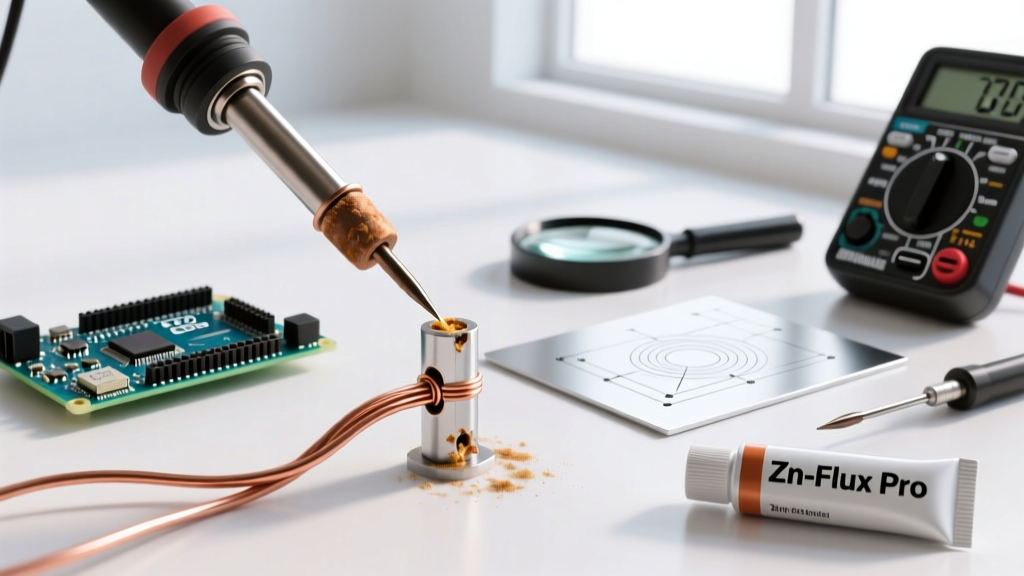
- Apply Flux: Paint a generous layer of Superior #4000 flux over the joint. The heat will cause it to bubble and melt into a liquid shield.
- Continue Heating: Bring the joint up to the melting point of your filler rod (approx. 700°F - 750°F). The flux will turn dark and highly active.
- Abrade Under the Pool: While keeping the flame on the part, take a stainless steel scratch brush or a hardened steel pick and physically scrub the aluminum surface through the liquid flux pool. The flux prevents oxygen from reaching the metal, while the brush physically shatters the Al2O3 layer.
- Introduce Filler: Touch your Zinc-Aluminum rod to the abraded area. It should instantly flash-melt and wick into the joint via capillary action.
Post-Solder Cleanup and Corrosion Prevention
Because effective aluminum fluxes rely on aggressive zinc-chloride or hydrochloric acid derivatives, leaving the residue on the joint will guarantee catastrophic galvanic corrosion within months, especially in marine or high-humidity environments. Once the joint has cooled to a safe handling temperature (below 150°F), scrub the area with a stiff nylon brush and a solution of warm water and baking soda (sodium bicarbonate). The baking soda will violently neutralize the acidic flux. Rinse with distilled water, dry completely with compressed air or a heat gun, and coat the finished joint with a marine-grade dielectric grease or a liquid electrical tape coating to seal it from future atmospheric moisture.