
The Shift to Soldering Automation in 2026
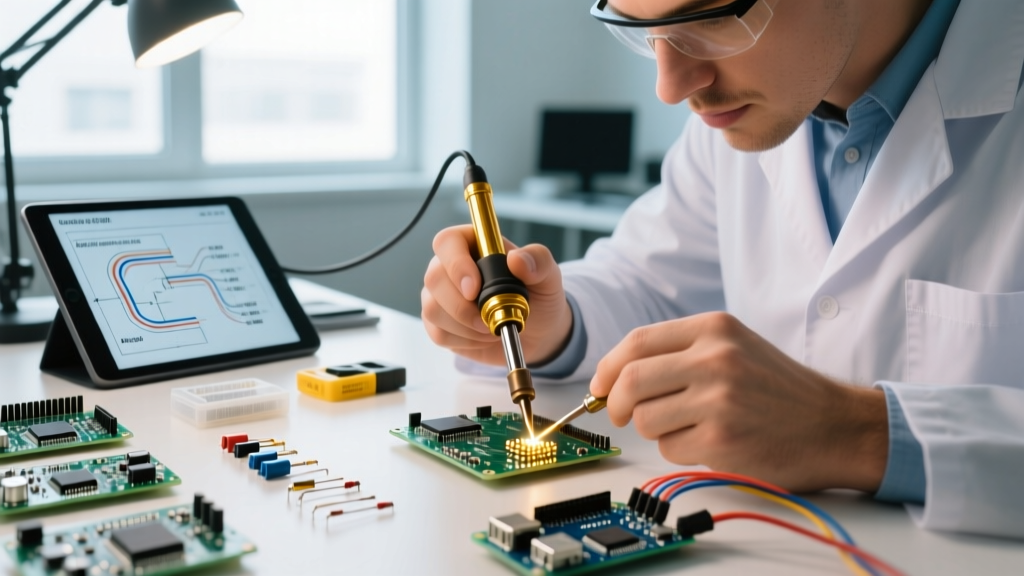
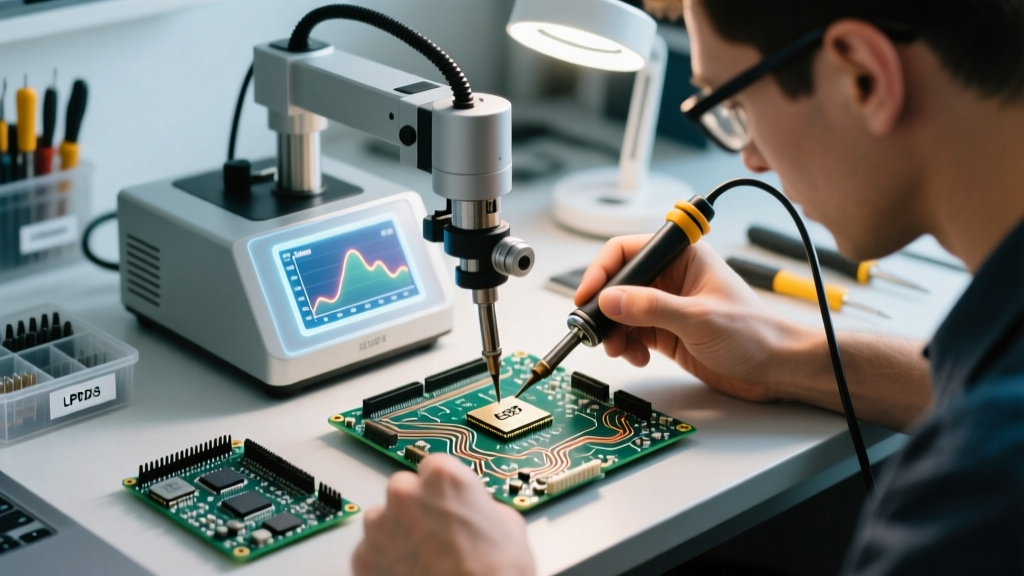
As electronics manufacturing scales and the demand for high-reliability assemblies grows, manual soldering has become a critical bottleneck. Human operators typically max out at 400 to 600 through-hole joints per hour, with fatigue inevitably leading to variability in wetting angles and fillet shapes. In 2026, soldering automation is no longer reserved exclusively for high-volume automotive or aerospace tiers; it is now accessible for small-to-mid-batch PCB assembly houses and advanced DIY prototyping labs.
Transitioning from manual to automated soldering requires navigating a complex matrix of technologies, upfront capital expenditures, and stringent thermal profiling. Whether you are aiming to meet IPC-A-610 Class 3 acceptability standards or simply trying to reduce per-board labor costs, understanding the nuances of robotic, selective, and laser soldering is paramount.
Core Technologies: Robotic vs. Selective vs. Laser
Not all automation is created equal. The right choice depends on your board density, component mix, and thermal sensitivity. Below is a comparison matrix of the three dominant soldering automation methods used in modern PCBA facilities.
| Technology | Best Application | Average Speed | Upfront Cost (2026) | Maintenance Overhead |
|---|---|---|---|---|
| Robotic (Point-to-Point) | Wire-to-board, simple THT, connectors | 3 - 6 sec/joint | $4,000 - $55,000 | Low (Tip changes, flux cleaning) |
| Selective (Mini-Wave) | Mixed SMT/THT, high-density boards | 1 - 3 sec/joint | $75,000 - $150,000 | High (Nozzle cleaning, dross removal, flux SG checks) |
| Laser (Non-Contact) | Heat-sensitive RF, micro-BGA, tight pitch | 0.5 - 2 sec/joint | $90,000 - $200,000+ | Low (Optics cleaning, laser calibration) |
ROI and Break-Even Analysis: When to Automate?
A common mistake engineering managers make is automating too early. Soldering automation yields a positive return on investment (ROI) under specific production conditions:
- High-Volume / Low-Mix: If you are running >10,000 identical boards per month, selective soldering will pay for itself in 8 to 14 months through labor reduction and scrap mitigation.
- High-Reliability Requirements: For aerospace or medical devices where NASA and military soldering standards mandate strict thermal profiling and zero-defect fillets, automation removes human error, saving thousands in rework and compliance auditing.
- Ergonomic Bottlenecks: If your operators are suffering from repetitive strain injuries (RSI) or you are facing high turnover in the hand-soldering department, a collaborative robot (cobot) soldering cell stabilizes your labor costs.
Expert Insight: Do not automate a broken process. If your PCB pad design violates DFM (Design for Manufacturing) principles—such as insufficient thermal relief on ground planes—automation will simply produce cold joints faster. Fix the thermal mass issues in your CAD layout before investing in capital equipment.
Top Automation Systems for Scaling Production
Based on 2026 market availability, here are the standout systems for facilities looking to integrate soldering automation, ranging from entry-level robotics to full selective lines.
1. Hakko FR-830 Robotic Soldering System (Entry-Level)
- Price Range: $4,500 - $6,500
- Specs: 4-axis desktop robot, integrated flux dispenser, programmable dwell times.
- Use Case: Ideal for low-volume wire harnesses, USB connectors, and large THT capacitors. It utilizes standard Hakko T18 series tips, keeping consumable costs under $10 per tip.
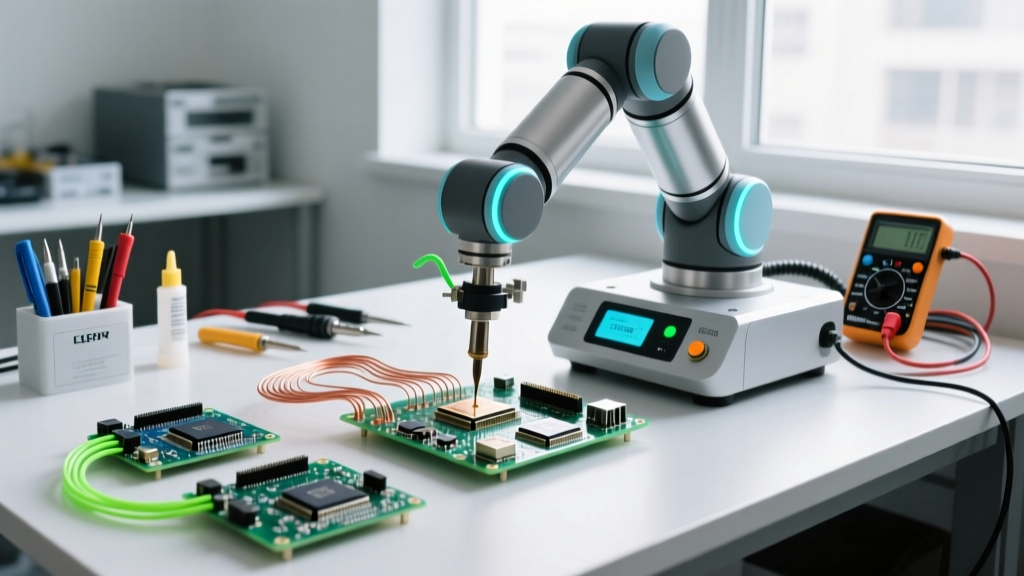
2. Universal Robots UR3e + Hakko End-Effector (Cobot Cell)
- Price Range: $35,000 - $55,000 (fully integrated)
- Specs: 6-axis collaborative robot, 3kg payload, force-torque sensing for Z-axis compliance.
- Use Case: 3D spatial soldering where the board cannot be laid flat, or for high-mix environments where the cobot can be quickly reprogrammed via teach-pendant for different board geometries.
3. PILLARHOUSE Jade MKII (Selective Soldering)
- Price Range: $85,000 - $120,000
- Specs: Inline conveyor, piezoelectric drop-jet fluxer, nitrogen-blanketed mini-wave nozzles.
- Use Case: High-mix, high-volume THT components on SMT-heavy boards. The N2 blanketing reduces dross generation by up to 85% and improves wetting on OSP-finished boards.
4. Finetech FINEPLACER lambda (Laser Soldering)
- Price Range: $110,000 - $160,000
- Specs: Closed-loop pyrometer temperature control, localized diode laser heating.
- Use Case: Soldering near heat-sensitive components (e.g., plastic connectors, RF shields) where a physical iron tip would cause thermal damage or physical interference.
Troubleshooting Automated Failure Modes
Automation does not eliminate defects; it merely changes their root causes. Below are the most common failure modes in automated soldering and how to engineer them out of your process.
Thermal Profiling Edge Cases & Cold Joints
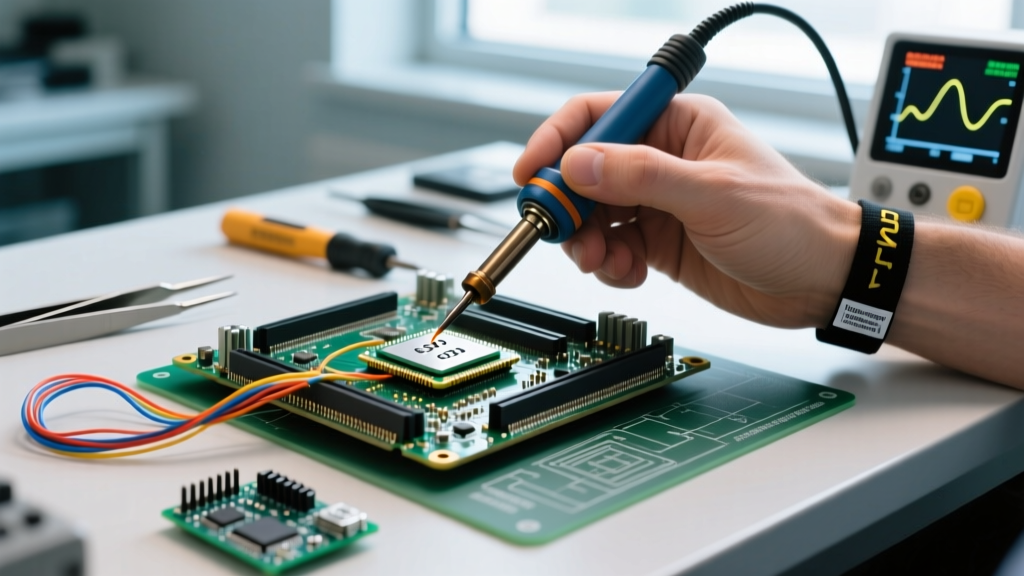
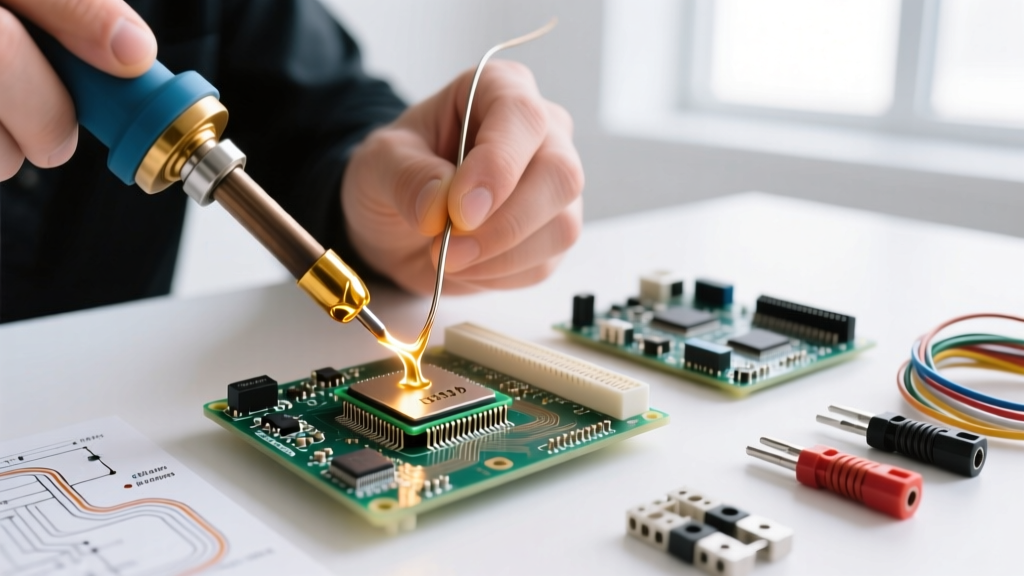
When using SAC305 (Sn96.5/Ag3.0/Cu0.5) lead-free alloy, the liquidus temperature is 217°C. A common error in robotic soldering is setting the iron tip to 350°C but failing to account for the thermal mass of the joint. If the dwell time is capped at 1.5 seconds on a multi-layer board with heavy ground planes, the joint will not reach the required 235°C minimum for proper intermetallic compound (IMC) formation, resulting in a dull, grainy cold joint. Solution: Implement pre-heating (bottom-side IR or convection at 100°C-120°C) and extend robotic dwell times to 2.5 - 3.5 seconds for high-mass joints.
Flux Spatter and Specific Gravity Drift
In selective soldering, piezoelectric drop-jet fluxers apply microscopic droplets of VOC-free, water-based flux. If the flux specific gravity (SG) drops below 0.90 due to water evaporation, the flux becomes overly concentrated, leading to violent spattering when it hits the 270°C solder wave. This spatter contaminates adjacent SMT pads and causes bridging. Solution: Install an inline SG monitor and auto-dilution valve to maintain the flux strictly between 0.92 and 0.94 SG.
Robotic Tip Oxidation (Fe3O4 Buildup)
Robotic arms do not 'feel' when a tip stops wetting. If the automated brass-wool tip cleaner cycle is skipped or the tip is left at 380°C between joints for more than 15 seconds, the iron plating oxidizes into a black, non-wetting crust. Solution: Program the robot to drop the tip temperature to 250°C during idle transit moves and utilize nitrogen-shrouded tip cleaners to displace oxygen during the cleaning cycle.
Integration Checklist for Engineering Managers
Before signing a purchase order for a soldering automation system, ensure your facility meets these prerequisites:
- DFM Audit: Verify all THT pads have thermal reliefs and sufficient annular rings (minimum 0.15mm) to prevent pad lifting under automated thermal stress.
- Fixture Design: Design pallets or nests that hold the board perfectly flat. Even a 1mm Z-axis variance can cause a selective soldering nozzle to crash into the PCB or fail to make contact.
- Fume Extraction: Automated systems generate concentrated flux fumes. Ensure your facility has localized HEPA/Carbon extraction capable of handling 500+ CFM directly at the solder wave or iron tip.
- Consumables Supply Chain: Secure a localized supply of specialized automation tips (which often feature thicker iron plating, e.g., 150+ microns, compared to manual tips) and high-purity nitrogen gas if utilizing N2 blanketing.
Final Thoughts
Soldering automation in 2026 is a powerful lever for scaling production, improving yield, and achieving strict IPC compliance. However, it requires a shift in mindset from 'craftsmanship' to 'process engineering.' By selecting the right technology for your specific board geometry, rigorously controlling your flux and thermal profiles, and maintaining your equipment to prevent oxidation and spatter, you can transform your PCBA line into a highly efficient, zero-defect manufacturing cell.