
From Hand-Pumps to Swirl Combustion: The Thermal Evolution
The modern propane torch for soldering is a marvel of compact thermodynamics, capable of delivering concentrated, 3,600°F heat to copper joints and heavy electrical lugs with the flick of a wrist. However, the path from the soot-spewing, hand-pumped blowtorches of the early 20th century to the piezo-ignited, swirl-combustion wands of 2026 is a fascinating study in chemical engineering and metallurgical safety. Understanding this history is not just an academic exercise; it directly informs which torch setup you should buy today for specific plumbing, electrical, or HVAC applications.
The Pre-Propane Era: Gasoline, Kerosene, and Hand-Pumped Heat
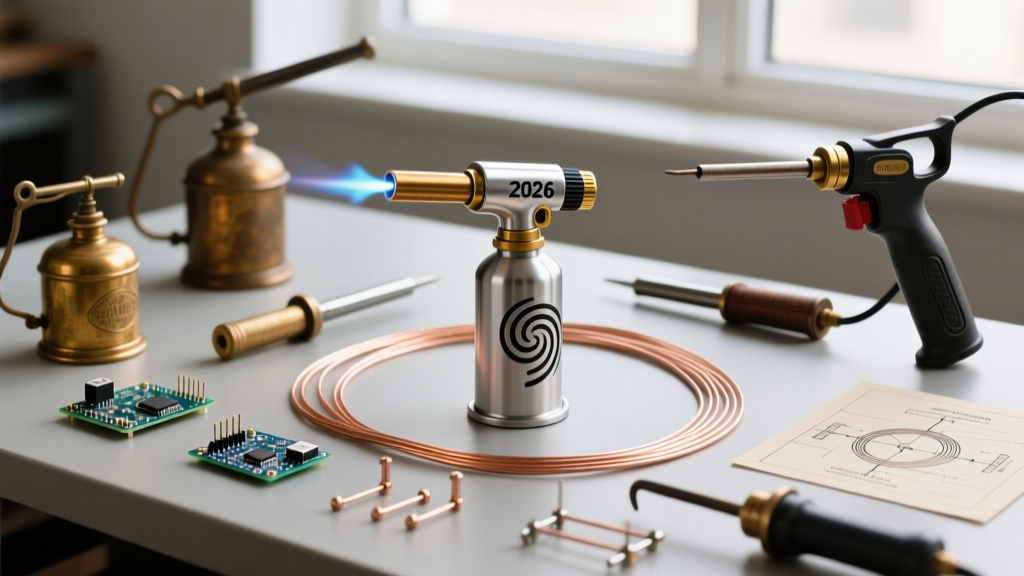
Before the widespread commercialization of liquefied petroleum gas (LPG), plumbers and electricians relied on gasoline and kerosene blowtorches. Early models, such as the original Bernzomatic gasoline torches from the 1910s through the 1940s, were essentially pressurized bombs. The user had to manually operate a leather pump on the base of the tank to build 30 to 40 PSI of pressure, forcing liquid fuel up a tube where it was vaporized by a pre-heating flame.
These tools were notoriously dangerous. If the vaporizing tube clogged with carbon soot—a common failure mode—the torch would spit raw, flaming liquid gasoline. Furthermore, gasoline burns relatively cool and dirty compared to modern gases, leaving heavy carbon deposits on copper pipes that could interfere with the capillary action required for proper solder joints, a critical factor noted in historical Copper Development Association (CDA) plumbing standards.
The 1950s Propane Revolution and the Disposable Cylinder
The paradigm shifted dramatically in the post-WWII era with the refinement of propane extraction and the introduction of the seamless, disposable steel cylinder. Bernzomatic and other manufacturers capitalized on the DOT 39 specification cylinder, which allowed non-refillable 14.1 oz tanks of pure propane to be sold at hardware stores. Propane (C3H8) offered a clean burn, a boiling point of -44°F (meaning it vaporizes readily at room temperature), and a maximum flame temperature of roughly 3,600°F when mixed with ambient air.
This era introduced the standard brass pencil torch. While a massive leap forward in safety and convenience, these early air-aspirated pencil tips suffered from a "cold spot" at the very center of the flame cone, requiring technicians to constantly sweep the torch back and forth across a copper fitting to avoid localized overheating while waiting for the 95/5 tin-antimony solder to flow.
The MAPP Gas Era and the 2008 Propylene Shift
As HVAC systems grew more complex and silver-bearing solders (which require higher temperatures to melt) became standard for high-pressure refrigeration lines, standard propane struggled to deliver adequate BTU transfer. Enter MAPP gas (Methylacetylene-Propadiene Propane). Packaged in distinct yellow cylinders, true MAPP gas burned at approximately 3,730°F in air and maintained higher vapor pressure in cold weather, making it the undisputed king of the job site from the 1980s through the early 2000s.
However, true MAPP gas was a byproduct of natural gas processing. In 2008, Dow Chemical (via its Petromont subsidiary) shut down the sole North American plant producing the MAPP stabilizers. The industry faced a crisis. The solution was MAP-Pro, a proprietary blend consisting primarily of propylene (C3H6). Propylene burns just as hot as the original MAPP (3,730°F) and mimics its vapor pressure curve, allowing it to be sold in the exact same yellow 14.1 oz cylinders (such as the ubiquitous Worthington 336336). Today, when you buy a "yellow cylinder" for your torch, you are buying propylene, not the original MAPP formula.
Data Matrix: Fuel Evolution in Soldering Torches
| Era | Primary Fuel | Max Temp (in Air) | Ignition Method | Primary Limitation |
|---|---|---|---|---|
| 1920s-1950s | Gasoline/Kerosene | ~3,200°F | Match/Flint | Soot, manual pumping, flashback risk |
| 1960s-1990s | Standard Propane | ~3,600°F | Flint Striker | Flame cold-spot, slow heat transfer |
| 1990s-2008 | True MAPP Gas | ~3,730°F | Flint/Early Piezo | Supply chain vulnerability |
| 2009-2026 | MAP-Pro (Propylene) | ~3,730°F | Piezo/Swirl Chamber | Higher fuel cost per ounce |
Modern 2026 Torch Technology: Swirl Combustion and Turbo Tips
The most significant mechanical evolution in the modern propane torch for soldering is the advent of swirl combustion technology, popularized by the Bernzomatic TS8000. In a standard torch, gas flows straight through a narrow orifice, pulling in air via the Venturi effect. In a swirl-combustion torch, the gas is injected tangentially into a spherical chamber. This creates a high-speed vortex that thoroughly mixes the propylene with ambient oxygen before it exits the nozzle.
The result is a stoichiometric, ultra-concentrated flame that eliminates the traditional cold spot. According to Lincoln Electric's soldering and brazing guidelines, precise, concentrated heat is vital to prevent flux burnout and base metal oxidation. The TS8000 can bring a 1/2-inch copper pipe and fitting to the 500°F flow temperature of 95/5 solder in under four seconds, drastically reducing the heat soak that can damage nearby PVC insulation or wooden studs.
Actionable Buyer Guide: Choosing Your Torch Based on Evolution
Do not simply buy the cheapest torch on the shelf. Match the technology to your specific 2026 workflow:
- Light Electrical & Hobbyist (Under $30): A standard brass pencil torch (e.g., Worthington WT2301) paired with a standard green propane cylinder. Ideal for tinning 10 AWG wire, shrinking heat tubing, or light silver jewelry work. The lower heat prevents blowing away delicate components.
- Residential Plumbing & Heavy Lugs ($75 - $95): The Bernzomatic TS8000 trigger-start torch paired with a yellow MAP-Pro cylinder. The swirl combustion is mandatory for soldering 3/4-inch and 1-inch copper water lines, or sweating heavy 500 MCM electrical lugs where rapid heat penetration is required before the flux turns to glass.
- HVAC & Silver Brazing ($250+): For joining copper refrigeration lines with 15% silver phos-copper alloy (which melts at ~1,200°F), air-aspirated torches fall short. You must step up to an Oxy-Propane setup, such as the Victor Journeyman or Smith AW1A. These mix pure oxygen from an R-cylinder with propane, pushing flame temperatures past 4,600°F and providing the reducing envelope necessary to prevent internal copper oxidation (cupric oxide scale).
Historical Failure Modes and Modern Edge Cases
While modern torches are vastly safer than their gasoline predecessors, understanding historical failure modes helps prevent modern accidents. Flashback—where the flame burns inside the torch tube—was a constant threat with early liquid fuels. Today, flashback in a propane torch is rare but can occur if the orifice is loose or if the operator attempts to use a swirl-combustion tip (like the TS8000) with a nearly empty, freezing standard propane cylinder. The swirl chamber requires the higher vapor pressure of propylene (MAP-Pro) to pull the correct air-to-fuel ratio; starving it causes the flame to lift off the tip or burn back into the chamber.
Furthermore, technicians must adhere to strict OSHA hazard and safety guidelines regarding cylinder storage. Unlike the heavy steel tanks of the 1950s, modern DOT 39 disposable cylinders have pressure relief valves that will vent raw gas if exposed to temperatures above 120°F. Never leave a MAP-Pro cylinder in a closed truck bed in the summer sun; the thermal expansion of propylene will trigger the relief disc, filling your vehicle with highly flammable gas that is heavier than air and will pool in the footwells.
Conclusion
The evolution of the propane torch for soldering is a testament to the relentless pursuit of job-site efficiency and safety. From the terrifying volatility of hand-pumped gasoline to the precision-engineered, vortex-driven MAP-Pro wands of today, the tools have adapted to the increasing demands of modern metallurgy and building codes. By understanding the chemical and mechanical history of your torch, you can select the exact thermal profile required for your next project, ensuring leak-free plumbing joints and electrically sound connections every time.