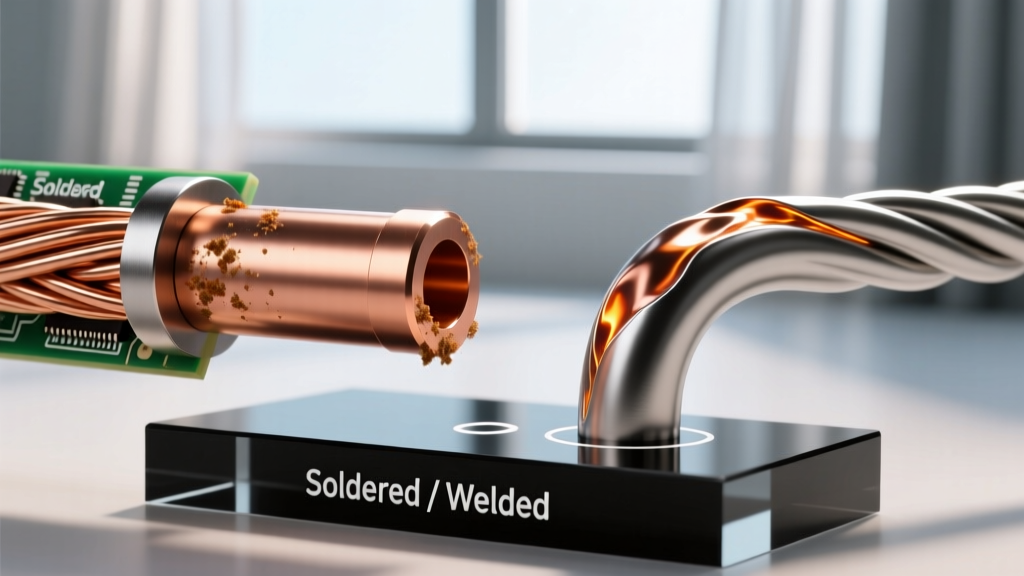

The Metallurgical Divide: Fusion vs. Capillary Action
When engineers and DIYers evaluate soldered vs welded connections for electrical applications, the decision hinges on metallurgy, thermal tolerance, and mechanical stress. While both methods create electrically conductive pathways, their underlying physics are fundamentally opposed. Understanding these differences is critical for preventing catastrophic failures in high-current systems, custom battery packs, and sensitive microcontroller circuits.
Soldering: The Filler Metal Approach
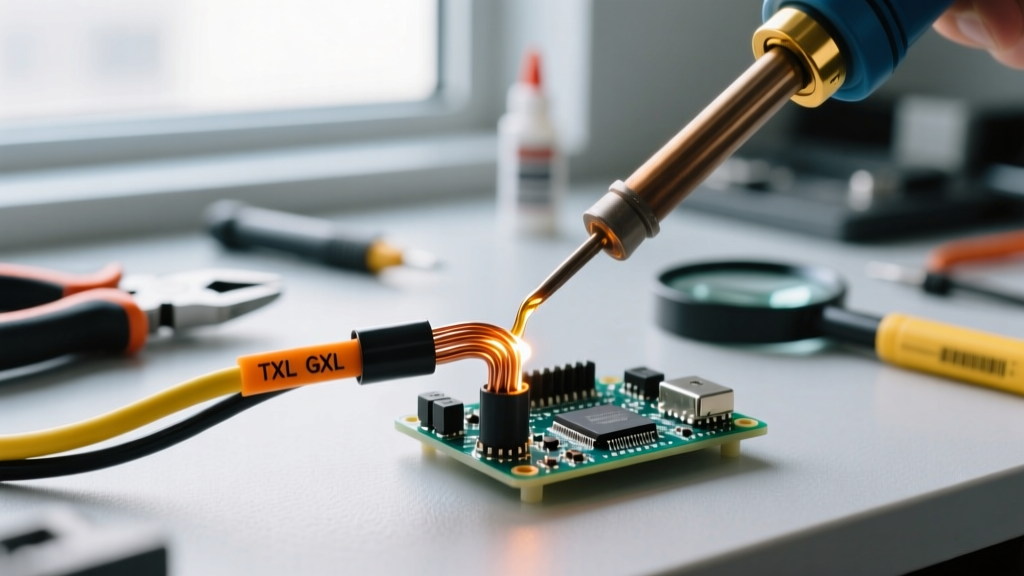
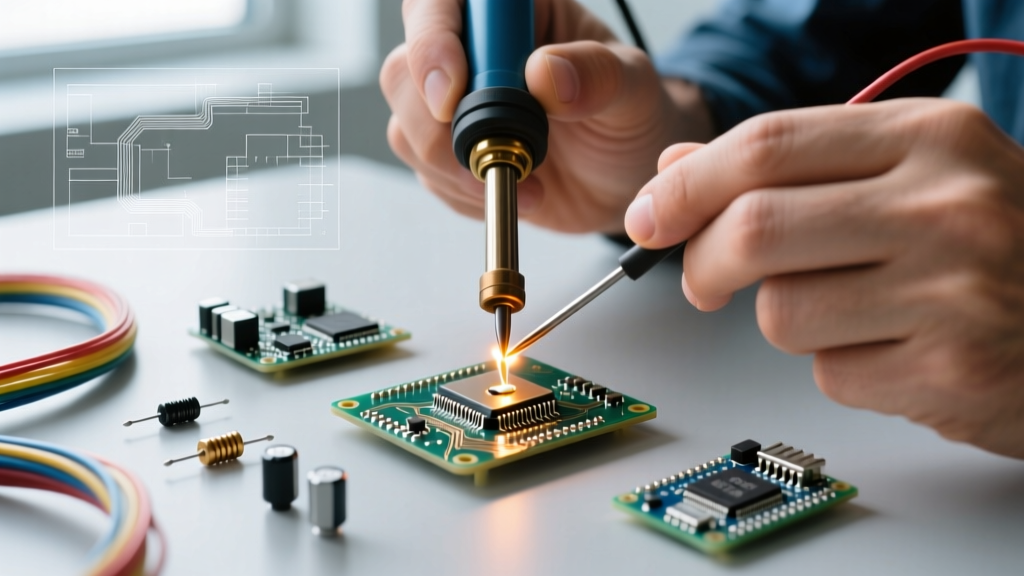
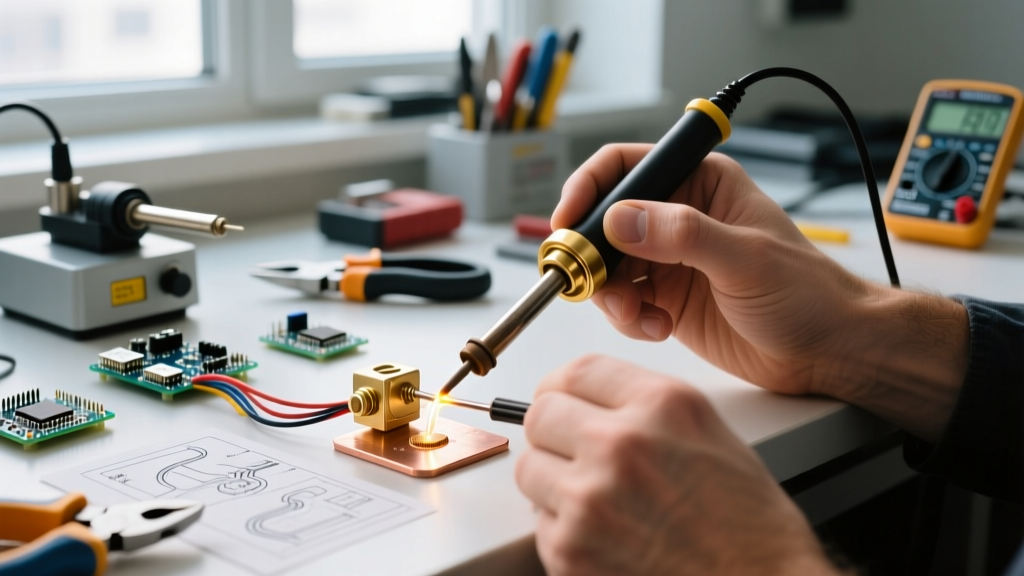
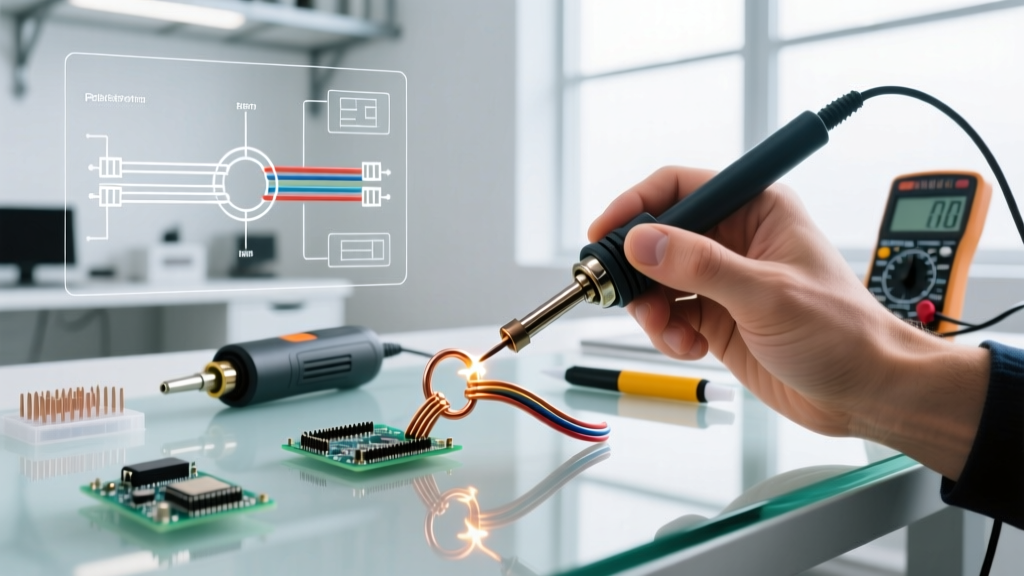
Soldering is a low-temperature joining process where the base metals do not melt. Instead, a filler alloy (typically melting under 450°C) liquefies and flows via capillary action, aided by chemical flux. In modern electronics, lead-free SAC305 (Sn96.5/Ag3.0/Cu0.5) is the industry standard, melting at 217°C. The joint's mechanical and electrical integrity relies entirely on the microscopic intermetallic compound (IMC) layer formed between the molten solder and the copper pad or wire strands.
Welding: The Fusion Approach
Welding achieves a true metallurgical bond by melting the base metals themselves, often combined with localized pressure. In electrical contexts, this usually means Resistance Spot Welding (RSW) for battery tabs or Exothermic Welding for heavy grounding infrastructure. According to the TWI Global welding authority, welding creates a continuous grain structure across the joint, resulting in tensile strengths that match or exceed the base metal itself.
Soldered vs Welded: Head-to-Head Comparison Matrix
| Criteria | Soldering (SAC305 / Sn63) | Resistance Spot Welding | Exothermic Welding (Cadweld) |
|---|---|---|---|
| Peak Temperature | 220°C - 380°C | Localized >1000°C (Microseconds) | >1400°C (Molten Copper) |
| Tensile Strength | ~58 MPa (SAC305) | Matches Base Metal (~200+ MPa) | Exceeds Base Copper Wire |
| Heat Affected Zone (HAZ) | Wide (Risk of insulation melt) | Extremely Narrow (Pulse controlled) | Massive (Requires bare metal) |
| Electrical Resistance | Higher (Alloy dependent) | Near Zero (Homogeneous bond) | Near Zero (Solid Copper Mass) |
| Primary Use Case | PCBs, delicate wiring, sensors | 18650/21700 cells, busbars | Grounding rods, heavy rail |
Application Deep-Dive: Where Each Method Wins
1. EV Battery Packs and 18650/21700 Cells
In the realm of lithium-ion battery pack assembly, the soldered vs welded debate is definitively settled: welding is mandatory. Soldering an 18650 cell requires prolonged heat application to overcome the thermal mass of the steel or nickel can. This heat transfers directly into the cell's internal jelly roll, degrading the electrolyte and potentially tripping the CID (Current Interrupt Device), permanently killing the cell.
Conversely, pulse spot welding delivers high current (often 1,500A to 3,000A) in a tightly controlled 20 to 40-millisecond burst. The resistance at the interface of the 0.15mm pure nickel strip and the battery terminal generates instant, localized fusion without raising the internal cell temperature. As noted in NASA's Electronic Parts and Packaging (NEPP) reliability studies, minimizing thermal cycling and bulk heat exposure is critical for preventing micro-cracking and chemical degradation in sensitive electrochemical cells.
2. High-Current Marine and Automotive Grounding
For joining thick-gauge copper wire (e.g., 2/0 AWG) to steel chassis or copper-clad ground rods, soldering is mechanically insufficient and highly prone to galvanic corrosion. Here, exothermic welding (commonly known by the brand name CADWELD) is the gold standard. The process uses a chemical reaction to produce molten copper that permanently fuses the cable to the rod. According to nVent's CADWELD engineering documentation, these molecular bonds will not loosen, corrode, or increase in resistance over decades of soil exposure, unlike soldered joints which suffer from creep and moisture ingress.
3. PCBs, Microcontrollers, and Delicate Electronics
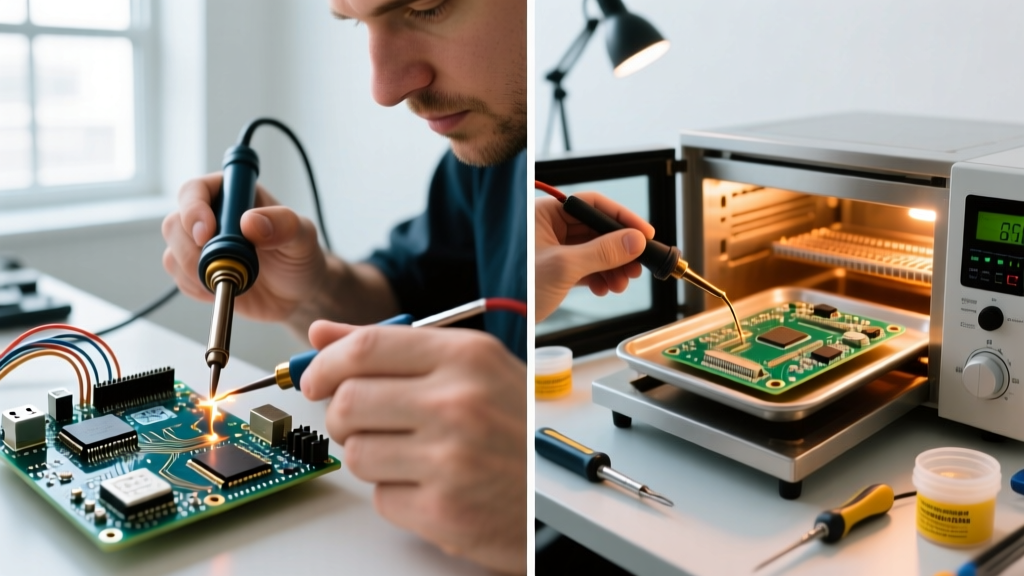
Welding is entirely destructive to printed circuit boards. The localized plasma and extreme thermal shock of even micro-TIG welding would instantly vaporize copper traces and delaminate FR4 fiberglass substrates. Soldering remains the undisputed king of PCB assembly, utilizing precise thermal profiles (e.g., reflow ovens peaking at 245°C for SAC305) to secure components without destroying the underlying architecture.
The Third Contender: Cold Crimping
No comprehensive guide on electrical joining is complete without addressing cold crimping. In automotive and aerospace wiring (governed by IPC/WHMA-A-620 standards), crimping is often preferred over both soldering and welding for wire-to-terminal connections. A properly executed crimp using a ratcheting tool (like the Knipex KN-97 53 50) creates a "cold-weld" effect through extreme mechanical deformation. This eliminates the heat-affected zone entirely, preserving the wire's tensile strength and preventing the "solder wick" effect—where liquid solder travels under the wire insulation, creating a rigid, brittle point that easily snaps under vibration.
Failure Modes: How the Joints Actually Break
"A solder joint fails when subjected to continuous mechanical shear; a weld fails when improper pulse parameters create brittle intermetallics."
- Solder Creep & Fatigue: Lead-free solders like SAC305 are susceptible to thermal fatigue. In high-vibration environments (like automotive engine bays), the IMC layer develops micro-fissures over time, leading to a high-resistance hot spot and eventual thermal runaway.
- Tin Whiskers: Bright tin and lead-free solder finishes can grow microscopic crystalline structures over months or years, causing short circuits in high-density, low-voltage logic boards.
- Weld Expulsion (Splatter): If a spot welder's pulse current is too high or the electrode force is too low, the molten metal violently expels from the weld nugget. This leaves a porous, weak joint and can potentially pierce the battery cell casing, causing a lethal short circuit.
- Dissimilar Metal Embrittlement: Attempting to weld copper directly to aluminum without ultrasonic friction creates a brittle CuAl2 intermetallic layer that shatters under minor bending stress.
2026 Equipment Cost & Setup Breakdown
Building a reliable joining station requires matching the tool to the thermal demand. Here is a realistic look at current market pricing for prosumer and light-industrial gear:
- Precision Soldering Station: The Hakko FX-888D remains a benchmark for reliability at $115, while the Weller WE1010NA offers faster thermal recovery for thick wires at $135. For high-mass busbars, a JBC CD-2BQE active-tip station is required, costing upwards of $550.
- DIY Battery Spot Welders: The Malectics DIY spot welder (~$150) handles basic 0.10mm nickel strips, but serious builders opt for the KWeld system paired with a kCap supercapacitor bank, totaling roughly $350 for industrial-grade pulse control.
- Exothermic Kits: Single-use CADWELD molds and cartridges cost between $40 to $80 per joint, making it economically viable only for permanent, high-stakes grounding infrastructure.
Final Verdict: Choosing Your Joining Method
The choice between soldered and welded connections is not about which is universally "better," but which respects the physics of your specific application. If you are routing signals on an ESP32 microcontroller or terminating a delicate thermocouple, soldering provides the necessary thermal restraint. However, if you are assembling a 48V e-bike battery pack or burying a ground grid, welding provides the structural integrity and zero-resistance permanence that solder simply cannot achieve. Always design for the failure mode: if the joint will experience shear stress or thermal cycling, abandon the soldering iron and reach for the welder.