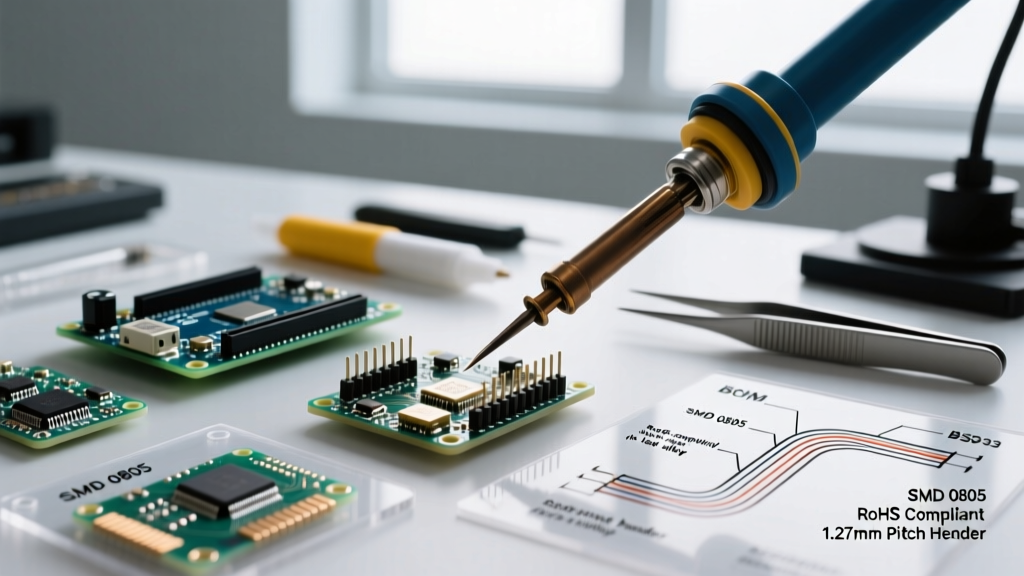

When junior hardware engineers, procurement specialists, or technical writers first enter the electronics manufacturing space, a surprisingly common foundational search query is simply: how do you spell soldering? While the literal, dictionary answer is S-O-L-D-E-R-I-N-G, in the context of industrial application, global supply chains, and contract manufacturing (CM), "spelling" takes on a much more critical and expensive meaning. In the electronics industry, spelling equates to precise technical nomenclature, alloy specification, and process definition.
A single typographical error in a Bill of Materials (BOM) or a Request for Quote (RFQ)—such as confusing "soldering" with "brazing," or misspelling a critical alloy designation like SAC305—can result in catastrophic assembly failures, severe RoHS compliance violations, and tens of thousands of dollars in scrapped printed circuit board assemblies (PCBAs). As we navigate the increasingly automated and AI-driven supply chain landscape of 2026, mastering the "spelling" and terminology of soldering is a mandatory skill for buyers and engineering managers.
Beyond the Dictionary: The Syntax of Electronics Manufacturing
The English language is forgiving; industrial manufacturing is not. The term "soldering" specifically defines a joining process where two or more metal items are fused together by melting and putting a filler metal (solder) into the joint, without melting the base workpieces. According to the IPC Standards Directory, soldering is strictly differentiated from other thermal joining methods by its temperature threshold: the filler metal must have a liquidus temperature below 450°C (842°F).
When procurement teams use imprecise language—such as writing "weld the connector pins" or "braze the RF shield" instead of "solder"—automated procurement systems and overseas CMs may interpret this literally, leading to the application of destructive heat profiles that delaminate FR-4 substrates and destroy surface-mount components.
The Joining Process Terminology Matrix
To ensure your RFQs and technical documentation are interpreted correctly by global manufacturing partners, buyers must use the exact terminology for the intended thermal process. Below is the industry-standard matrix for thermal joining nomenclature:
| Process Term | Temperature Threshold | Base Metal Melting? | Primary Industrial Application |
|---|---|---|---|
| Soldering | Below 450°C (842°F) | No | PCBA component attachment, wire termination, SMT/BGA reflow. |
| Brazing | Above 450°C (842°F) | No | Heavy copper busbars, HVAC refrigerant lines, aerospace structural joints. |
| Welding | Above base metal melting point | Yes | Chassis fabrication, battery tab joining (ultrasonic/laser), structural steel. |
The High Cost of "Misspelled" Alloys in the BOM
In industrial procurement, "spelling" extends to the exact alphanumeric designation of solder alloys. A common and devastating error occurs when buyers mistype or abbreviate alloy compositions. Consider the industry-standard lead-free alloy: SAC305.
SAC305 is the correct nomenclature for an alloy composed of 96.5% Tin (Sn), 3.0% Silver (Ag), and 0.5% Copper (Cu). If a procurement officer attempts to "spell" this out manually and enters SAC300 or SAC35 into the ERP system, the CM may source an alloy with drastically different silver content. Silver is the most expensive component in this alloy; in 2026, authentic SAC305 solder paste and wire remain highly sensitive to precious metal market fluctuations, typically costing between $90 and $120 per kilogram depending on volume and flux chemistry.
⚠️ Procurement Warning: Substituting SAC305 with a lower-silver alternative like SAC0307 (0.3% Ag) to cut costs without engineering approval alters the thermal fatigue resistance of the joint. This is a direct violation of IPC J-STD-001 requirements for high-reliability assemblies and will void automotive (AEC-Q) or aerospace certifications.
Leaded vs. Lead-Free: The Syntax of Compliance
Perhaps the most dangerous "spelling" error in electronics procurement involves lead content. The transition to RoHS (Restriction of Hazardous Substances) compliance requires meticulous documentation. The EU RoHS Directive Guidelines mandate that lead (Pb) must not exceed 0.1% by weight in homogeneous materials.
If a BOM specifies "Sn63" without explicitly stating "Sn63Pb37" (which is 63% Tin and 37% Lead), a CM might assume a lead-free alternative is required, or worse, use a leaded alloy on a board destined for the European market. The resulting compliance failure can lead to customs impoundment, fines, and complete product recalls. Buyers must always spell out the full metallurgical composition or use the exact IPC-registered alloy designator.
Standardizing Your Procurement Language: A 4-Step Framework
To eliminate terminology-driven procurement errors, engineering and supply chain teams must implement strict nomenclature protocols. Follow this actionable framework to standardize how your organization "spells" and specifies soldering requirements:
- Mandate IPC-Registered Designators: Never use colloquial terms like "silver solder" or "rosin paste" in a BOM. Require the use of standardized IPC designators (e.g., Sn96.5Ag3.0Cu0.5 or ROL0 Flux Classification).
- Implement Automated BOM Scrubbing: Utilize 2026-era AI-driven PLM (Product Lifecycle Management) tools that flag non-standard alloy abbreviations and force the user to select from a verified, RoHS-compliant component library.
- Define Process Standards in the RFQ: Explicitly state the required workmanship standard on all manufacturing drawings. For example: "All soldering processes must comply with IPC J-STD-001, Class 3 requirements." This removes ambiguity regarding inspection criteria and acceptable defect limits.
- Audit Safety and Handling Terminology: When procuring leaded solders for exempt applications (e.g., military or medical aerospace), ensure your safety data sheets (SDS) and handling protocols align with OSHA Lead Standards. Mislabeling leaded solder as "industrial standard" rather than "leaded-exempt" can result in severe workplace safety violations.
Conclusion: Precision is Profitability
So, how do you spell soldering? In the consumer world, it is simply a verb describing the act of joining metals with heat. But in the industrial application and procurement sector, "spelling" soldering means mastering the precise, unforgiving language of metallurgy, thermal dynamics, and global compliance. By treating BOM terminology with the same rigor as circuit design, hardware companies can avoid devastating supply chain errors, ensure IPC compliance, and guarantee the long-term reliability of their electronic assemblies.