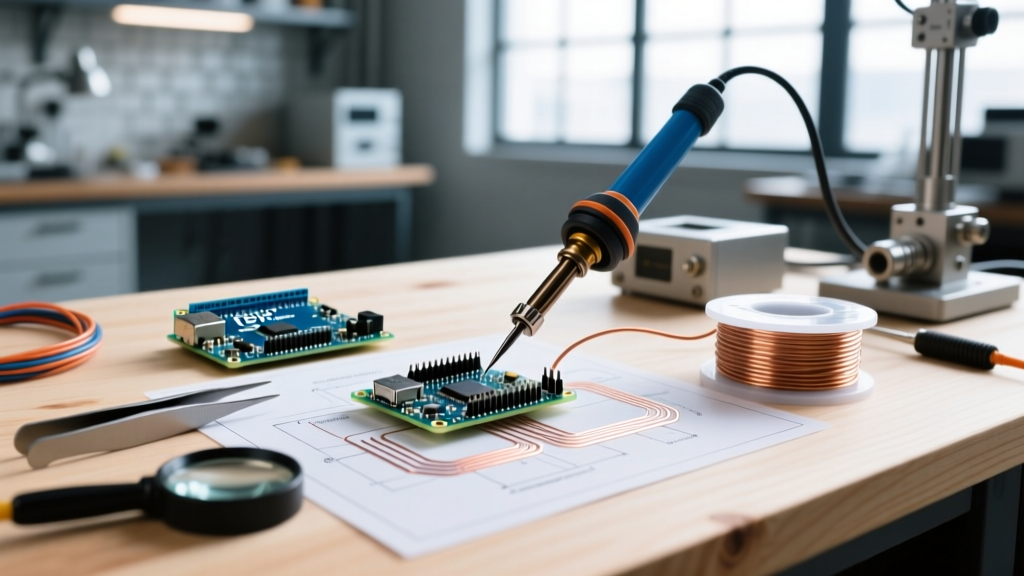

The 2026 Soldering Landscape: Why Thermal Recovery Matters
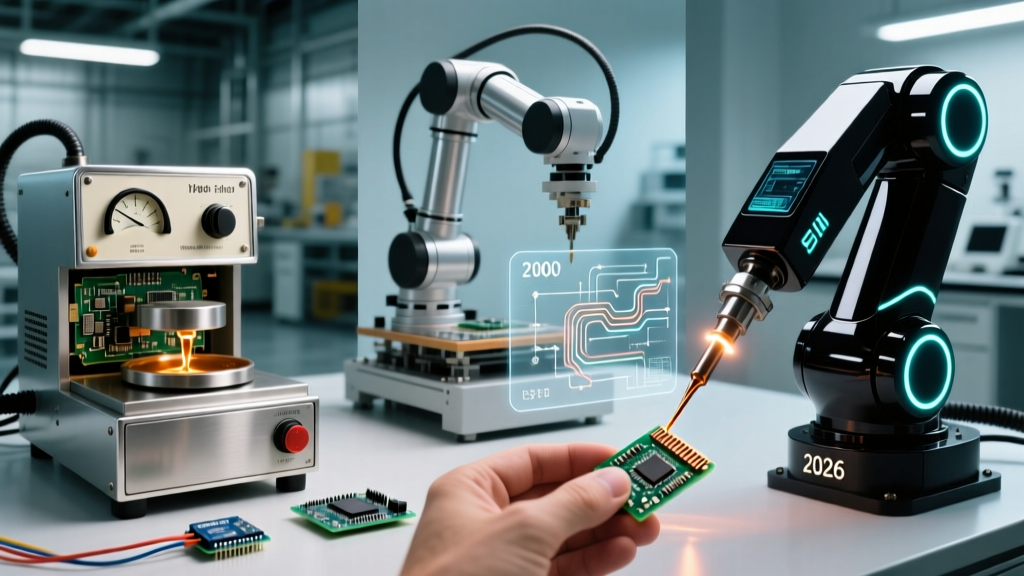
The transition to lead-free manufacturing is no longer a future mandate; it is the baseline reality of 2026. With SAC305 (Sn96.5/Ag3.0/Cu0.5) and SAC405 alloys dominating the market, the melting point for standard electronic assembly has shifted from 183°C to roughly 217°C–220°C. This 35°C increase demands significantly more thermal energy transfer, making the thermal recovery rate of your electronic soldering equipment the single most critical factor in preventing cold joints and pad delamination.
To cut through the marketing noise, we convened a panel of three industry veterans—an IPC-certified trainer, a depot-level repair technician, and a high-volume hardware hacker—to evaluate the best electronic soldering equipment available today. Their insights focus on real-world failure modes, exact pricing, and actionable setup parameters.
The Expert Panel
Marcus Thorne: IPC J-STD-001 Certified Trainer with 18 years in aerospace electronics manufacturing. Specializes in high-reliability Class 3 assemblies.
Sarah Jenkins: Senior Depot Repair Technician for a major consumer electronics OEM. Replaces over 400 micro-BGA and QFN components monthly.
David Lin: Hardware Hacker and Maker Space Director. Focuses on rapid prototyping, field repairs, and budget-optimized lab setups.
Tier 1: High-Volume Production & Mission-Critical Repair
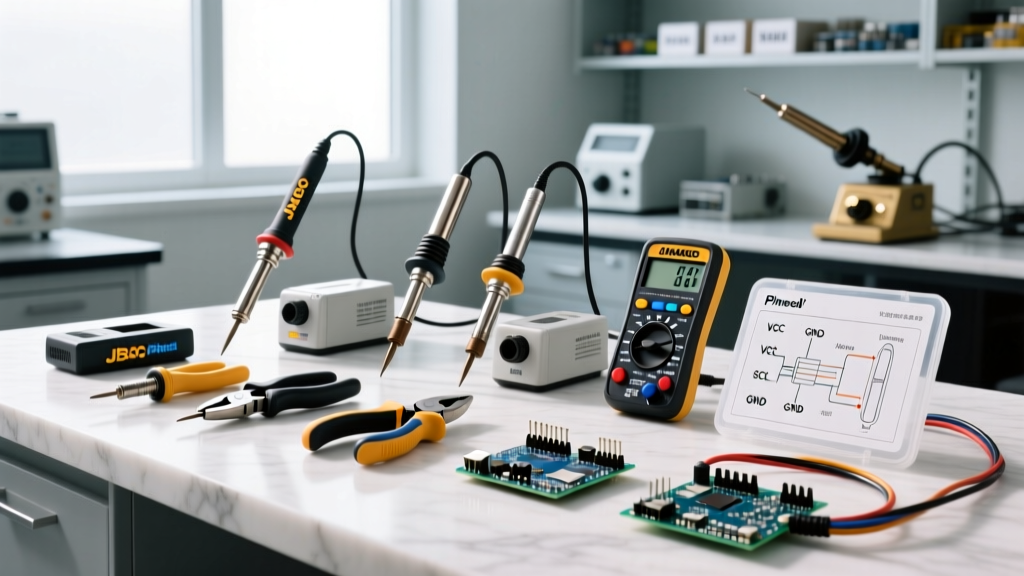
Expert Pick: JBC CD-2BQE Precision Station
2026 Street Price: $549 (Station only) | Tip Cartridge: C245 Series (~$48 each)
Marcus Thorne insists that for mission-critical work, the JBC CD-2BQE remains untouchable. Unlike traditional ceramic heaters where the tip slides over a heating element (creating thermal interface resistance), JBC’s C245 cartridge integrates the heater, thermocouple, and tip into a single unified copper core.
- Thermal Recovery: Reaches 350°C in under 2 seconds. When a cold ground plane leeches heat, the station’s 130W transformer detects the micro-drop in resistance and dumps current instantly.
- Smart Sleep Mode: The station detects when the handpiece is returned to the magnetic stand, dropping the temperature to 180°C within seconds. Thorne notes this extends C245 tip life by up to 5x, offsetting the high cost of replacement cartridges.
- Edge Case & Failure Mode: Leaving the station on the bench without engaging the magnetic sleep stand will oxidize the C245 plating in roughly 45 minutes at 380°C. Never use abrasive sponges; use a brass wire tip cleaner (like the JBC CLS-A) to preserve the iron plating.
Tier 2: The Mid-Range Workhorse for Prototyping
Expert Pick: Hakko FX-951 Digital Soldering Station
2026 Street Price: $345 | Tip Series: T18 (~$9 each)
For serious prototyping and mid-volume repair, Sarah Jenkins relies on the Hakko FX-951. While older models like the FX-888D struggle with heavy ground planes, the FX-951 utilizes a highly optimized 70W ceramic heater with an integrated sensor that drastically reduces the thermal lag found in legacy stations.
- Tip Geometry Selection: Jenkins strictly avoids conical tips for SMD work. She recommends the T18-D24 (2.4mm chisel) for general 0805/0603 passives and the T18-K (knife tip) for drag-soldering 0.5mm pitch TQFP microcontrollers.
- Ergonomics: The FM-206 handpiece is notably lighter than JBC’s offerings, reducing carpal tunnel fatigue during 8-hour shifts.
- Edge Case & Failure Mode: The primary failure point on the FX-951 is handpiece cord fatigue at the strain relief. Jenkins recommends wrapping the first 3 inches of the cord in self-fusing silicone tape to prevent internal wire breakage after years of bench sweeping.
Tier 3: Portable & Budget-Friendly Innovation
Expert Pick: Pine64 Pinecil V2
2026 Street Price: $26 (Iron only) | Tip Series: Miniware/Pine64 ST Series (~$4 each)
David Lin champions the Pinecil V2 for field engineers, students, and makers. Powered by a RISC-V BL706 microcontroller, this USB-C PD3.1 iron negotiates up to 65W from a compatible laptop charger or power bank.
- Software Advantage: The open-source IronOS firmware allows granular control over PID tuning, sleep timeouts, and voltage thresholds. Lin recommends setting the sleep timeout to 60 seconds and the standby temperature to 150°C to save tips.
- Limitation: The thermal mass of the ST series tips is physically small. When attempting to solder a 14AWG wire to a massive copper pour on a 10-layer PCB, the Pinecil will stall and fail to reflow the solder, regardless of the 65W input.
- Pro-Tip: Always use a high-quality 100W USB-C PD power brick. Cheaper 65W chargers often suffer from voltage sag under the Pinecil’s initial inrush current, triggering the iron’s low-voltage shutoff.
Electronic Soldering Equipment Comparison Matrix
| Model | Heating Technology | Max Wattage | Tip Series | 2026 Price | Best Application |
|---|---|---|---|---|---|
| JBC CD-2BQE | Cartridge (Integrated) | 130W | C245 / C210 | $549 | Class 3 Aerospace, Micro-BGA |
| Hakko FX-951 | Advanced Ceramic | 70W | T18 | $345 | Lab Prototyping, SMD Rework |
| Weller WE1010NA | Ceramic | 70W | ET / LT | $125 | General Through-Hole, Hobbyist |
| Pinecil V2 | USB-C PD Direct | 65W | ST (Miniware) | $26 | Field Repair, Drone Racing, Maker |
Beyond the Iron: Mandatory Ancillary Gear
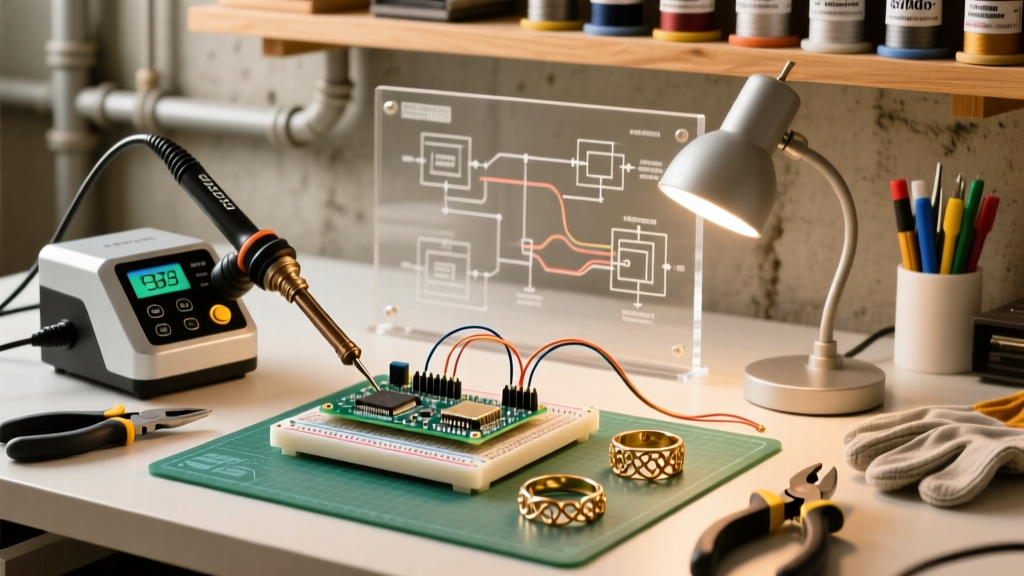
No expert roundup on electronic soldering equipment is complete without addressing the ecosystem surrounding the iron. According to the NASA Workmanship Standard for Soldering (NASA-STD-8739.3), proper flux activation and joint inspection are just as critical as the heat source.
1. Fume Extraction and Safety
Rosin-based flux fumes contain colophony, a known respiratory sensitizer. The Occupational Safety and Health Administration (OSHA) strictly regulates airborne particulate and chemical exposure in manufacturing environments. At a minimum, use a localized HEPA/Carbon extractor like the Hakko FA-400 ($75) for hobbyists, or a BOFA PrintPRO 3 system ($1,800+) for professional labs. Never rely on a desk fan to blow fumes away; this merely dilutes them temporarily while spreading particulates across your workspace.
2. Tip Tinning and Maintenance
Oxidation is the enemy of thermal transfer. Keep a pot of Hakko 599B Tip Tinner ($18) on your bench. When a tip becomes blackened and refuses to accept solder, plunge it into the tinner for 2 seconds, wipe it on a damp cellulose sponge, and immediately apply a fresh coat of 63/37 leaded solder. This sacrificial layer prevents the underlying iron plating from corroding.
Expert Troubleshooting: Edge Cases in 2026
Even with premium electronic soldering equipment, operators encounter specific failure modes. Our panel provided the following diagnostic frameworks:
- Tombstoning on 0402 Components: Often caused by uneven pad heating. If using a chisel tip, ensure both pads are contacted simultaneously. If one pad connects to a ground plane and the other to a signal trace, apply the iron slightly closer to the ground plane pad to balance the thermal mass.
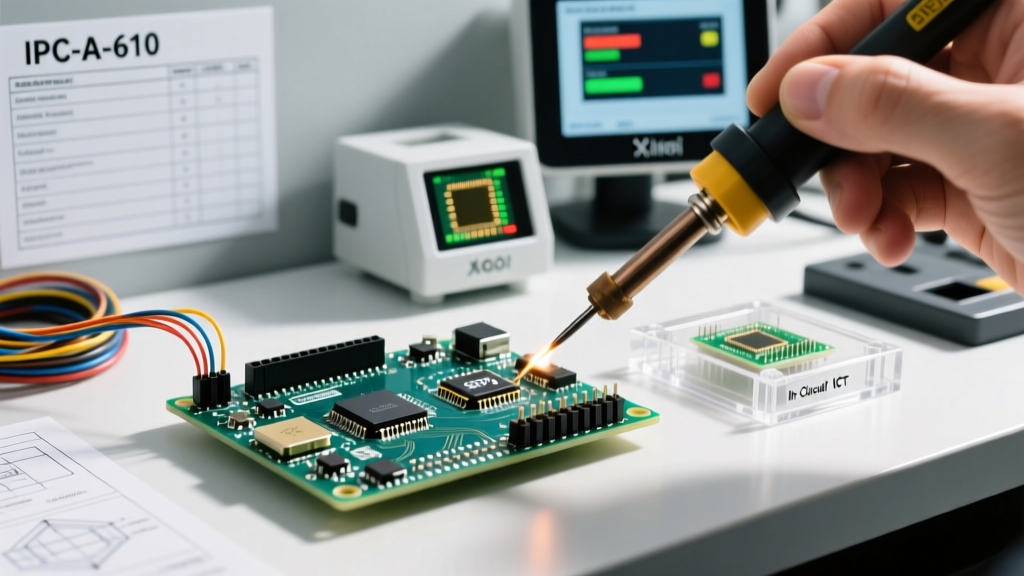
- Solder Balling and Splatter: Indicates flux boiling too rapidly. Your iron temperature is likely set too high for the specific flux chemistry. Check the manufacturer's datasheet; most no-clean ROL0 fluxes activate optimally between 200°C and 220°C. Running your iron at 380°C vaporizes the flux before it can clean the oxides, resulting in brittle, dull joints that fail IPC J-STD-001 visual inspection criteria.
- Pad Lifting on FR4: Caused by dwelling on a joint for more than 3–4 seconds. If the solder hasn't flowed by the 3-second mark, remove the iron, let the board cool for 60 seconds, apply fresh liquid flux, and try again with a larger tip geometry rather than a higher temperature.
Final Verdict: Matching Equipment to Your Workflow
Selecting the right electronic soldering equipment requires an honest assessment of your daily tasks. If you are reworking 0.3mm pitch BGAs and require IPC Class 3 compliance, the $549 JBC CD-2BQE is a non-negotiable investment that pays for itself in saved PCBs. For the dedicated lab technician balancing budget and performance, the Hakko FX-951 remains the undisputed mid-range champion. Finally, for the field engineer or student, the Pinecil V2 proves that exceptional thermal control no longer requires a massive bench footprint or a four-figure budget.