
The Metallurgy of Silver Soldered Joints
In the realm of electrical and mechanical fabrication, the term silver soldered is frequently used on job sites to describe what metallurgists classify as silver brazing. Unlike soft soldering (which utilizes tin-lead or SAC305 alloys melting below 840°F / 450°C), silver soldering employs filler metals containing varying percentages of silver, copper, zinc, and phosphorus. These alloys melt between 1,100°F and 1,500°F (593°C to 815°C), creating joints with tensile strengths that often exceed the base metals themselves.
As we navigate the industrial landscape in 2026, the transition toward higher operating pressures, extreme thermal cycling, and stringent environmental regulations has made soft solder obsolete for critical infrastructure. Whether you are assembling high-voltage EV busbars or pressurized refrigerant lines, understanding the precise application of silver-bearing alloys is non-negotiable.
Alloy Selection Matrix: Cost vs. Performance
The cost of silver-bearing alloys fluctuates with precious metal commodity markets. In early 2026, high-silver alloys (45% Ag) can exceed $45 per ounce, making precise alloy selection a matter of both engineering integrity and budget management.
| Alloy Designation | Silver Content | Melting Range (°F) | Primary Base Metals | Flux Requirement | 2026 Approx. Cost |
|---|---|---|---|---|---|
| Sil-Fos 5 (Phos-Copper) | 5% | 1,150 - 1,450 | Copper to Copper | None (Self-fluxing) | ~$8 / oz |
| Stay-Silv 15 | 15% | 1,200 - 1,300 | Copper, Brass, Steel | White Flux | ~$18 / oz |
| Easy-Flo 45 | 45% | 1,120 - 1,200 | Stainless, Carbide, Aerospace | Black Flux | ~$48 / oz |
Why Modern HVAC Demands Silver Soldered Connections
The HVAC and refrigeration industry represents the highest volume consumer of silver soldered joints. The phase-down of HFCs and the aggressive 2026 industry pivot toward A2L (mildly flammable) refrigerants like R-32 and R-454B have fundamentally altered joint requirements. These modern refrigerants operate at discharge pressures frequently exceeding 600 PSI and possess lower molecular weights, making them highly susceptible to micro-leaks.
Soft solder simply cannot withstand the vibrational fatigue of compressor discharge lines or the high-pressure spikes inherent in modern heat pump reversing valves. According to EPA Section 608 regulations, any leak in a refrigerant circuit carries severe environmental and financial penalties. Silver soldered joints, specifically using 5% to 15% silver alloys, provide the necessary capillary penetration and ductility to absorb compressor vibration without fracturing.
Pro Tip for HVAC Techs: When brazing copper-to-copper linesets with Sil-Fos 5, you do not need flux. However, if your joint transitions to brass (like a service valve), the phosphorus in the alloy cannot break down the zinc oxide in the brass. You must switch to a 15% silver alloy (Stay-Silv 15) and apply a white brazing flux to ensure proper wetting.
High-Current Electrical & EV Busbar Applications
While electrical flux and soft solder are standard for PCB and low-voltage wire termination, heavy industrial power distribution requires silver soldered connections. In solar inverter farms and electric vehicle (EV) battery pack assembly, massive copper busbars carry continuous currents exceeding 500 amps.
Under heavy load, these busbars experience significant thermal expansion and contraction. Soft solder is prone to thermal creep—a slow, permanent deformation under mechanical stress and elevated temperatures. Over a few years of thermal cycling, a soft-soldered busbar joint will develop micro-voids, increasing electrical resistance, generating localized heat, and eventually leading to catastrophic thermal runaway.
By utilizing a 15% or 45% silver soldered joint, the metallurgical bond maintains structural rigidity well beyond the 150°C operating ceiling of most high-power electronics. The Copper Development Association notes that properly brazed copper joints maintain 100% of the base metal's conductivity and structural integrity, provided the joint is cleaned of flux residue post-braze to prevent long-term galvanic corrosion.
Flux Selection and Thermal Management
A common failure point for DIYers and junior technicians attempting silver soldering is thermal mismanagement and incorrect flux chemistry. Silver brazing requires rapid, uniform heating of the base metal, not the filler rod.
- White Flux (Borax/Boric Acid based): Active between 1,050°F and 1,600°F. Ideal for copper, brass, and mild steel. It turns clear and glassy when the base metal reaches brazing temperature, serving as a visual cue to apply the silver alloy.
- Black Flux (Boron modified): Active between 1,400°F and 1,600°F+. Mandatory when silver soldering stainless steel, tungsten carbide, or high-nickel alloys. The boron additive aggressively dissolves refractory oxides that white flux cannot penetrate.
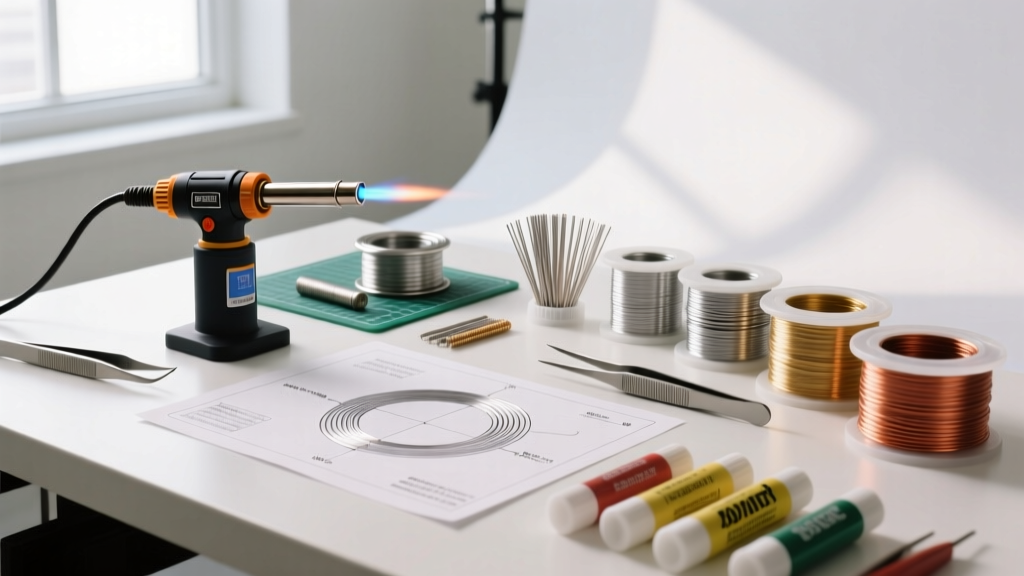
For heat application, standard air-acetylene torches often lack the BTU output required for thick busbars or large refrigerant headers. Industrial applications rely on swirl-tip torches (such as the Victor TurboTorch) or oxy-acetylene setups. The swirl tip creates a vortex of flame that wraps around the copper fitting, ensuring uniform capillary draw rather than localized hot spots that can melt the base metal.
Critical Failure Modes in the Field
Even with premium 45% silver alloys, a silver soldered joint will fail if fundamental brazing physics are ignored. The American Welding Society (AWS) outlines several critical parameters for brazed joints that directly apply to field failures:
1. Improper Capillary Gap Tolerances
Silver soldering relies on capillary action to draw the molten alloy deep into the joint. The optimal radial gap for most silver-bearing alloys is between 0.002" and 0.005" at brazing temperature. If the tube is loose and wobbles inside the fitting (gap > 0.010"), capillary action fails, resulting in a superficial "ring" of silver that will blow out under pressure. Conversely, if the fit is too tight, the flux cannot escape the joint cavity, leading to flux inclusions that create brittle, leak-prone voids.
2. Oxidation and "Cold Laps"
If the base metal is not purged with dry nitrogen (in HVAC) or chemically cleaned (in electrical busbars), internal copper oxide scale forms the moment the torch is applied. This black scale acts as a physical barrier. When the silver alloy is introduced, it balls up and rolls off the joint—a phenomenon known as a "cold lap" or lack of wetting. Scraping the joint with sandpaper is insufficient; the oxide layer reforms instantly under heat. Always use fresh flux or a nitrogen purge to displace oxygen.
3. Thermal Shock on Brass Components
When silver soldering copper pipes to brass service valves, technicians frequently concentrate the flame directly on the brass to melt the alloy faster. Brass has a significantly lower melting point and higher thermal conductivity than copper. Concentrated oxy-acetylene heat can easily cause dezincification or melt the valve seat internals, destroying a $150 component in seconds. Always pre-heat the copper tube first, allowing the heat to conduct into the brass fitting gently, and keep the flame moving in a continuous figure-eight pattern.
Summary: Choosing the Right Process
Deciding when a component must be silver soldered comes down to evaluating the operational environment. If the joint will experience pressures above 150 PSI, continuous temperatures above 250°F (121°C), or high-frequency mechanical vibration, soft solder is a liability. By selecting the correct silver percentage, matching the flux to the base metal chemistry, and maintaining strict capillary gap tolerances, fabricators can ensure joints that outlast the equipment they are built upon.