
The 2026 Landscape of Mixed-Technology PCB Assembly
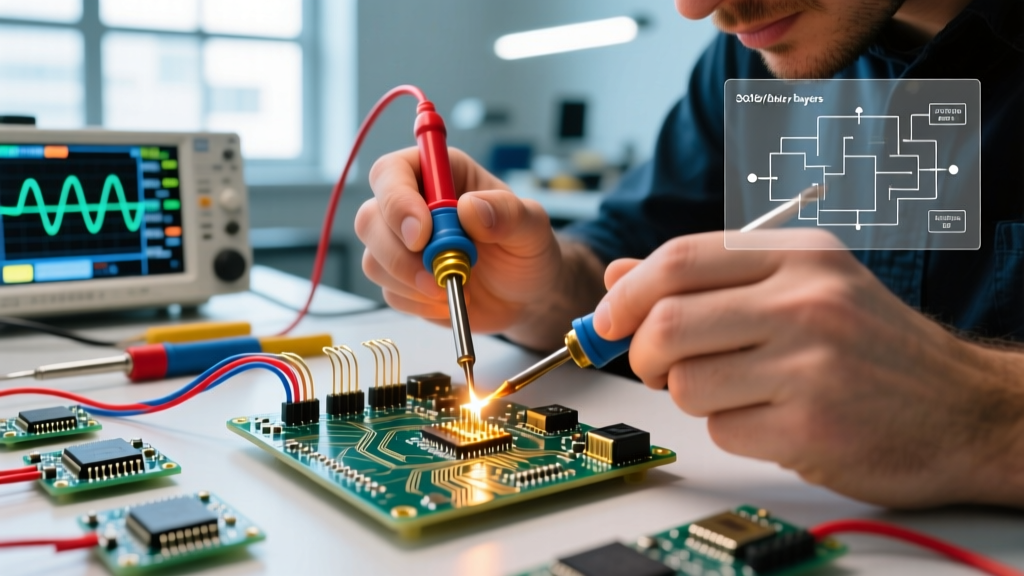
As we navigate the manufacturing realities of 2026, the electronics manufacturing services (EMS) sector is overwhelmingly dominated by high-density, mixed-technology printed circuit boards (PCBs). Designers are routinely placing sensitive surface-mount devices (SMDs) millimeters away from heavy through-hole technology (THT) connectors. Hand soldering these THT components creates severe bottlenecks and inconsistency, while traditional wave soldering requires expensive, time-consuming custom pallets and risks thermal damage to nearby SMDs.
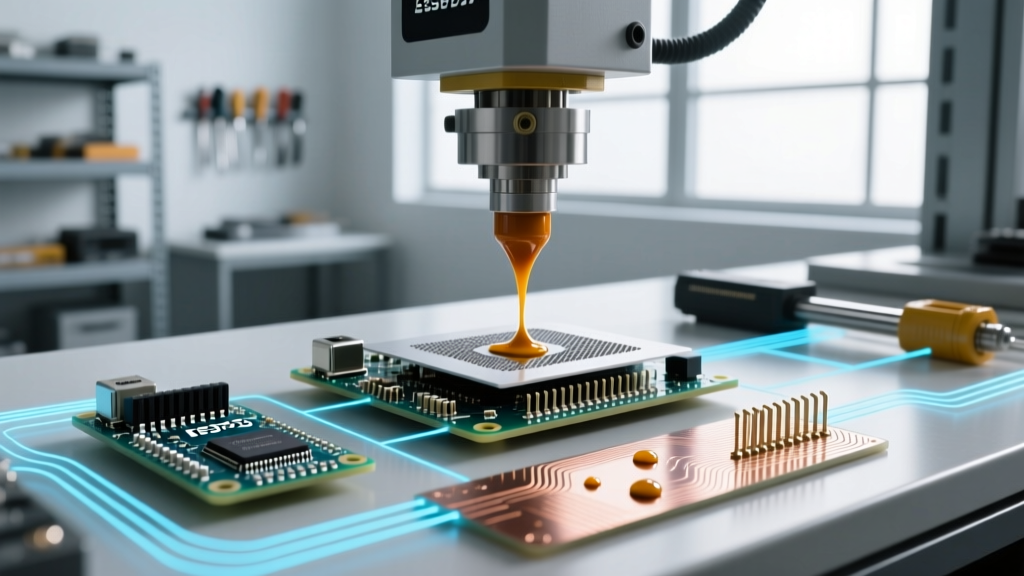
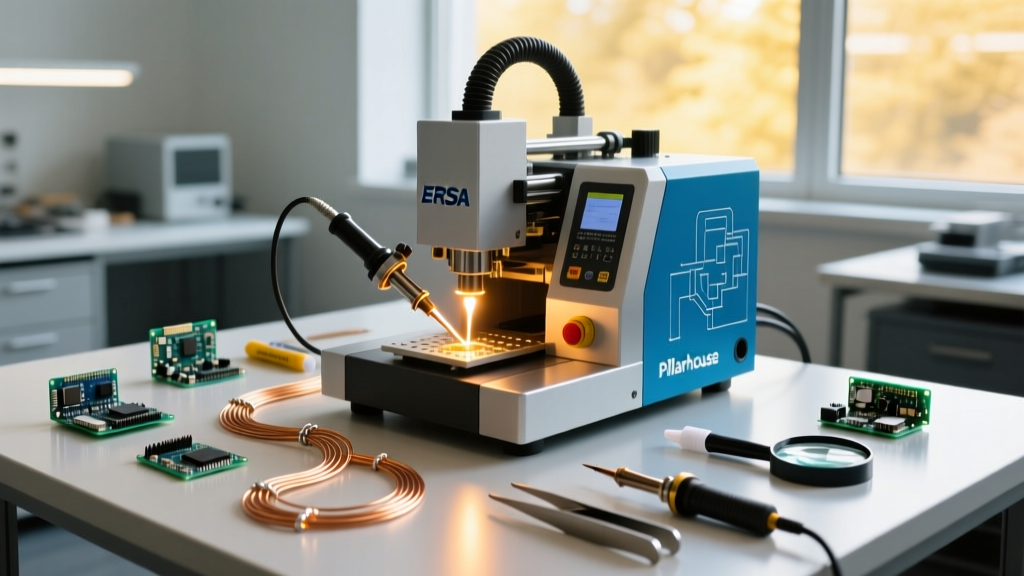
The definitive solution is the selective soldering machine. By utilizing localized mini-wave solder nozzles and precision fluxing, these systems automate THT assembly without the collateral damage of a full wave. To help process engineers and facility managers navigate the current market, we have synthesized insights from senior EMS process engineers, IPC-certified trainers, and manufacturing consultants into this comprehensive expert roundup of the top selective soldering systems available today.
Expert Comparison Matrix: Top Selective Soldering Machines
Our panel evaluated systems based on total cost of ownership (TCO), changeover times, flux precision, and inerting capabilities. Below is the consensus comparison for the leading models in 2026.
| Machine Model | Best Application | 2026 Est. Base Price | Fluxing Technology | Nitrogen Purity Target | Avg. Cycle Time (per joint) |
|---|---|---|---|---|---|
| ERSA VERSAFLOW 4/55 | High-Volume Inline | $185,000 - $240,000 | Piezo Drop-Jet | < 20 ppm O2 | 1.2 - 1.8 seconds |
| Pillarhouse Jade MKII | High-Mix / NPI Batch | $85,000 - $115,000 | Micro-Spray / Drop | < 100 ppm O2 | 2.0 - 3.5 seconds |
| SEHO PowerSelective | Mid-Volume Inline | $130,000 - $165,000 | Micro-Drop Jet | < 50 ppm O2 | 1.5 - 2.2 seconds |
Deep Dive: High-Volume Inline vs. High-Mix Batch Systems
The choice of a selective soldering machine rarely comes down to just the sticker price; it is dictated by your facility's volume-to-mix ratio. Our experts break down the two dominant paradigms.
1. The High-Volume Workhorse: ERSA VERSAFLOW 4/55
For Tier 1 EMS providers running automotive or telecom boards in continuous inline configurations, the ERSA VERSAFLOW series remains the industry benchmark. The 4/55 model features a modular design that allows for multiple fluxing, preheat, and soldering stations in a single pass.
Expert Insight: "The true ROI of the VERSAFLOW 4/55 in 2026 isn't just the speed; it's the drop-jet fluxing accuracy. We are seeing flux deposition accuracies down to the micro-liter, which eliminates the flux splatter that causes ionic contamination failures on high-impedance analog circuits. Furthermore, their multi-nozzle solder pots allow you to process a board with varying thermal masses simultaneously, cutting cycle times by up to 40% compared to single-nozzle routing." — M. Vance, Senior Process Engineer at a Midwest Automotive EMS.
Failure Mode to Watch: High-volume inline systems demand rigorous solder dross management. If the automated dross removal system is not calibrated to the specific alloy (e.g., SnCu0.7 vs. SAC305), oxide inclusions can clog the micro-nozzles, leading to asymmetrical solder fillets and IPC-A-610 Class 3 violations.
2. The High-Mix Flexibility King: Pillarhouse Jade MKII
For contract manufacturers handling New Product Introduction (NPI), aerospace prototyping, and high-mix/low-volume runs, the Pillarhouse Jade MKII is the undisputed favorite. As an offline, batch-style system, it excels in environments where board changeovers happen multiple times per shift.
Expert Insight: "When you are running 15 different SKUs a day, an inline machine's conveyor changeover and recipe loading times will kill your OEE (Overall Equipment Effectiveness). The Jade MKII allows operators to load a batch of identical boards, run them, and swap to the next SKU in under three minutes. Its offline programming software is also vastly superior for importing complex CAD data without tying up the machine's UI." — S. Lin, NPI Manufacturing Consultant.
Thermal Mass Edge Case: The Jade MKII relies on localized top-side preheating. When soldering heavy ground-plane connectors on 10-layer PCBs (2.5mm+ thickness), engineers must implement a multi-pass preheat strategy. Failing to ramp the temperature gradually (keeping the gradient below 3°C per second) will cause micro-cracking in the PCB's barrel plating, a latent defect that often escapes initial ICT (In-Circuit Testing).
Critical Process Variables: Insights from the Manufacturing Floor
Buying the machine is only 30% of the battle. The remaining 70% relies on dialing in the metallurgical and chemical processes. Our expert panel highlighted three non-negotiable parameters for 2026 selective soldering:
- Flux Chemistry and Specific Gravity (SG): Modern VOC-free, water-based fluxes are standard for environmental compliance, but they are highly susceptible to evaporation and moisture absorption. Automated SG monitoring and closed-loop dilution systems are mandatory. If the SG drifts above 1.015, flux activation fails, resulting in severe solder bridging on fine-pitch THT headers.
- Nitrogen Inerting Economics: To achieve the pristine, shiny fillets required by IPC J-STD-001, the solder wave must be inerted. While liquid nitrogen (LN2) dewars were standard a decade ago, the 2026 consensus heavily favors on-site nitrogen generators. Maintaining an oxygen level below 50 ppm at the nozzle tip reduces dross generation by up to 85%, paying for the generator in roughly 14 months of continuous operation.
- Nozzle Wetting and Maintenance: Selective soldering nozzles are coated with specialized wettable alloys. Over time, the iron plating dissolves into the molten solder bath (especially with aggressive SAC alloys). Experts mandate a strict nozzle rotation and re-tinning schedule every 40 hours of active soldering to prevent de-wetting and skewed solder flow.
IPC J-STD-001 Compliance and Hole Fill Dynamics
Achieving compliance with the Surface Mount Technology Association (SMTA) guidelines and IPC J-STD-001 is the ultimate benchmark for any selective soldering process. The most common point of failure is inadequate barrel fill.
For IPC Class 2 (standard commercial electronics), a minimum of 75% hole fill is required. For IPC Class 3 (aerospace, medical, life-support), 100% hole fill with a visible top-side fillet is mandatory. Selective soldering machines achieve this not just through temperature, but through dwell time and nozzle sizing.
Expert process engineers recommend using a nozzle diameter that is 1.0mm to 1.5mm larger than the component lead diagonal. This ensures the mini-wave completely envelops the lead, allowing capillary action to draw the molten alloy (typically held at 275°C for SAC305) up through the plated through-hole (PTH). If the board features heavy copper inner layers acting as heat sinks, the solder will freeze before reaching the top side. The workaround is to utilize a specialized 'drag-soldering' profile, where the nozzle moves slowly away from the joint, leaving a trailing thermal tail that keeps the solder liquid long enough for complete capillary fill.
The 2026 Buyer’s Decision Framework
If you are specifying a selective soldering machine for your facility this year, follow this step-by-step decision matrix:
- Audit Your Thermal Mass Distribution: If more than 20% of your THT components are connected to internal ground planes exceeding 4 layers, you must prioritize a machine with high-wattage, multi-zone IR preheaters (like the ERSA or SEHO inline models) rather than basic batch systems.
- Calculate Your Changeover Frequency: If your average batch size is under 50 boards and you run more than 5 different SKUs per shift, the capital expenditure of an inline conveyor system will never yield an ROI. Invest in a high-end batch system like the Pillarhouse Jade MKII and allocate the saved capital toward advanced offline programming software and automated optical inspection (AOI).
- Evaluate Facility Infrastructure: Selective soldering machines require significant exhaust for flux volatiles and robust electrical drops (often 400V 3-phase for the preheat modules). Ensure your facility's HVAC can handle the localized heat load and that you have the footprint for an integrated nitrogen generator.
Final Expert Verdict
The selective soldering machine has evolved from a niche alternative to hand soldering into a highly precise, data-driven manufacturing pillar. For high-volume, low-mix environments where uptime and cycle times dictate profitability, the ERSA VERSAFLOW 4/55 remains the premier investment for 2026. Conversely, for agile, high-mix manufacturers navigating the complexities of NPI and aerospace prototyping, the Pillarhouse Jade MKII offers unmatched flexibility and rapid ROI. Ultimately, the success of your selective soldering process will rely less on the hardware itself and more on your engineering team's mastery of flux chemistry, thermal profiling, and strict adherence to IPC metallurgical standards.