
The Hidden Dangers of Soldering Galvanised Steel
Galvanised steel is a staple in HVAC ductwork, automotive chassis repair, and outdoor structural DIY projects. The protective zinc coating prevents rust, but it introduces severe metallurgical and chemical hazards when subjected to the high heat of soldering. While welding galvanised steel is widely known to be dangerous, soldering galvanised steel is frequently underestimated by hobbyists and electronics enthusiasts.
The danger stems from two distinct sources: the vaporization of the zinc coating itself, and the aggressive chemical fluxes required to break through the zinc oxide passivation layer. Standard rosin-based fluxes (RMA) are entirely ineffective on zinc. To achieve a reliable metallurgical bond, you must use highly corrosive acid fluxes, which introduce severe respiratory and equipment-corrosion risks if mishandled.
OSHA Warning: Heating galvanised coatings releases zinc oxide particulates and toxic flux byproducts. Inadequate ventilation during hot work on zinc-coated metals is a primary vector for respiratory distress and metal fume fever. Always consult OSHA hot work guidelines before applying thermal energy to coated steels.
Metal Fume Fever: The Zinc Oxide Threat
Metal fume fever (often called 'zinc chills' or 'brass founder's ague') is a debilitating, flu-like condition caused by inhaling fine zinc oxide (ZnO) particulates. Symptoms include severe chills, fever, nausea, and muscle aches, typically peaking 4 to 12 hours after exposure and lasting up to 48 hours.
Temperature Thresholds and Fume Generation
Zinc melts at 419.5°C (787°F) and boils/vaporizes at 907°C (1665°F). A standard 60W electronics soldering iron operates around 350°C to 400°C, which generally keeps zinc vaporization minimal. However, soldering heavy-gauge galvanised steel (like 16-gauge HVAC ducting) requires high-wattage irons (100W+) or butane/propane torches. A Bernzomatic TS8000 torch produces flame temperatures exceeding 1,300°C, instantly vaporizing the zinc coating into a dense, toxic white smoke.
| Material / State | Temperature | Safety Implication |
|---|---|---|
| Zinc Melting Point | 419.5°C (787°F) | Coating becomes molten; risk of hot-metal splatter. |
| Standard Solder Iron Tip | 350°C - 400°C | Low ZnO fume risk, but high acid flux fume risk. |
| Zinc Boiling Point | 907°C (1665°F) | Rapid ZnO vaporization; extreme fume hazard. |
| Torch Flame (MAPP/Propane) | 1,300°C - 2,500°C | Instant, massive ZnO generation. Respirator mandatory. |
For a comprehensive breakdown of particulate toxicity, refer to the NIH PubChem database on Zinc Chloride and Zinc Oxide compounds, which details the severe cellular irritation caused by these heavy metal byproducts.
Flux Selection: Acid vs. Rosin (and the Safety Gap)
The most critical safety decision when soldering galvanised steel is flux selection. Because zinc oxidizes rapidly when heated, standard electronics flux cannot clean the joint. You must use an inorganic acid flux, typically Zinc Chloride (ZnCl2) or a hydrochloric acid-based 'tinning fluid' (e.g., Ruby Fluid, La-Co 13100, or Baker's Fluid).
The Hydrogen Chloride Hazard
When zinc chloride flux is heated by an iron or torch, it releases hydrogen chloride (HCl) gas. When this gas contacts the moisture in your eyes, throat, and lungs, it forms hydrochloric acid. This causes immediate coughing, throat burning, and long-term respiratory sensitization.
- Rosin Flux (RMA/No-Clean): Safe for lungs, completely useless on galvanised steel. Results in cold joints and immediate delamination.
- Zinc Chloride Paste/Liquid: Effective on zinc, but releases toxic HCl gas upon heating. Requires active extraction.
- Water-Soluble Organic Acid (OA): Milder than ZnCl2, but still insufficient for heavy zinc oxide layers without mechanical prep.
Recommended PPE and Ventilation Gear (2026 Market Snapshot)
Do not rely on open windows or cheap desk fans. Moving HCl gas and ZnO particulates across your face only increases your exposure. Below is a comparison of extraction methods tailored for acid flux and zinc fumes.
| Equipment Type | Model Example (2026) | Approx. Cost | Efficacy on ZnO & HCl |
|---|---|---|---|
| Basic Desk Fan Extractor | Hakko FA-400 | $65 | Poor. Blows acid gas directly into operator's breathing zone. No filtration. |
| HEPA + Carbon Benchtop | Weller WSA350S | $320 | Good. HEPA traps ZnO; activated carbon absorbs some HCl. Requires frequent filter changes. |
| Industrial Source Capture | Sentry Air Systems 300 | $1,850+ | Excellent. Multi-stage chemical and particulate filtration. Mandatory for daily HVAC soldering. |
| Half-Face Respirator | 3M 6200 + 6003 Cartridges | $45 | Mandatory PPE. The 6003 cartridge specifically targets Acid Gases and Organic Vapors. |
Note: The CDC's NIOSH guidelines on welding and soldering fumes explicitly state that local exhaust ventilation (LEV) must capture contaminants at the source before they pass through the worker's breathing zone.
Step-by-Step Safe Soldering Protocol
To minimize both zinc vaporization and acid flux usage, follow this strict preparation and soldering workflow.
Step 1: Mechanical Zinc Removal (The Safest Method)
The most effective way to eliminate zinc fumes is to remove the zinc coating entirely at the joint site. Use a rotary tool (e.g., Dremel 3000) equipped with a silicon carbide grinding bit (like the Dremel 85422) to grind away the galvanised layer down to bare, shiny steel. Wear a P100 mask during grinding to avoid inhaling zinc dust. By exposing bare steel, you drastically reduce the need for heavy acid fluxes and eliminate the risk of localized zinc boiling.
Step 2: Chemical Prep and Tinning
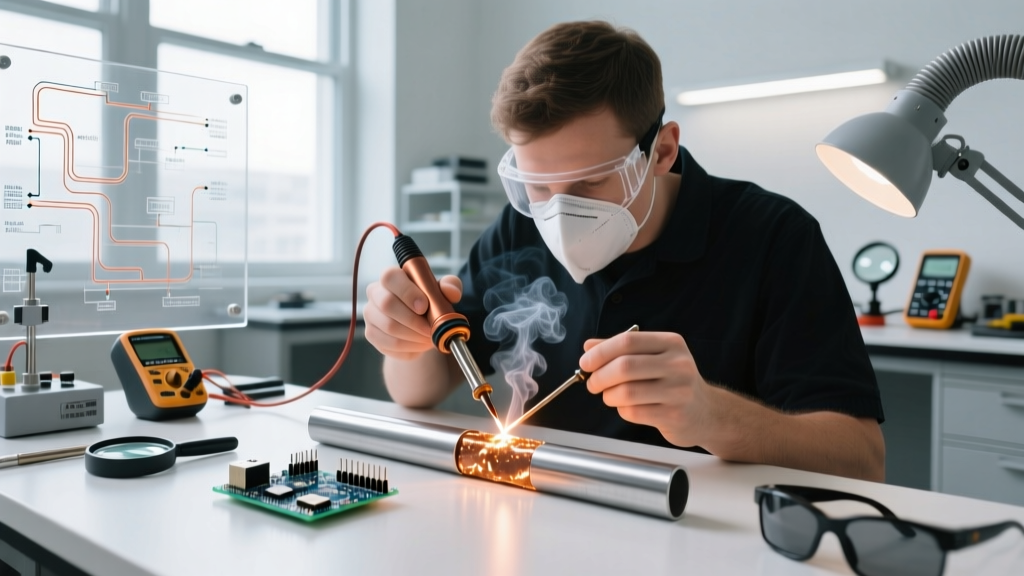
Wipe the ground area with isopropyl alcohol (99%). Apply a minimal amount of zinc chloride flux using a dedicated acid brush. Tin both mating surfaces with a high-wattage iron (e.g., Weller W100PG 100W) using a solid, lead-free or 60/40 tin-lead wire. The pre-tinning process will cause the flux to bubble and off-gas—keep your fume extractor running at maximum draw.
Step 3: Sweat Soldering the Joint
Clamp the pre-tinned pieces together. Apply heat to the thickest part of the joint. Because both surfaces are already tinned, the solder will reflow and capillary into the joint without needing additional flux. This 'sweat soldering' technique prevents the trapped gas bubbles that cause 'cold joint delamination'—a common failure mode where outgassing zinc blows microscopic holes in the cooling solder bead.
Post-Solder Neutralization and Corrosion Prevention
Zinc chloride flux is highly hygroscopic (it absorbs moisture from the air) and deeply corrosive. If left on the joint, it will cause severe galvanic corrosion, eating through the steel within weeks and compromising the structural integrity of the solder joint.
- Cool the Joint: Allow the steel to drop below 50°C. Do not quench with water, as thermal shock can crack the solder lattice.
- Mix Neutralizer: Create a 10% sodium bicarbonate solution (1 tablespoon of baking soda per pint of warm distilled water).
- Scrub: Use a stiff nylon brush to aggressively scrub the joint with the solution. You will see fizzing as the baking soda neutralizes the residual hydrochloric/zinc chloride acids.
- Rinse and Dry: Wipe clean with distilled water, dry with compressed air, and apply a protective coating (e.g., cold galvanising compound or polyurethane sealant) to restore the rust protection lost during grinding.
Frequently Asked Questions (FAQ)
Can I use standard 60/40 electronics solder on galvanised steel?
You can use the solder alloy, but you cannot use the rosin core inside it. You must use solid solder wire paired with an external zinc chloride acid flux. Rosin core solder will ball up and roll off the zinc coating.
Is metal fume fever permanent?
No, metal fume fever is generally not permanent, and symptoms subside within 24 to 48 hours. However, repeated exposure can lead to chronic respiratory issues, and the acute symptoms are severe enough to require medical intervention and missed work days.
Why does my solder joint look porous and spongy?
This is caused by zinc outgassing. If the underlying zinc coating boils while the solder is molten, the zinc vapor becomes trapped inside the cooling solder, creating a porous, weak joint. Mechanical removal of the zinc layer prior to soldering prevents this failure mode.