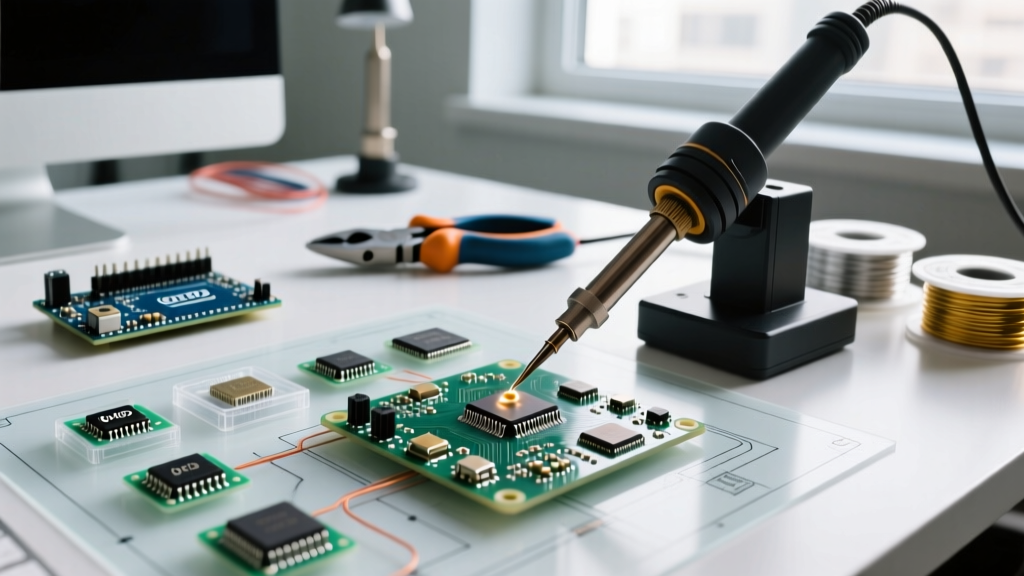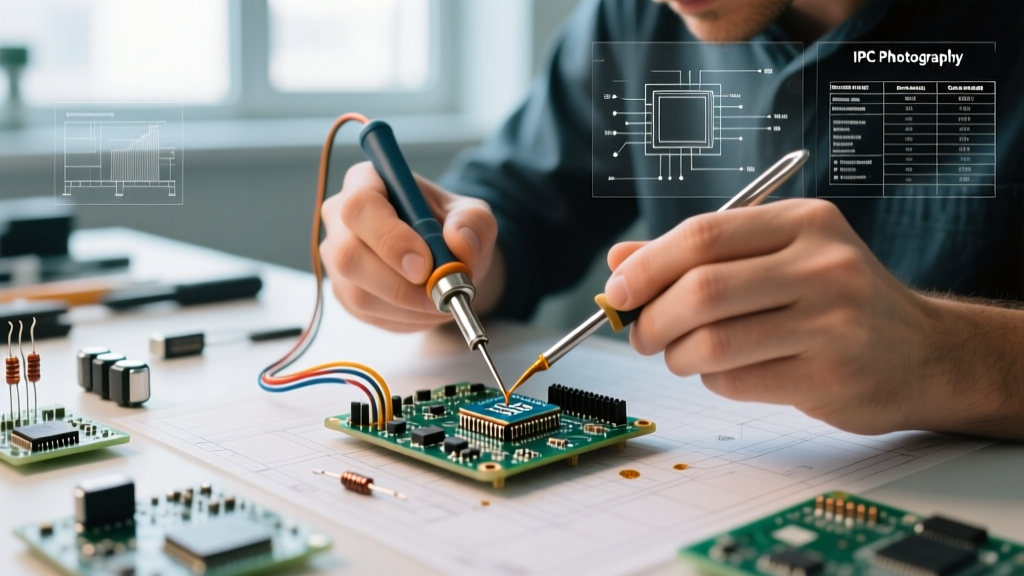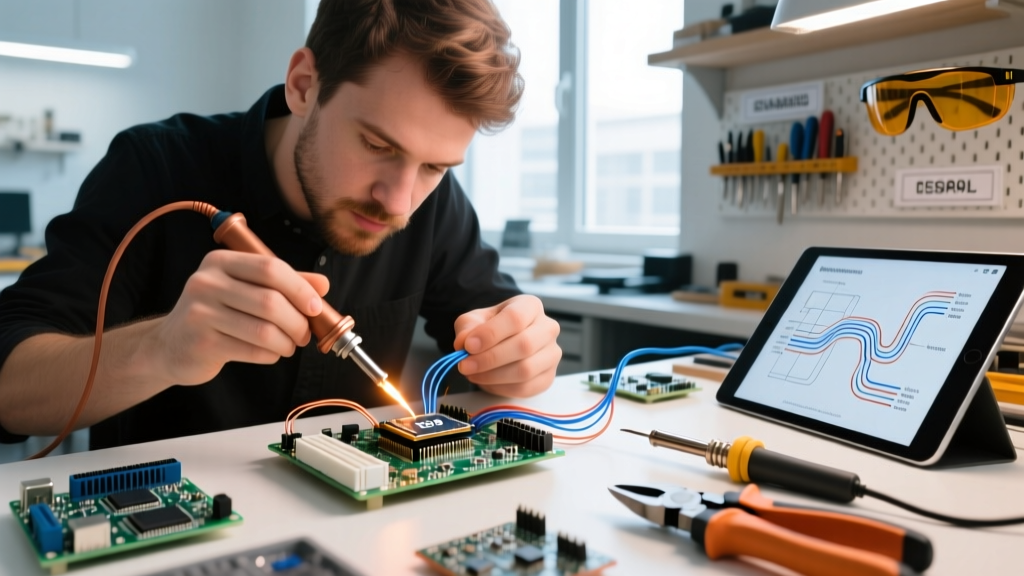

The Great Dialect Divide: Sod-der vs. Soul-der
If you have ever spent time in an international electronics lab or a mixed-origin engineering team, you have likely encountered the great linguistic debate: how do you pronounce soldering? In North America, the 'L' is famously silent, resulting in 'sod-der-ing.' In the UK, Australia, New Zealand, and many Commonwealth nations, the 'L' is fully voiced, yielding 'soul-der-ing.' The word originates from the Old French soudure (meaning 'to strengthen'), but the phonetic split occurred centuries later as regional dialects evolved.
While this linguistic quirk is a fun icebreaker, in a professional electronics manufacturing environment or a high-stakes DIY lab, verbal communication regarding the act of soldering and the materials used is a cornerstone of safety best practices. Miscommunication on a noisy shop floor—where reflow ovens, ventilation hoods, and CNC mills generate upwards of 75 decibels of ambient noise—can lead to severe thermal burns, chemical exposures, or fire hazards.
Why Phonetics and Terminology Matter in Lab Safety
When we talk about how to pronounce soldering, we are really talking about standardized shop floor communication. A technician yelling 'Watch the solder!' over the hum of a BOFA AD Oracle iQ fume extractor might be misunderstood due to regional accents or hearing protection dampening high-frequency consonants.
As of 2026, modern EHS (Environment, Health, and Safety) protocols dictate that high-heat and chemical-handling zones must rely on unambiguous, standardized callouts rather than colloquial terms. This extends beyond the verb itself to the precise pronunciation and identification of the alloys and fluxes being used.
The 'Hot Zone' Auditory Protocol
Instead of vague warnings, professional labs utilize specific auditory protocols to announce hazards. Here is a comparison of amateur versus professional safety callouts:
| Hazard Scenario | Amateur Callout (Avoid) | Standardized EHS Callout (Use) |
|---|---|---|
| Leaving a 350°C iron unattended | 'Iron's on!' | 'Hot tip exposed, Station 4.' |
| Flux splatter or boiling | 'Watch out, it's popping!' | 'Flux splatter hazard, stepping back.' |
| Moving through the lab with a hot tool | 'Hot solder coming through!' | 'Hot tool in transit, right side.' |
Decoding Alloy Terminology and SDS Sheets
'Speaking the language' of soldering also means correctly identifying and pronouncing the chemical compositions of your consumables. When Safety Data Sheets (SDS) are reviewed during a 2026 IPC J-STD-004D compliance audit, you cannot simply refer to 'the silver stuff' or 'the lead-free wire.' You must understand the metallurgical terminology.
- Sn63Pb37 (Tin-Lead): Pronounced 'Tin-Sixty-Three, Lead-Thirty-Seven.' This eutectic alloy melts at a sharp 183°C (361°F). The primary safety hazard here is lead toxicity, requiring strict hand-washing protocols and prohibiting use in food-safe or plumbing applications.
- SAC305 (Tin-Silver-Copper): Pronounced 'Sack-Three-Oh-Five.' This is the industry-standard lead-free alloy (96.5% Sn, 3.0% Ag, 0.5% Cu). It requires higher iron temperatures (220°C - 250°C), which exponentially increases the vaporization rate of rosin-based fluxes, creating a secondary respiratory hazard.
- Sn42Bi58 (Bismuth-Tin): A low-temperature lead-free alternative melting at 138°C. While safer for thermal-sensitive components, bismuth dust requires specific particulate filtration if sanding or grinding the cured joints.
The Silent Hazard: Flux Fumes and Colophony
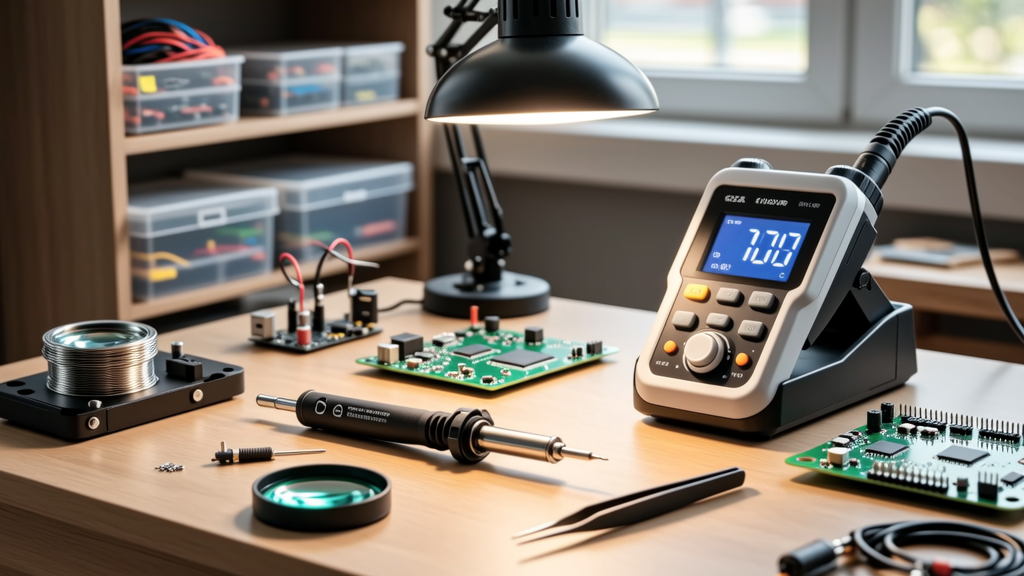
The most critical safety discussion surrounding soldering is not the heat, but the smoke. The visible plume generated when flux-core wire hits a 350°C Weller WE1010NA tip is not just 'smoke'; it is a complex aerosol of vaporized rosin (colophony) and volatile organic compounds (VOCs).
'Rosin (colophony) is a known respiratory sensitizer. Repeated exposure to rosin fumes can cause occupational asthma, which is irreversible and can end a technician's career. It is a legal requirement to control exposure under COSHH regulations.' — UK Health and Safety Executive (HSE)
According to MIT Environment, Health & Safety guidelines, relying on a simple desk fan to blow fumes away from your face is a severe safety violation. A fan merely dilutes and redistributes the sensitizing particles into the ambient room air, exposing nearby colleagues who are not even soldering.
Engineering Controls: LEV vs. Ambient Purifiers
To properly mitigate flux fumes, you must invest in Local Exhaust Ventilation (LEV). Here is how the 2026 market breaks down for buyer safety:
- Basic Carbon Filters (e.g., Hakko FA-400, ~$65): These are not true LEV. They pull air through a basic activated carbon pad and recirculate it. They trap some large particulates and reduce odor, but they fail to capture sub-micron rosin vapors. Use only for very occasional, low-temperature hobbyist work.
- True LEV Extractors (e.g., BOFA AD Oracle iQ, ~$1,500+): These units use a multi-stage HEPA and deep-bed activated carbon filtration system. The critical metric here is capture velocity. The extraction nozzle must be positioned 2 to 4 inches from the solder joint to achieve the required 100-150 feet per minute (fpm) capture velocity before the thermal plume disperses into the technician's breathing zone.
PPE: Beyond the Basic Safety Glasses
Personal Protective Equipment is the last line of defense in the hierarchy of controls. When handling soldering materials, your PPE must be matched to the specific chemical hazards of your flux.
- Thermal & Splash Protection: Standard ANSI Z87.1 safety glasses are mandatory. Flux cores can boil and 'spit' microscopic droplets of liquid rosin at high speeds. Polycarbonate lenses prevent both thermal burns and corneal chemical irritation.
- Respiratory Protection: If you are using liquid or paste fluxes containing high VOCs (like isopropyl alcohol or glycol ethers) and an LEV system is unavailable, a half-face respirator (e.g., 3M 6200) equipped with 6001 Organic Vapor cartridges is required. Standard N95 masks do absolutely nothing to stop chemical vapors; they only filter solid particulates.
- Dermal Protection: Wear powder-free nitrile gloves when handling raw leaded solder wire or applying liquid flux. Latex gloves are discouraged as they offer poor chemical resistance to flux solvents and can degrade when exposed to high heat.
Frequently Asked Questions (FAQ)
Does the type of solder I buy affect how much toxic smoke is produced?
Yes. Water-soluble (OA) fluxes and no-clean fluxes have different vaporization profiles. No-clean fluxes, which dominate the 2026 consumer market, leave a hard, glass-like residue but can produce highly irritating aldehyde vapors if the iron temperature exceeds the flux's thermal threshold (usually around 250°C). Always match your iron's temperature profile to the specific flux chemistry listed on the manufacturer's SDS.
Is lead-free solder safer to breathe than leaded solder?
This is a common misconception. The lead in Sn63Pb37 solder does not vaporize at standard soldering temperatures (lead's boiling point is 1,749°C). The danger of leaded solder is ingestion via hand-to-mouth transfer. The respiratory danger in both leaded and lead-free soldering comes entirely from the flux. Because lead-free alloys like SAC305 require higher iron temperatures, they actually vaporize more flux, potentially creating a higher respiratory hazard if LEV is not used.
How often should I replace my fume extractor filters?
For a professional lab running 8 hours a day, HEPA pre-filters typically require replacement every 3 to 6 months, while the main deep-bed carbon/HEPA combined filters need replacement every 9 to 12 months. Many modern 2026 units feature digital airflow sensors that will trigger an audible alarm and flash an LED when the filter saturation restricts airflow below safe capture velocities.
Final Thoughts on Shop Floor Culture
Whether you pronounce it 'sod-der-ing' or 'soul-der-ing,' the physics of thermal transfer and the chemistry of rosin sensitization remain exactly the same. True safety in the electronics lab is not just about buying the most expensive Weller or Hakko station; it is about fostering a culture of precise communication, respecting the invisible hazards of flux fumes, and strictly adhering to modern LEV and PPE standards. By standardizing your shop's vocabulary and investing in proper extraction, you ensure that your DIY or professional manufacturing environment remains safe, compliant, and productive for years to come.