
The Shift to RAM Soldered Directly to the Motherboard
If you have shopped for a high-performance ultrabook or a flagship ARM-based laptop in 2026, you have likely encountered a frustrating specification: memory that is not user-upgradable. The era of easily swapping out SODIMM sticks is rapidly fading in the mobile computing space. Instead, manufacturers are increasingly relying on architectures where the RAM is soldered directly to the main logic board using Ball Grid Array (BGA) packaging.
While this trend angers right-to-repair advocates and limits post-purchase upgradability, it is not merely a cynical ploy to force consumers into buying higher-capacity SKUs upfront. The transition to soldered memory—specifically LPDDR5x and the emerging LPDDR6 standards—is driven by the unforgiving laws of high-frequency signal integrity, power efficiency, and physical Z-height constraints. In this comprehensive guide, we will explore the electrical engineering realities of BGA memory, the soldering processes involved, and how to navigate the 2026 laptop market as an informed buyer.
The Physics of High-Speed Memory: Why Soldering is Mandatory
To understand why RAM soldered configurations dominate the premium laptop market, we must look at signal trace lengths and stub resonance. Modern LPDDR5x memory operates at data transfer rates exceeding 8533 MT/s (MegaTransfers per second). At these extreme frequencies, the electrical signals traveling from the CPU to the memory chips behave more like high-frequency radio waves than simple DC currents.
Signal Integrity and Trace Length
When using a traditional SODIMM socket, the electrical signal must travel from the CPU, across the motherboard traces, into the socket, and up through the gold fingers of the RAM module. This physical detour introduces stub resonance and signal attenuation. By utilizing a BGA soldered approach, the memory chips are placed millimeters away from the silicon die, often on the opposite side of the PCB or integrated directly into the CPU package (as seen in Apple's M-series Unified Memory). This drastically reduces trace length, minimizes capacitance, and allows for significantly higher bandwidth.
The Z-Height Constraint
Ultrabooks and thin-and-light devices demand aggressive Z-height (thickness) reduction. A standard DDR5 SODIMM socket and module add roughly 3.0mm to 4.0mm to the motherboard's vertical profile. BGA soldered LPDDR5x chips, by contrast, sit flush against the PCB, adding less than 1.2mm. This saved space is reallocated to larger batteries or advanced vapor-chamber cooling solutions.
Memory Architecture Comparison Matrix (2026)
Below is a technical comparison of the three dominant memory packaging formats you will encounter in modern portable workstations and laptops.
| Feature | LPDDR5x (BGA Soldered) | DDR5 (SODIMM Socketed) | CAMM2 (Compression Module) |
|---|---|---|---|
| Max Speed (Typical) | 8533+ MT/s | 5600 - 6400 MT/s | 6400 - 8000 MT/s |
| Upgradability | None (Factory Fixed) | High (User Replaceable) | Moderate (Requires Disassembly) |
| Signal Integrity | Excellent (Short Traces) | Poor at High Freq (Stub Resonance) | Very Good (LGA-style Compression) |
| Z-Height Impact | Minimal (<1.2mm) | High (~4.0mm) | Low (~2.2mm) |
| Primary Use Case | Ultrabooks, Apple Silicon, AI PCs | Gaming Laptops, Mobile Workstations | Premium Thin-and-Light x86 Laptops |
The BGA Soldering Process: Factory Floor Realities
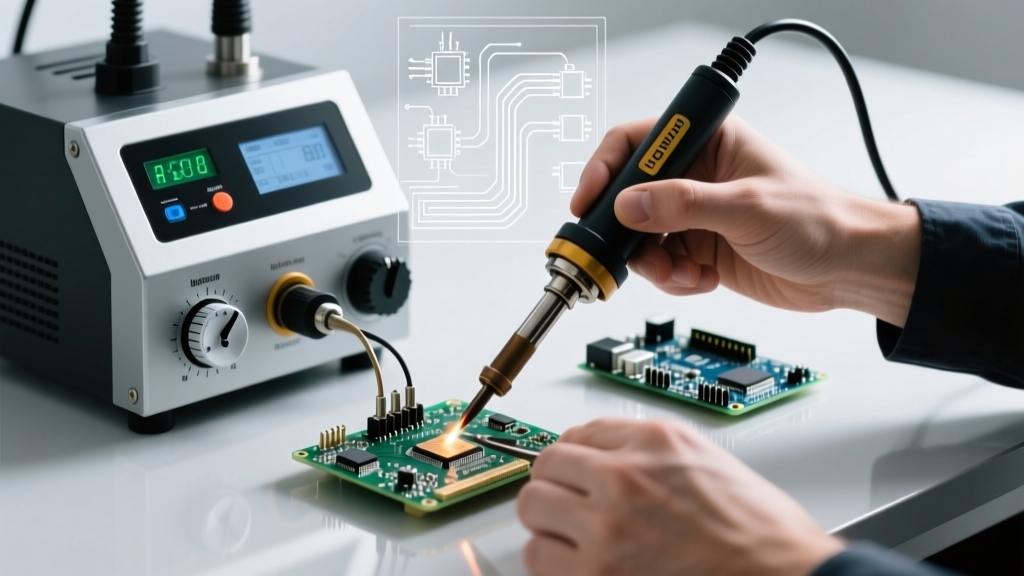
For electronics enthusiasts and DIY repair technicians, it is vital to understand that replacing RAM soldered via BGA is not a simple task achievable with a standard soldering iron. It requires a highly controlled surface-mount technology (SMT) environment.
Solder Alloys and Reflow Profiles
Modern motherboards utilize lead-free solder alloys, predominantly SAC305 (96.5% Tin, 3.0% Silver, 0.5% Copper). This alloy has a melting point of approximately 217°C to 220°C. During the factory assembly process, the PCB passes through a multi-zone reflow oven. The peak temperature typically reaches 245°C to 250°C to ensure proper wetting and the formation of reliable intermetallic compounds (IMCs) between the BGA spheres and the copper pads on the motherboard.
According to the IPC-7095 standard for BGA design and assembly, precise thermal profiling is critical. If the ramp-up rate is too fast, the solder paste can splatter (causing micro-bridging between the tiny 0.4mm pitch balls). If the cooling rate is too slow, the solder joints may develop large grain structures, making them brittle and susceptible to thermal cycling fatigue.
Inspection and Quality Control
Because the solder joints are hidden beneath the silicon package, visual inspection is impossible. Manufacturers rely on Automated X-Ray Inspection (AXI) and 2D/3D X-ray tomography to check for voiding, head-in-pillow defects, and cold solder joints. This level of infrastructure is why upgrading a 16GB soldered RAM laptop to 32GB post-purchase is economically and technically unfeasible for 99% of consumers.
The CAMM2 Alternative: Bridging the Gap
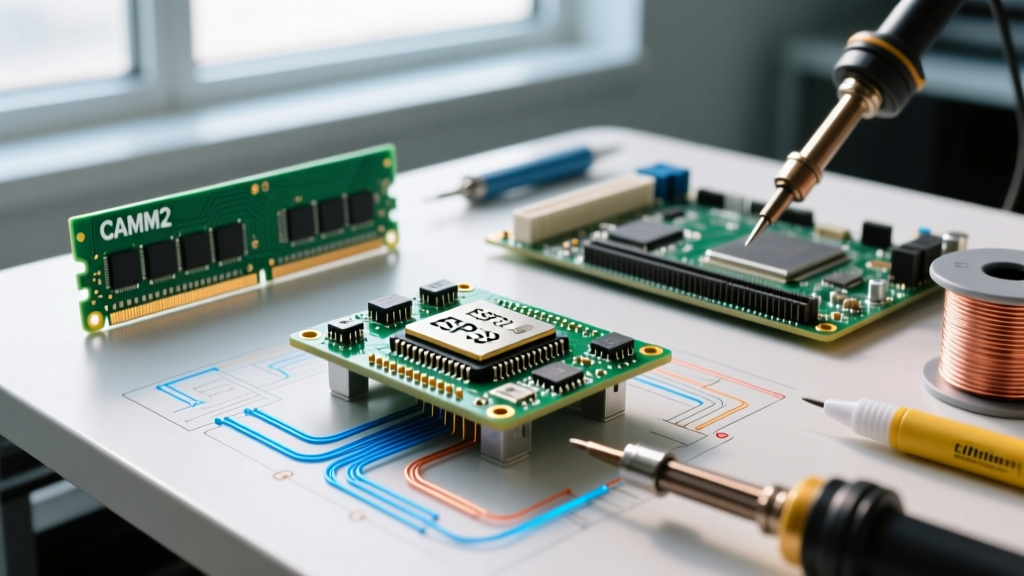
If you refuse to buy a machine with RAM soldered permanently to the board, 2026 offers a compelling alternative: the CAMM2 (Compression Attached Memory Module) standard. Developed to replace the aging SODIMM format, CAMM2 uses an LGA-style compression connector with a central screw.
As outlined in the official JEDEC CAMM2 standard publication, this format allows memory modules to sit flat against the motherboard, drastically reducing Z-height while maintaining much shorter trace lengths than SODIMM. While it requires a screwdriver to access, it provides a vital upgrade path for professionals who need to scale their memory from 32GB to 64GB or 128GB as their project requirements evolve over a laptop's 4-to-5-year lifespan.
2026 Buyer's Framework: How to Configure Your Machine
When purchasing a laptop with RAM soldered to the logic board, you are making a permanent hardware decision. Follow these actionable rules to avoid buyer's remorse:
- The 32GB Minimum Rule: In 2026, local AI inference (running LLMs via NPU/GPU) and heavy browser tab workflows consume memory aggressively. Never buy a 16GB soldered machine for professional work. 32GB is the new baseline for longevity.
- Apple Silicon Unified Memory: If buying a MacBook Pro, remember that the RAM is not just soldered; it is integrated into the SoC package. You cannot upgrade it, but the memory bandwidth is vastly superior to x86 counterparts. Configuring 36GB or 48GB upfront is highly recommended for video editors.
- Check for CAMM2: If looking at premium Windows ultrabooks (like the Dell XPS or Lenovo ThinkPad X1 lines), check the spec sheet for CAMM2. This gives you the high bandwidth of LPDDR5x with the physical upgradability of a module.
- Resale Value Consideration: Laptops with 16GB of soldered RAM suffer massive depreciation by year three. Machines with 32GB+ hold their resale value significantly better on the secondary market.
Repairability: What Happens When Soldered RAM Fails?
While BGA soldered memory is generally highly reliable due to the lack of mechanical socket contacts (which can oxidize or loosen from physical shock), it is not immune to failure. The most common failure mode is BGA pad cratering or solder joint fracturing caused by Coefficient of Thermal Expansion (CTE) mismatch. When the laptop undergoes extreme thermal cycling (e.g., heavy gaming or rendering followed by sleep mode), the motherboard and the RAM chip expand and contract at different rates, eventually fatiguing the microscopic solder balls.
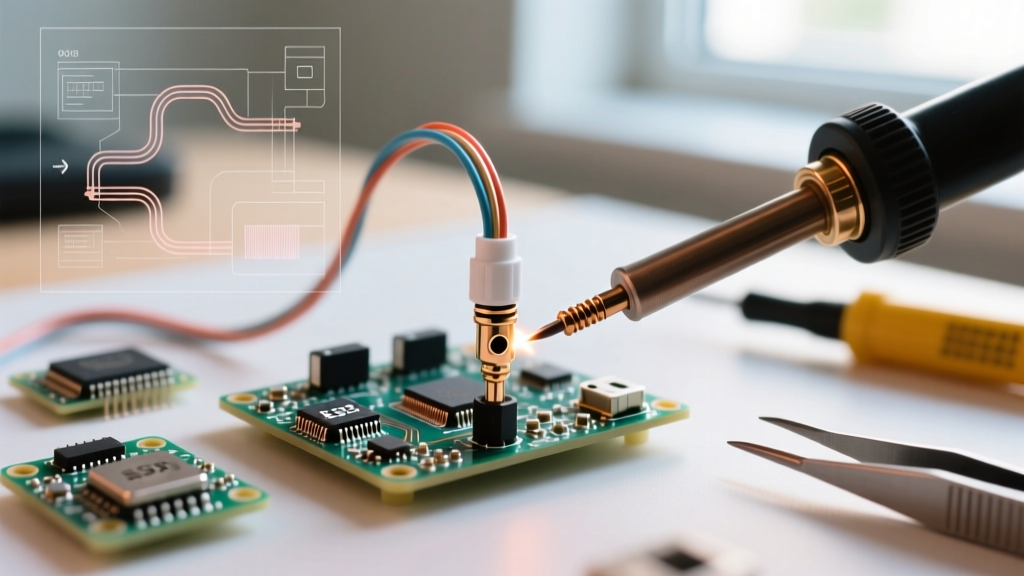
If this occurs, the machine will fail to POST or will exhibit random kernel panics. Repair requires a specialized micro-soldering technician using a BGA rework station to apply localized hot air (profiled precisely to 245°C), remove the faulty chip, clean the pads with flux and desoldering wick, reball a donor LPDDR5x chip using a precision stencil, and reflow it back onto the board. Expect to pay between $200 and $400 for this level of board repair at a specialized data-recovery or micro-soldering lab.
Frequently Asked Questions
Can I desolder my 16GB RAM chips and solder on 32GB chips?
Theoretically, yes, but practically, no. The BIOS/UEFI firmware on modern motherboards contains a memory training table hardcoded for the specific density, timing, and SPD data of the factory-installed chips. Even if you successfully executed the BGA rework, the system would likely fail to boot without a custom BIOS flash to recognize the new memory topology.
Does soldered RAM last longer than socketed SODIMM RAM?
From a purely electrical standpoint, yes. Soldered BGA joints are highly resistant to vibration, physical shock, and contact oxidation, which are common failure points for SODIMM edge connectors. However, if a single soldered memory chip fails, the entire motherboard must be replaced or undergo complex micro-soldering, whereas a SODIMM stick can simply be swapped out in two minutes.