
The Hidden Dangers of Budget SMT Equipment
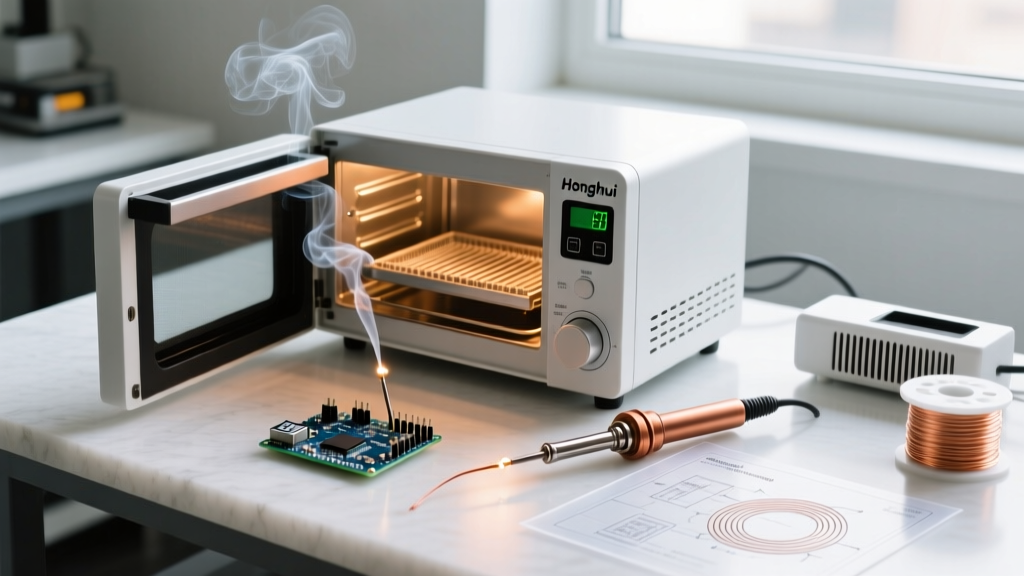
The transition from hand soldering to automated surface mount technology (SMT) is a major milestone for any electronics lab or small-scale manufacturing setup. The Honghui Technology reflow soldering oven and similar benchtop infrared (IR) batch ovens have become incredibly popular due to their accessible price point and compact footprint. However, as we navigate the dense, fine-pitch component landscape of 2026, relying on out-of-the-box budget SMT equipment introduces severe, often overlooked safety hazards.
While these ovens are capable of achieving the thermal profiles required for modern lead-free alloys like SAC305, their stock configurations frequently lack the industrial safety redundancies found in $10,000+ conveyorized systems. From toxic polymer off-gassing to inadequate chassis grounding, operating a stock benchtop reflow oven without critical safety modifications is a liability. This guide details the exact engineering and environmental modifications required to operate your Honghui Technology reflow soldering oven safely and effectively.
Thermal Shielding and the PTFE Off-Gassing Hazard
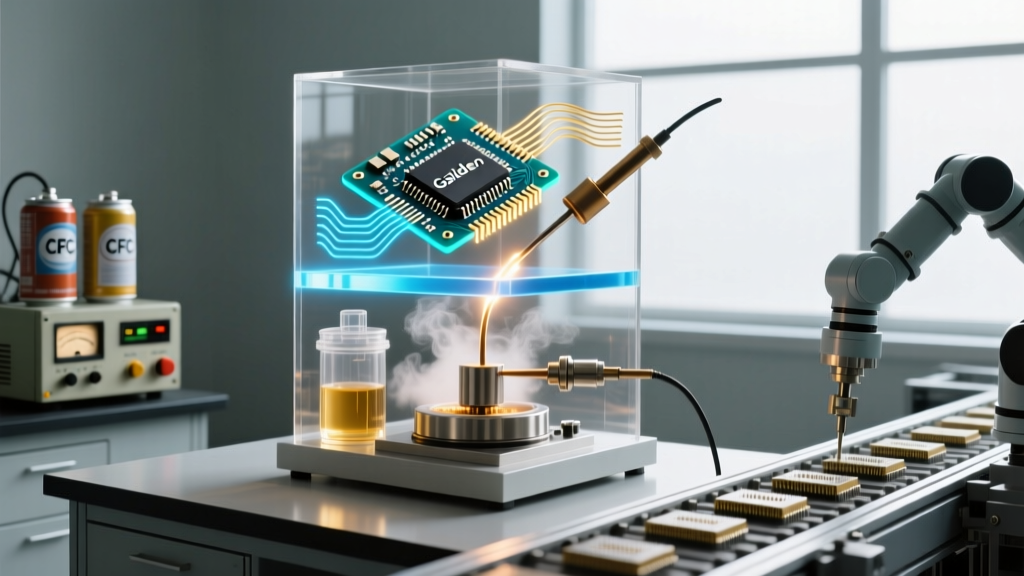
One of the most insidious hazards in entry-level reflow ovens is the manufacturer's use of Polytetrafluoroethylene (PTFE/Teflon) tape or seals around the heating element terminals and the main viewing window. PTFE is chemically inert at room temperature, but its thermal degradation threshold is a critical point of failure in reflow applications.
Critical Thermal Warning: PTFE begins to degrade and release toxic fluorocarbon gases at approximately 260°C (500°F). Because modern lead-free reflow profiles (such as those for SAC305) require peak temperatures of 245°C to 260°C, the ambient chamber temperature—and the localized heat near IR quartz tubes—can easily exceed the safe operating limit of PTFE, leading to polymer fume fever.
Required Material Substitutions
Before running your first thermal profile, you must inspect the interior of the oven. If you spot white, slick tape wrapping wire connections or sealing the glass door, it must be removed immediately.
- High-Temperature Kapton (Polyimide) Tape: Rated for continuous use up to 260°C and short spikes to 400°C. Use this for insulating internal wiring and securing K-type thermocouples.
- Fiberglass Cloth Tape with Silicone Adhesive: Ideal for sealing the edges of the glass viewing window. It withstands up to 300°C without off-gassing.
- High-Temp RTV Silicone: Use a high-temperature red or black RTV silicone gasket maker to seal the door perimeter instead of relying on compression tapes.
Electrical Grounding and Shock Prevention
Benchtop SMT ovens draw significant current—often between 800W and 1500W—utilizing standard 110V or 220V mains power. A recurring failure mode in imported, budget-friendly ovens is a "floating ground," where the metal chassis is not properly bonded to the earth ground pin of the power plug. If an internal heating element shorts to the chassis, the entire exterior of the oven becomes energized.
Implementing a Robust Electrical Safety Chain
To mitigate electrocution risks, implement the following electrical safety protocol:
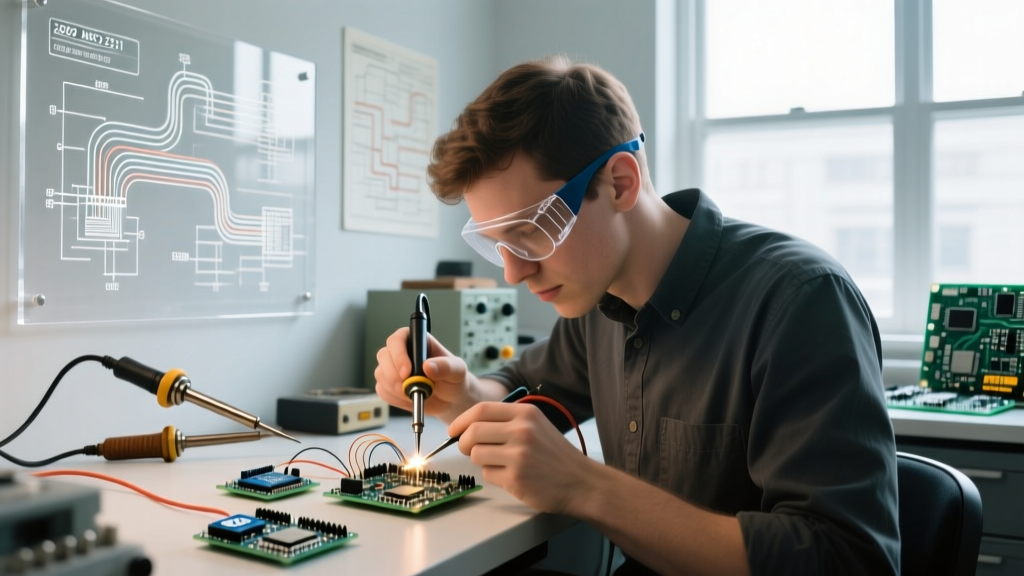
- Verify Chassis Continuity: Use a multimeter to check for continuity between the earth ground pin on the plug and the bare metal of the oven's exterior chassis. Resistance should be near zero ohms.
- Install an IEC320 C14 Inlet: If your oven uses a cheap, molded 2-prong or ungrounded cord, replace it with a properly grounded IEC320 C14 inlet and wire the earth pin directly to the chassis using a ring terminal and star washer to ensure a bite-proof connection.
- Mandatory GFCI/RCD Protection: Never plug a reflow oven directly into a standard wall receptacle without Ground Fault Circuit Interrupter (GFCI) protection. Use an inline GFCI adapter or ensure the circuit breaker is GFCI-equipped to trip within milliseconds if current leaks to the chassis or user.
Fume Extraction and VOC Mitigation
Reflow soldering vaporizes the flux core within your solder paste. Whether you are using rosin-based (colophony) or synthetic no-clean fluxes, the resulting smoke contains volatile organic compounds (VOCs), aliphatic aldehydes, and microscopic particulate matter. According to the UK Health and Safety Executive (HSE), repeated exposure to rosin flux fumes can cause occupational asthma and severe respiratory sensitization. Furthermore, the CDC NIOSH Soldering Safety Guidelines emphasize that standard room ventilation is entirely insufficient for SMT reflow processes.
Designing an Active Exhaust System
The Honghui Technology reflow soldering oven typically features a rudimentary rear exhaust port, often just a passive vent or a low-CFM computer fan. This is inadequate for capturing the sudden plume of flux vapor released during the reflow phase (the "outgassing" stage of the thermal profile).
| Component | Stock Configuration | Safety-Optimized Configuration |
|---|---|---|
| Fan Type | Standard 12V PC Fan (30-50 CFM) | Inline Duct Booster or Centrifugal Blower (150+ CFM) |
| Filtration | None (Vented into room) | HEPA Filter + Activated Carbon Bed (for VOCs) |
| Ducting | None or flexible plastic | 4-inch Aluminum Flexible Ducting (Fire-retardant) |
| Exhaust Routing | Back of desk | Vented outdoors or through a closed-loop HEPA/Carbon scrubber |
For labs without exterior venting capabilities, investing in a dedicated benchtop fume extractor equipped with a multi-stage HEPA and activated carbon filter (such as those offered by Hakko or BOFA) is non-negotiable. As noted in the Adafruit Industries Lead-Free Safety Guide, carbon filtration is specifically required to adsorb the gaseous VOCs that HEPA filters alone cannot capture.
Step-by-Step Thermal Profiling and PID Verification
Safety in SMT isn't just about electrical and chemical hazards; it's also about preventing component destruction and PCB delamination caused by thermal runaway. Budget ovens often rely on rudimentary PID controllers and poorly placed internal thermocouples that read the air temperature near the heating elements rather than the actual temperature of the PCB mass.
The Profiling Protocol
Before trusting the oven's pre-programmed profiles, you must validate them using an external K-type thermocouple datalogger.
- Attach Thermocouples: Use high-temp Kapton tape to secure at least three K-type thermocouples to a sacrificial PCB. Place one on a large ground plane (high thermal mass), one on a small 0402 pad (low thermal mass), and one on the edge of the board.
- Run a Test Profile: Execute the oven's standard lead-free profile while the external datalogger records the actual board temperature at 1-second intervals.
- Analyze the Delta: Compare the oven's display readout to your datalogger. It is common to see a 15°C to 30°C discrepancy. If the oven displays 240°C but your PCB is only at 215°C, you risk under-reflowing. Conversely, if the oven overshoots to 275°C to compensate, you risk popping BGAs and delaminating FR4 fiberglass.
- Adjust PID Offsets: Access the oven's internal controller menu and apply a temperature offset, or manually adjust your profile setpoints to ensure the PCB mass hits the exact 245°C peak required by IPC J-STD-020 Standards for moisture sensitivity level (MSL) compliance.
Comparative Safety Matrix: Stock vs. Modified
To summarize the necessary upgrades for your Honghui Technology reflow soldering oven, review the matrix below. Transitioning from a stock setup to a modified setup transforms a hazardous prototype tool into a reliable, safe small-batch production asset.
| Safety Parameter | Stock Oven (High Risk) | Modified Oven (Lab Safe) |
|---|---|---|
| Internal Sealing | PTFE Tape (Toxic off-gassing > 260°C) | Fiberglass Tape & RTV Silicone |
| Chassis Grounding | Floating / Ungrounded Metal Chassis | Bonded to Earth Ground + GFCI Outlet |
| Fume Management | Passive Venting into Workspace | Active Inline Blower + Carbon Scrubber |
| Thermal Verification | Blind Trust of Internal PID Sensor | Validated via External K-Type Datalogger |
Final Thoughts on SMT Lab Safety
The Honghui Technology reflow soldering oven offers an incredible entry point into automated PCB assembly, but it demands a proactive approach to safety. By systematically eliminating PTFE materials, enforcing strict electrical grounding protocols, engineering proper VOC extraction, and validating thermal profiles with external dataloggers, you protect both your health and your hardware. Never assume that out-of-the-box consumer SMT equipment meets industrial safety standards; taking the time to implement these modifications is the hallmark of a professional, forward-thinking electronics engineering lab.