
The Core Dilemma: Thermal Welding vs. Chemical Adhesives
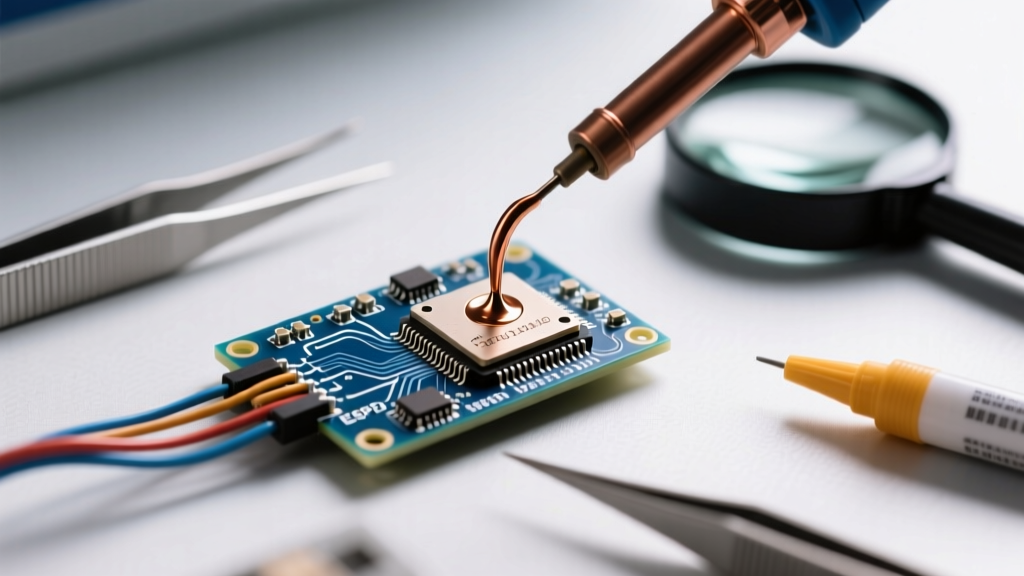
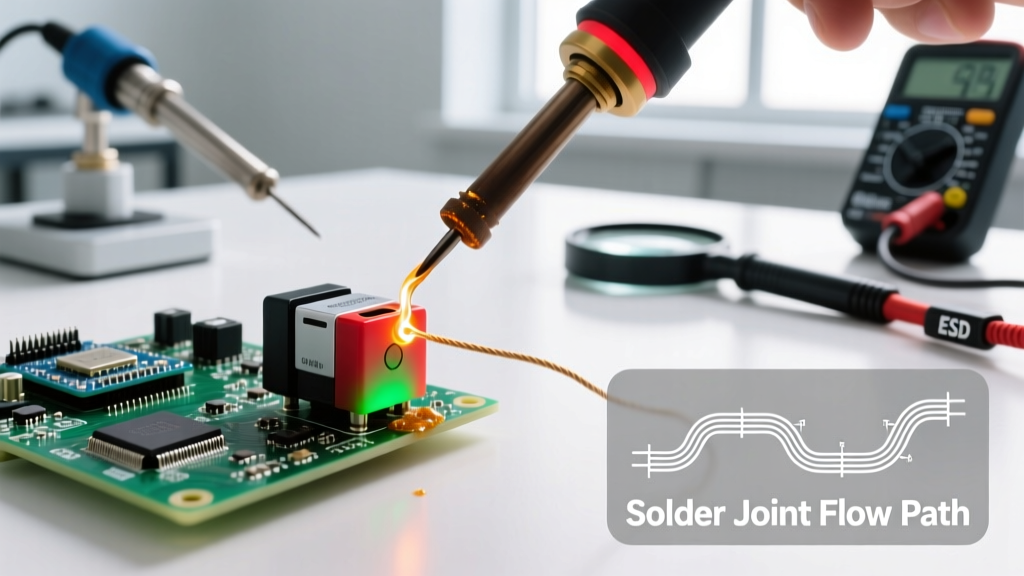
When repairing cracked drone frames, automotive interior trim, or 3D-printed enclosures, makers and technicians face a critical fork in the road: use chemical adhesives or perform thermal plastic soldering. Despite the colloquial term 'plastic soldering,' the process is technically thermal welding. Unlike metallic soldering, which uses a lower-melting-point filler to bond base metals, plastic soldering melts the base polymers and a compatible filler rod to fuse them at the molecular level.
In 2026, the availability of high-efficiency, USB-C-powered thermal tools has democratized plastic repair, moving it from specialized automotive body shops to the DIY electronics bench. However, choosing the right method requires a rigorous decision framework based on material chemistry, structural load, and environmental exposure.
Method Selection Matrix
| Repair Method | Shear Strength | Chemical Resistance | Best Use Case | Limitations |
|---|---|---|---|---|
| Cyanoacrylate (Super Glue) | Low-Medium | Poor | Static, low-stress cosmetic fixes | Brittle; fails under vibration |
| Two-Part Epoxy | Medium-High | Good | Rigid multi-material bonding | Adds weight; surface prep intensive |
| Mechanical Fasteners | High | Excellent | Heavy load-bearing enclosures | Requires drilling; creates stress risers |
| Plastic Soldering (Thermal) | Very High | Excellent | Flexible/stressed thermoplastics (PP, ABS) | Requires heat control; thermoplastics only |
Material Compatibility: The Thermoplastic Rule
The most common failure mode for beginners is attempting to 'solder' a thermoset plastic. You must understand the chemical distinction before applying heat. According to the Society of Plastics Engineers (SPE), polymers are broadly categorized into two families:
- Thermoplastics (Weldable): These polymers soften when heated and harden when cooled, a process that can be repeated indefinitely. Examples include ABS, Polypropylene (PP), Polyethylene (PE), PVC, and PLA. These are ideal for plastic soldering.
- Thermosets (Non-Weldable): These undergo a chemical cross-linking reaction during curing. Once set, applying heat will not melt them; it will burn and degrade them. Examples include Bakelite, cured epoxy resins, and polyurethane (PU). You cannot solder thermosets; you must use mechanical fasteners or specialized structural adhesives.
Pro Tip for Automotive Repair: Modern car bumpers are rarely pure PP. They are usually PP-EPDM-Talc blends (Polypropylene with Ethylene Propylene Diene Monomer rubber and Talc filler). When sourcing filler rods for automotive plastic soldering, ensure you buy 'PP/EPDM' specific rods, or the weld pool will delaminate under flex testing.
Temperature Profiles for Common Polymers
Precision temperature control is non-negotiable. Exceeding the thermal degradation temperature releases toxic fumes and destroys the polymer chain, resulting in a brittle 'burnt' joint. The MatterHackers Filament Temperature Guide provides an excellent baseline for common thermoplastics used in electronics and maker projects:
| Polymer | Ideal Melt Temp | Degradation Threshold | Common Applications |
|---|---|---|---|
| PLA | 180°C - 210°C | 230°C | 3D printed enclosures, prototypes |
| PETG | 220°C - 245°C | 260°C | Waterproof housings, drone canopies |
| ABS | 240°C - 270°C | 290°C | RC cars, automotive trim, retro consoles |
| PP (Polypropylene) | 250°C - 280°C | 300°C | Bumpers, battery cases, living hinges |
| Nylon (PA) | 260°C - 290°C | 310°C | Gears, high-wear structural joints |
Tool Selection Framework: What to Buy in 2026
The market for plastic welding tools has segmented into three distinct tiers. Your purchase should align with your volume of repairs and the precision required.
Tier 1: The Hobbyist & Maker (Under $60)
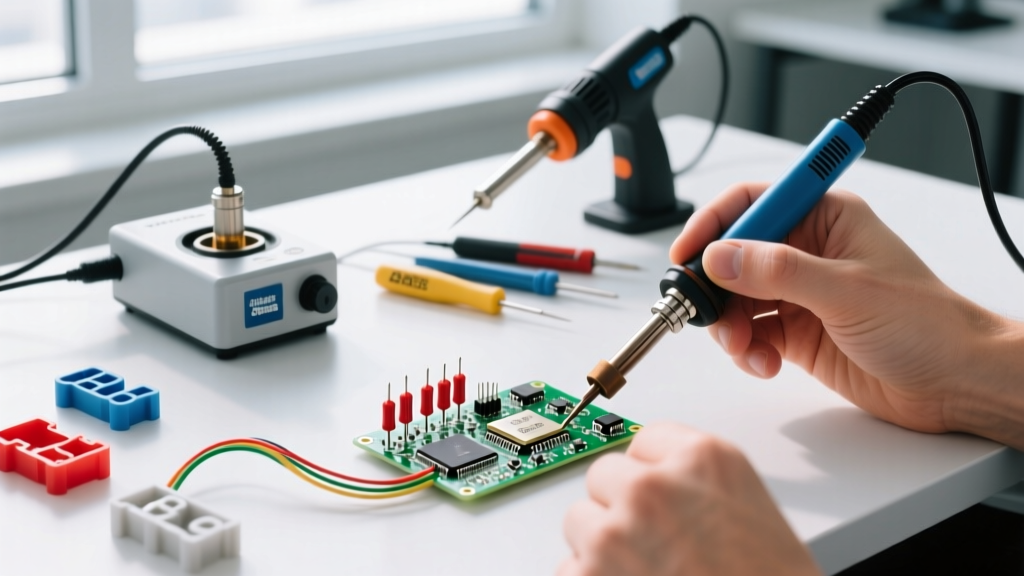
For occasional 3D print seam smoothing, RC car arm repairs, or drone frame reinforcement, a high-end smart soldering iron is sufficient.
- Top Pick: Pine64 Pinecil V2 or Miniware TS101.
- Configuration: Pair the iron with a custom flat-blade or 'spatula' tip (often sold as 'plastic welding tips' on maker marketplaces).
- Why it works: The RISC-V processors in these 2026-era irons recover heat in milliseconds when pressed against a heat-sinking plastic mass. The 65W USB-C PD output is enough to melt ABS and PLA rods without thermal stalling.
Tier 2: The Prosumer & Electronics Tech ($300 - $700)
When repairing complex geometries, internal baffle structures, or large surface areas, conductive hot air is superior to direct-contact irons.
- Top Pick: Hakko FR-811 or Weller WHA900.
- Configuration: Use a 'spoon' or 'shoe' nozzle attachment designed to glide over the plastic surface without catching.
- Why it works: Hot air prevents the physical dragging and tearing of the semi-molten plastic that occurs with solid iron tips. It also allows for localized pre-heating of thick sections to prevent thermal shock cracking.
Tier 3: Automotive & Industrial Structural ($400 - $800+)
For structural repairs on polyolefins (PP/PE), oxygen exposure during the melt phase causes oxidation, weakening the weld. Dedicated plastic welders solve this.
- Top Pick: Polyvance Nitrohot or generic hot air welders with inert gas shielding.
- Why it works: As detailed by TWI Global's research on plastic welding, shielding the melt pool with an inert gas (like nitrogen or compressed dry air) prevents oxidation, ensuring the filler rod and base material fuse with near-injection-molding strength.
The Reinforcement Decision: Mesh vs. Pure Melt
A pure plastic weld is only as strong as the polymer chain itself. For high-tension areas (like drone motor mounts or RC suspension arms), you must embed a structural skeleton.
The 304 Stainless Steel Mesh Standard: Do not use aluminum window screen or copper wire. Aluminum melts at 660°C (too close to some polymer degradation points if using high-heat hot air), and copper acts as a massive heat sink, causing cold joints. Use 304 Stainless Steel wire mesh, 40x40 threads per inch (TPI), with a 0.005-inch wire diameter. This specific gauge allows the mesh to sink completely below the surface of the plastic when heated, encapsulating it fully and preventing corrosion or surface snagging.
Step-by-Step Execution: High-Stress ABS Repair
Follow this exact sequence for repairing a cracked ABS electronics enclosure or RC chassis:
- V-Groove Preparation: Use a rotary tool with a carbide burr to cut a 60-degree 'V' groove along the entire length of the crack. This increases the surface area for the weld pool and ensures the filler rod penetrates to the root of the joint.
- Clean and Tack: Wipe the groove with isopropyl alcohol (99%). Use the flat blade tip of your iron at 220°C to 'tack' the two sides together every half-inch. This prevents warping during the final weld.
- Mesh Embedding (If applicable): Cut the stainless mesh slightly narrower than the V-groove. Press the iron tip through the mesh, melting the ABS base just enough to sink the mesh 1mm below the surface.
- Filler Rod Deposition: Increase iron temp to 250°C. Hold the ABS filler rod in your off-hand. Simultaneously melt the rod and the base groove, pushing the molten plastic into the V-groove. Do not just melt the rod and 'paint' it over the top; the base material must reach its glass transition temperature to achieve molecular cross-linking.
- Thermal Annealing: ABS is prone to warping as it cools unevenly. Immediately after welding, use a heat gun set to 100°C to gently warm the entire repaired panel, then allow it to cool to room temperature slowly over 2 hours.
Common Failure Modes and Edge Cases
- The 'Cold Joint' Delamination: Occurs when the filler rod is melted, but the base material is only warmed, not melted. The rod simply sits on top of the crack like hot glue. Fix: Slow down your travel speed and apply downward pressure to ensure the heat conducts into the base.
- Toxic Off-Gassing: Soldering PVC releases hydrogen chloride gas; ABS releases styrene. Fix: Never perform plastic soldering without a localized fume extractor (e.g., Hakko FA-400 or BOFA system) positioned within 3 inches of the melt pool.
- Moisture Popping: Nylon (PA) and PETG are highly hygroscopic. If the base plastic has absorbed ambient humidity, the water will flash-boil at 100°C, creating bubbles and voids in your weld pool. Fix: Bake hygroscopic plastic parts in a food dehydrator at 60°C for 4 hours prior to welding.
Final Verdict
Plastic soldering is not a universal panacea, but when applied to the correct thermoplastic polymers with the right thermal profile and reinforcement strategy, it yields repairs that are often stronger and lighter than the original factory molding. By utilizing this decision framework, you can confidently select between chemical adhesives, mechanical fasteners, and thermal welding, ensuring your 2026 projects are built to survive real-world mechanical stress.