
The Core Dilemma: Sweat Soldering vs. Modern Alternatives
In the modern plumbing landscape, professionals and advanced DIYers face a constant crossroads: when to rely on traditional pipe soldering versus adopting press-fit or push-to-connect technologies. While systems like Viega ProPress and SharkBite have captured significant market share due to their speed, sweat soldering remains the undisputed champion for cost-efficiency, long-term reliability in high-heat environments, and accessibility in tight joist bays where massive pressing jaws simply cannot fit.
This decision framework is engineered to help you evaluate the exact variables—torch fuel types, alloy metallurgy, flux chemistry, and joint physics—required to execute flawless pipe soldering. Whether you are running 1/2-inch Type M copper for residential domestic water or 2-inch Type L for commercial HVAC, the choices you make at the workbench dictate the lifespan of the system.
The Pipe Soldering Decision Matrix
Before striking the torch, evaluate your project constraints against this comparative matrix to determine if pipe soldering is the optimal path.
| Method | Upfront Tool Cost | Joint Longevity | Skill Curve | Best Application Scenario |
|---|---|---|---|---|
| Pipe Soldering (Sweat) | $50 - $250 | 50+ Years | Moderate-High | Tight spaces, high-heat HVAC, budget-conscious rough-ins. |
| ProPress (Copper) | $2,500 - $3,500 | 25-50 Years | Low | Commercial retrofits, live wet lines, time-critical repairs. |
| Push-to-Connect | $0 - $30 | 15-25 Years | Very Low | Emergency temporary fixes, exposed PEX-to-Copper transitions. |
Torch Selection: Fuel Types & Heat Output
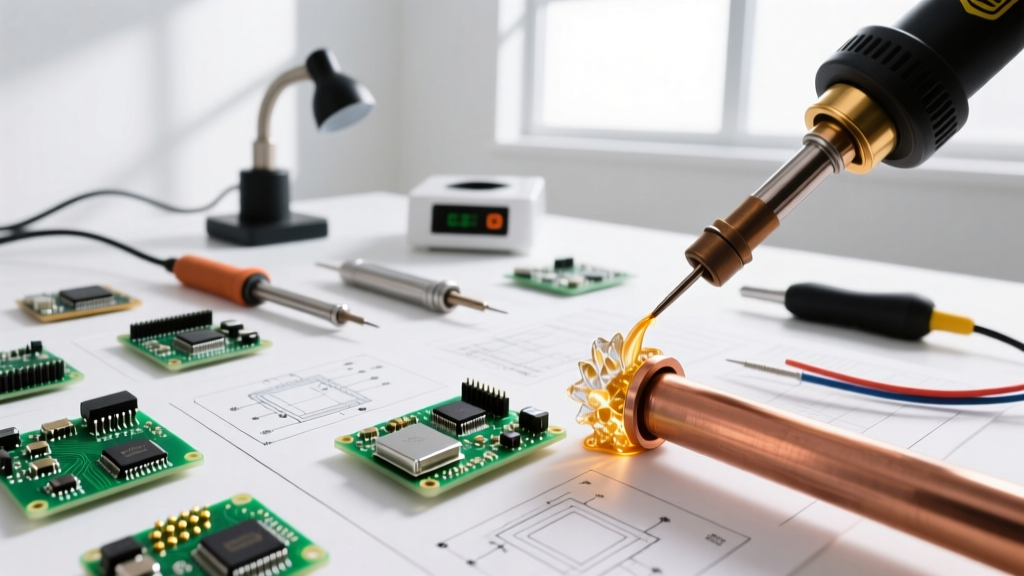
The most critical failure point in pipe soldering is inadequate heat transfer, leading to 'cold joints' where the solder merely sits on the surface rather than being drawn into the fitting via capillary action. Your torch selection must match the thermal mass of the copper being joined.
1. MAP-Pro / Propane Torches (The Standard)
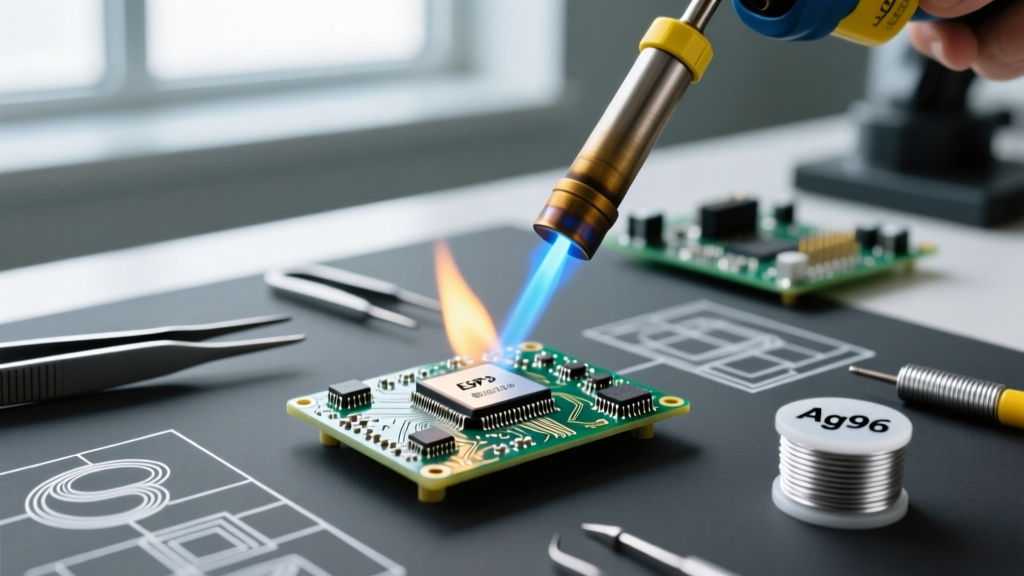
For 1/2-inch to 3/4-inch residential water lines, high-intensity propane or MAP-Pro torches are the industry standard. The Bernzomatic TS8000 (approx. $55) features a cast-brass swirl burner that maximizes heat transfer, reaching flame temperatures of 3,730°F when paired with MAP-Pro fuel. A standard 1/2-inch copper joint requires roughly 3 to 5 seconds of direct heat with a TS8000 before the fitting accepts solder.
2. Acetylene Torches (The Heavy Duty)
When stepping up to 1-inch, 1-1/4-inch, or larger copper mains, or when working in freezing ambient conditions, MAP-Pro loses its thermal edge. Acetylene burns at an intense 5,720°F. The TurboTorch T-3 Extreme outfit (approx. $180 for the torch and regulator, plus tank) utilizes a vortex flame that wraps entirely around the fitting, eliminating the need to constantly rotate the flame. This reduces localized overheating and ensures uniform capillary draw.
Alloy Metallurgy: Choosing the Right Solder
Selecting the correct solder alloy is not just about melting points; it is a strict matter of code compliance and metallurgical compatibility. According to the EPA Lead-Free Plumbing Requirements, any solder used on potable water lines must contain less than 0.2% lead.
95/5 Tin-Antimony or Tin-Copper (Potable Water)
Composed of 95% tin and 5% antimony (or copper), this lead-free alloy melts at approximately 450°F (232°C). Brands like Oatey Safe-Flo ($25 per 1lb spool) are the default for domestic water. The narrow plastic range (the temperature gap between solidus and liquidus states) demands precise heat control; if the joint cools slightly during application, the solder will fracture internally.
Silver-Bearing Alloys (HVAC & High Vibration)
For refrigeration lines, compressed air, or high-vibration environments, standard 95/5 lacks the tensile strength required. Silver-bearing solders, such as Harris Sil-Fos 5% ($45+ per ounce), contain 5% silver, 6% phosphorus, and 89% copper. These melt at higher temperatures (around 1,195°F) and possess self-fluxing properties on copper-to-copper joints due to the phosphorus content, though they are strictly prohibited for potable water due to heavy metal toxicity and cost.
50/50 Tin-Lead (DWV Only)
Historically used for drain-waste-vent (DWV) systems, 50/50 solder melts at a lower 361°F and has a wide plastic range, making it incredibly forgiving for beginners. However, due to modern environmental codes, it is heavily restricted and largely obsolete. Default to 95/5 for all general plumbing to maintain a unified, code-compliant inventory.
Flux Chemistry and Capillary Physics
Flux is not merely a cleaning agent; it is a chemical catalyst that prevents oxidation during the heating phase and reduces the surface tension of the molten solder. The CDA Copper Tube Handbook emphasizes that proper flux application is the primary determinant of joint integrity.
- Petroleum-Based Paste (e.g., Oatey No. 5): Contains zinc chloride and ammonium chloride suspended in a petroleum jelly base. It aggressively strips copper oxide but leaves a highly corrosive residue that must be wiped clean post-solder to prevent long-term pinhole leaks.
- Water-Soluble Flux (e.g., Oatey H-20): Uses a synthetic base that washes away easily with water. This is the superior choice for DIYers and pros who want to minimize post-installation cleanup and mitigate the risk of external pipe corrosion.
The Physics of the Joint
Capillary action relies on a precise annular clearance between the tube OD (outside diameter) and the fitting ID (inside diameter). The engineered gap is exactly 0.002 to 0.005 inches. If the pipe is scratched too deeply with aggressive emery cloth, the gap widens, breaking the capillary draw and resulting in a void-filled joint. Always use specialized abrasive grit cloth (e.g., Norton 120-grit aluminum oxide) rather than a wire wheel, which removes too much base metal.
Troubleshooting Edge Cases & Failure Modes
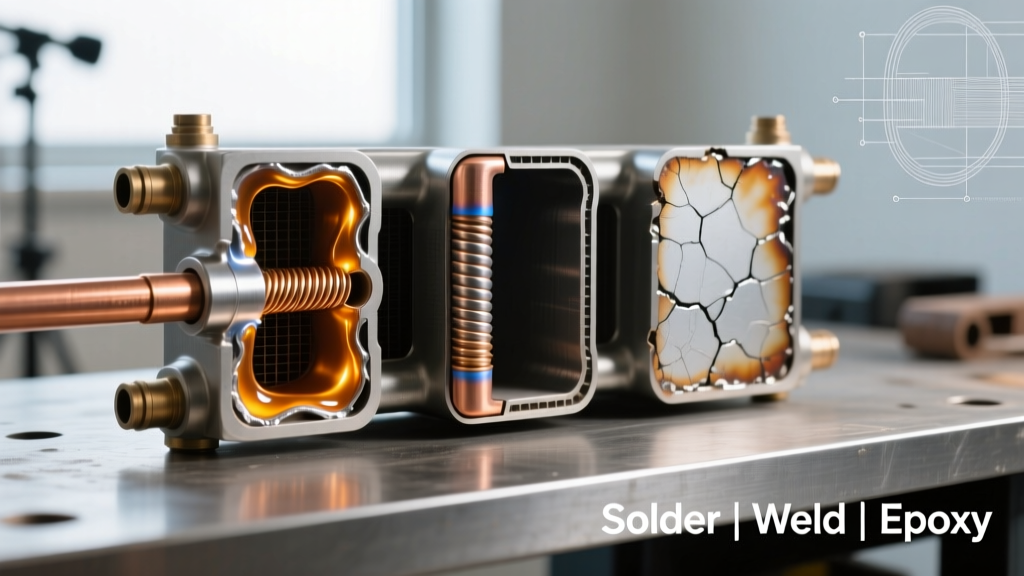
Even seasoned plumbers encounter joint failures. Recognizing the visual cues of a failing sweat joint allows for immediate remediation before the system is pressurized.
Pro-Tip: The Solder Ring Indicator
Always look for the continuous 'solder ring' at the base of the fitting. When the joint reaches optimal temperature, capillary action will pull the alloy entirely into the fitting, leaving a distinct, shiny silver bead at the seam. If you only see a dull, frosted patch, you have a cold joint.
Failure Mode 1: Flux Inclusion (Pinhole Leaks)
Cause: Applying excessive flux or heating the joint too rapidly, causing the flux to boil and become trapped inside the capillary space.
Remedy: Use a flux brush with 1/4-inch bristles. Apply a microscopically thin, even coat to the pipe OD only. The fitting ID should remain dry; the solder will carry the necessary flux displacement as it is drawn inward.
Failure Mode 2: Burnt Flux (Carbon Barrier)
Cause: Overheating the copper past 800°F causes the petroleum flux to carbonize, turning into a hard, black crust that molten solder cannot wet or penetrate.
Remedy: If the copper turns cherry red and the flux blackens, stop immediately. Allow the joint to cool, disassemble using a fitting saver tool, re-clean with emery cloth, and re-flux. Never attempt to force solder into a carbonized joint.
Failure Mode 3: Water Migration (Steam Blowout)
Cause: Attempting to solder a vertical riser or low-point drain where residual water remains in the line. The heat turns the water to steam, which expands 1,600 times in volume, blowing the molten solder out of the joint.
Remedy: Always use a Jet-Flow water stopper (a dissolvable starch plug) or a mechanical tube plug upstream of the work area. Open a downstream valve to vent any expanding air or steam.
Expert Verdict: When to Default to Pipe Soldering
While press-fittings dominate commercial time-sensitive repairs, pipe soldering remains the ultimate decision for high-temperature hydronic heating systems, tight residential remodels, and situations where the $3,000 capital expenditure of a ProPress tool cannot be justified. By strictly adhering to the 0.005-inch clearance rule, matching your torch BTU output to the pipe diameter, and respecting the metallurgy of lead-free 95/5 alloys, you ensure a plumbing infrastructure that will outlast the building itself.