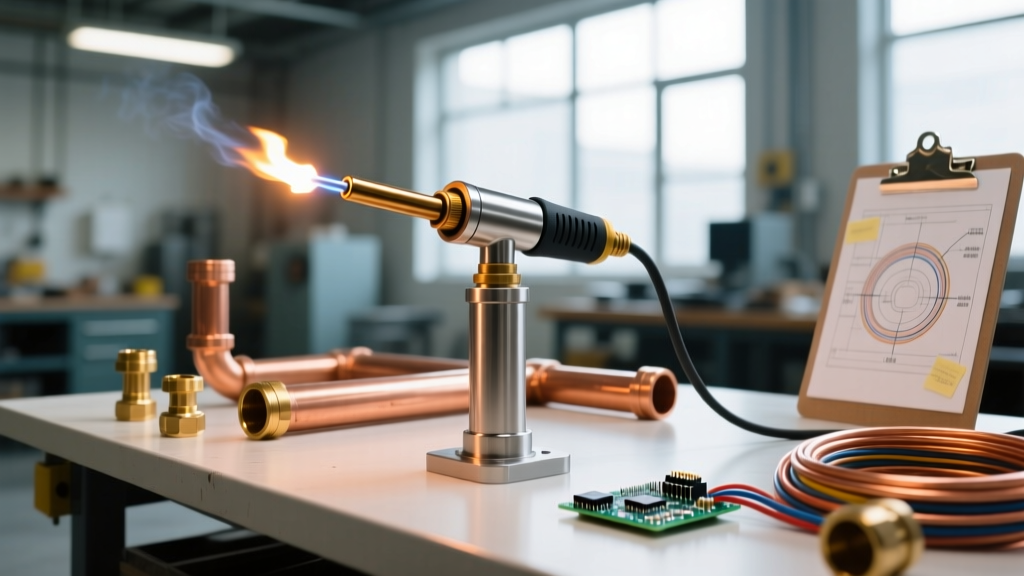

The Role of the Copper Pipe Soldering Torch in Modern Industry
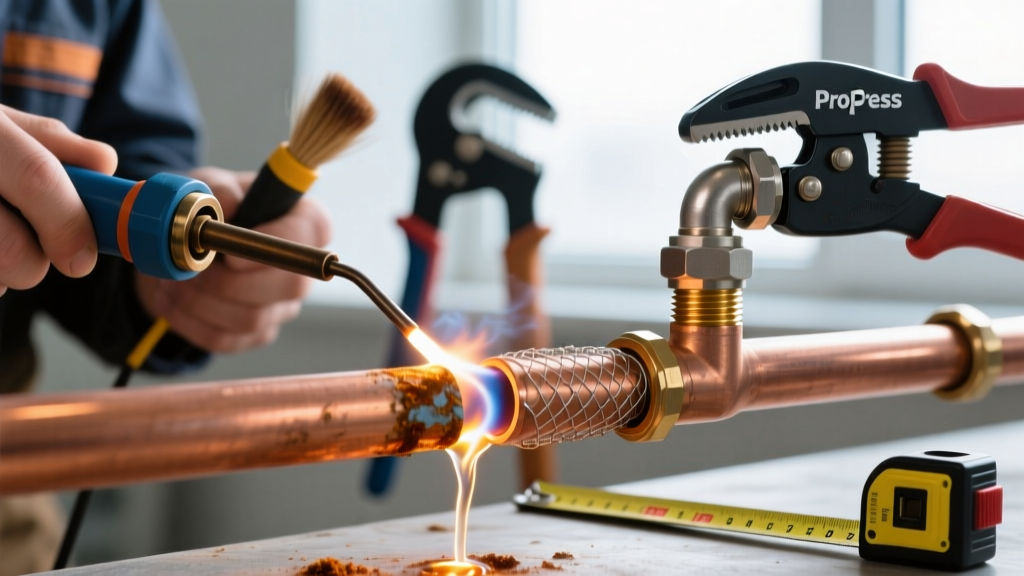
In commercial plumbing, industrial refrigeration, and HVAC, the reliability of a piping system hinges entirely on the integrity of its joints. While residential DIYers might rely on basic hardware store pencil torches, professional contractors require a high-output copper pipe soldering torch capable of delivering consistent, high-BTU heat to large-diameter pipes and complex manifolds. As the HVAC industry fully transitions to higher-pressure A2L refrigerants like R-32 in 2026, joint failure is no longer just a leak hazard—it is a critical safety and environmental liability.
This guide cuts through consumer-grade marketing to evaluate the thermal dynamics, fuel efficiencies, and specific torch models demanded by modern industrial applications. We will also clarify a common industry misnomer: while technicians universally search for a "soldering torch," HVAC applications technically require brazing (heating above 840°F / 450°C), whereas commercial plumbing relies on soldering (below 840°F). The right torch must be versatile enough to handle both.
Fuel Gas Dynamics: Propane vs. MAP-Pro vs. Acetylene vs. Oxy-Acetylene
Selecting the correct fuel gas is the first critical decision in industrial pipe joining. The thermal output and flame envelope dictate how quickly a joint reaches capillary temperature without oxidizing the copper or burning the flux.
| Fuel Type | Max Temp (Air) | Max Temp (O2) | Cost Profile (2026) | Primary Industry Application |
|---|---|---|---|---|
| Propane (C3H8) | ~3,600°F | ~4,550°F | Lowest ($) | Thawing, light residential soldering |
| MAP-Pro / Propylene | ~3,730°F | ~5,300°F | Moderate ($$) | Commercial plumbing, 1/2" to 1.5" copper |
| Acetylene (C2H2) | ~4,500°F | ~5,589°F | High ($$$) | Heavy HVAC brazing, 2"+ mains, wet lines |
| Oxy-Acetylene | N/A | ~6,300°F | Highest ($$$$) | Industrial refrigeration, thick-walled brazing |
For commercial plumbers working on 1-inch to 2-inch Type L or M copper water lines, MAP-Pro (Propylene) offers the optimal balance of portability and BTU output. However, HVAC technicians brazing refrigerant linesets exposed to 400+ PSI operating pressures must step up to Acetylene or Oxy-Acetylene to properly flow silver-bearing brazing alloys (like Sil-Fos 15) into the joint capillary.
Top Tier Torches for Commercial & Industrial Applications
Based on 2026 field performance, thermal efficiency, and durability in harsh job-site environments, these three torch systems dominate the industrial sector.
1. TurboTorch XT-1 (Swirl Combustion Technology)
The TurboTorch XT-1 is the undisputed workhorse for commercial plumbing and mid-sized HVAC applications. Unlike standard straight-flame torches, the XT-1 utilizes a patented swirl combustion chamber that wraps the flame around the pipe, heating the entire circumference simultaneously.
- Best For: 3/4" to 2" copper pipe soldering and brazing.
- 2026 Pricing: ~$165 (Head only) / ~$260 (Kit with MAP-Pro cylinder).
- Industry Advantage: Reduces joint heating time by up to 40% compared to standard brass torches, significantly minimizing the risk of flux burn-off and internal oxidation.
- Edge Case Limitation: The swirl tips (T-3, T-4, T-6) are highly sensitive to carbon buildup if used with improper fuel regulators. Regular tip cleaning with a brass wire brush is mandatory.
2. Bernzomatic TS8000 (High-Intensity Trigger Start)
While often found in retail stores, the TS8000 remains a staple for service plumbers doing quick repairs, retrofitting valves, and working in tight joist spaces where a full acetylene rig is impractical.
- Best For: 1/2" to 1" residential and light commercial plumbing repairs.
- 2026 Pricing: ~$55 - $65.
- Industry Advantage: The cast-aluminum burn tube withstands high ambient heat, and the instant-on trigger saves fuel in stop-and-start service environments.
- Failure Mode: The piezoelectric igniter is prone to failure after 2-3 years in dusty or high-humidity environments (like mechanical rooms). Contractors should always carry a secondary flint striker.
3. Victor Journeyman 100 Series (Oxy-Acetylene Outfit)
For industrial refrigeration, medical gas piping, and heavy commercial HVAC, the Victor Journeyman is the gold standard. This is a dual-tank oxy-acetylene rig that provides pinpoint temperature control required for brazing large-diameter pipes and complex brass-to-copper transitions.
- Best For: 2" to 6" industrial mains, heavy brazing, and cutting.
- 2026 Pricing: ~$450 - $550 (Complete heavy-duty kit).
- Industry Advantage: Features forged brass construction and aircraft-grade aluminum hoses. The precise gas mixing valves allow technicians to dial in a strictly neutral flame, preventing carburization or oxidation of the base metals.
Sizing the Torch Tip to the Pipe Diameter
Using an undersized tip on a large pipe forces the technician to hold the flame in one spot for too long, melting the pipe wall before the opposite side reaches capillary temperature. Conversely, an oversized tip on a small pipe instantly burns the flux. Follow this industry-standard matrix for MAP-Pro and Acetylene swirl/standard tips:
- 1/2" & 3/4" Pipe: Use a standard pencil flame or TurboTorch T-3 tip. Target heat time: 5–8 seconds.
- 1" & 1-1/4" Pipe: Use TurboTorch T-4 or equivalent high-BTU MAP-Pro tip. Target heat time: 10–15 seconds.
- 1-1/2" & 2" Pipe: Use TurboTorch T-6 or switch to Oxy-Acetylene with a #2 or #3 welding tip. Target heat time: 20–35 seconds.
- 3" & 4"+ Mains: Oxy-Acetylene with a multi-flame "rosebud" heating tip is mandatory to ensure uniform thermal expansion across the massive surface area.
Critical Failure Modes in the Field
Even with the best copper pipe soldering torch, improper technique leads to catastrophic joint failures. Understanding these failure modes is what separates apprentices from master technicians.
Flux Burn-Off and Oxidation Barrier
Water-soluble and rosin-based fluxes are designed to clean copper oxides at specific temperature thresholds (typically 350°F - 400°F). If a technician applies a high-BTU acetylene flame directly to the fluxed joint, the flux will flash-burn into a hard, black carbon crust. This crust acts as a physical barrier, preventing the solder from wicking into the capillary space. Solution: Always pre-heat the pipe 2 inches away from the joint, allowing thermal conduction to melt the flux gently before applying the flame directly to the fitting cup.
Internal Cupric Oxide Scale in HVAC Systems
When brazing HVAC refrigerant lines, the high heat of an oxy-acetylene torch causes the inside of the copper pipe to react with ambient oxygen, forming cupric oxide scale (flaky black soot). If this scale breaks loose during operation, it will permanently clog the TXV (Thermostatic Expansion Valve) and destroy the compressor. According to the EPA Section 608 refrigerant handling guidelines and ASHRAE standards, technicians must flow dry nitrogen through the lines at 2-3 CFM while brazing to displace oxygen and prevent internal scaling.
Thermal Shock in Pressurized Water Systems
When repairing live commercial water lines that cannot be fully drained, residual water acts as a massive heat sink. Technicians often crank up the torch to maximum to overcome the water's cooling effect. This localized extreme heat can anneal the copper, softening it and reducing its burst pressure rating. Always use a wet rag heat-sink barrier downstream of the joint to absorb conducted heat, protecting nearby valves and seals.
Safety & Compliance on the Job Site
Industrial torch operation carries severe fire risks, particularly in retrofit projects involving older buildings with combustible insulation or wooden framing. Compliance with OSHA Welding, Cutting, and Brazing standards is legally mandated. Furthermore, adherence to NFPA 51B hot work safety protocols requires the use of a designated fire watch for at least 60 minutes after the torch is extinguished. In 2026, smart job-site sensors and thermal imaging cameras are increasingly used by commercial contractors to verify that concealed wall cavities have returned to ambient temperatures before the fire watch is cleared.
Expert Verdict: Matching the Torch to the Trade
There is no single "best" copper pipe soldering torch; there is only the right tool for the specific thermal mass and alloy requirement of the job. Commercial plumbers should standardize on MAP-Pro fueled TurboTorch XT-1 kits for their speed and swirl-flame efficiency on 2-inch and smaller mains. HVAC and refrigeration technicians must invest in Victor Oxy-Acetylene rigs to ensure the precise, high-temperature neutral flames required for silver-brazing high-pressure refrigerant circuits. By matching the fuel, tip geometry, and thermal output to the specific industry application, contractors eliminate leak callbacks, ensure code compliance, and maximize job-site profitability.