
The Unique Hazards of Perfboard Prototyping
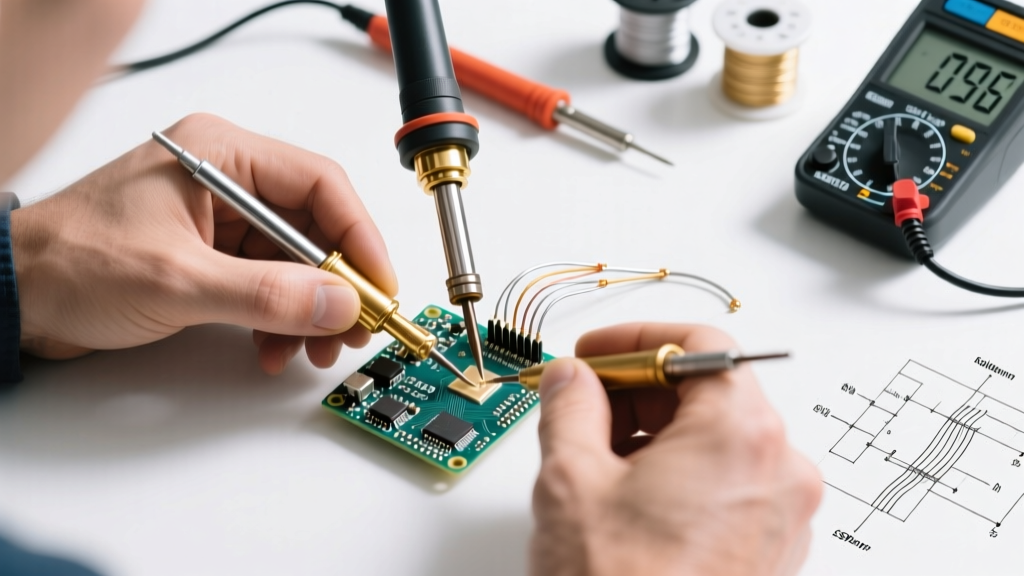
Perfboard (perforated prototyping board) remains a cornerstone of DIY electronics and rapid hardware iteration in 2026. Unlike printed circuit boards (PCBs) with pre-etched copper traces, perfboard requires manual wire routing, point-to-point soldering, and extensive bridging. While this offers ultimate layout flexibility, it introduces a distinct matrix of safety hazards that standard PCB assembly guides often overlook.
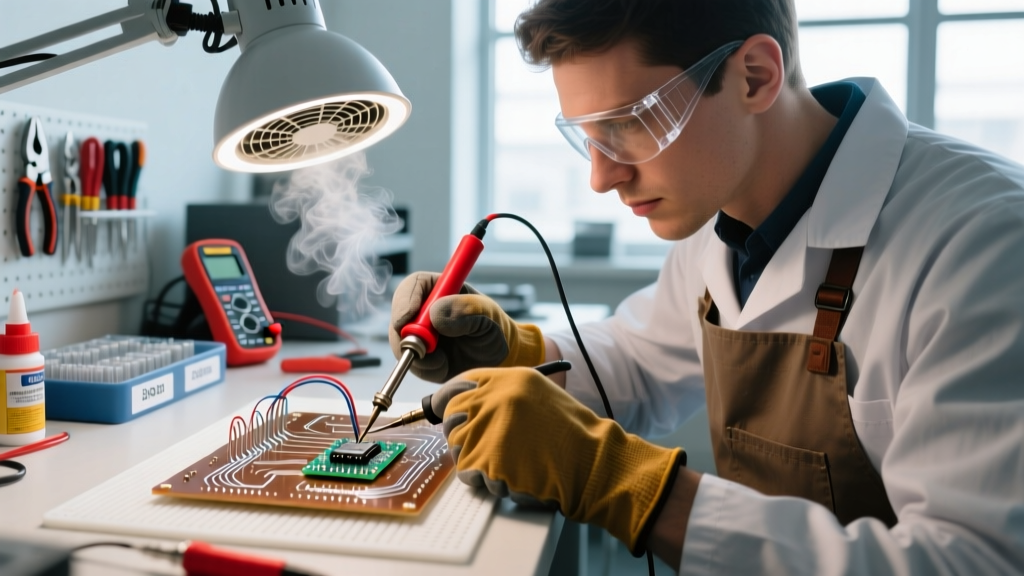
When you solder on perfboard, you are not just melting solder; you are subjecting the board substrate to prolonged, localized thermal stress, manipulating bare, uninsulated copper conductors, and generating concentrated plumes of flux particulates. Understanding the material science of your prototyping board and implementing rigorous safety protocols is non-negotiable for long-term health and workshop safety.
Substrate Material Safety: FR-2 vs. FR-4 Off-Gassing
The most critical, yet frequently ignored, safety variable in perfboard soldering is the substrate material. Most inexpensive, brown perfboards are manufactured from FR-2 (NEMA XXXP), a paper-reinforced phenolic resin. Higher-end, green or transparent boards are typically FR-4, a woven fiberglass epoxy.
The Phenolic Threat (FR-2)
FR-2 has a relatively low glass transition temperature (Tg) of around 110°C to 130°C. When a 350°C soldering iron dwells on an FR-2 pad for more than 3 to 4 seconds, the phenolic resin begins to thermally degrade. This off-gasses phenol and formaldehyde vapor, both of which are toxic respiratory irritants and known carcinogens with chronic exposure. If you notice a sharp, sweet, or acrid chemical smell accompanied by a white haze, you are actively degrading the phenolic binder.
Fiberglass Hazards (FR-4)
FR-4 handles soldering temperatures (up to 380°C) with ease and does not off-gas phenol. However, the safety hazard with FR-4 arises during mechanical modification. Cutting, scoring, or sanding FR-4 perfboard releases microscopic glass fibers into the air, which can embed in the skin and lungs. Always use a specialized PCB shear or score-and-snap method with a vacuum attachment when sizing FR-4 perfboards, and never dry-sand them.
Fume Extraction: Neutralizing Colophony and Particulates
Soldering flux—specifically rosin-based (colophony) flux—generates sub-micron particulates when vaporized. According to the UK Health and Safety Executive (HSE), colophony fumes are a leading cause of occupational asthma. A simple desk fan blowing fumes across your face does not mitigate this; it merely dilutes it while ensuring the particulates pass directly through your breathing zone.
Choosing the Right Extractor for Perfboarding
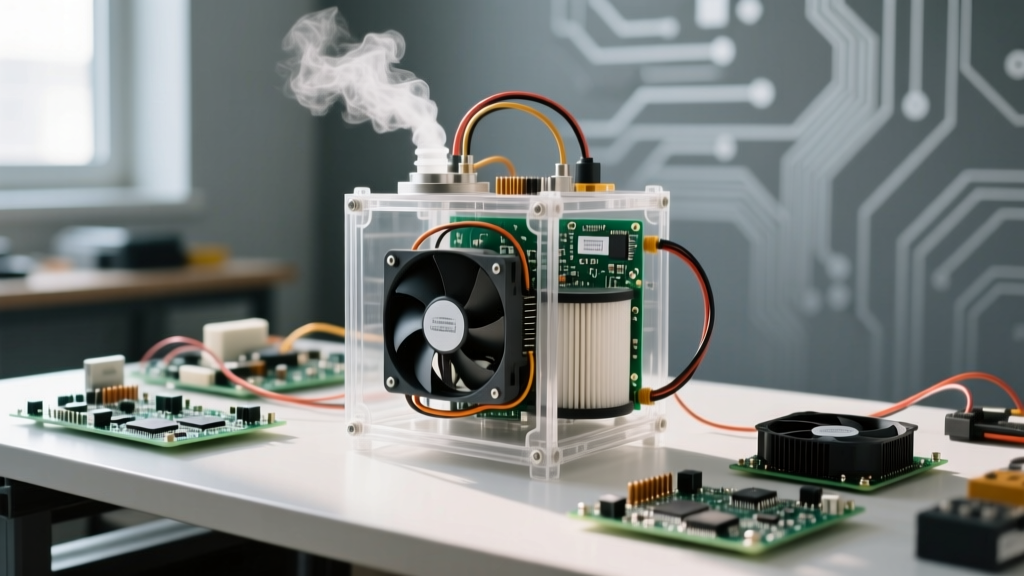
Perfboard soldering often requires adding extra liquid or tacky flux (like Amtech or Chip Quik) to bridge gaps between pads, which exponentially increases fume volume. You need a benchtop extractor with a two-stage filtration system: a HEPA filter for sub-micron particulates and an activated carbon bed for volatile organic compounds (VOCs).
- Entry-Level (Hobbyist): The Hakko FA-400 ($65-$80 in 2026) uses a carbon-foam filter. It is adequate for occasional leaded soldering but requires filter replacement every 30-50 hours.
- Professional Grade: The Weller WSA350H ($350-$400) features a multi-pound replaceable HEPA/Carbon cartridge and an ESD-safe brushless motor, providing 70+ CFM of localized extraction. This is mandatory if you are soldering water-soluble or high-activity (RA) fluxes on dense perfboard layouts.
Thermal Management and Burn Prevention
Perfboard layouts frequently rely on bare 22 AWG or 24 AWG solid copper wire to create ground planes or power buses. Copper is an exceptional thermal conductor. When you solder a wire to a pad, the heat travels rapidly along the bare conductor. A joint soldered at 360°C can raise the temperature of the bare wire two inches away to over 150°C in less than five seconds.
Safe Handling Techniques
- Ceramic Tweezers: Never use standard steel tweezers to hold a bare wire while soldering; steel conducts heat directly to your fingers. Invest in ceramic-tipped tweezers (e.g., Hakko CHP170 or Lindström ceramic variants), which are thermally insulative and ESD-safe.
- Polyimide (Kapton) Tape: When routing bare wires near the edge of the board where your fingers rest, apply 2-mil Kapton tape over the routed wires. Rated for continuous use up to 400°C, it provides an immediate burn barrier and prevents accidental short circuits from stray solder blobs.
- Silicone Work Mats: Always solder on a high-temp silicone mat (rated to 500°C). Perfboard corners are sharp, and dropping a hot, flux-covered board onto a plastic desk or anti-static mat can cause severe burn injuries and toxic melting.
Material Safety: Lead vs. Lead-Free Alloys
The choice of solder alloy dictates your safety protocol. While the Environmental Protection Agency (EPA) strictly regulates lead exposure, the reality of hobbyist perfboarding involves nuanced risk management.
Leaded Solder (Sn63Pb37)
Leaded eutectic solder melts at a lower temperature (183°C), requiring less iron heat (typically 320°C-340°C). This reduces flux fuming and substrate thermal stress. The primary safety risk is ingestion, not inhalation (soldering temperatures do not vaporize lead). Strict handwashing protocols and prohibiting food/drink in the soldering area are mandatory. Use a dedicated lead-wipe station or 10% EDTA soap post-session.
Lead-Free Solder (SAC305 / Sn96.5Ag3.0Cu0.5)
Lead-free alloys melt higher (217°C-220°C) and require iron temperatures of 360°C-390°C. This higher heat causes exponential increases in flux vaporization and accelerates tip oxidation. If you choose lead-free for environmental compliance, you must upgrade your fume extraction and use a nitrogen-assisted soldering system (like the Hakko FX-970) to suppress oxidation and lower the required ambient tip temperature.
2026 Perfboard Safety Equipment Cost Matrix
Equipping a safe perfboarding station requires targeted investments. Below is a realistic 2026 pricing breakdown for essential safety and ergonomic gear.
| Equipment Category | Recommended Specification | 2026 Estimated Cost | Safety Function |
|---|---|---|---|
| Fume Extractor | HEPA + Activated Carbon (Min 50 CFM) | $250 - $400 | Prevents colophony asthma and VOC inhalation |
| Ceramic Tweezers | ESD-Safe, Fine Point (e.g., CHP170) | $15 - $25 | Thermal insulation against bare-wire heat transfer |
| Kapton Tape (Polyimide) | 2-mil thickness, 1/4 inch width | $8 - $12 | Burn prevention and short-circuit isolation |
| Silicone Repair Mat | 18x14 inches, 500°C rated, magnetic | $20 - $35 | Surface burn protection and component organization |
| ESD Wrist Strap | Adjustable, 1M ohm resistor inline | $10 - $15 | Protects sensitive ICs during manual placement |
Ergonomics and Vision Safety
Perfboard soldering demands intense visual focus, often involving 0.1-inch (2.54mm) pitch grids and 0.5mm component leads. Hunching over a poorly lit desk leads to chronic cervical spine issues and eye strain.
- Magnification: Avoid cheap, single-lens visor magnifiers that cause edge distortion. Invest in an articulated boom-arm magnifying lamp with a circular fluorescent or high-CRI LED ring light (e.g., Brightech LightView Pro). The shadow-free illumination is critical for spotting microscopic solder bridges between adjacent perfboard holes.
- Posture Alignment: Your work surface should be elbow-height. Bring the perfboard up to your eye level using an articulated PCB holder (like the Panavise 201 or a third-hand tool with a heavy base) rather than bending your neck down to the desk.
Electrical Safety During Live Testing
Unlike commercial PCBs, populated perfboards lack solder mask and conformal coating. The exposed copper pads and wire runs on the bottom of the board are a severe short-circuit and shock hazard during live testing.
Expert Warning: Never test a freshly soldered perfboard directly on a conductive or anti-static mat while power is applied. Stray wire clippings or metallic debris trapped in the mat can bridge exposed high-voltage traces.
Always test perfboards on a clean, insulated silicone mat. If your circuit interfaces with mains voltage (120V/240V AC), you must use an isolation transformer and a GFCI-protected outlet. Furthermore, adhere to IPC J-STD-001 requirements for wire dress and clearance, ensuring no bare wire overhangs the edge of the perfboard where it could contact an enclosure or the user's hand.
Frequently Asked Questions
Is it safe to use water-soluble flux on perfboard?
From a respiratory standpoint, water-soluble (OA) flux fumes are highly irritating and require professional-grade extraction. From a board-safety standpoint, it is strongly discouraged. Because perfboard has hundreds of unplated through-holes, water-soluble flux gets trapped inside the vias. If not aggressively cleaned with heated deionized water and baked dry, the residual flux will cause dendritic growth and catastrophic short circuits within weeks.
How often should I replace the carbon filter in my fume extractor?
Carbon filters do not last forever; they adsorb VOCs until saturated. For a hobbyist soldering 5 hours a week on perfboard projects, replace the carbon pre-filter every 3 to 4 months, and the main HEPA/Carbon block annually. If you can smell the rosin flux through the exhaust, the filter is already saturated and failing.
What is the safest temperature for soldering FR-2 perfboard?
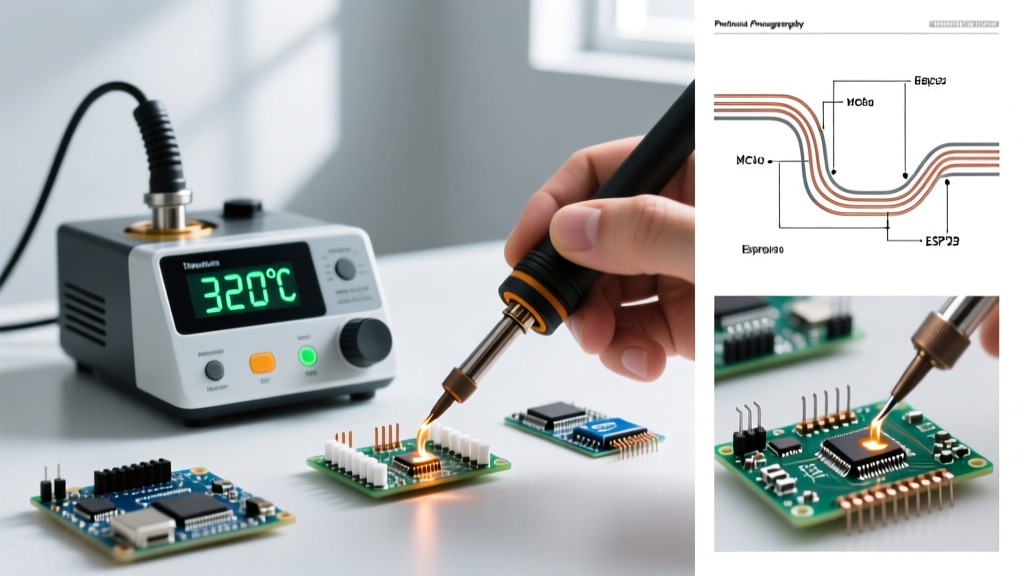
Set your soldering station to 320°C - 340°C (608°F - 644°F) when using Sn63Pb37 leaded solder. Use a chisel tip (e.g., Hakko T18-D12) to maximize thermal transfer speed. The goal is to complete the joint in under 2.5 seconds to prevent the phenolic substrate from delaminating or off-gassing toxic phenol vapors.