
The Thermal Demands of Jewelry Soldering
Selecting the right torch for jewelry soldering requires a fundamental shift in thermal thinking. Unlike electrical PCB soldering, where Sn63/Pb37 alloys melt at a mere 361°F (183°C), jewelry fabrication involves melting hard silver solders that flow at 1,450°F to 1,550°F without melting the base metal (sterling silver melts at 1,640°F). This narrow thermal window demands precise BTU output, rapid heat saturation, and exact flame chemistry. As of 2026, the jewelry bench is dominated by three primary setups: butane micro-torches, traditional oxy-acetylene rigs, and modern oxy-propane systems paired with oxygen concentrators.
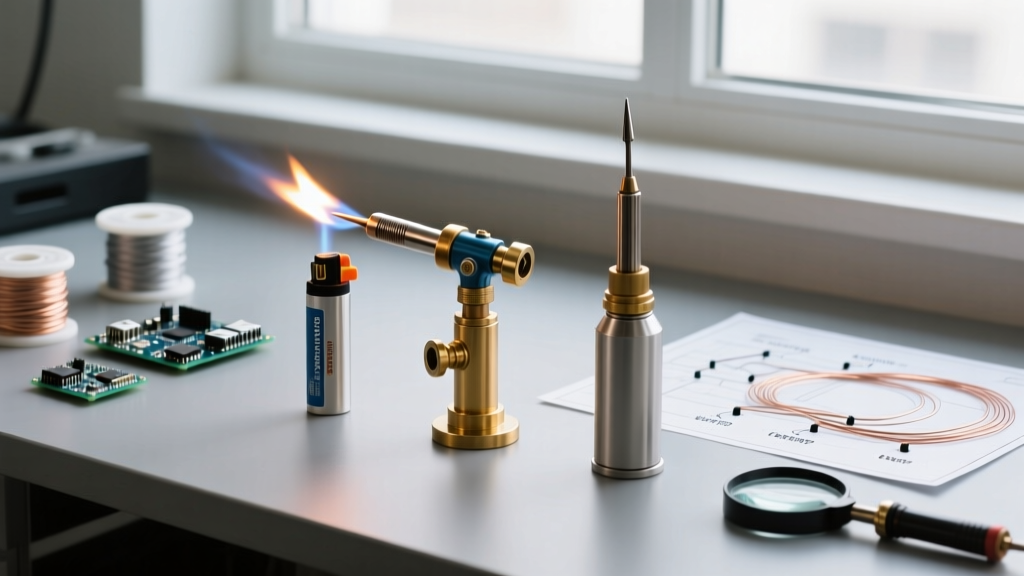
The Butane Micro-Torch: Hobbyist & Light Repair
Butane torches rely on atmospheric air mixing with pressurized butane gas. While they lack the raw BTU output of dual-gas systems, high-end models offer remarkable precision for light tasks.
Market Leader: Blazer Big Shot GT 8000
- Cost: ~$75 - $90
- Max Flame Temp: 2,500°F (1,371°C)
- Continuous Burn Time: ~35 minutes
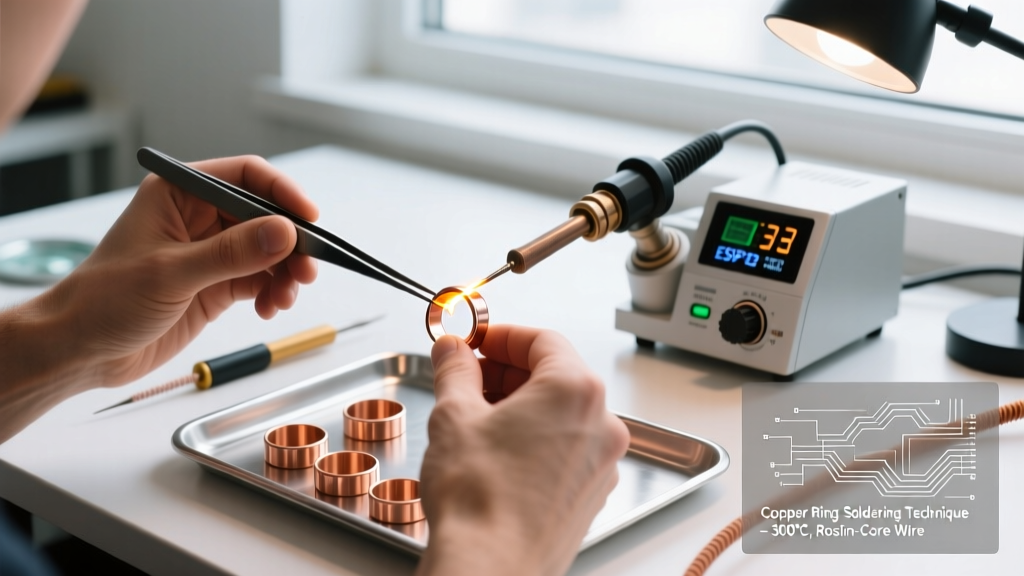
- Best For: Jump rings, small bezel settings, chain sizing, and enamel work.
Failure Modes & Edge Cases: The most common failure point in butane torches is piezoelectric igniter degradation and fuel vapor lock. If your studio drops below 65°F (18°C), liquid butane struggles to vaporize, resulting in sputtering flames. Furthermore, attempting to solder heavy 8-gauge sterling silver bangles with a butane torch will result in prolonged heating, causing severe fire-scale (cuprous oxide) and potential metal annealing before the solder flows.
Oxy-Acetylene: The Legacy Industry Standard
For decades, the Smith Little Torch has been the undisputed king of professional jewelry benches. Acetylene gas, when mixed with pure oxygen, produces a highly concentrated, high-velocity flame capable of melting platinum and heavy gold chains in seconds.
Market Leader: Smith Acetylene Jewelry Torch Outfit (Model 23-5121C)
- Cost: ~$550 - $650 (Torch, regulators, and B-tank yokes; tanks sold separately)
- Max Flame Temp: 6,300°F (3,482°C)
- Tip Range: #00 (hair-fine for filigree) to #7 (heavy melting)
Flame Chemistry & Soot: Acetylene is a carbon-rich fuel (C2H2). If the oxygen ratio is starved, the flame becomes "reducing" and deposits carbon soot directly onto the silver or gold, which can contaminate the solder joint and require aggressive pickling in heated sulfuric acid. According to Smith Equipment, maintaining clean tip orifices with brass tip cleaners is mandatory to prevent turbulent gas flow and flashback.
Safety Mandates: OSHA regulations strictly require flashback arrestors on both the torch handles and regulators for oxy-fuel setups to prevent catastrophic cylinder explosions. Always verify your rig complies with OSHA Welding, Cutting, and Brazing Guidelines.
Oxy-Propane & Oxygen Concentrators: The 2026 Studio Workhorse
The most significant shift in jewelry soldering over the last decade is the migration from acetylene to propane, specifically utilizing repurposed medical oxygen concentrators instead of heavy, pressurized T-tanks. Propane burns cleaner than acetylene, eliminating soot contamination and reducing the risk of dangerous acetylene gas pooling (acetylene is lighter than air; propane is heavier, but concentrator setups operate at much lower, safer pressures).
Market Leader: Gentec Small Torch + 10L Oxygen Concentrator
- Cost: ~$150 (Gentec Torch) + $500-$700 (10 LPM Oxygen Concentrator, e.g., Respironics EverFlo)
- Max Flame Temp: 5,200°F (2,871°C)
- Running Cost: Pennies per hour (Propane is incredibly cheap; electricity for the concentrator is minimal)
The Concentrator Advantage: By using a 10 Liters Per Minute (LPM) home oxygen concentrator, jewelers eliminate the need for hazardous high-pressure oxygen cylinder deliveries and rental fees. The Gentec Small Torch features a specialized mixer that perfectly atomizes propane with the 93% pure oxygen from the concentrator, yielding a sharp, neutral flame ideal for soldering 14k/18k gold and sterling silver without excessive fire-scale.
Head-to-Head Comparison Matrix
| Feature | Butane Micro-Torch | Oxy-Acetylene (Smith) | Oxy-Propane (Gentec + Concentrator) |
|---|---|---|---|
| Initial Investment | $25 - $90 | $550 - $750+ | $650 - $850 |
| Max Flame Temp | 2,500°F | 6,300°F | 5,200°F |
| Heat Saturation Speed | Slow (High thermal mass risk) | Extremely Fast | Fast & Controlled |
| Platinum Capability | No | Yes (with #5+ tips) | Limited (Requires Oxy-Hydrogen for pure Pt) |
| Soot / Carbon Risk | Low | High (if improperly tuned) | Very Low (Clean burn) |
| Studio Footprint | Handheld / Minimal | Large (Requires dual tank storage) | Medium (Concentrator sits under bench) |
Flame Chemistry & Metallurgical Edge Cases
Mastering a torch for jewelry soldering is 20% hardware and 80% flame chemistry. Understanding how your gas mixture interacts with precious metals is critical.
Expert Insight: Never use an oxidizing flame (excess oxygen, characterized by a sharp, hissing, pale blue inner cone) on sterling silver. The excess oxygen rapidly converts surface copper into cuprous oxide (fire-scale), which penetrates deep into the metal grain and ruins the polish.
The Three Flame Zones
- The Mixing Zone (Dark Blue): Cool, unburned gas. Never touch the metal with this zone.
- The Reducing Zone (Feather Edge): Just outside the inner cone. This area is oxygen-starved and actively pulls oxygen from the metal surface, protecting sterling silver from oxidation. This is where you hold the flame for silver soldering.
- The Oxidizing Zone (Outer Envelope): The pale, bushy outer flame. Used for broad, gentle pre-heating of the entire ring shank to raise the ambient temperature before focusing the reducing zone on the solder joint.
Expert Decision Framework: Which Setup Should You Buy?
Your choice of equipment should be dictated by your production volume, metal types, and studio infrastructure. Industry suppliers like Rio Grande Jewelry Supplies consistently recommend matching the torch to your primary metallurgical tasks.
Scenario A: The Wire-Wrapper & Light Repair Bench
If your daily work consists of closing sterling silver jump rings, sizing thin chains, and setting small cabochons, the Blazer GT 8000 Butane Torch is sufficient. It requires zero infrastructure, no gas deliveries, and fits in a drawer. Limitation: You will struggle to solder heavy bezels onto thick backplates due to heat dissipation.
Scenario B: The Full-Time Custom Fabricator
If you are casting, fabricating heavy 14k gold chains, and soldering multi-joint hinges, the Gentec Oxy-Propane setup with a 10L Oxygen Concentrator is the optimal 2026 choice. The upfront cost is offset by the elimination of tank rental fees, and the clean-burning propane saves hours of pickling and polishing time.
Scenario C: The Platinum & High-Karat Specialist
Platinum melts at a staggering 3,215°F (1,768°C). Neither butane nor standard oxy-propane setups can efficiently reach this temperature without risking the torch tip. For dedicated platinum work, you must invest in an Oxy-Acetylene rig with large Smith tips, or upgrade to a specialized Oxy-Hydrogen water torch system, which provides the extreme, concentrated heat required for platinum welds without carbon contamination.
Final Bench Tips for Solder Flow
Regardless of the torch you select, solder flows toward the heat source, not necessarily toward the flux. Always use a heat-sinking technique (like holding the ring shank with copper cross-locking tweezers) to draw heat away from delicate stones or previously soldered joints. Pair your torch with a high-temperature barrier flux like Cupron for the base metal, and a flow flux like Batterns directly on the solder pallion to ensure a clean, capillary draw into the joint.