
The Financial Reality: Is Soldering Dangerous?
When electronics hobbyists and manufacturing engineers ask, is soldering dangerous?, the immediate answers usually focus on burns or toxic fumes. However, as a senior buyer and safety analyst, I approach this question through a different lens: cost analysis. The true danger of soldering isn't just physical; it is financial. Failing to invest in proper safety mitigation can result in staggering medical bills, property damage, and regulatory fines that dwarf the upfront cost of professional safety gear.
In 2026, the landscape of soldering safety equipment has evolved. Benchtop HEPA filtration is more accessible, and lead-free alloys have become the industry standard for commercial work. Yet, many DIYers and small repair shops still operate on a "zero-budget" safety model. This guide breaks down the exact costs of soldering hazards and provides a financial framework for building a safe, cost-effective soldering station.
Industry Insight: According to the UK Health and Safety Executive (HSE), rosin-based solder flux is a known respiratory sensitizer. Prolonged exposure without extraction can lead to occupational asthma—a condition that costs thousands in lifelong inhaler prescriptions and lost wages.
Breakdown 1: Fume Extraction & Respiratory Health Costs
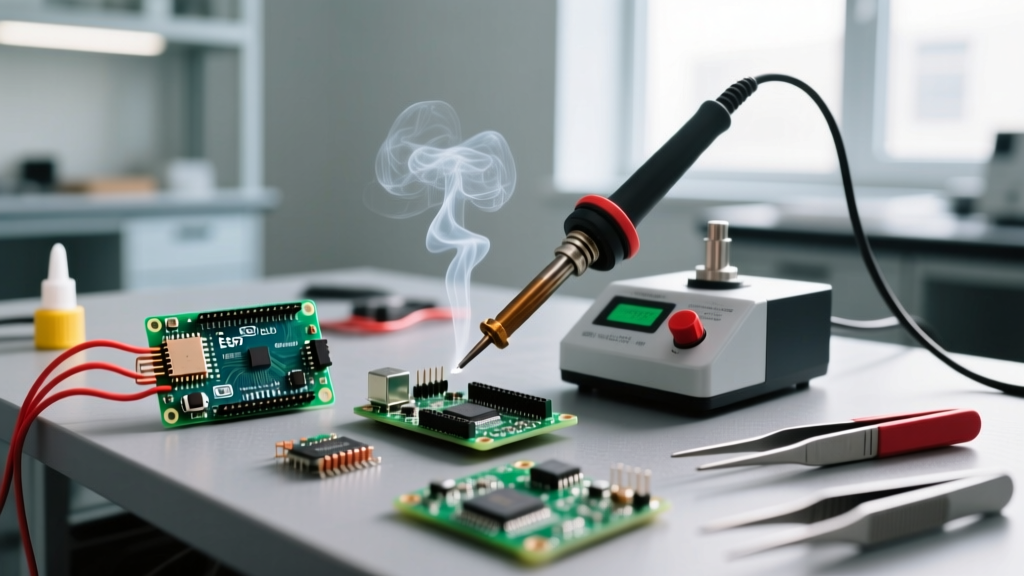
The most insidious danger in soldering is invisible. When flux core melts at typical iron temperatures (320°C to 380°C), it vaporizes into a plume of particulate matter and volatile organic compounds (VOCs). If you are asking if soldering dangerous to your lungs, the answer is a resounding yes if you lack extraction.
The Cost of Fume Mitigation
Let's compare the upfront capital expenditure (CapEx) of fume extraction against the potential medical costs of respiratory illness.
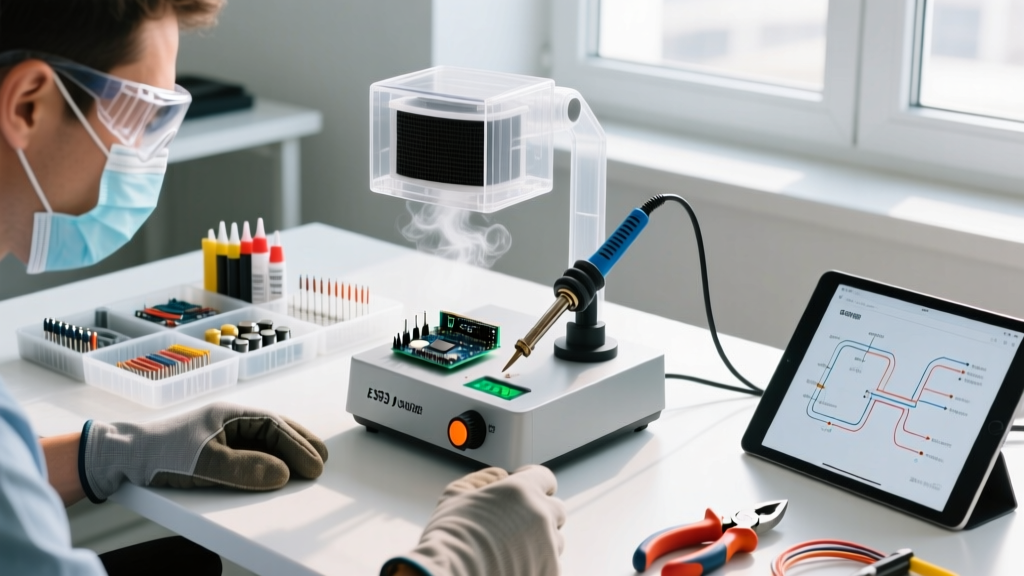
- Entry-Level Fan Filters (e.g., Hakko FA-400): Priced around $75. These use a small fan and a basic activated carbon mat. They redirect fumes away from your face but do not eliminate ambient room contamination. Best for occasional hobbyists using lead-free, low-VOC flux.
- Mid-Range Benchtop Extractors (e.g., Edsyn MX350): Priced between $350 and $500. These feature multi-stage filtration (HEPA + replaceable carbon beds) and flexible capture arms. Essential for daily repair technicians.
- Professional Grade Systems (e.g., BOFA AD Orbis 300): Priced at $1,250+. Used in high-volume manufacturing and heavy rework stations. Features deep-pleat HEPA and massive carbon capacity for continuous 24/7 operation.
- Personal Respirators (e.g., 3M 6200 Half Facepiece + 2097 P100/OV Filters): Priced at $60 total. The ultimate fallback for environments where ambient extraction is impossible.
The Unmitigated Risk Cost
Treating occupational asthma or chronic bronchitis caused by colophony (rosin) exposure can cost upwards of $3,000 to $5,000 annually in specialist visits, pulmonary function tests, and prescription corticosteroids. From a pure ROI perspective, a $500 Edsyn extractor pays for itself in less than two months of avoided medical copays.
Breakdown 2: Thermal Hazards & Property Damage
A modern 65W soldering station (like the Pinecil V2 or a Hakko FX-888D) can hold a tip temperature of 400°C (752°F). The danger here is twofold: severe contact burns and catastrophic fire hazards.
Mitigation Gear Pricing
| Safety Equipment | Typical 2026 Cost | Function & Risk Mitigated |
|---|---|---|
| Silicone Repair Mat (e.g., Mechanic iRepair P10) | $25 - $35 | Withstands 500°C. Prevents scorch marks on workbenches and stops rolling irons. |
| Heavy-Duty Iron Holder with Brass Sponge | $15 - $25 | Prevents tip oxidation and stops the iron from rolling off the desk onto carpets or laps. |
| Kevlar/Nomex Finger Cots | $12 (Pack of 5) | Protects fingers during tight-space through-hole desoldering where heat sinks fail. |
| Auto-Sleep Soldering Station | $120 - $180 | Stations with magnetic sleep sensors drop temps to 200°C when idle, drastically reducing fire risk and tip degradation. |
The Occupational Safety and Health Administration (OSHA) and local fire marshals frequently cite unattended thermal tools as a primary cause of workshop fires. The average cost of a localized workshop fire remediation (smoke damage cleaning, drywall repair, electronics replacement) starts at $15,000. Spending $30 on a high-quality silicone mat and an auto-sleep station is non-negotiable insurance.
Breakdown 3: Material Costs (Leaded vs. Lead-Free Solder)
Is soldering dangerous regarding heavy metal toxicity? Leaded solder (typically 63/37 Tin/Lead) poses a severe neurological risk, particularly through hand-to-mouth transfer or improper disposal. The Environmental Protection Agency (EPA) strictly regulates lead exposure and disposal due to its environmental persistence and toxicity.
The Heavy Metal Tax
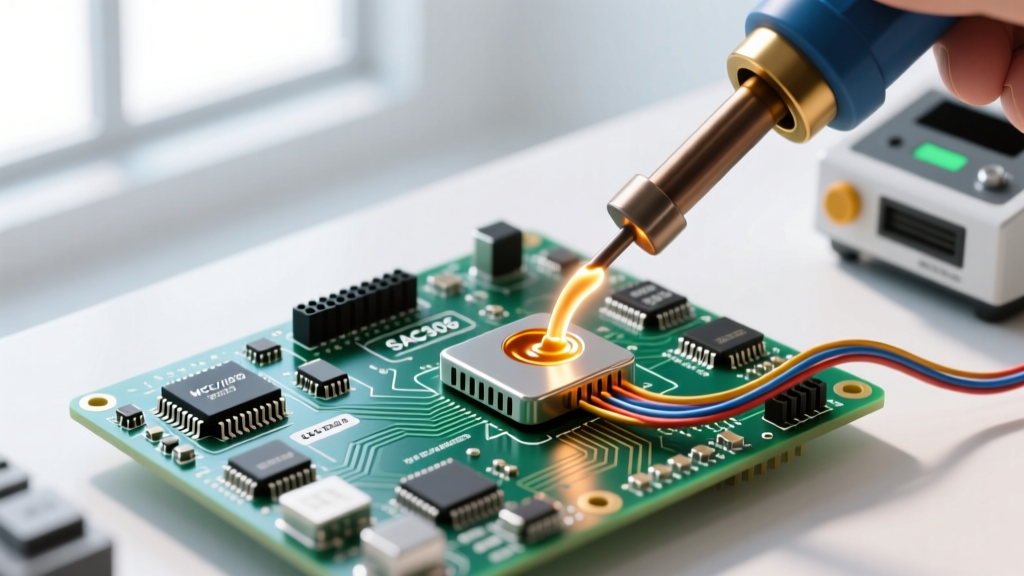
Many hobbyists cling to leaded solder (like Kester 44) because it flows easier and melts at a lower 183°C. However, let's look at the cost analysis of transitioning to Lead-Free (SAC305 alloys like Kester 275, melting point ~217°C).
- Leaded Solder (63/37): ~$35.00 per 1lb spool.
- Lead-Free Solder (SAC305): ~$42.00 per 1lb spool.
- Cost Difference: $7.00 per pound.
For a hobbyist who uses roughly 1lb of solder every two years, the cost to eliminate the risk of lead toxicity from your home environment is $3.50 per year. For professional shops, the cost is offset by compliance with RoHS (Restriction of Hazardous Substances) directives, which prevent massive EU and US market exclusion fines. The slight increase in material cost and the need for a slightly higher iron temperature (350°C vs 320°C) is financially insignificant compared to the cost of blood-lead-level testing and environmental remediation.
The $150 Ultimate Safety Starter Kit (Actionable Guide)
If you are setting up a new bench in 2026 and want to answer the question "is soldering dangerous?" with a confident "not on my bench," here is a highly optimized, budget-conscious safety bill of materials:
- Hakko FA-400 Fume Extractor ($75): Position the intake within 6 inches of the solder joint to capture the plume before it reaches your breathing zone.
- Mechanic iRepair P10 Silicone Mat ($28): Provides a thermal barrier and magnetic zones to keep sharp components and hot tips contained.
- 3M Safety Glasses with Anti-Fog Coating ($15): Flux spatter at 350°C can cause severe corneal burns. Standard prescription glasses do not offer adequate side-impact or splash protection.
- Lead-Free SAC305 Wire Solder, 0.031" ($32): Eliminates the need for rigorous lead-washing protocols and hazardous waste disposal fees.
Total Investment: $150.00. This kit provides 90% of the safety benefits of a $2,000 professional lab setup, making it the highest-ROI safety purchase a maker can make.
FAQ: Is Soldering Dangerous at Home?
Is the smoke from soldering actually toxic?
The smoke is not vaporized metal; it is vaporized flux (rosin or synthetic resins). While it doesn't contain heavy metals, the colophony in rosin flux is a potent respiratory sensitizer. Breathing it daily without a carbon/HEPA filter can trigger permanent occupational asthma.
Do I need a special mask for soldering?
Standard N95 masks do not block VOCs or flux fumes. If you cannot afford a benchtop extractor, you must use a half-face respirator equipped with Organic Vapor (OV) cartridges and P100 particulate filters, such as the 3M 6000 series.
Can I get lead poisoning from handling leaded solder?
Lead cannot be absorbed through intact skin. The danger arises from cross-contamination: touching solder, then touching your face, eating, or smoking without washing your hands with a heavy-metal-specific soap (like D-Lead). Switching to lead-free solder entirely eliminates this behavioral risk.