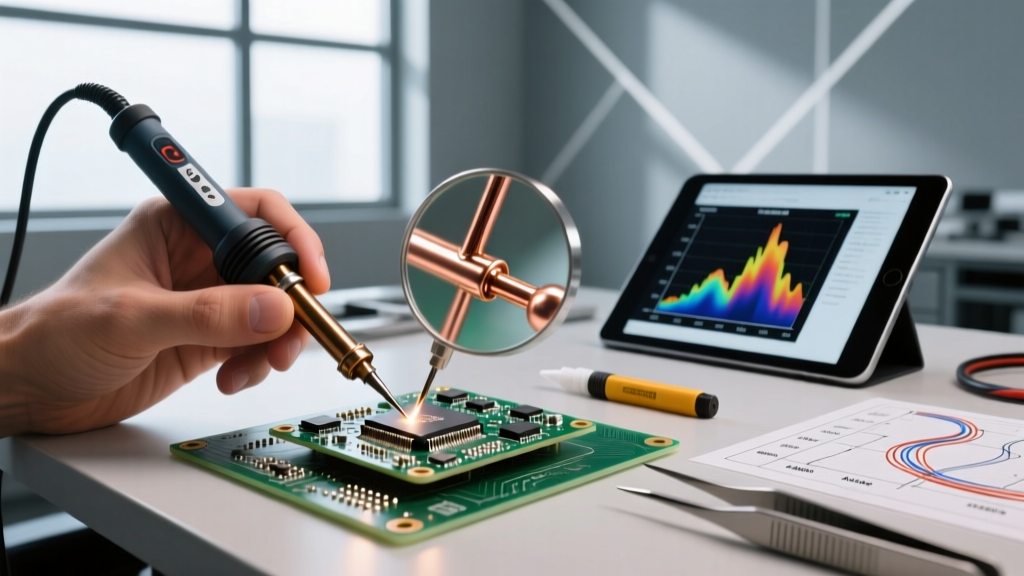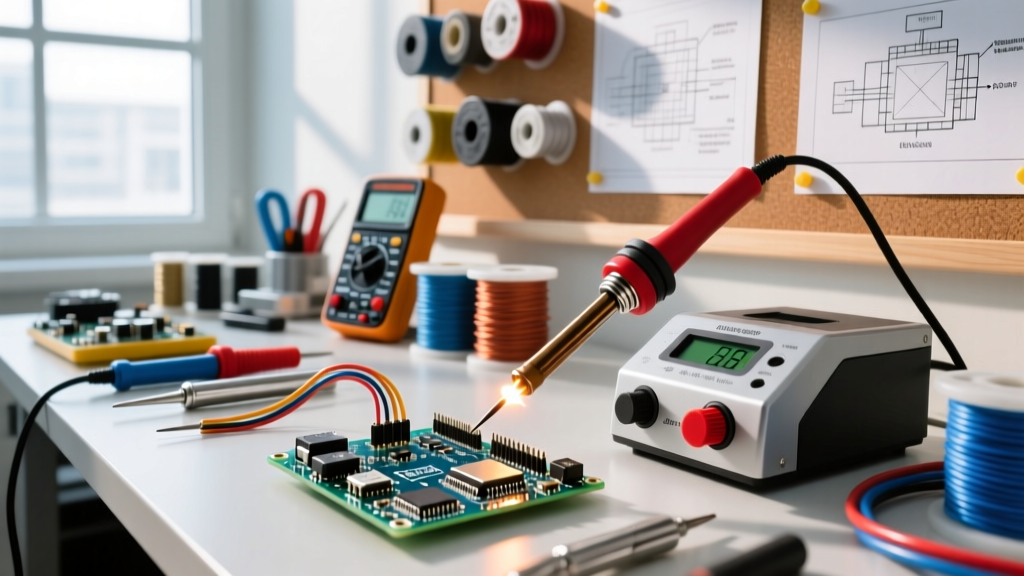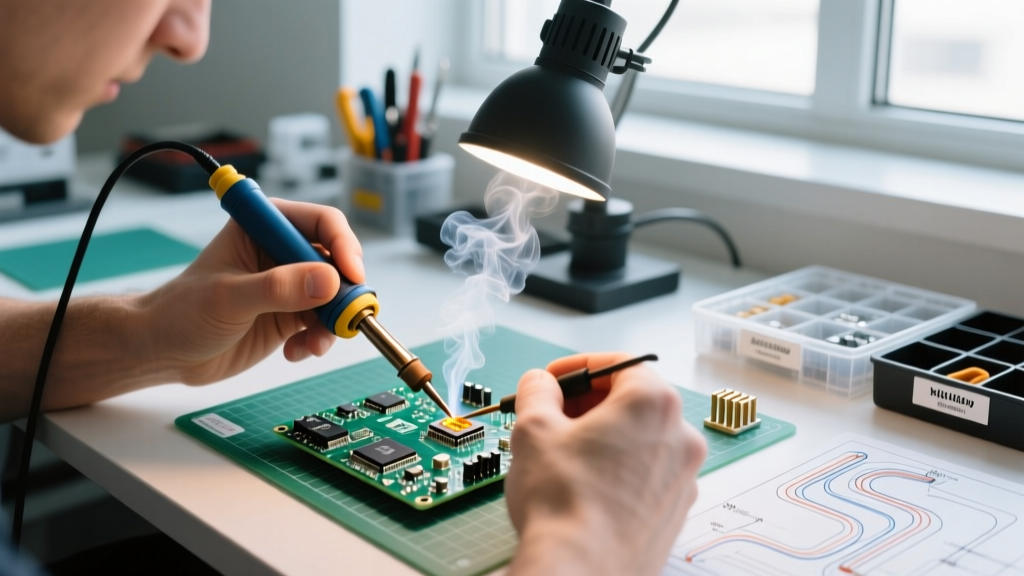

The Unique Risk Profile of Micro-Soldering
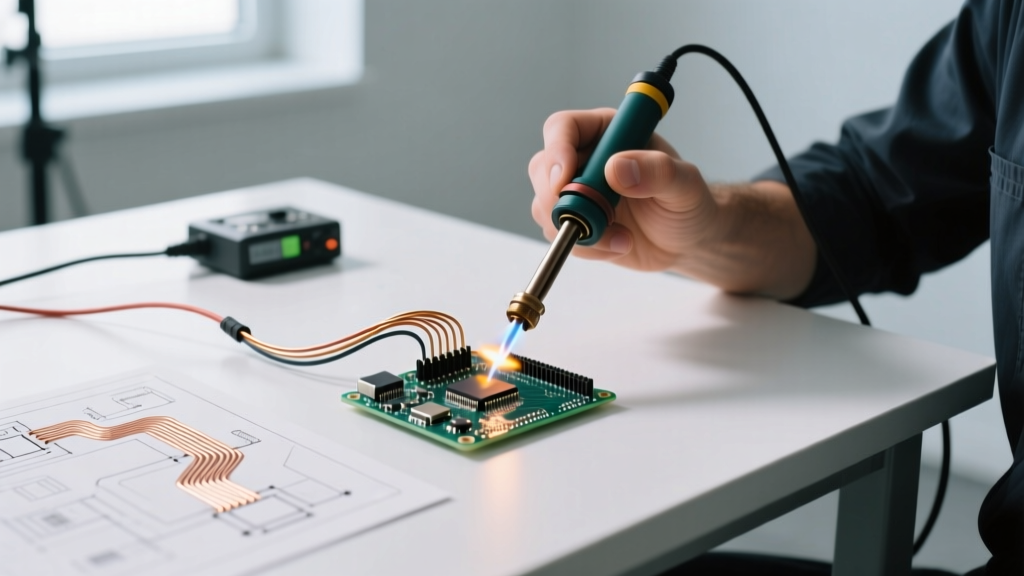
Transitioning from standard through-hole or large-pitch SMD work to soldering micro components introduces a completely different set of bench hazards. When working with 0201, 01005, and 0.4mm pitch BGA (Ball Grid Array) packages, the physical scale of the work demands intense magnification, ultra-fine tip geometry, and precise thermal profiling. However, the safety protocols required for micro-soldering are frequently overlooked by hobbyists and even seasoned technicians.
At the micro-scale, a tiny droplet of molten lead-free SAC305 solder or a microscopic burst of activated flux can cause significant injury if proper precautions are not in place. Furthermore, the prolonged use of trinocular microscopes and the inhalation of concentrated rosin aerosols pose long-term occupational health risks. According to the CDC National Institute for Occupational Safety and Health (NIOSH), soldering fumes contain complex mixtures of aliphatic aldehydes and rosin derivatives that can lead to severe respiratory conditions over time. This guide outlines the definitive safety best practices for micro-soldering in 2026, ensuring your bench is as safe as it is precise.
Respiratory Protection: Managing Flux Aerosols
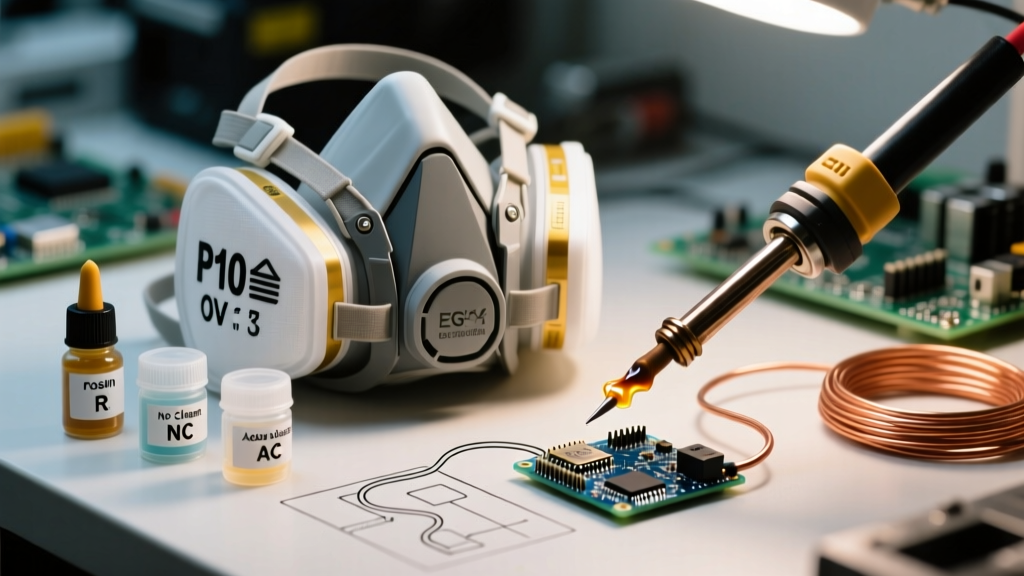
The most insidious hazard in micro-soldering is colophony (rosin) exposure. When soldering micro-passives, technicians often rely on high-activity, no-clean, or water-soluble liquid fluxes (such as ORH1 or ROL1 classifications) to ensure proper wetting on microscopic pads. When these fluxes hit a 350°C JBC C115 micro-tip, they do not just melt; they aerosolize.
The UK Health and Safety Executive (HSE) identifies colophony as a known respiratory sensitizer. Repeated exposure to these microscopic aerosolized particles can trigger occupational asthma, a condition that is often irreversible. Because micro-soldering requires you to lean in close to the PCB to maintain visual contact through the microscope, your breathing zone is directly in the path of the rising thermal plume.
Capture Velocity and Extractor Positioning
A common mistake is placing a fume extractor nozzle 12 inches away from the work area. At that distance, the thermal plume has already dissipated into the ambient air, rendering the extractor useless. For effective micro-soldering safety, you must achieve a capture velocity of 100 to 150 feet per minute (fpm) exactly at the point of soldering.
- Entry-Level (Hakko FA-400): Priced around $45, this is a basic bench fan with a carbon filter. It is insufficient for heavy micro-rework but acceptable for occasional 0402 touch-ups if placed 3 inches from the joint.
- Professional (Metcal BVX-200): Costing approximately $650 in 2026, this unit features a HEPA pre-filter and a deep-bed activated carbon main filter. Its adjustable arm allows you to position the 30mm nozzle exactly 1.5 inches from the BGA rework zone without obstructing your microscope's line of sight.
- Industrial (BOFA AD Oracle iQ): Priced over $1,500, this system offers intelligent filter monitoring and variable speed control, essential for high-volume micro-rework labs dealing with aggressive water-soluble fluxes.
Thermal Safety: Hot Air and Micro-Iron Hazards
Micro hot air rework stations, such as the Quick 861DW or the JBC JTSE, are mandatory for BGA reballing and removing multi-pin QFNs. However, the nozzles used for micro-work (ranging from 2mm to 5mm) concentrate immense thermal energy into a tiny area. While the FR-4 substrate of a PCB has a glass transition temperature (Tg) of roughly 130°C to 180°C, localized scorching and delamination occur rapidly when exposed to 380°C airflows.
The MLCC Popcorn Effect and Flux Splatter
One of the most dangerous physical hazards when soldering micro components is the "popcorn effect." Multi-Layer Ceramic Capacitors (MLCCs), especially in 0201 and 01005 sizes, are highly susceptible to moisture ingress. If a board has not been properly baked in a convection oven prior to hot air rework, the trapped moisture inside the ceramic body flashes into steam when hit with 350°C air. This causes the microscopic component to violently fracture and shrapnel across the bench.
Expert Warning: Never apply directed hot air to an un-baked PCB containing MLCCs without wearing ANSI Z87.1 rated safety glasses. Micro-ceramic shrapnel travels fast enough to cause corneal abrasions.
Additionally, liquid flux applied under a BGA chip can boil and splatter when heated from above. Always use a micro-soldering splash guard or position your face behind the microscope's eyepieces, never directly over the optical axis looking down with bare eyes.
Vision and Ergonomic Preservation
Soldering micro components is impossible without high-magnification optics. However, improper microscope setup leads to severe cervical spine strain and chronic eye fatigue. In 2026, the standard for professional micro-soldering is a trinocular stereo microscope (such as the AmScope 7X-45X or Omax 10X-30X) paired with a dedicated 1080p or 4K HDMI camera and an external monitor.
Relying solely on the binocular eyepieces forces the technician into a hunched posture, bringing their face dangerously close to the flux plume and straining the neck. By utilizing the external monitor for the primary visual feed, you can sit back in an ergonomic chair, maintaining a 20-inch viewing distance while keeping your airway clear of the rework zone. Ensure your bench lighting utilizes high-CRI (Color Rendering Index > 90) LED ring lights to prevent the pupil dilation and eye strain associated with cheap, flickering fluorescent bench lamps.
Micro-Soldering Safety & Gear Matrix
Equipping a micro-soldering bench requires specialized Personal Protective Equipment (PPE) that does not interfere with fine motor skills. Below is a comparison matrix of essential safety gear tailored for micro-electronics.
| Equipment Category | Recommended Specification | Micro-Soldering Rationale | Approx. Cost (2026) |
|---|---|---|---|
| Eye Protection | ANSI Z87.1 Wrap-around Glasses | Prevents flux splatter and ceramic shrapnel from bypassing side shields during hot air rework. | $15 - $30 |
| Respiratory | N95 / P100 Mask (if extractor fails) | Backup protection against sub-micron rosin particulates when source capture is obstructed. | $2 - $10 |
| Hand Protection | Nitrile Gloves (Powder-Free, 3-mil) | Prevents skin absorption of activated flux acids and protects against minor thermal bumps. | $15 / box |
| Tweezers | Anti-Magnetic Titanium (e.g., Vetus ST-15) | Titanium does not conduct heat rapidly, preventing burns when holding a component during reflow. | $25 - $40 |
| Bench Mat | Silicone Thermal Mat (500°C rated) | Prevents PCB scorching and provides a non-slip surface for 01005 component placement. | $20 - $35 |
Emergency Bench Protocols
When working at the micro-scale, accidents happen in a fraction of a second. Establishing strict emergency protocols is vital for any lab environment.
- Flux Fire Protocol: Highly activated liquid fluxes (like Amtech NC-559 or Kingbo) contain volatile alcohols. If a pool of flux catches fire from a hot air gun, do not use water. Smother it immediately with a fiberglass fire blanket or use a CO2 extinguisher. Water will spread the burning alcohol across the bench.
- Molten Solder on Skin: If a bead of SAC305 (melting point 217°C) drops onto your skin, do not attempt to wipe it off, as this will drive the heat deeper into the tissue. Immediately submerge the affected area in a bowl of cool (not ice-cold) water kept at the bench for at least 10 minutes, then seek medical attention for second-degree burns.
- Component Loss/Shrapnel: If a micro-component pops off under hot air, immediately power down the hot air station. Use a strong neodymium magnet encased in a plastic bag to sweep the bench area to recover magnetic components and prevent them from being inhaled or tracked into other workspaces.
Frequently Asked Questions
Is lead-free solder more dangerous to inhale than leaded solder?
Contrary to popular belief, the lead in solder wire does not vaporize at standard iron temperatures (350°C). Lead vaporization requires temperatures exceeding 1,700°C. The primary respiratory danger in both leaded (Sn63/Pb37) and lead-free (SAC305) micro-soldering comes from the flux core (colophony/rosin), not the metal itself. However, leaded solder poses a severe ingestion hazard if proper hand-washing protocols are not followed, which is especially risky when handling microscopic components that require frequent finger adjustments.
Can I use a standard desk fan to blow soldering fumes away?
Absolutely not. Using a desk fan simply dilutes the plume temporarily and redistributes the hazardous colophony particulates around the room, where they will eventually settle on surfaces, clothing, and into the lungs of others in the workspace. Source-capture extraction with HEPA and activated carbon filtration is the only acceptable method for micro-soldering.
How often should I replace my fume extractor filters?
For a professional micro-rework station running 4 hours a day, the HEPA pre-filter should be replaced every 3 to 4 months, while the main activated carbon bed typically requires replacement every 6 to 8 months. If you begin to smell the distinct pine-like scent of rosin while the machine is running, the carbon bed is saturated and must be replaced immediately.