
The Economics of the Solder Joint in 2026
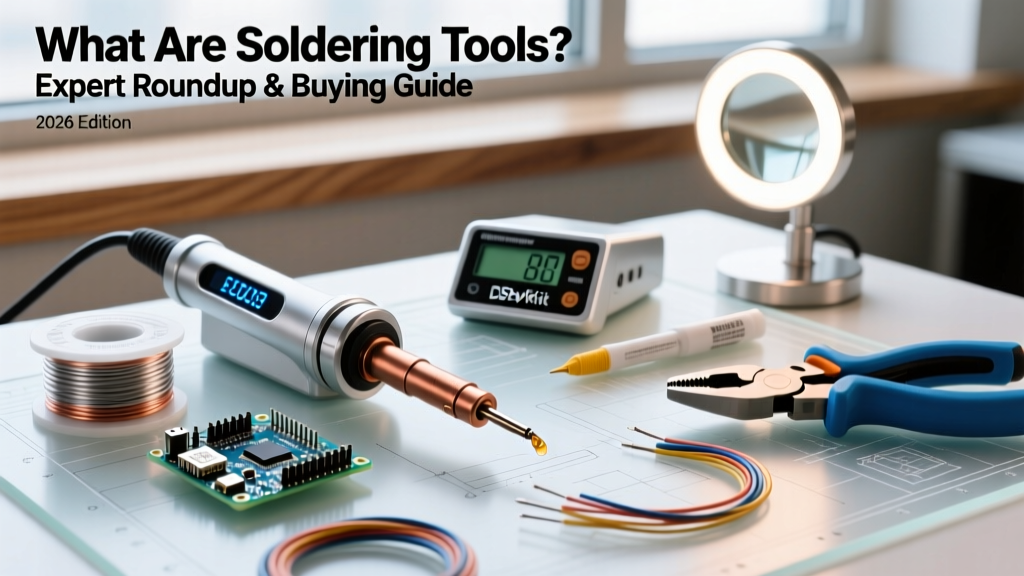
When evaluating the true economics of electronics assembly, hobbyists, educators, and small-batch manufacturers must look far beyond the initial price tag of a soldering station. The landscape of soldering methods techniques has evolved significantly. With the rising cost of raw materials like silver and tin, alongside the industry's continued shift toward complex surface-mount devices (SMD), understanding the total cost of ownership (TCO) is critical. Whether you are assembling a single DIY microcontroller board or running a batch of 500 IoT sensors, the technique you choose dictates your capital expenditure (CapEx), operational expenditure (OpEx), and hidden rework costs.
Industry Standard Note: According to the IPC J-STD-001 requirements for soldered electrical and electronic assemblies, the chosen soldering method must consistently produce joints that meet strict metallurgical and mechanical criteria. A cheaper technique that yields a 15% failure rate will ultimately cost more in scrap and rework than a premium setup.
Breakdown of Core Soldering Methods & Techniques
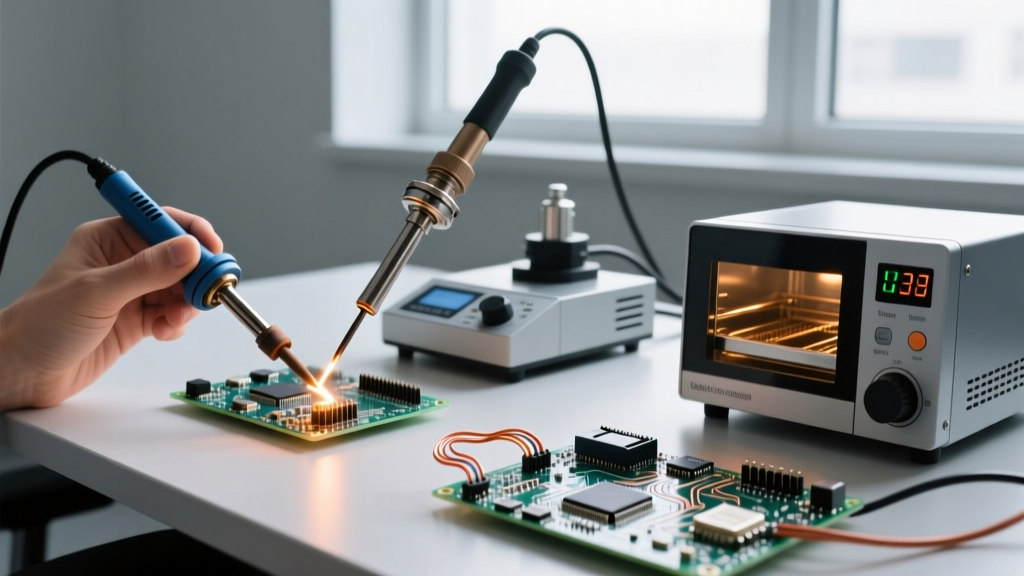
To conduct a proper cost analysis, we must categorize the primary techniques used in prosumer and light-commercial environments. We will evaluate manual hand soldering, hot air convection, and DIY/prosumer reflow methods.
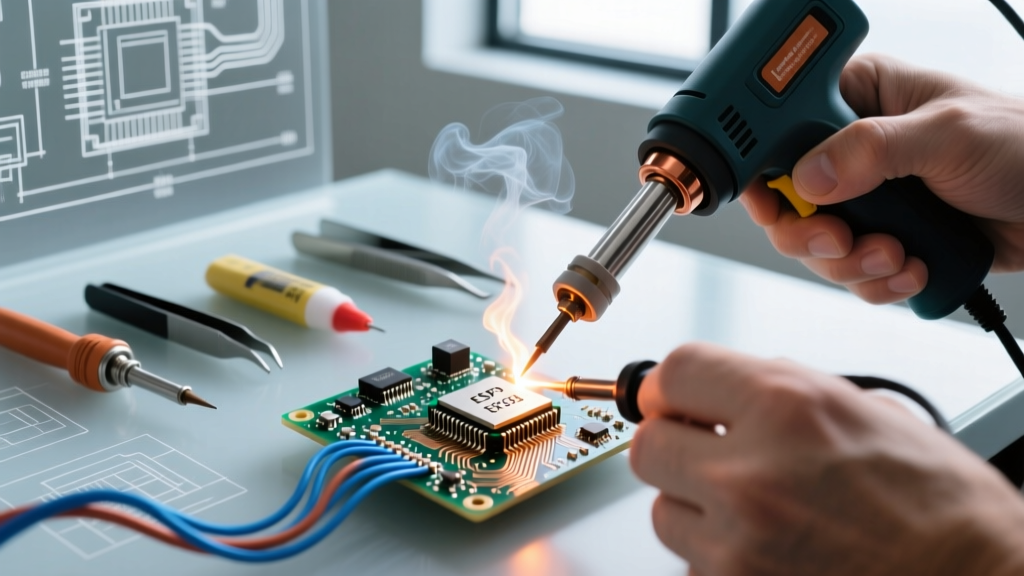
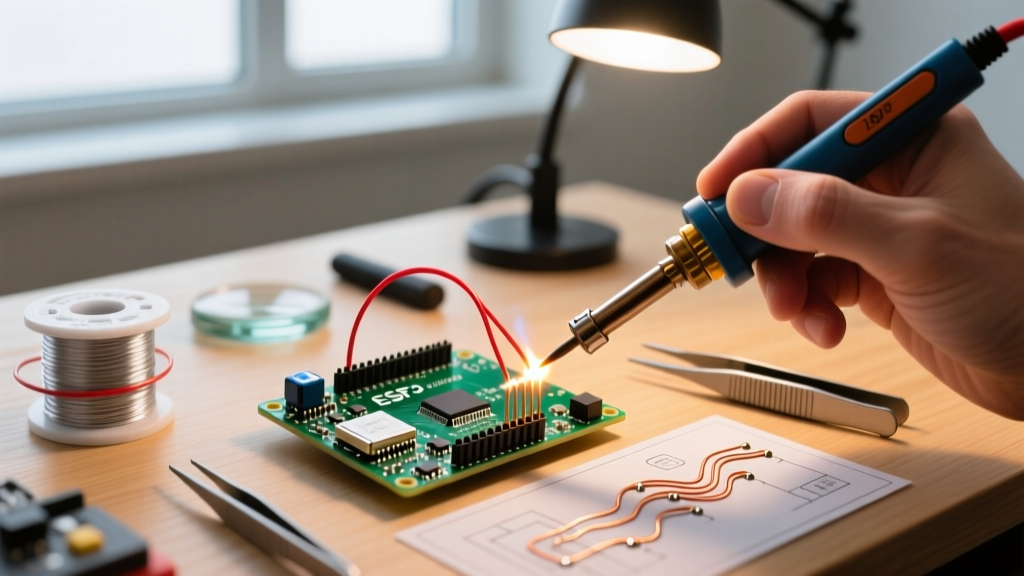
1. Manual Hand Soldering (THT & Large SMD)
Manual soldering remains the backbone of prototyping and through-hole technology (THT) assembly. However, the cost dynamics depend heavily on your equipment tier and solder alloy.
- CapEx (Equipment): Entry-level variable-temperature stations like the Hakko FX-888D retail around $115. Mid-tier digital stations like the Weller WE1010NA sit around $135. For portable USB-C PD soldering, the Pine64 Pinecil V2 costs just $26, though it lacks the thermal mass for heavy ground planes.
- OpEx (Consumables): The alloy you choose drastically impacts costs. Standard Sn63Pb37 (leaded) solder wire costs roughly $25 to $30 per 1lb spool. Conversely, lead-free SAC305 (Sn96.5/Ag3.0/Cu0.5) costs between $40 and $55 per spool due to silver content.
- Hidden Costs (Tip Degradation): SAC305 requires higher operating temperatures (typically 245°C to 260°C compared to 183°C for leaded). This accelerates tip oxidation and iron leaching. A standard Hakko T18 tip costs $8, but when running lead-free alloys daily, you may replace it every 3 weeks instead of every 3 months, adding $40+ annually in tip OpEx per station.
2. Hot Air Convection (SMD Rework & Stenciling)
Hot air is essential for QFN, BGA, and dense 0402/0201 SMD components. It is often paired with solder paste and stencils for small-batch SMT assembly.
- CapEx: A reliable prosumer station like the Quick 861DW costs approximately $260. You will also need a brass nozzle set ($30) and an ESD-safe mat ($25).
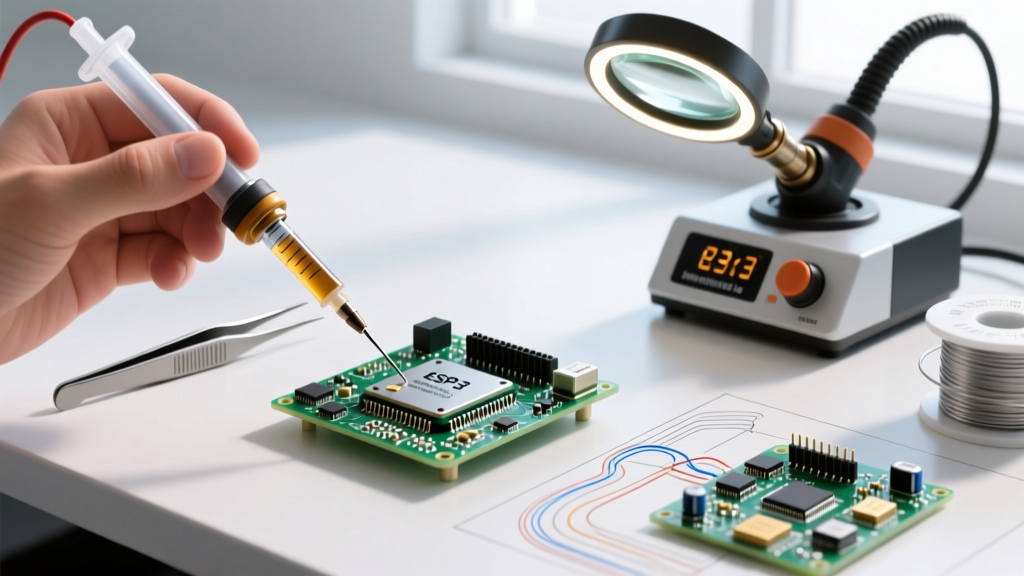
- OpEx: Solder paste is a major recurring cost. A 35g syringe of Type 4 SAC305 no-clean paste from a reputable manufacturer like Indium Corporation costs around $35 to $45. Paste has a strict shelf life (usually 6 months refrigerated), meaning expired paste is a sunk cost.
- Tooling: Frameless stainless steel stencils from fab houses like PCBWay or JLCPCB cost $15 to $25 per design. If you iterate your PCB layout three times, you have spent $75 just on stencil tooling.
3. DIY & Prosumer Reflow (Hotplates & Toaster Ovens)
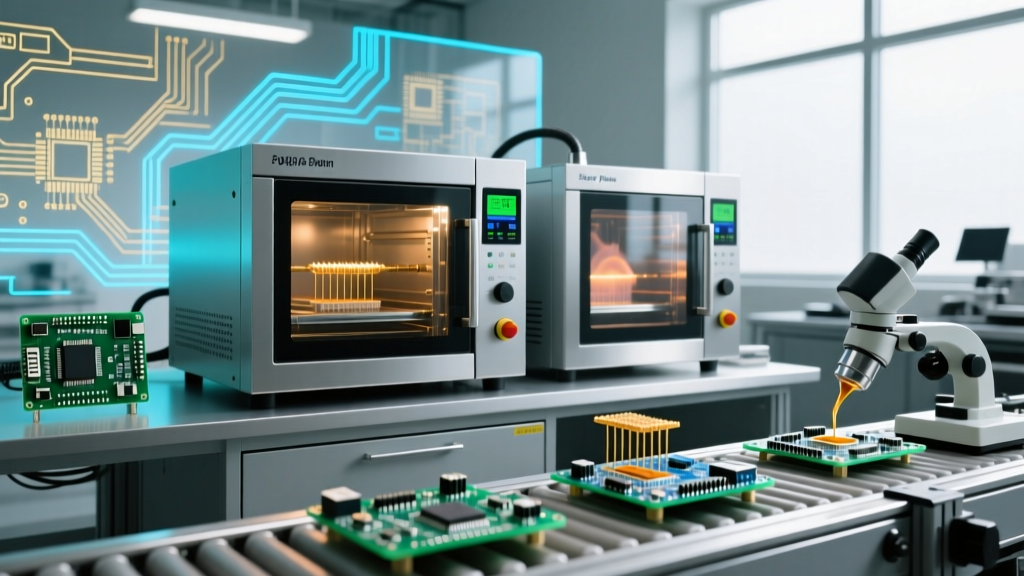
For batches exceeding 20 boards, manual hot air becomes a labor bottleneck. Reflow techniques automate the heating profile.
- CapEx: The MHP50 mini hotplate by Pine64 costs $60 and is perfect for boards under 50x50mm. For larger boards, modified convection toaster ovens or dedicated prosumer reflow ovens like the Whizoo Reflow Oven cost between $150 and $300.
- OpEx: Electricity consumption is slightly higher than a 70W iron, but the labor cost per board drops to near zero once the thermal profile is dialed in. The primary OpEx remains the solder paste and stencil.
Comparative Cost Matrix (Per 100-Board Batch)
The following table illustrates the estimated costs for assembling a batch of 100 identical mixed-signal PCBs (featuring both THT connectors and 0603 SMD passives) in a small workshop environment in 2026.
| Soldering Technique | Initial CapEx | Consumables (Paste/Wire/Flux) | Labor Time (Hours) | Est. Rework/Scrap Rate | Total Batch Cost |
|---|---|---|---|---|---|
| Manual Hand (Iron) | $115 (Hakko FX-888D) | $15 (Wire & Flux) | 12 - 15 hrs | 8% (High for SMD) | $180 + Labor |
| Hot Air & Stencil | $290 (Quick 861DW + Stencil) | $45 (Paste + Stencil) | 6 - 8 hrs | 3% (Moderate) | $120 + Labor |
| Hotplate Reflow | $85 (MHP50 + Stencil) | $45 (Paste + Stencil) | 2 - 3 hrs | 1.5% (Low) | $65 + Labor |
The Hidden Costs: Rework, Flux, and Electricity
When calculating the ROI of different soldering methods techniques, beginners often ignore the secondary expenses that erode profit margins.
Rework and Scrap Rates
A bridged QFN pin or a tombstoned 0402 capacitor requires rework. Rework demands desoldering braid ($6 per roll), flux pens ($8 each), and potentially replacement components. More importantly, rework consumes time. If a technician charges $30/hour, spending 10 minutes fixing a botched hand-soldered BGA joint adds $5 to the cost of that single board. Reflow techniques drastically reduce tombstoning and bridging if the stencil aperture reduction is designed correctly (typically a 10-20% area reduction for small pads).
Consumable Degradation and Waste
Solder paste left on a stencil for more than 4 hours begins to dry out and lose its tackiness, leading to poor component adhesion before reflow. Furthermore, liquid flux residues, if not properly cleaned with isopropyl alcohol (IPA) or a dedicated PCB wash, can cause electrochemical migration (dendrite growth) over time, leading to field failures. The cost of a $20 bottle of 99% IPA and lint-free wipes must be factored into your OpEx if your process requires no-clean flux validation or cleaning.
Electricity and Thermal Efficiency
While often overlooked, power draw matters in high-volume or off-grid scenarios. A standard 70W soldering iron running continuously for an 8-hour shift consumes 0.56 kWh. At the US average commercial rate of $0.16/kWh, this is less than $0.10 per day. However, a 1500W reflow oven running multiple cycles can draw significantly more peak power, which may trip standard 15A residential circuits if other equipment is running simultaneously.
Decision Framework: Which Technique Fits Your Budget?
Selecting the right method requires aligning your production volume with your capital constraints. Use this framework to guide your purchasing decisions:
- Choose Manual Hand Soldering if: You are strictly prototyping (1-5 boards), working primarily with through-hole components, or repairing large wire harnesses where stencils are impossible. Invest in a high-quality iron like the Weller WE1010 to minimize tip replacement costs.
- Choose Hot Air & Stenciling if: You are producing 10-50 boards featuring dense SMD components (QFP, QFN) but lack the budget or space for a reflow oven. This method offers the best balance of CapEx and professional results.
- Choose Reflow (Hotplate/Oven) if: You are scaling to 50+ boards per batch. The time saved on labor will pay for the hotplate or oven within the first two production runs, and the consistency will drop your scrap rate below 2%.
Frequently Asked Questions (Cost Specific)
Is lead-free solder more expensive to use long-term?
Yes. Beyond the 40-60% higher upfront cost of SAC305 wire and paste compared to Sn63Pb37, lead-free alloys require higher temperatures. This degrades soldering iron tips up to three times faster and increases the likelihood of thermal damage to sensitive PCBs, potentially raising scrap rates.
Can I reuse solder paste to save money?
Reusing solder paste scraped back into the jar is highly discouraged. The paste will have absorbed moisture and contaminants, and the flux-to-solder sphere ratio will be altered. This leads to solder balling and splattering during reflow, which can short-circuit fine-pitch ICs and cost far more in rework than a fresh $40 jar of paste.
Do I need a nitrogen system for hand soldering?
For hobbyists, no. A nitrogen generator (like the Hakko FX-8801, costing over $400) blankets the tip in inert gas, preventing oxidation and extending tip life by up to 10 times. However, the CapEx is only justified in high-volume commercial environments running 24/7 lead-free production where tip replacement downtime is a critical bottleneck.