
The Core Dilemma: Matching Thermal Mass to Your PCB
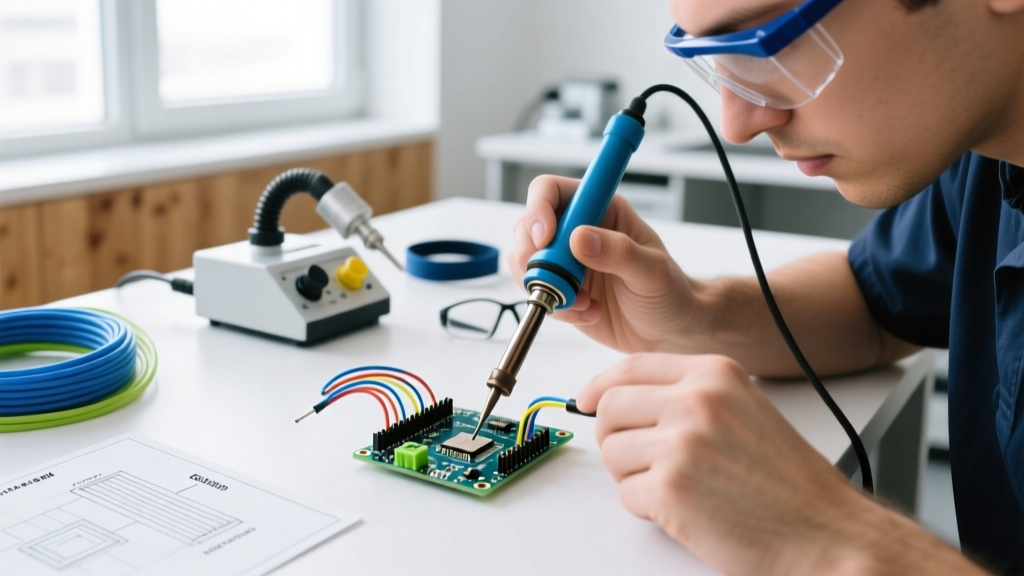
Choosing the right tool for iron soldering is rarely about just melting solder; it is fundamentally a thermodynamics problem. When you touch a 350°C tip to a component lead, heat immediately bleeds into the copper traces, the FR4 substrate, and internal ground planes. If your tool cannot replenish that lost thermal energy within milliseconds, you experience thermal starvation—resulting in cold joints, prolonged heat exposure, and delaminated pads.
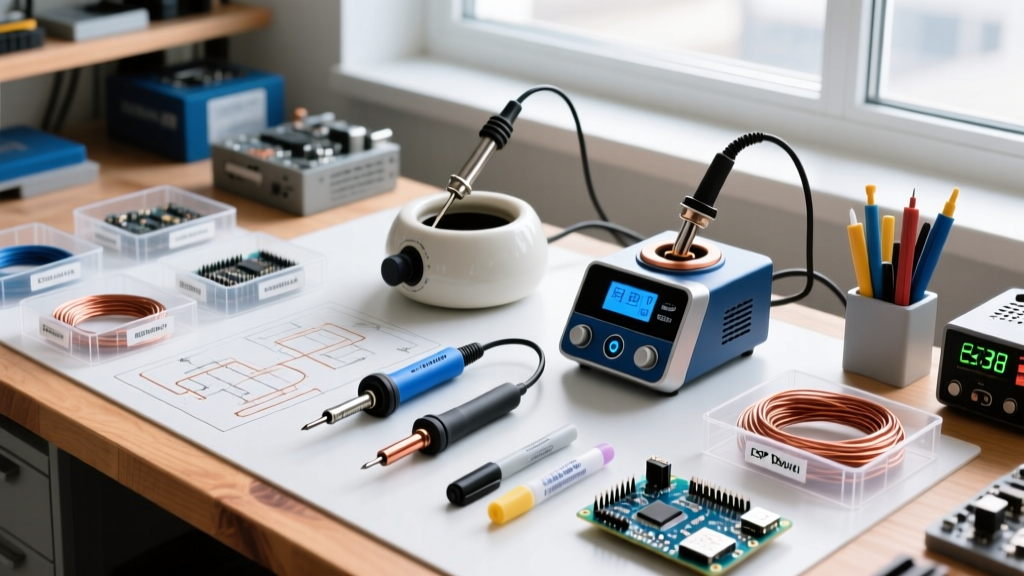
In 2026, the market is fractured across three distinct tiers of iron soldering technology. This decision framework will help you map your specific PCB architectures, alloy requirements, and budget to the exact thermal delivery system your bench demands.
"The biggest mistake in electronics assembly is sizing your iron's wattage to the component, rather than sizing it to the thermal mass of the underlying ground planes and vias." — Adapted from IPC J-STD-001 training methodologies.
Tier 1: Direct-Drive & USB-C Smart Irons (The Modern Hobbyist)
The proliferation of USB-C Power Delivery (PD 3.1) has completely disrupted the entry-level and portable iron soldering market. These irons ditch bulky transformers for RISC-V microcontrollers and MOSFET direct-drive heating elements.
Key Models & Specifications
- Pine64 Pinecil V2: Priced around $26 (bare). Supports up to 65W via USB-C and 17W via DC barrel. Heats to 320°C in under 8 seconds. Uses standard TS100-compatible tips.
- Miniware TS101: Priced around $45. Features a slightly more robust OLED interface and dual-core processing for tighter PID temperature loops.
The Decision Criteria
Choose Tier 1 if you are primarily soldering through-hole components, 0805/0603 SMD passives, and basic 2-layer PCBs without heavy copper pours. Edge Case Warning: These irons require a high-quality, PD-compliant 65W+ GaN charger. Using a standard phone charger will result in continuous power negotiation resets, causing the tip temperature to oscillate wildly during critical solder joints. For detailed firmware and hardware architecture, refer to the official Pine64 Pinecil documentation.
Tier 2: Ceramic Sensor Stations (The Reliable Workhorse)
For decades, ceramic heating elements with integrated thermocouples have been the backbone of professional and serious hobbyist benches. The heater and sensor are combined into a single wand, which transfers heat to a hollow, composite tip.
Key Models & Specifications
- Hakko FX-888D: The undisputed benchmark at ~$115. 70W output, digital PID control, and the massive T18 tip ecosystem.
- Weller WE1010NA: Priced around $130. Features a slightly faster heating element and an integrated standby safety rest.
The Decision Criteria
Tier 2 is ideal for general-purpose repair, automotive ECU work, and mixed-technology boards. However, you must understand the sensor lag phenomenon. In a Hakko T18 tip, the thermocouple is located inside the heater wand, not at the very tip of the iron. When you touch a large thermal pad, the tip temperature drops, but the sensor doesn't register this drop for 2 to 4 seconds. By the time the PID controller ramps the 70W heater to maximum, you may have already damaged a sensitive IC with prolonged, insufficient heat.
Tier 3: RF Induction & Cartridge Systems (The Professional Standard)
When working on 6-layer+ motherboards, RF shielding cans, or heavy power electronics, standard ceramic stations fail. Tier 3 systems solve this via two distinct physics approaches: RF Induction (Curie point) and Integrated Cartridge heaters.
Approach A: RF Induction (Metcal)
Metcal systems (like the MX-5200, ~$550) pass an alternating RF current through a coil in the handpiece, inducing eddy currents in the ferromagnetic tip. The tip heats up until it reaches its Curie temperature, at which point it loses its magnetic properties and stops heating. There is no sensor and no PID loop. The physics of the alloy inherently regulate the temperature. If you touch a massive ground plane, the tip cools below the Curie point, instantly regaining magnetism and drawing maximum power to recover. Learn more about this skin-effect physics via OK International's Metcal division.
Approach B: Integrated Cartridge (JBC)
JBC tools (like the CD-2BQF station, ~$450) place the thermocouple and heater at the absolute extreme front of the tip cartridge (e.g., the C245 series). This eliminates thermal lag entirely. The station detects a temperature drop and delivers 130W of power in under 20 milliseconds. According to JBC Tools, this allows operators to solder at lower baseline temperatures (e.g., 320°C instead of 380°C), drastically extending tip life and reducing thermal shock to MLCC capacitors.
Decision Matrix: Which Iron Soldering Setup Fits Your Bench?
| Primary Application | Recommended Tier | Specific Model (2026) | Est. Cost | Thermal Recovery |
|---|---|---|---|---|
| Basic DIY, Drones, 2-Layer PCBs | Tier 1 (USB-C Smart) | Pinecil V2 + 65W PD | $50 | Fast (Direct Drive) |
| General Repair, Audio Amps, Auto | Tier 2 (Ceramic Station) | Hakko FX-888D | $115 | Moderate (Sensor Lag) |
| Server Mobos, Heavy Ground Planes | Tier 3 (RF Induction) | Metcal MX-5200 | $550 | Instant (Curie Physics) |
| Precision SMD, BGA Rework, Micro | Tier 3 (Cartridge) | JBC CD-2BQF (C245) | $450 | Instant (Front Sensor) |
Critical Failure Modes in Iron Soldering
Even with the right equipment, improper technique leads to catastrophic bench failures. Avoid these specific edge cases:
1. Thermal Pad Starvation & Via Tenting
When soldering QFN packages with exposed thermal pads, the vias beneath the pad act as heat sinks, pulling molten solder down into the inner layers of the PCB. Solution: Use a Tier 3 iron with a wide chisel tip (e.g., JBC C245-112) to maximize surface area contact, and pre-heat the board to 100°C to reduce the thermal delta.
2. Tip Oxidation from SAC305 Alloys
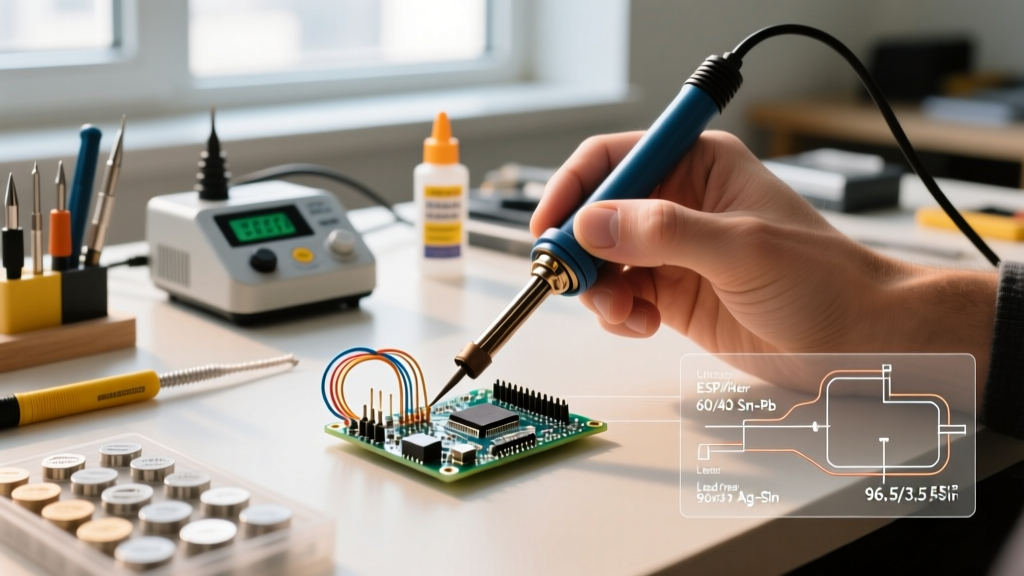
Lead-free SAC305 (Sn96.5/Ag3.0/Cu0.5) requires higher working temperatures (typically 340°C) compared to Sn63/Pb37 (320°C). Leaving a standard iron idling at 380°C to compensate for poor thermal recovery will oxidize the iron plating on the tip within hours, rendering it un-tinnable. Solution: Never exceed 350°C with a Tier 2 iron; if you need more heat transfer, switch to a larger tip geometry, not a higher temperature.
3. ESD and Ground Loop Damage
Sensitive MOSFETs and RF ICs can be destroyed by stray voltages leaking from an ungrounded iron tip. The IPC J-STD-001 standard mandates strict grounding protocols for soldering equipment. Tier 1 USB-C irons often lack a dedicated earth ground connection, relying entirely on the isolation of the PD power supply. If you are working on bare, highly sensitive silicon, a properly earthed Tier 2 or Tier 3 station with a tip-to-ground resistance of less than 2 ohms is non-negotiable.
Final Verdict: The 2026 Bench Upgrade Path
If you are building a bench from scratch, the most cost-effective decision framework is a hybrid approach. Purchase a Pinecil V2 ($50) for rapid, portable, and basic through-hole tasks. Pair it with a JBC T245 station (or a high-end clone if budget is restricted) for all SMD, multi-layer, and precision work. This combination covers 99% of modern electronics assembly scenarios while respecting the physical limitations of thermal mass and sensor lag inherent in traditional iron soldering tools.