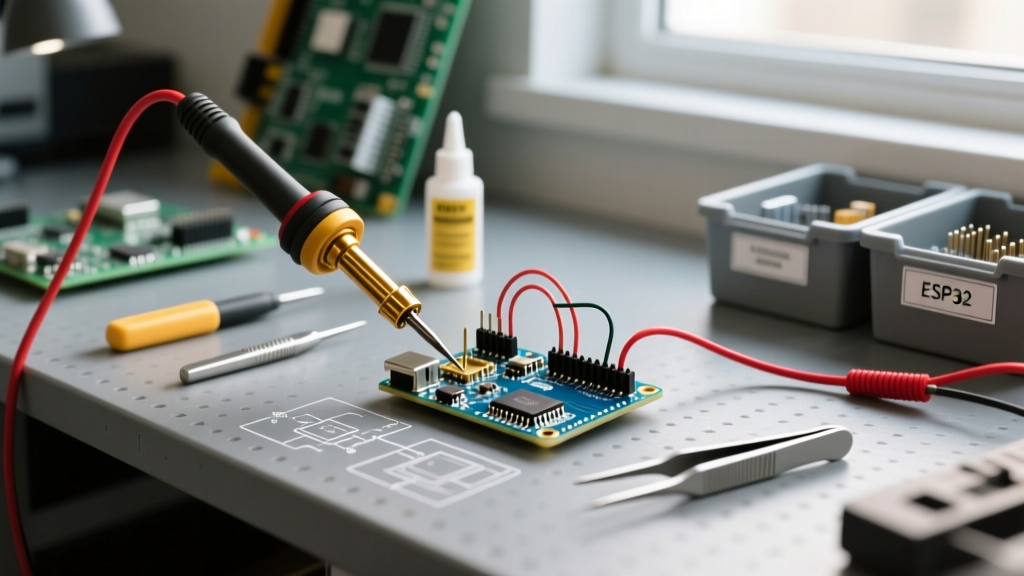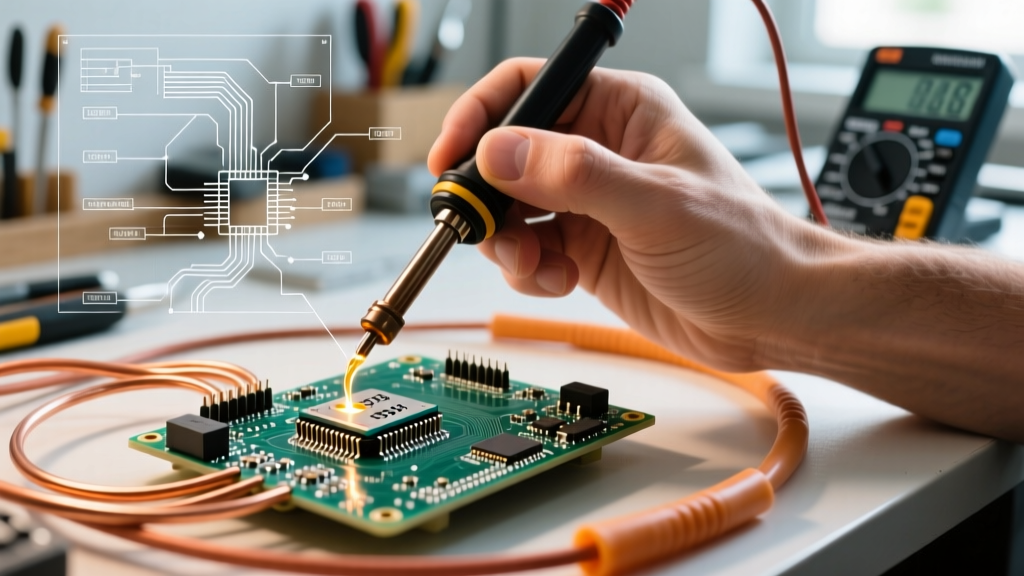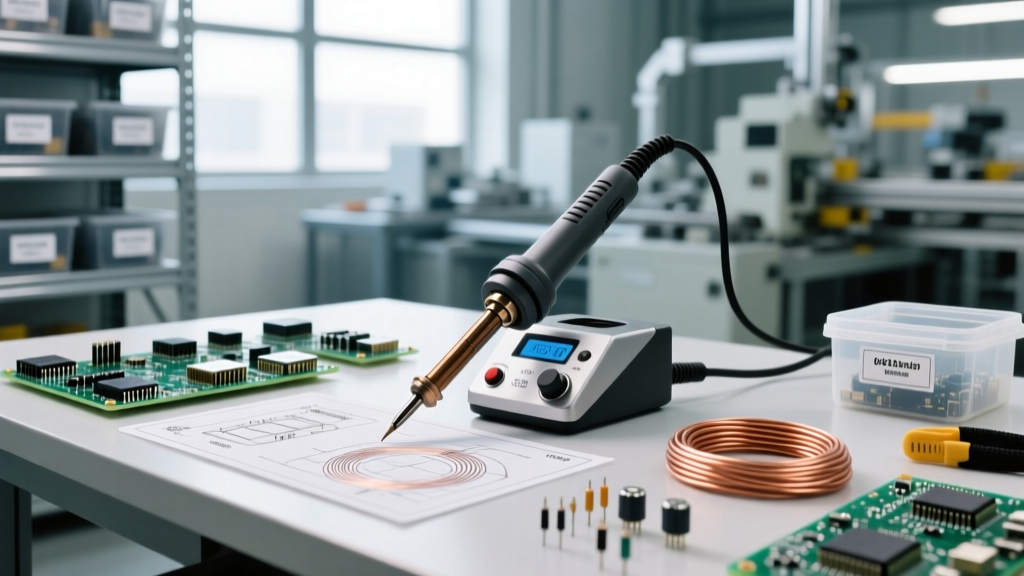

The Shift from Hobbyist to Industrial Soldering Electric Irons
When scaling from a prototyping bench to a high-volume manufacturing floor, the humble soldering electric iron transforms from a simple heating tool into a critical, data-logging production asset. In 2026, the manufacturing landscape demands absolute traceability and zero-defect assembly, particularly for Class 3 electronics governed by the IPC J-STD-001 standard. A standard $30 hobbyist iron cannot maintain the thermal stability required for multi-layer printed circuit boards (PCBs) with heavy copper ground planes. Industrial environments require a soldering electric iron that offers Electrostatic Discharge (ESD) safety, rapid thermal recovery, and integration with factory execution systems.
Core Requirements for Factory Floor Soldering Electric Irons
Before evaluating specific models, manufacturing engineers must establish the baseline requirements for industrial deployment.
1. True ESD Safety and Grounding
Industrial environments handle highly sensitive microprocessors and RF components. An industrial soldering electric iron must feature a verified, low-impedance path to earth ground (typically less than 5 ohms) to prevent static buildup on the tip. This protects sensitive MOSFETs and CMOS ICs from catastrophic electrostatic discharge.
2. Thermal Recovery and Active Sensing
When a 400°C tip touches a 10-layer PCB with a 2oz copper ground plane, the temperature drops instantly. High-end industrial irons use active, closed-loop thermocouple feedback located millimeters from the tip apex. This allows the station to dump up to 200 watts of power in milliseconds to recover the setpoint before the solder joint solidifies, preventing cold solder joints and IPC compliance failures.
3. Tip Longevity and Handle Ergonomics
In a 24/7 production line, tips degrade due to flux corrosion and thermal cycling. Industrial systems utilize cartridge-style tips where the heating element is integrated directly into the consumable. Furthermore, industrial handles must be constructed from high-temperature, solvent-resistant polymers. Assembly lines frequently use isopropyl alcohol (IPA) and aggressive flux removers; a standard foam grip will dissolve within weeks in such an environment, exposing the operator to burn risks and internal wiring.
2026 Industrial Soldering Station Comparison Matrix
| Feature | JBC CD-2BQF | Weller WX2021 | Hakko FX-951 |
|---|---|---|---|
| MSRP (2026) | $625 | $845 | $315 |
| Max Power Output | 130W | 200W | 70W |
| Heat-Up Time (to 350°C) | 2 Seconds | 6 Seconds | 15 Seconds |
| Tip Technology | C245 Cartridge | WXmicro / WXP | T18 Sleeve |
| IoT / Data Logging | Yes (via JBC Cloud) | Yes (Native Weller IoT) | No (Analog) |
| ESD Safe | Yes (< 2 ohms) | Yes (< 1 ohm) | Yes (< 5 ohms) |
Deep Dive: Top 3 Industrial Soldering Electric Iron Systems
1. JBC CD-2BQF: The High-Mix, Low-Volume Champion
The JBC CD-2BQF remains the gold standard for rework stations and high-mix production lines. Its proprietary C245 cartridge system integrates the heater and thermocouple directly into the tip. This yields an astonishing 2-second heat-up time from cold. Failure Mode Edge Case: Because the cartridge contains delicate internal contacts, operators dropping the handle on concrete floors can misalign the internal ceramic wafers, leading to 'Tool Not Recognized' errors. Implementing silicone holsters and strict drop-training is mandatory.
2. Weller WX2021: The IoT-Connected Powerhouse
For high-volume automotive and medical device manufacturing, the Weller WX2021 offers unmatched traceability. Paired with the WXP120 iron, it natively logs every joint's temperature profile, dwell time, and peak heat to a central SQL database. This is critical for passing ISO 9001 and aerospace audits. Pricing Note: While the base unit sits around $845, the WXmicro tips are expensive at roughly $48 each. However, their extreme longevity in lead-free (SAC305) environments offsets the initial capital expenditure.
3. Hakko FX-951: The Reliable Workhorse
The Hakko FX-951 is the budget-conscious industrial choice. At roughly $315, it provides genuine ESD safety and reliable T18 tip performance. However, its 70W output and traditional sleeve-over-heater design mean it struggles with thermal recovery on massive ground planes. Best Application: Use the FX-951 for wire tinning, small surface-mount device (SMD) assembly, and general harness wiring, but reserve the JBC or Weller units for complex multi-layer PCB rework.
Managing Fume Extraction and Operator Safety
The transition to lead-free solders (like SAC305) requires higher operating temperatures, typically between 350°C and 380°C. This increased heat causes rosin-based fluxes to vaporize into colophony smoke, a known respiratory sensitizer that can cause occupational asthma. According to guidelines detailed by OSHA's respiratory protection standards, simply blowing the smoke away with a desk fan is a severe OSHA violation and a health hazard.
Industrial soldering electric iron setups must be paired with Local Exhaust Ventilation (LEV) systems. Modern arms, such as the Weller WSA2 or Hakko FA-430, utilize HEPA and activated carbon multi-stage filters to capture sub-micron particulates and adsorb volatile organic compounds (VOCs). Furthermore, the activated carbon filters in these LEV systems require strict replacement schedules. Once the carbon bed is saturated with VOCs, it off-gasses, creating a false sense of security. Manufacturing managers must implement barcode-scanned filter logs to ensure replacements occur exactly at the 600-hour operational mark.
Traceability and Industry 4.0 Integration
In 2026, the concept of the 'smart factory' extends to the soldering iron. Advanced stations like the Weller WX series and JBC's connected line allow manufacturing execution systems (MES) to enforce process controls. For example, if an operator attempts to solder a heat-sensitive RF module, the MES can push a locked temperature profile (e.g., max 320°C) directly to the soldering electric iron over the local network. If the operator attempts to override this limit, the station disables the heater and flags the event in the quality assurance database.
Additionally, IoT-enabled soldering electric irons can monitor operator fatigue by analyzing dwell times and erratic temperature fluctuations. If the system detects that an operator's average soldering time has increased by 15% over their baseline, it can automatically alert the floor supervisor to mandate a break, thereby preventing late-shift quality degradation. This level of digital integration eliminates the primary cause of field failures: human error in temperature selection.
Final Procurement Advice for Manufacturing Engineers
When outfitting a new production line, do not evaluate the soldering electric iron solely on its initial hardware cost. Calculate the 3-year Total Cost of Ownership (TCO). Factor in the cost of replacement tips, annual calibration services, and the potential cost of scrapped PCBs due to cold joints from inadequate thermal recovery.
- For Aerospace/Medical (Class 3): Mandate the Weller WX2021 or JBC CD-2BQF for their data logging and extreme thermal stability.
- For Consumer Electronics (Class 2): A mix of Hakko FX-951 for general wiring and JBC for complex SMD rework offers the best balance of cost and performance.
- For Wire Harness Facilities: Prioritize high-wattage irons with heavy-duty chisel tips to handle thick gauge wires without thermal stalling.
By aligning your soldering electric iron procurement with your specific IPC class requirements and production volume, you ensure long-term reliability, operator safety, and uncompromising joint quality.