
The Core Uses for Soldering in Modern Fabrication
When engineers and DIY enthusiasts evaluate joining methods, the uses for soldering extend far beyond basic printed circuit board (PCB) assembly. Soldering is a metallurgical process that relies on capillary action and wetting to join base metals using a filler metal (solder) with a melting point below 840°F (450°C). However, it is not a universal solution. In 2026, modern fabrication requires a rigorous comparison between soldering and alternative methods like crimping, welding, brazing, and conductive adhesives.
This guide provides a deep-dive method comparison across the primary industrial and DIY uses for soldering, helping you select the optimal joining technique based on mechanical stress, thermal requirements, and electrical conductivity.
Electronics and Micro-Fabrication: Soldering vs. Conductive Adhesives
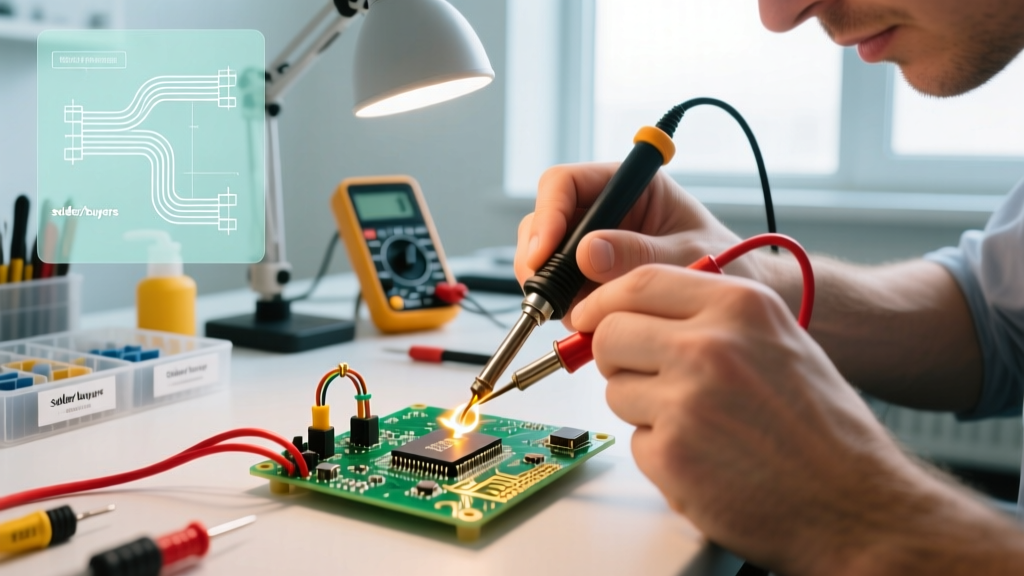
The most ubiquitous use for soldering is in electronics manufacturing. According to the IPC (Association Connecting Electronics Industries), standards like IPC J-STD-001 dictate the rigorous requirements for soldered electrical and electronic assemblies. But when does soldering lose to conductive adhesives?
The Soldering Advantage in PCBs
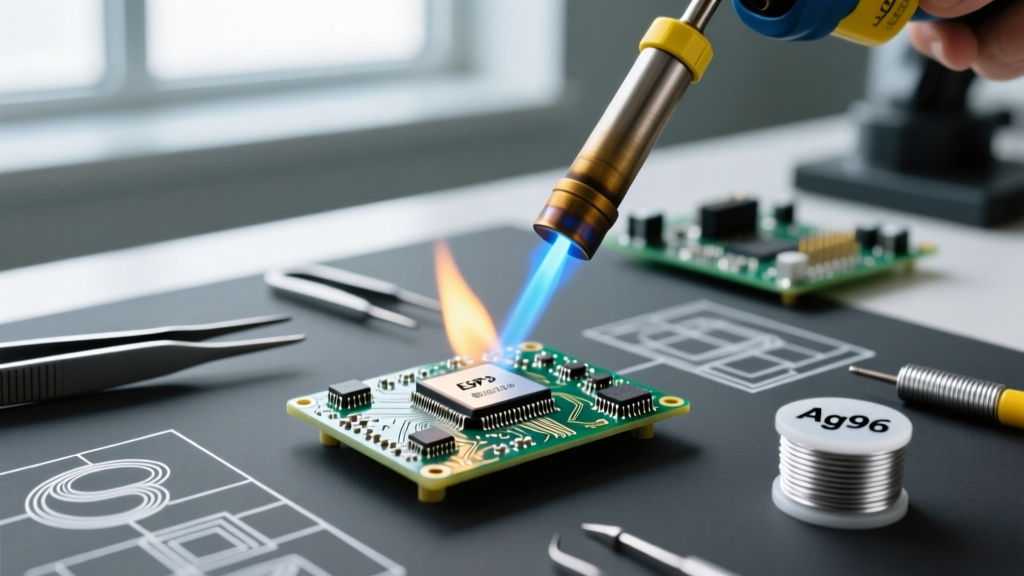
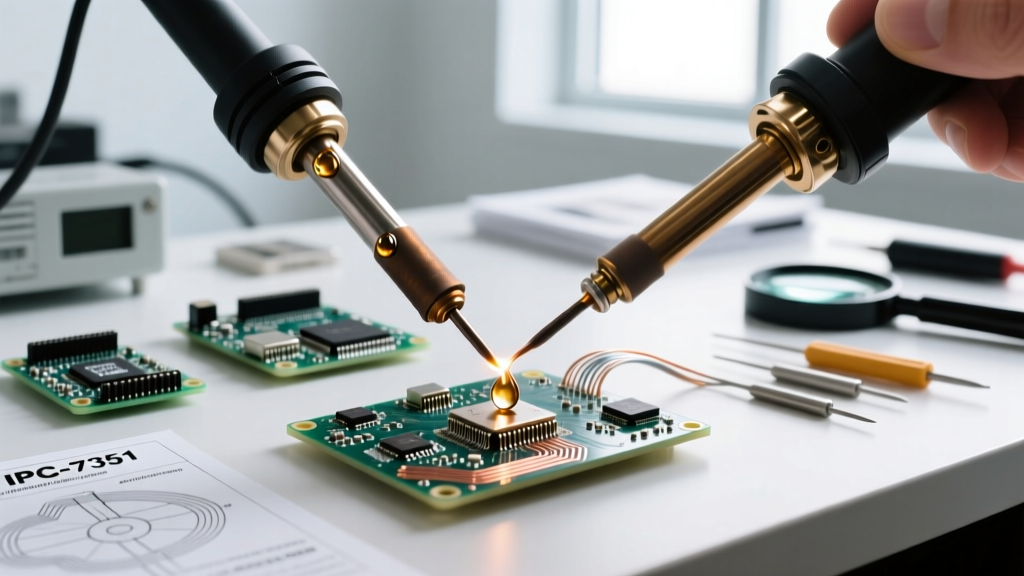
For standard through-hole and surface-mount technology (SMT), lead-free alloys like SAC305 (96.5% Tin, 3.0% Silver, 0.5% Copper) remain the industry standard. SAC305 melts at approximately 217°C (422°F) and provides a robust metallurgical bond. In 2026, a one-pound spool of high-quality SAC305 wire solder costs between $45 and $65. The metallurgical intermetallic compound (IMC) layer formed between the copper pad and the tin ensures long-term electrical stability and high shear strength.
When Conductive Adhesives Win
Soldering fails when the substrate is heat-sensitive. Flexible printed circuits (FPCs), PET films, and certain RF shielding applications cannot withstand the 230°C+ reflow temperatures required for lead-free solder. In these uses, silver-filled conductive epoxies (such as MG Chemicals 8331) are superior. While significantly more expensive (roughly $80 for a 50g syringe), these adhesives cure at room temperature or low heat (65°C), offering a volume resistivity of <0.0001 ohm-cm without risking thermal delamination of the substrate.
Expert Decision Framework: If your component can withstand 240°C for 10 seconds and requires high mechanical shear strength, use SAC305 solder. If you are bonding to heat-sensitive flex circuits, glass, or repairing delicate RF traces, use a silver-loaded conductive adhesive.
Automotive and Aerospace Wiring: Soldering vs. Crimping
One of the most fiercely debated uses for soldering is in wire termination and harness fabrication. While many DIYers default to soldering automotive wire splices, professional automotive and aerospace standards strictly prohibit it in high-vibration environments.
The Failure Mode of Soldered Wires
When solder wicks into the strands of a wire, it creates a rigid, inflexible point just behind the joint. In high-vibration environments (like an engine bay or aircraft fuselage), this rigid-to-flexible transition point becomes a stress concentrator, leading to work-hardening and eventual wire fracture. Furthermore, flux residue trapped inside the insulation can cause long-term galvanic corrosion.
The Superiority of Cold Crimping
The NASA Electronic Parts and Packaging (NEPP) Program and USCAR (United States Council for Automotive Research) standards mandate cold crimping for critical wire terminations. A properly executed crimp using a calibrated tool (such as the Molex 63819-0000 Hand Crimper, priced around $450) creates a cold-weld effect. The terminal deforms around the wire strands, creating a gas-tight seal that prevents oxidation while maintaining the wire's natural flexibility. A high-quality crimp will typically withstand a pull-out force 30% to 50% higher than a soldered joint of the same gauge.
Plumbing, HVAC, and Structural: Soldering vs. Brazing and Welding
Joining copper pipes and structural metals represents another major category of uses for soldering. However, the distinction between soldering, brazing, and welding is defined strictly by temperature and structural load.
Potable Water Plumbing (Soldering)
For domestic copper water lines, soldering is the standard. Modern codes require lead-free alloys, typically 95/5 Tin-Antimony (melting point ~450°F). The capillary action draws the molten solder into the 0.002-inch clearance between the pipe and the fitting. It is highly effective for pressures up to 150 PSI and temperatures below 250°F.
HVAC Refrigeration (Brazing)
Soldering is strictly forbidden for high-pressure HVAC refrigerant lines (like R-410A, which operates at pressures exceeding 600 PSI). Here, brazing is required. Brazing uses filler metals that melt above 840°F, such as Sil-Fos 15 (15% Silver, 80% Copper, 5% Phosphorus). The phosphorus acts as a built-in flux for copper-to-copper joints, and the resulting joint possesses a tensile strength exceeding 60,000 PSI, far surpassing the 10,000 PSI limit of standard plumbing solder.
Comparison Matrix: Choosing the Right Method by Use Case
The following table summarizes the operational boundaries and ideal applications for soldering compared to its primary alternatives.
| Joining Method | Operating Temp Limit | Tensile/Shear Strength | Vibration Resistance | Primary Uses | Approximate Material Cost |
|---|---|---|---|---|---|
| Soft Soldering (SAC305 / Sn95) | ~250°F (121°C) | Low to Medium | Poor (Wicking causes fatigue) | PCBs, low-pressure plumbing, art glass | $40 - $65 / lb |
| Cold Crimping | Depends on wire insulation | Very High (Gas-tight) | Excellent (Maintains flexibility) | Automotive harnesses, aerospace, heavy gauge | $0.10 - $0.50 / terminal |
| Brazing (Sil-Fos / Brass) | ~600°F (315°C) | Very High (>60,000 PSI) | Excellent | HVAC refrigeration, structural steel, high-pressure | $150 - $250 / lb |
| Conductive Adhesive | ~300°F (150°C) | Low (Brittle) | Poor to Fair | Flex circuits, RF shielding, heat-sensitive substrates | $80 - $120 / 50g syringe |
Edge Cases and Failure Modes Across Methods
Understanding how and why these methods fail is critical for selecting the right use for soldering.
- Tin Whiskers in Soldering: Lead-free tin finishes and SAC305 solders are prone to growing microscopic crystalline structures known as tin whiskers. In high-density PCBs, these can cause short circuits years after assembly. Mitigation requires conformal coatings or adding trace amounts of bismuth/lead where RoHS exemptions allow.
- Fretting Corrosion in Crimping: If a crimp is improperly sized (using a terminal meant for 12 AWG on a 14 AWG wire), micro-movements will cause fretting corrosion, increasing electrical resistance and leading to thermal runaway. Always use ratcheting crimpers calibrated to the exact wire gauge.
- Galvanic Corrosion in Adhesives: Silver-filled epoxies used on copper traces can accelerate galvanic corrosion if exposed to high humidity, as silver is highly cathodic to copper. They must be sealed with a UV-curable solder mask or conformal coating.
Expert FAQ on Soldering Applications
Can I use soldering for high-current battery pack assembly (e.g., 18650 cells)?
While spot welding is the industry standard for lithium-ion cell packs, soldering can be used if you employ a high-wattage iron (minimum 100W, preferably 150W like the Hakko FX-951 with a heavy chisel tip) and highly active, no-clean flux. However, the risk of thermal damage to the cell's internal CID (Current Interrupt Device) is high. If you must solder, use 2mm wide nickel strips and limit heat application to under 2 seconds per joint. For production, always use a pulse spot welder.
Why is soldering still used in plumbing if PEX and push-to-connect fittings exist?
Soldered copper joints remain the gold standard for exposed plumbing and high-temperature lines (like boiler feeds) because they are UV-resistant, impermeable to oxygen (preventing internal corrosion of ferrous boiler components), and have a proven lifespan exceeding 50 years. Push-to-connect fittings rely on internal O-rings that can degrade over decades, making soldering the superior choice for permanent, behind-the-wall installations.
Is wave soldering still relevant for PCB assembly in 2026?
Yes, but its use case has narrowed. Wave soldering is primarily reserved for high-mix, low-volume through-hole components or heavy power electronics where large thermal masses require the massive heat transfer of a molten solder wave. For standard SMT assemblies, reflow soldering using solder paste and a convection oven has entirely replaced wave soldering due to better precision and lower defect rates.