
The Industrial Evolution of the Soldering Air Gun
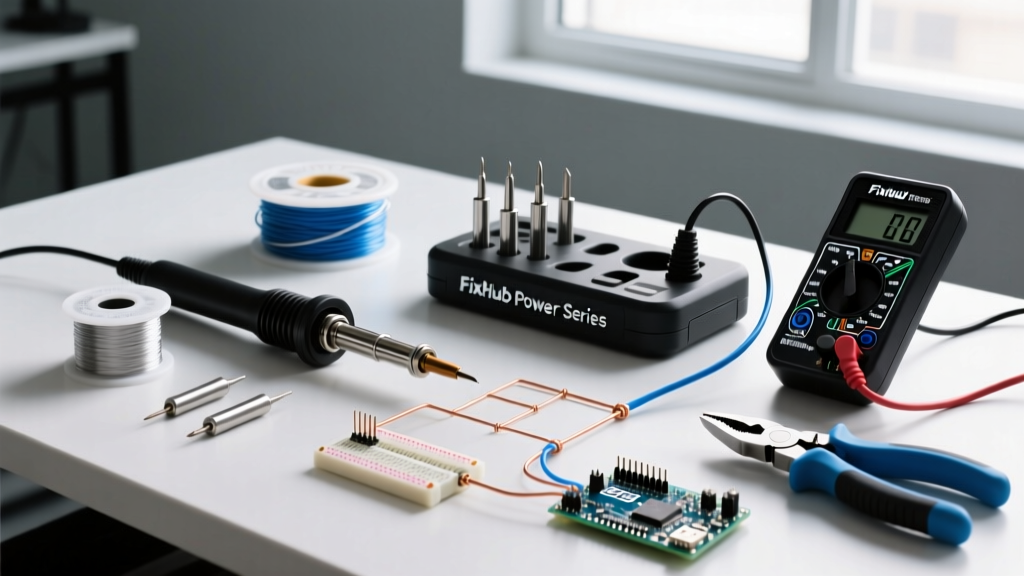
When manufacturing engineers and procurement specialists search for a soldering air gun, they are typically navigating a complex intersection of two distinct industrial tool categories: precision hot air rework stations for Surface Mount Technology (SMT) and focused thermal tools for wire harnessing and solder sleeves. In the consumer space, these tools are often conflated with basic craft heat guns. However, in high-reliability industries such as aerospace, automotive ECU manufacturing, and medical device assembly, a soldering air gun must deliver precise thermal profiling, closed-loop temperature feedback, and strict adherence to IPC workmanship standards.
As we move through 2026, the demand for lead-free soldering compliance (specifically SAC305 and SAC405 alloys) has pushed the thermal requirements of these systems higher. Melting points for lead-free alloys hover around 217°C to 227°C, requiring peak nozzle temperatures of 350°C to 420°C to ensure proper wetting without inducing thermal shock to the printed circuit board (PCB) substrate or the components themselves. This guide provides a deep-dive technical analysis of industrial-grade hot air systems, their specific applications, and the failure modes they help mitigate.
Core Industrial Applications
1. Aerospace and Automotive Wire Harnessing
In wire harness manufacturing, a specialized soldering air gun is used to activate heat-shrink solder sleeves (such as TE Connectivity's Raychem DuraSeal or D-Solder lines). These sleeves contain a preform of flux-cored solder and thermoplastic sealing rings. The operator must apply focused hot air to shrink the sleeve, melt the solder preform, and seal the wire splice simultaneously.
- Temperature Requirements: The heat shrink tubing typically activates at 120°C–150°C, but the internal solder preform requires localized temperatures exceeding 230°C to flow and wet the copper strands.
- Airflow Dynamics: High airflow can blow the lightweight sleeve off the wire before the adhesive sets. Industrial systems require adjustable airflow down to 10–20 Liters/minute (L/min) with highly focused, narrow nozzles (5mm–10mm diameter).
- Compliance: Aerospace applications must comply with IPC/WHMA-A-620 and NASA workmanship standards, which strictly prohibit open-flame torches or uncalibrated heat sources for solder sleeve termination.
2. High-Density SMT Rework and BGA Replacement
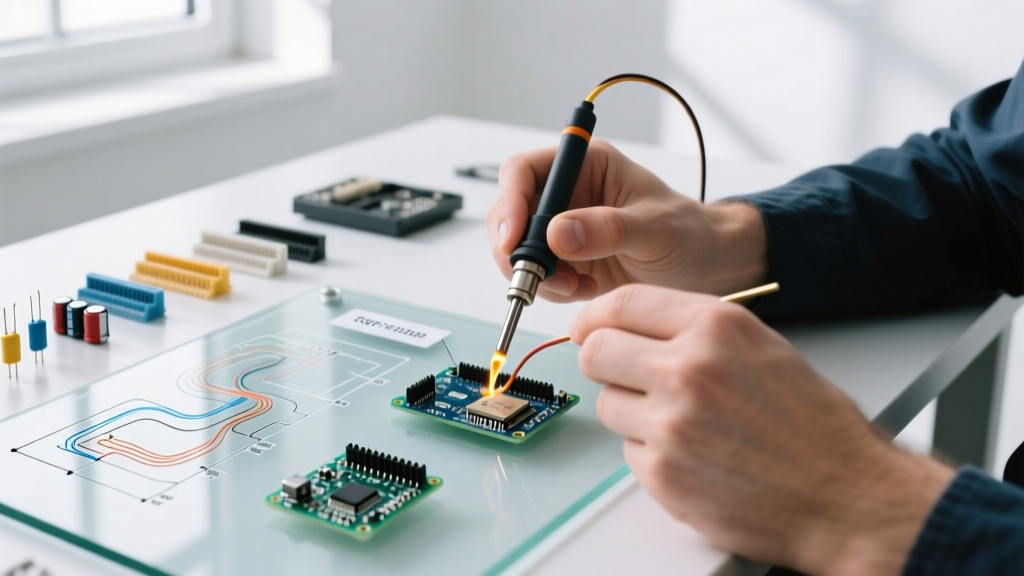
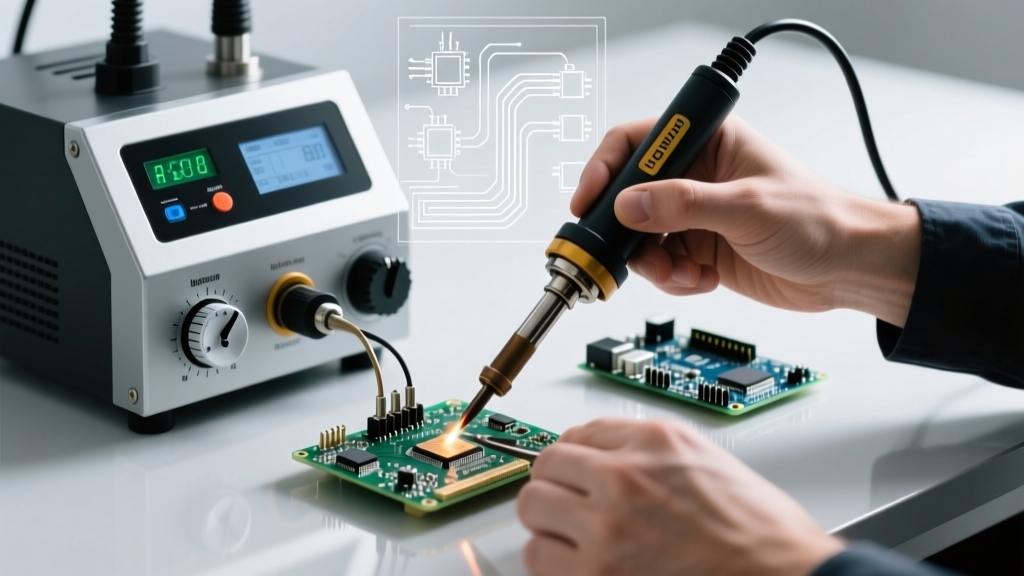
For PCB assembly and repair, the soldering air gun takes the form of a benchtop or floor-standing Hot Air Rework Station. These are essential for removing and replacing Ball Grid Arrays (BGAs), Quad Flat No-leads (QFNs), and densely populated multilayer ceramic capacitors (MLCCs). Modern 2026 rework stations utilize brushless micro-pumps and PID (Proportional-Integral-Derivative) controllers to maintain temperature accuracy within ±2°C, even when the thermal mass of the PCB acts as a massive heat sink.
2026 Industrial Soldering Air Gun Comparison Matrix
The following table compares three dominant systems used in industrial environments, ranging from high-volume benchtop repair to automated floor-standing rework cells.
| System Model | Primary Use Case | Temp Range | Max Airflow | Est. Price (2026) | Key Feature |
|---|---|---|---|---|---|
| Weller WHA3000PS | Heavy SMT / BGA Rework | 50°C – 550°C | 100 L/min | $4,800 - $5,200 | Integrated preheating & closed-loop sensor |
| Quick 861DW | Benchtop SMT / General | 100°C – 500°C | 120 L/min | $260 - $290 | Dual-channel, rapid thermal recovery |
| Hakko FR-830 | PCB Preheating / Soldering | 50°C – 500°C | 50 L/min | $1,100 - $1,300 | Bottom-side IR preheat + top hot air |
Thermal Profiling and IPC J-STD-001 Compliance
According to the IPC J-STD-001 requirements for soldered electrical and electronic assemblies, thermal profiling is not optional; it is a critical quality assurance metric. When utilizing a soldering air gun for SMT rework, operators must adhere to specific ramp-up and cool-down rates to prevent catastrophic component failure.
Expert Insight: Never apply maximum airflow and maximum temperature simultaneously to a cold PCB. The sudden thermal gradient will cause the fiberglass substrate to delaminate and will instantly crack the dielectric layers inside MLCCs. Always use a stepped thermal profile.
Standard 4-Step Rework Profile for Lead-Free SMT
- Preheat Phase (Bottom & Top): Ramp the entire board to 120°C–150°C over 60–90 seconds. This minimizes the thermal shock delta and evaporates volatile solvents in the flux.
- Thermal Soak: Maintain 150°C for 30 seconds. This activates the rosin-based flux (e.g., ROL0 or ROL1 classifications), allowing it to clean the oxidation from the pads and component leads.
- Reflow Phase: Increase the localized hot air nozzle temperature to 380°C with moderate airflow (40 L/min). The target is to bring the solder joints to 235°C–245°C for 10–15 seconds to achieve proper intermetallic compound (IMC) formation.
- Cooling Phase: Remove the heat source. Allow the board to cool naturally. Never use compressed air or cold fans to force-cool the board, as this induces micro-cracking in the solder joints and component packages.
Critical Failure Modes and Mitigation Strategies
Improper use of a soldering air gun leads to specific, often latent, defects that can cause field failures. Understanding these failure modes is essential for process engineers.
Pad Cratering and Substrate Delamination
The Cause: Applying excessive mechanical force with tweezers to remove a component while the solder is only in a semi-solid (pasty) state, combined with localized overheating of the PCB pad.
The Mitigation: Ensure the solder has reached full liquidus. Use a vacuum pickup pen rather than mechanical tweezers to lift BGAs and QFNs once the solder flashes to a liquid state. If using a Weller or Hakko system, utilize the automated vacuum pickup feature triggered by the thermal sensor.
Tombstoning and Uneven Wetting
The Cause: Asymmetric airflow from the hot air nozzle. If the air hits one side of a 0402 or 0603 capacitor harder than the other, the flux on that side will activate and evaporate prematurely, causing uneven surface tension that pulls the component upright (tombstoning).
The Mitigation: Use a circular, sweeping motion with the nozzle, or invest in a system with a diffuser nozzle designed specifically for small passive components. Ensure the nozzle diameter is at least 2mm larger than the component footprint to allow for even air distribution.
MLCC Micro-Cracking (Thermal Shock)
The Cause: Multilayer Ceramic Capacitors are highly susceptible to thermal gradients. Blasting 400°C air onto a localized area of a board that is sitting at 20°C ambient creates a severe gradient across the ceramic body.
The Mitigation: Mandatory use of a bottom-side preheater (like the Hakko FR-830 or an integrated IR mat) to bring the baseline board temperature up to 100°C before applying top-side hot air.
Industrial Safety: Fume Extraction and Air Quality
The use of a soldering air gun vaporizes the flux core within the solder or the liquid flux applied to the pads. This creates aerosolized colophony (rosin) and volatile organic compounds (VOCs). According to the National Institute for Occupational Safety and Health (NIOSH), chronic exposure to rosin-based solder fumes can cause occupational asthma and severe respiratory sensitization.
In an industrial environment, a standalone soldering air gun is non-compliant without integrated fume extraction. Procurement specifications for 2026 must include:
- Source Capture Systems: Articulated fume extraction arms positioned within 2 inches of the rework zone.
- Filtration Standards: HEPA filters combined with activated carbon beds to capture both particulate matter and VOC gases.
- Enclosed Rework Cells: For high-volume BGA rework, enclosed chambers with negative pressure and automated filtration are required to meet OSHA permissible exposure limits (PELs).
Procurement Checklist for Manufacturing Engineers
When specifying a soldering air gun system for your assembly line or repair depot, ensure the following parameters are met in your RFQ (Request for Quote):
- ESD Safety: The handpiece and nozzle must be grounded, with a leakage resistance of less than 10^9 ohms to prevent Electrostatic Discharge (ESD) damage to sensitive MOSFETs and ICs.
- Calibration and Lockout: The system must support password-protected temperature lockouts to prevent line operators from exceeding the maximum thermal profile approved by the process engineering team.
- Nozzle Ecosystem: Verify that the manufacturer offers custom-machined nozzles for your specific, proprietary component footprints. Standard SOIC and QFP nozzles are insufficient for complex RF shielding cans or custom automotive connectors.
- Data Logging: High-end systems (such as those from Weller and Finetech) now offer USB and Ethernet data logging, allowing you to export the exact thermal profile of every single reworked board for traceability and ISO 9001 compliance.
Conclusion
The term 'soldering air gun' encompasses a vital array of thermal tools that keep modern electronics manufacturing and repair viable. Whether you are shrinking TE Connectivity solder sleeves on an aerospace wire harness or reballing a 0.4mm pitch BGA on a server motherboard, the physics of thermal transfer remain unforgiving. By investing in closed-loop, digitally profiled hot air rework stations and adhering strictly to IPC thermal ramp rates, manufacturers can eliminate latent defects, ensure long-term field reliability, and protect their operators from hazardous flux emissions.