
The Metallurgical Baseline: What Is Soldering Metal?
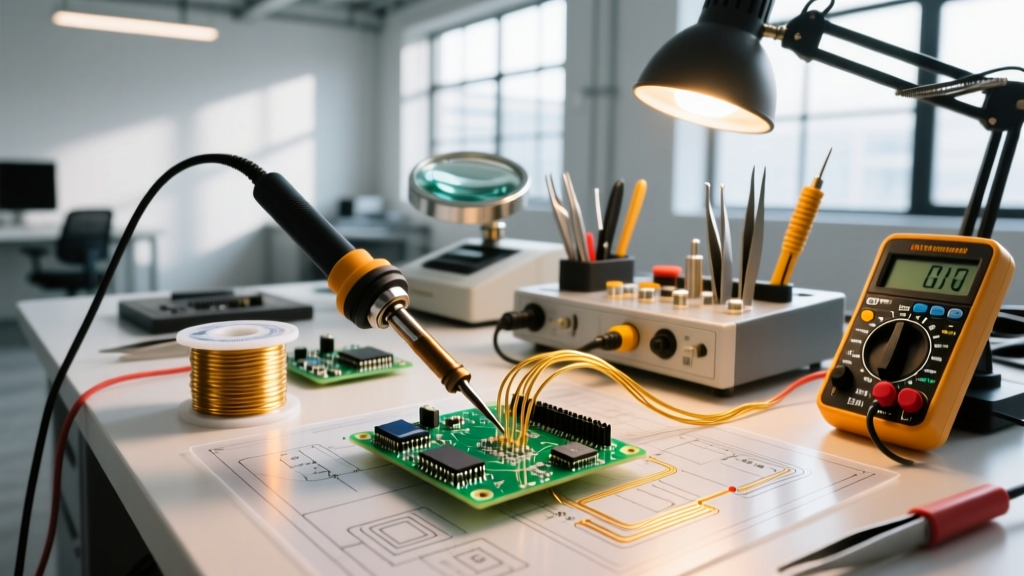
At its core, what is soldering metal is a question of metallurgy. Solder is a precisely engineered filler metal alloy designed to wet and bond base metals at temperatures significantly below the melting points of the workpieces themselves. Unlike welding, which melts the base metal, soldering relies on capillary action and metallurgical wetting to form an intermetallic compound (IMC) layer.
The most critical concept to understand when selecting an alloy is the eutectic point. A eutectic alloy transitions directly from a solid to a liquid at a single, specific temperature. Non-eutectic alloys, however, pass through a 'plastic' or 'pasty' range where they are partially solid and partially liquid. Disturbing a joint during this plastic phase results in a fractured, high-resistance connection known as a cold joint.
The 2026 Alloy Decision Matrix
Use this framework to narrow down your alloy selection based on your specific application, thermal requirements, and budget.
| Alloy Designation | Composition | Melting Point | Primary Application | Approx. Cost (2026) |
|---|---|---|---|---|
| Sn63/Pb37 | 63% Tin, 37% Lead | 183°C (361°F) Eutectic | Prototyping, aerospace, legacy electronics | $35 - $45 / lb |
| SAC305 | 96.5% Sn, 3% Ag, 0.5% Cu | 217°C - 220°C | Commercial RoHS-compliant PCB assembly | $55 - $70 / lb |
| Sn96.5/Ag3.5 | 96.5% Tin, 3.5% Silver | 221°C (430°F) Eutectic | High-reliability, lead-free plumbing/die-attach | $80 - $100 / lb |
| Sn95/Sb5 | 95% Tin, 5% Antimony | 232°C - 240°C | High-temp electronics, automotive under-hood | $40 - $50 / lb |
| Harris Stay-Brite | Tin/Silver blend (Plumbing) | ~226°C (439°F) | Copper plumbing, HVAC, structural joints | $90 - $120 / lb |
Decision Branch 1: PCB Assembly & Microelectronics
If your project involves printed circuit boards, your decision hinges on regulatory compliance (RoHS) versus manufacturing ease.
The Leaded Route (Sn63/Pb37)
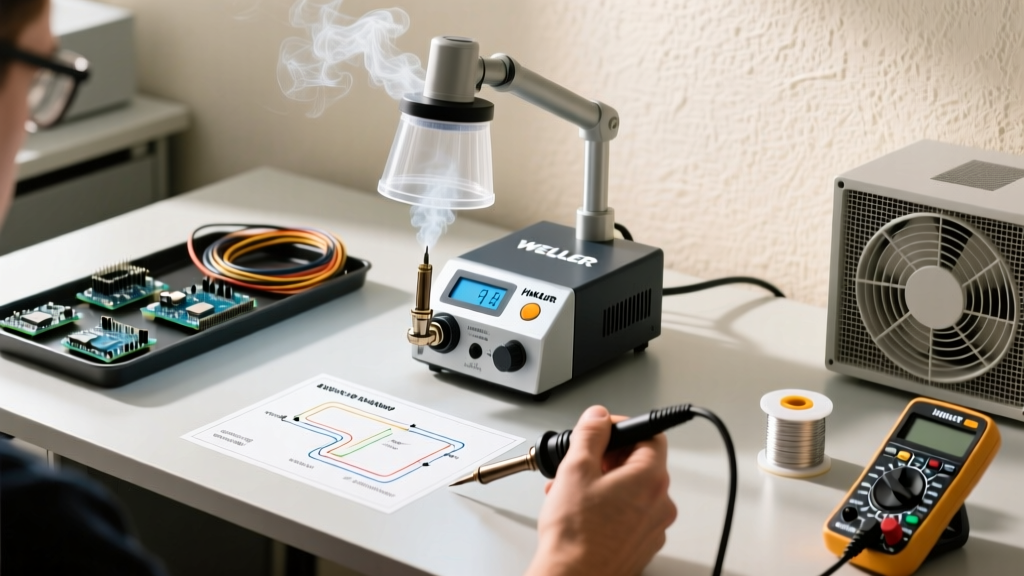
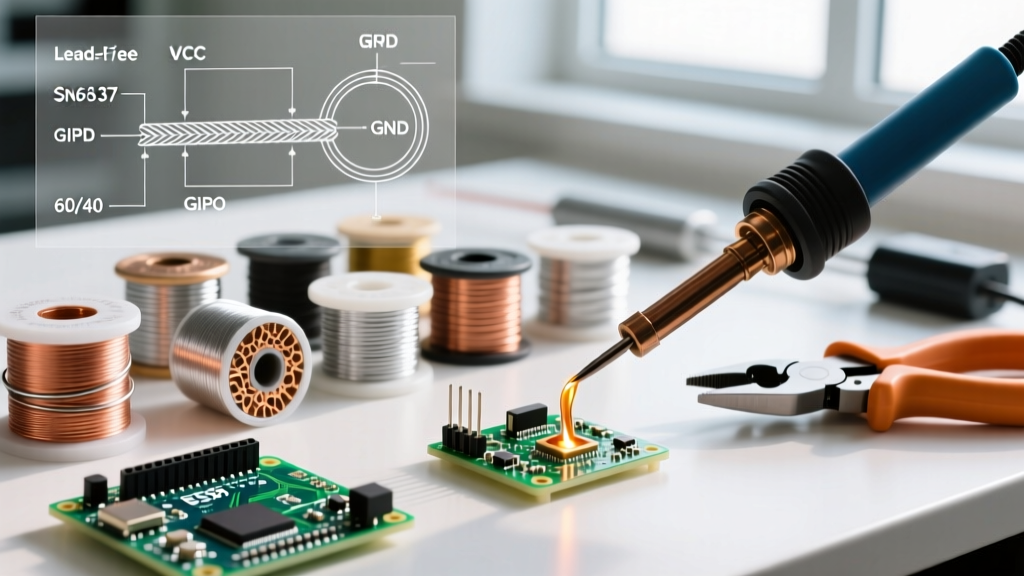
For hobbyists, prototypers, and exempt aerospace or medical applications, Sn63/Pb37 remains the gold standard. Its eutectic nature (melting sharply at 183°C) eliminates the plastic range, making it highly forgiving for hand soldering. For 0402 or 0603 surface-mount components, select a wire diameter of 0.015' to 0.020'. For standard through-hole DIP components, 0.031' is optimal. According to OSHA Lead Guidelines, proper ventilation and hand-washing protocols are mandatory when handling leaded alloys to prevent systemic absorption.
The Lead-Free Route (SAC305)
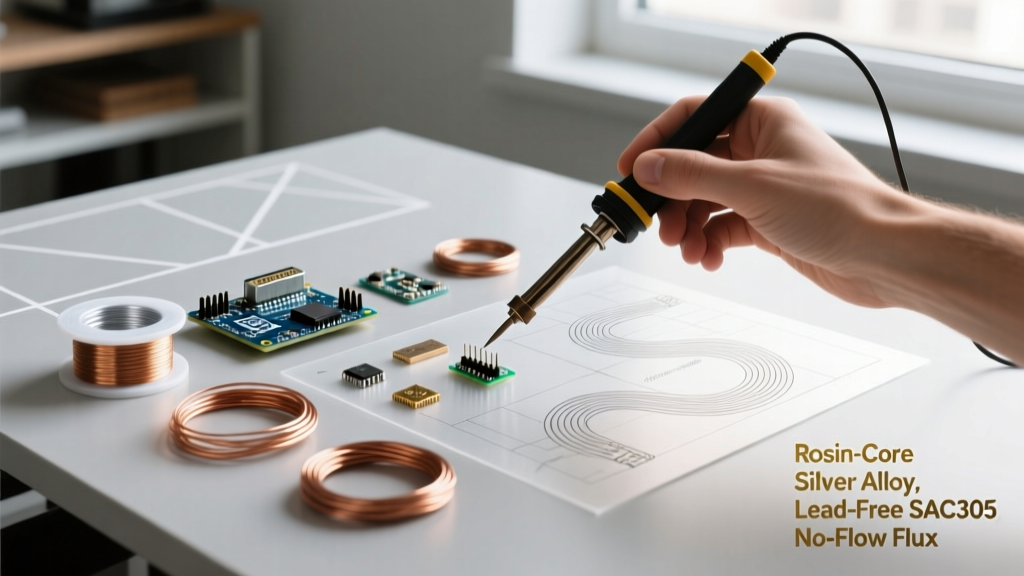
For commercial production, SAC305 is the industry standard. The addition of silver (Ag) and copper (Cu) raises the melting point to 217°C and increases the stiffness of the joint. However, SAC305 exhibits poorer wetting characteristics than leaded solder. To compensate, you must use a highly active flux core and increase your iron tip temperature to 350°C - 380°C. Data from the IPC Standards (specifically J-STD-001) dictates strict thermal profiling for SAC alloys to prevent pad lift-off on FR4 boards.
Decision Branch 2: Heavy-Duty Plumbing, HVAC, & Structural
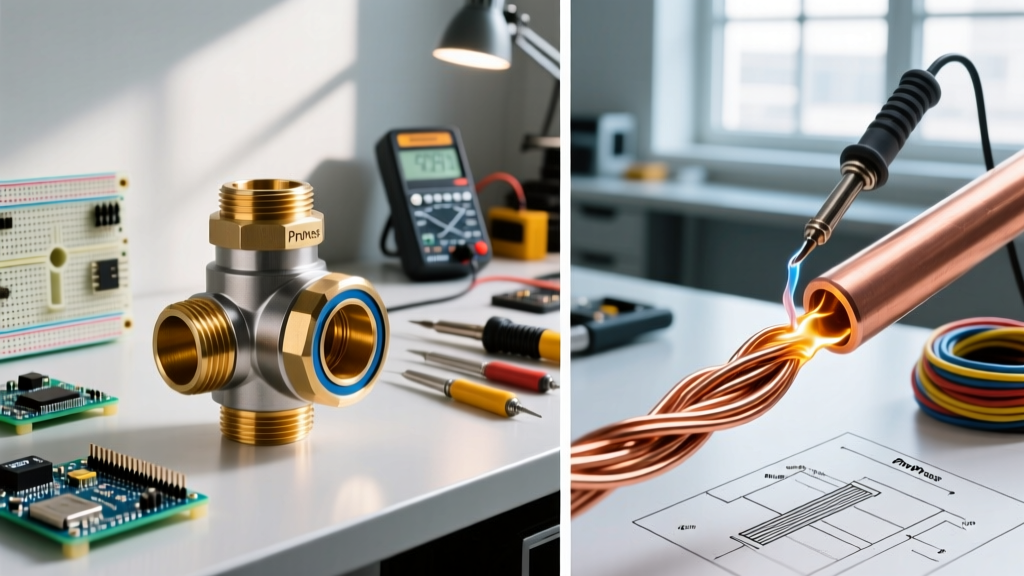
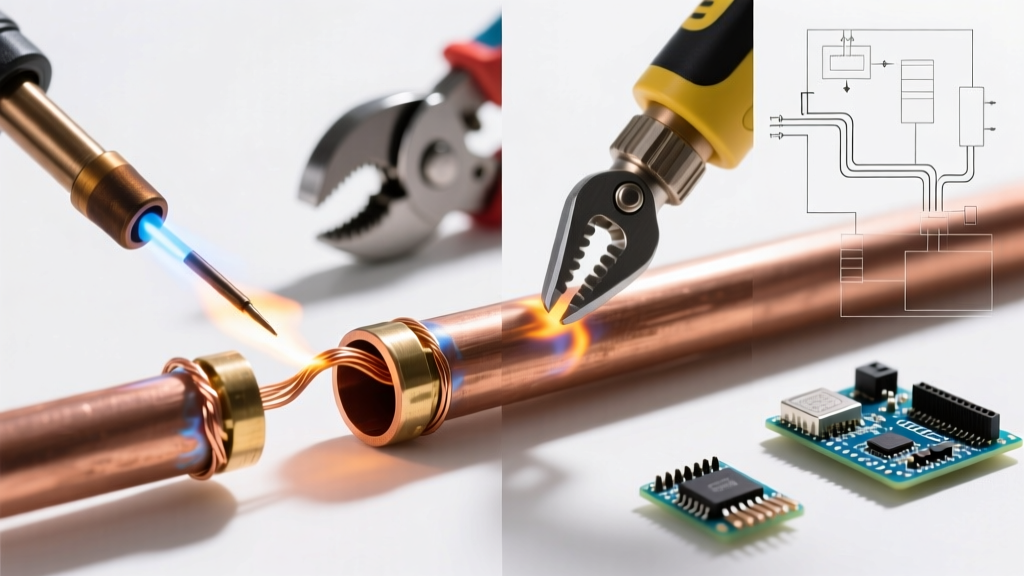
When joining copper pipes, brass fittings, or steel structural elements, electronics solder will fail under mechanical stress and thermal expansion. Here, the question of what is soldering metal shifts from electrical conductivity to tensile strength and capillary penetration.
- Silver-Bearing Alloys (Sil-Fos / Safety-Silv): Alloys containing 5% to 15% silver (like Harris Safety-Silv 45) provide tensile strengths exceeding 40,000 PSI. They are mandatory for HVAC refrigeration lines where vibration fatigue is a factor.
- Tin-Silver Plumbing Solder: Products like Harris Stay-Brite use a tin-silver matrix that melts around 226°C. It is ideal for potable water lines because it contains zero lead and flows beautifully with standard butane or propane torches.
- Zinc-Based Alloys: Used for aluminum-to-aluminum or aluminum-to-copper transitions. These require specialized fluxes (like zinc chloride) and operate at much higher temperatures (~380°C).
The Flux Variable: Core vs. External Application
The alloy is only half the equation; flux dictates the chemical cleaning of the oxidation layer. Wire solder typically comes with a flux core (usually 1% to 3% by weight).
Expert Tip: Never use plumbing paste flux (which is highly acidic) on electronics. The residual chlorides will cause electrochemical migration and short-circuit your PCB within weeks.
- Rosin Mildly Activated (RMA): The traditional standard. Leaves a sticky, amber residue that must be cleaned with isopropyl alcohol (IPA) or a specialized solvent.
- No-Clean (NC): Formulated to leave a benign, hard residue that does not require washing. Ideal for high-volume production, though the residue can sometimes interfere with bed-of-nails testing.
- Water-Soluble (OA - Organic Acid): Highly active and excellent for heavily oxidized pads. However, it must be washed with heated deionized water post-soldering, or it will rapidly corrode the copper traces.
Real-World Failure Modes & Edge Cases
Understanding how solder fails is crucial for your decision framework. According to metallurgical studies by the Indium Corporation, improper alloy selection leads to specific failure modes:
- Thermal Fatigue Cracking: Using standard Sn63/Pb37 in an automotive under-hood environment (where ambient temps exceed 125°C) will cause the joint to creep and fracture. Sn95/Sb5 or high-silver alloys must be used here.
- Tin Whisker Growth: Pure tin or high-tin lead-free alloys can spontaneously grow microscopic crystalline 'whiskers' that cause short circuits in high-impedance circuits. Mitigation requires conformal coating or using a bismuth-doped alloy.
- Gold Embrittlement: Soldering directly to gold-plated pads with standard tin-lead solder forms a brittle gold-tin intermetallic compound (AuSn4). For RF and aerospace applications, you must use indium-based alloys or specialized gold-tin (Au80/Sn20) preforms.
Sourcing and Pricing Benchmarks
Where you buy your soldering metal dictates both authenticity and price. Avoid unbranded spools on open marketplaces, as they frequently suffer from inaccurate alloy ratios and contaminated flux cores.
- Electronics Grade: Source from authorized distributors like Digi-Key, Mouser, or Newark. Expect to pay $40-$60 for a 1lb spool of premium Kester or Alpha Metals wire.
- Plumbing & HVAC: McMaster-Carr, Grainger, or local HVAC supply houses. Harris and Sil-Fos rods are typically sold in 1lb tubes ranging from $80 to $150 depending on silver content.
Frequently Asked Questions
Can I use plumbing solder for electronics?
No. Plumbing solder is often lead-free but uses a highly corrosive acid core flux designed to eat through copper oxidation. This flux will destroy delicate PCB traces and cause immediate electrical leakage.
What is the shelf life of soldering metal?
Unopened, flux-cored wire solder has a shelf life of 2 to 3 years. Over time, the flux core can dry out or oxidize, leading to poor wetting. Solid wire or bare preforms, however, have an indefinite shelf life if stored in a dry, climate-controlled environment.
Why does my lead-free solder look dull and grainy?
Unlike the shiny finish of Sn63/Pb37, SAC305 and other lead-free alloys naturally solidify with a dull, matte, or slightly grainy appearance. This is a normal metallurgical characteristic and does not indicate a cold joint, provided the wetting angle is correct.