
The Hidden Hazards of Jewelry Soldering Torches
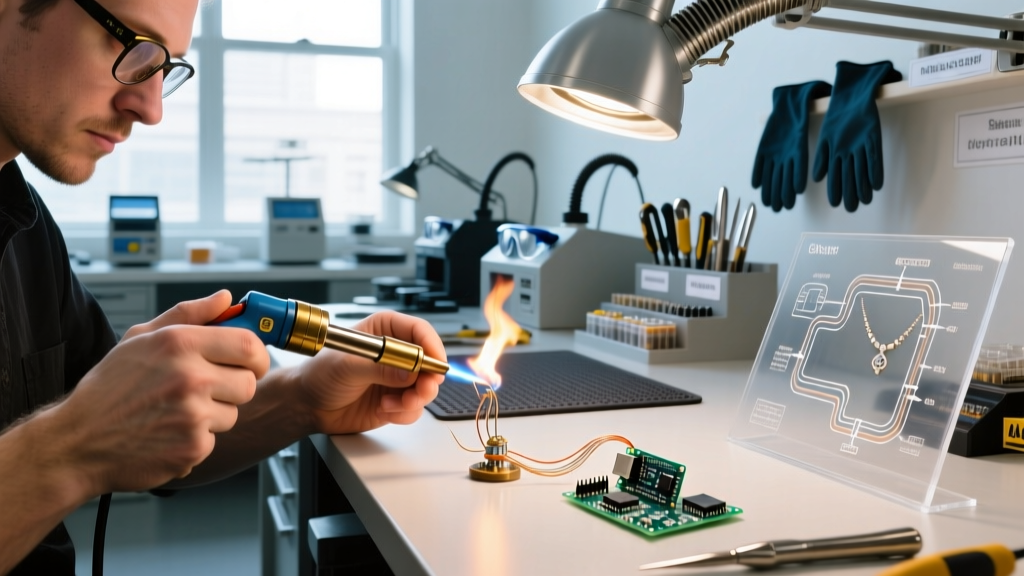
Working with a soldering torch for jewelry demands extreme precision, but the combination of open flames, pressurized gases, and toxic chemical fluxes introduces severe occupational hazards. Whether you are sizing a platinum ring or soldering a delicate sterling silver bezel, a momentary lapse in safety protocols can result in flash fires, toxic fume inhalation, or catastrophic equipment failure.
According to the Occupational Safety and Health Administration (OSHA), hot work operations—including soldering and brazing—require strict adherence to ventilation and fire prevention standards. This guide provides a comprehensive, expert-level breakdown of safety best practices, equipment specifications, and workspace configurations for jewelers in 2026.
Torch Fuel Comparison: Safety Profiles and Specifications
Choosing the right torch is the first line of defense. Different fuel gases carry unique risk profiles, pressure requirements, and thermal outputs. Below is a comparison of the most common jewelry soldering torches.
| Torch System | Fuel Type | Max Temp | 2026 Price Range | Primary Safety Risk |
|---|---|---|---|---|
| Blazer GT8000 | Butane | 2,500°F | $65 - $85 | Low pressure; pooling of unignited heavy gas |
| Bernzomatic TS8000 | Propane/MAPP | 3,730°F | $50 - $75 | Cylinder tipping; heavy gas accumulation |
| Smith Little Torch | Oxy-Acetylene | 6,300°F | $350 - $420 | Flashback; acetylene decomposition above 15 PSIG |
The 15 PSIG Acetylene Rule
If you use an oxy-acetylene system like the Smith Little Torch, you must never set the acetylene regulator above 15 PSIG (pounds per square inch gauge). Acetylene is inherently unstable; at pressures exceeding 15 PSIG, it can spontaneously decompose and explode, even without the presence of oxygen or a spark. Always use dual-stage regulators to ensure precise, safe pressure delivery.
Critical Workspace Ventilation Requirements
Jewelry soldering generates hazardous particulates and gases. Heating silver solder (which historically contained cadmium, though mostly phased out, still found in old stock) releases cadmium oxide. More commonly, heating fluoride-based fluxes (like Handy Flux Type B-1) releases hydrogen fluoride (HF) gas, which is highly corrosive to lung tissue.
The National Institute for Occupational Safety and Health (NIOSH) mandates local exhaust ventilation (LEV) for soldering operations.
- CFM Requirements: Your local fume extractor must pull at least 100 to 150 Cubic Feet per Minute (CFM) at the capture hood.
- Placement: The extraction hood should be positioned 4 to 6 inches from the soldering block, directly behind the workpiece, to pull fumes away from your breathing zone.
- Filtration: Standard HEPA filters do not capture gases. You must use a combination HEPA and activated carbon filter (e.g., Hakko FA-400 or Aardvark Rhino) specifically rated for acid gases and heavy metals.
Expert Rule of Thumb: If you can smell the flux while soldering, your ventilation system is failing. Odor indicates that toxic hydrogen fluoride or rosin fumes are bypassing the capture zone and entering your breathing zone.
Step-by-Step Safe Ignition and Shutdown Protocol
Improper lighting and extinguishing sequences are the leading causes of torch tip carbon buildup, backfires, and flashbacks. Follow this exact sequence for oxy-fuel torches:
Safe Ignition Sequence
- Purge Lines: Open and close both torch valves individually to purge air from the hoses before lighting.
- Set Pressures: Adjust regulators to working pressures (e.g., 5 PSIG Acetylene, 10 PSIG Oxygen for a #5 Smith tip).
- Open Fuel First: Open the acetylene valve on the torch handle approximately 1/8th of a turn.
- Spark: Use a friction spark striker. Never use a standard cigarette lighter or matches.
- Adjust Flame: Turn the acetylene up until the soot trail disappears, then slowly open the oxygen valve to neutralize the flame to a sharp blue cone.
Safe Shutdown Sequence
- Close Oxygen First: Shut off the oxygen valve on the torch handle. This prevents carbon soot from forming inside the tip and stops backfire.
- Close Fuel Second: Shut off the acetylene valve on the torch handle.
- Close Tank Valves: Turn off the main cylinder valves.
- Bleed Lines: Open the torch valves briefly to bleed residual gas from the hoses until the gauges read zero, then close the torch valves and back out the regulator tension screws.
Flashback Arrestors: Your Mandatory Fail-Safe
A flashback occurs when the flame burns back into the torch, hose, or regulator. This is usually caused by touching the hot tip to the soldering block, overheating the tip, or incorrect gas pressures.
Every oxy-acetylene jewelry setup must be equipped with resettable flashback arrestors (such as the Smith 30-100 series) installed directly at the regulator, not just at the torch handle. These devices contain a sintered metal filter that quenches the flame and a check valve that stops reverse gas flow, preventing a regulator explosion. Inspect these arrestors annually and replace them every five years.
Personal Protective Equipment (PPE) and Chemical Safety
Beyond the torch itself, the chemicals used in jewelry soldering require specific PPE.
- Eye Protection: For butane/propane torches, clear ANSI Z87.1 polycarbonate safety glasses are sufficient. For oxy-acetylene, you must use shade 2 to shade 3 welding goggles to protect against infrared and ultraviolet radiation emitted by the intense flame.
- Skin Protection: Wear a heavy leather or flame-retardant apron. Avoid synthetic clothing (like polyester), which will melt into the skin if exposed to a stray spark or molten solder splash.
- Flux Handling: Boric acid and fluoride fluxes are toxic if ingested or absorbed through open cuts. Always wash your hands with cold water and soap after handling flux. (Hot water opens the pores, increasing chemical absorption).
Emergency Preparedness and Fire Suppression
The National Fire Protection Association (NFPA 51B) outlines strict fire prevention standards for hot work. Your jewelry bench must be equipped with the correct fire suppression tools.
Keep a Class B/C fire extinguisher (rated for flammable liquids and electrical fires) within 10 feet of your soldering station. While standard ABC dry chemical extinguishers work, they will permanently ruin your workbench, tools, and unfinished jewelry pieces. A CO2 extinguisher is highly recommended for jewelry studios, as it displaces oxygen to kill the flame without leaving a destructive chemical residue.
Additionally, keep a tube of water-based hydrogel burn dressing (like Burnshield) in your first aid kit. If you suffer a thermal burn from a hot soldering pick or workpiece, immediately run the burn under cool (not ice-cold) water for 10 minutes before applying the gel.
Frequently Asked Questions
Can I use a butane culinary torch for jewelry soldering?
Yes, high-end culinary torches like the Blazer GT8000 or Iwatani PRO2 are frequently used for light jewelry soldering, such as jump rings and small bezels. However, they lack the pinpoint precision and thermal output of an oxy-acetylene setup, making them unsuitable for heavy casting repairs or platinum work. Ensure the butane is fully purged of air before lighting to prevent sputtering.
How often should I replace my soldering torch hoses?
Rubber hoses degrade over time due to UV exposure, heat, and internal chemical breakdown. Inspect your T-grade (or R-grade) hoses monthly for cracking, stiffness, or discoloration. Even if they look fine, industry best practices dictate replacing rubber welding hoses every 5 to 7 years to prevent internal leaks and flashbacks.
Is it safe to solder on a standard wooden workbench?
No. Soldering directly on wood poses a severe fire risk, as repeated heat exposure dries the wood out, lowering its ignition temperature (a process called pyrophoric carbonization). Always use a dedicated soldering station equipped with a fireproof surface, such as a kiln shelf, solderite pad, or magnesia block, elevated slightly above the wooden bench to allow for heat dissipation.