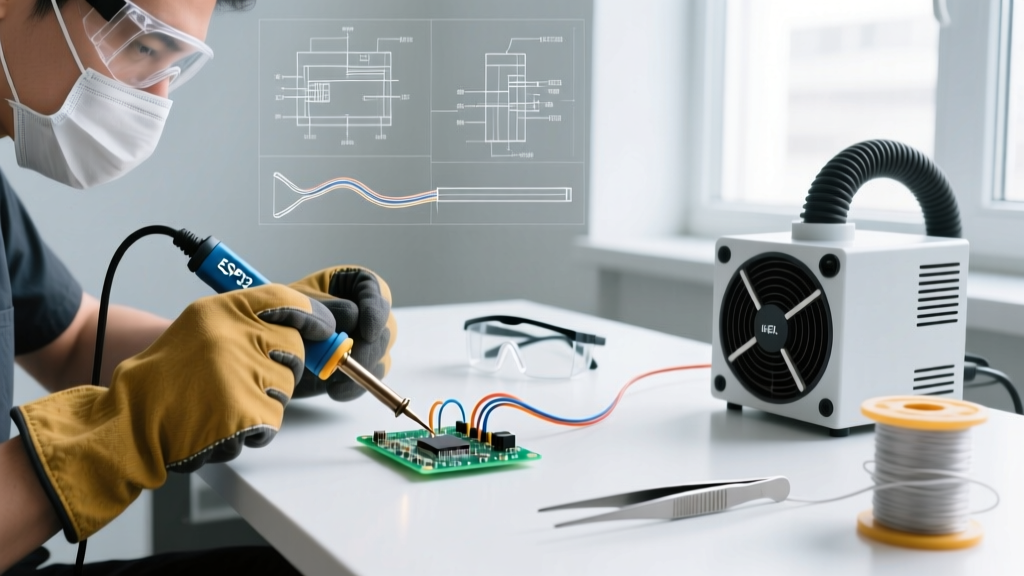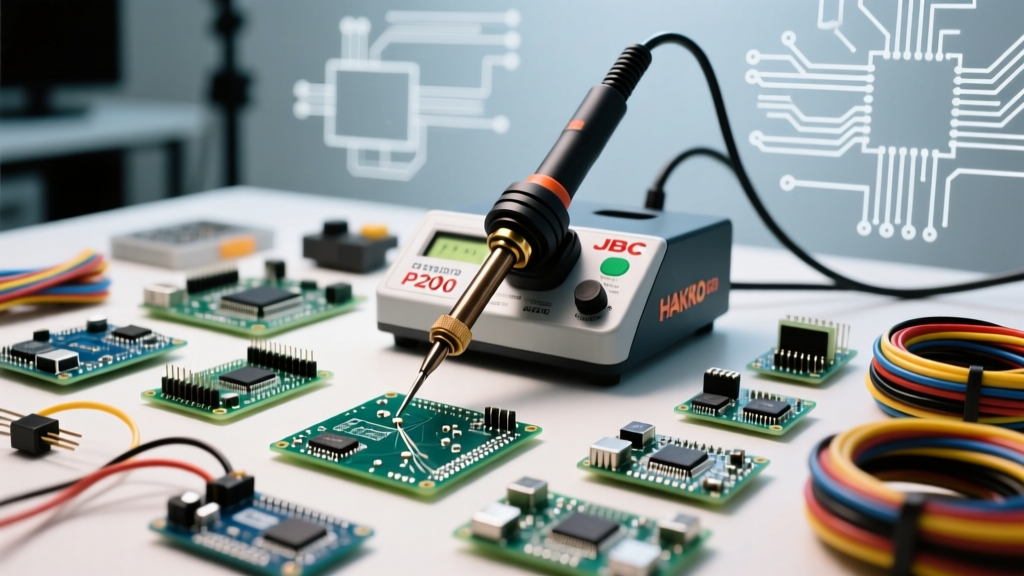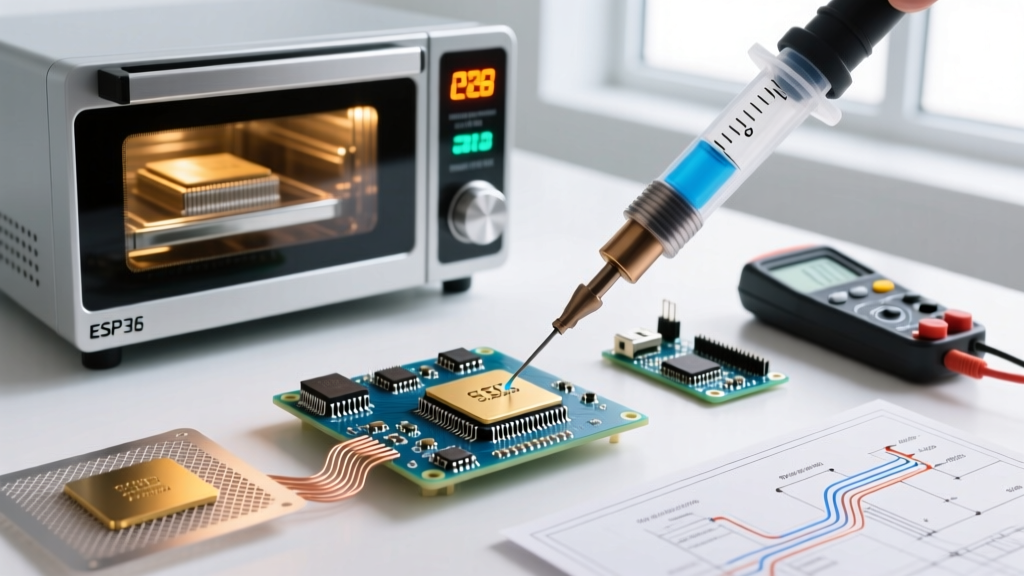

The State of SMT Soldering in 2026
Surface Mount Technology (SMT) has transitioned from a specialized manufacturing process to a mainstream skill for advanced hobbyists, hardware startups, and rapid prototyping labs. As component sizes shrink to 01005 and 008004 packages become standard in high-density IoT devices, the margin for error in SMT soldering has virtually disappeared. To navigate the complex landscape of solder pastes, reflow profiles, and placement equipment, we convened a panel of three industry veterans to share their definitive 2026 buyer's guide and technique roundup.
Meet the Expert Panel
- Sarah Jenkins: IPC-A-610 Master Instructor and lead auditor for aerospace electronics assemblies.
- Dr. Aris Thorne: Senior SMT Process Engineer at a mid-volume EMS (Electronics Manufacturing Services) firm specializing in medical devices.
- Kenji Sato: Director of Rapid Prototyping Labs, overseeing low-volume NPI (New Product Introduction) runs.
Solder Paste Selection: The Lifeblood of SMT Soldering
The most critical purchasing decision in any SMT workflow is the solder paste. In 2026, lead-free SAC305 (96.5% Tin, 3.0% Silver, 0.5% Copper) remains the undisputed industry standard for commercial and medical boards, though Sn63Pb37 (Tin-Lead) is still heavily favored in prototyping and aerospace exemptions due to its lower melting point and superior wetting.
According to Dr. Thorne, matching the paste type (particle size) to your smallest component pitch is where most beginners fail. 'Using Type 3 paste on 0402 components is a guaranteed way to experience micro-bridging and solder beading,' Thorne explains. 'You must scale your powder mesh down as your aperture shrinks.'
2026 Solder Paste Comparison Matrix
| Paste Type | Particle Size (Mesh) | Ideal Applications | Typical Cost (500g Jar) | Expert Recommendation |
|---|---|---|---|---|
| Type 3 | 25 - 45 μm | 0805, 0603, SOIC, standard pitch QFP | $60 - $85 | Kester EP256 (SnPb) or Alpha OM338 |
| Type 4 | 20 - 38 μm | 0402, 0201, 0.5mm pitch QFN/BGA | $95 - $140 | Amtech NC-559-V2-TF (No-Clean) |
| Type 5 | 15 - 25 μm | 01005, 0.4mm pitch micro-BGA | $160 - $230 | Indium 8.9HF (Water Wash) |
Expert Tip from Sarah Jenkins: 'Never buy solder paste in large syringes if you are only doing small batches. Paste degrades over time, even when refrigerated at 0-10°C. Buy 35g syringes for Type 4 and 5 pastes to ensure the flux chemistry remains active. Always allow the syringe to acclimate to room temperature for at least 2 hours before opening to prevent moisture condensation, which causes catastrophic solder splatter during reflow.'
Reflow Showdown: Hotplates vs. Benchtop Ovens
Once the paste is printed and components are placed, the assembly must undergo reflow. The thermal profile dictates the reliability of the intermetallic compound (IMC) formation. We asked our experts to evaluate the three most common reflow methods for low-to-medium volume SMT soldering.
1. PID-Controlled Hotplates (e.g., PCBite, Whirlpool Mods)
Cost: $80 - $250
Best For: Ultra-fast prototyping, single-sided boards, makers.
The Verdict: Kenji Sato relies on custom PID-controlled hotplates for rapid NPI. 'A hotplate heats the PCB from the bottom up, meaning the board itself acts as the thermal mass. It is incredibly forgiving for heavy ground planes. However, it is strictly for single-sided SMT. If you have components on the bottom, they will fall off or shift as the solder melts.'
2. Entry-Level Reflow Ovens (e.g., T-962A)
Cost: $200 - $350
Best For: Hobbyists, double-sided boards, small batch runs.
The Verdict: The T-962A is infamous in the maker community. Out of the box, its temperature sensors are notoriously inaccurate. 'If you buy a T-962A in 2026, you must immediately flash it with custom open-source firmware and tape external K-type thermocouples directly to the PCB,' warns Dr. Thorne. 'Without a proper Ramp-Soak-Spike (RSS) profile, you will bake your flux before the solder reaches its liquidus state, resulting in cold joints and massive voiding in BTCs (Bottom Terminated Components).'
3. Professional Benchtop Ovens (e.g., NeoDen T1830, Heller 1809)
Cost: $2,800 - $6,500
Best For: Commercial prototyping, medical/aerospace NPI, high-yield requirements.
The Verdict: For labs requiring IPC Class 3 compliance, benchtop convection ovens are mandatory. They offer multiple independent heating zones, allowing for precise Ramp-to-Peak (RTP) profiles that minimize head-in-pillow (HiP) defects on BGAs.
Stencil Design: Aperture Reduction and Thickness
You cannot achieve reliable SMT soldering without a high-quality stainless steel stencil. While laser-cut polyimide (Kapton) stencils ($15-$30) are fine for 0805 passives, they lack the tension and thickness control required for fine-pitch ICs.
- 4 Mil (0.10mm) Thickness: The absolute standard for modern boards featuring 0402 components, QFNs, and 0.5mm pitch ICs. Prevents excessive paste volume that leads to bridging.
- 5 Mil (0.127mm) Thickness: Ideal for older designs, large power components, and heavy through-hole paste-in-hole (PIH) applications.
Sarah Jenkins emphasizes the importance of aperture reduction. 'When designing your stencil gerbers, you must shrink the pad apertures by 10% to 20% for the home plate (the pad where the component sits). If the aperture matches the PCB pad exactly, the paste will spread during reflow, creating solder beads that can short adjacent vias. Furthermore, use an electropolished or nano-coated stencil for Type 4 and Type 5 pastes to ensure the paste releases cleanly from the microscopic aperture walls.'
Troubleshooting Common SMT Defects (IPC-A-610 Standards)
Even with premium gear, process variations occur. Our experts break down the most common SMT soldering failures and their exact remedies, referencing the IPC Standards Documentation for defect classification.
Tombstoning (Drawbridging)
The Symptom: A two-terminal component (like a capacitor) stands up on one end during reflow.
The Root Cause: Uneven wetting forces. One pad reaches the solder's liquidus temperature before the other, or one pad has a larger thermal mass (e.g., connected to a ground plane via multiple vias), drawing heat away and delaying melting.
The Fix: Implement a longer 'soak' phase in your reflow profile (typically 60-90 seconds at 150°C-175°C) to allow the entire PCB to reach thermal equilibrium before the spike to peak temperature (235°C-245°C for SAC305).
Head-in-Pillow (HiP) on BGAs
The Symptom: The BGA solder ball and the PCB paste deposit melt, but fail to coalesce into a single joint, leaving a weak mechanical connection.
The Root Cause: Flux exhaustion or PCB warpage during the high-temperature spike.
The Fix: Switch to a solder paste with a more robust, high-temperature flux chemistry, or utilize a Ramp-to-Peak (RTP) profile that eliminates the soak zone, preserving the flux's activity for the final liquidus phase. For deep dives into BGA warpage mitigation, consult the NASA Workmanship Training archives, which detail underfill and fixture clamping techniques.
Solder Bridging (Shorts)
The Symptom: Paste flows between adjacent pins on QFP or QFN packages.
The Root Cause: Excessive paste volume (stencil too thick) or paste smearing during the printing process.
The Fix: Reduce stencil thickness to 4 mil. Ensure your squeegee pressure is set correctly—too much pressure will scoop paste out of the apertures and smear it across the mask. The squeegee should just barely wipe the stencil clean.
Final Verdict: Building Your 2026 SMT Lab
The barrier to entry for professional-grade SMT soldering has never been lower, but the knowledge requirement has never been higher. For a startup or advanced lab in 2026, the optimal entry-level configuration includes:
- Stencil: 4-mil framed stainless steel stencil with nano-coating (~$85 via PCBWay or JLCPCB).
- Paste: Amtech NC-559-V2-TF Type 4 in a 35g syringe (~$45).
- Placement: Manual placement using high-precision carbon fiber tweezers (e.g., Vetus ESD-15) and a stereo microscope, upgrading to a NeoDen YY1 desktop pick-and-place ($3,500) only when volume demands it.
- Reflow: A PID-controlled hotplate for single-sided prototypes, scaling to a NeoDen T1830 benchtop oven for double-sided, high-reliability runs.
By aligning your equipment purchases with the physics of solder metallurgy and adhering to strict thermal profiling, you can achieve IPC Class 2 and Class 3 yields right on your workbench. For further reading on advanced thermal profiling and flux chemistry, the Surface Mount Technology Association (SMTA) offers extensive technical papers and webinar archives that remain invaluable resources for process engineers.