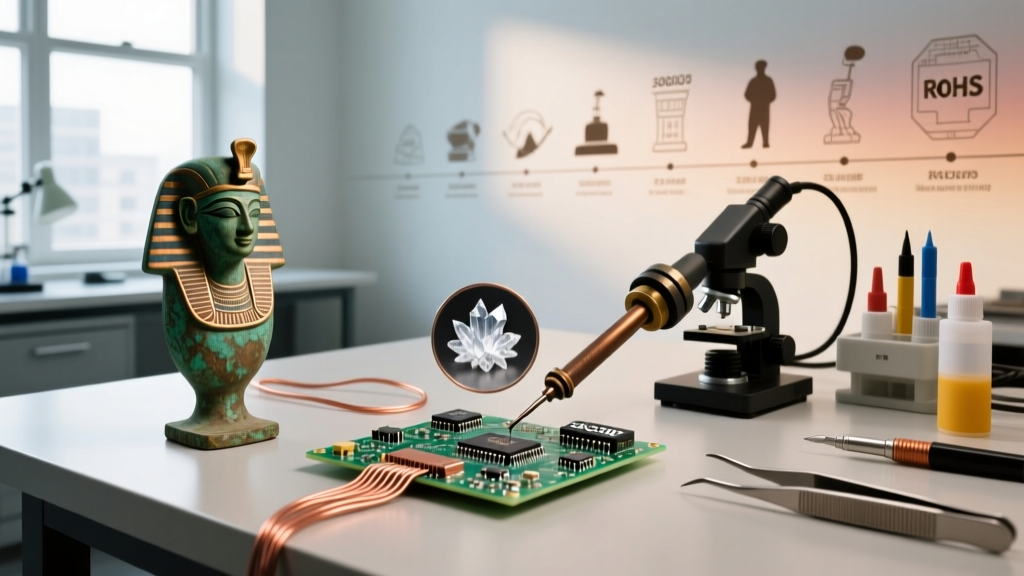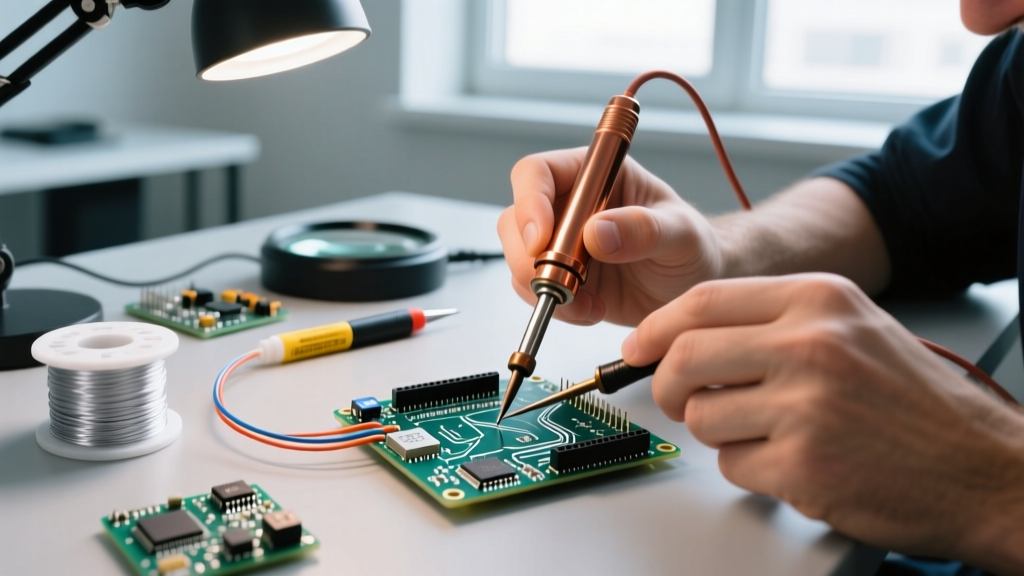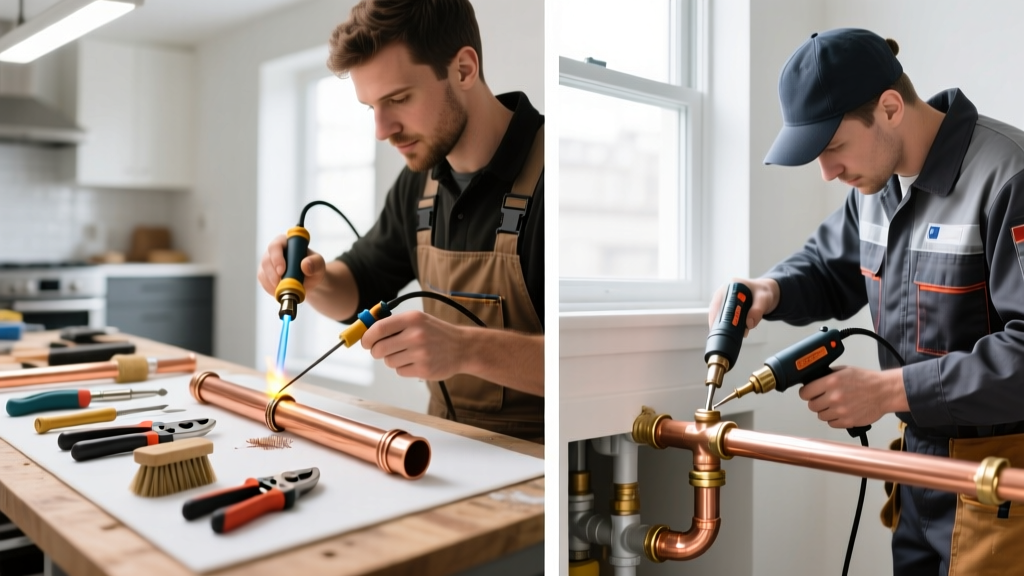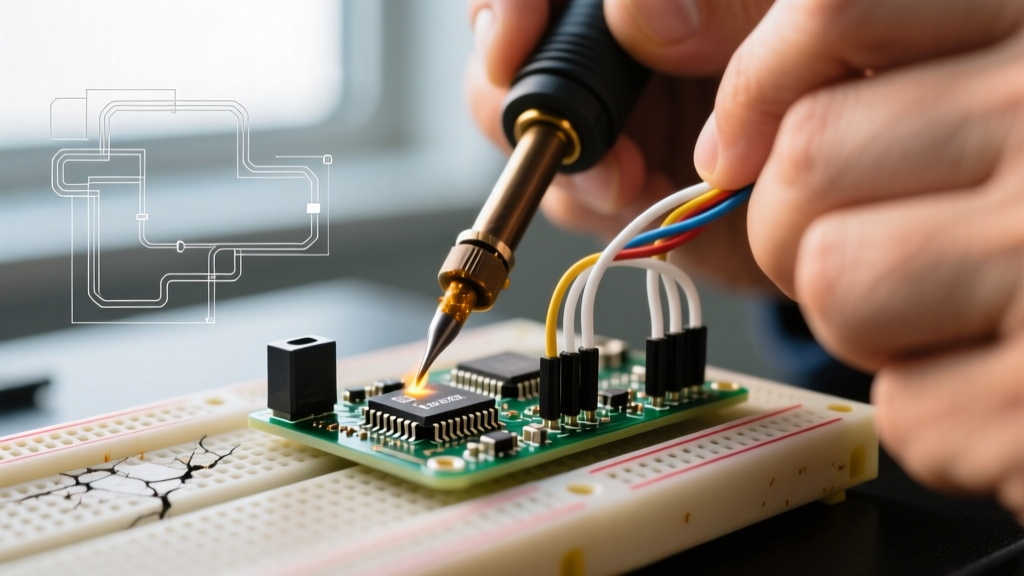

The Metallurgical Challenge of Brass
Brass—an alloy primarily composed of copper (60-70%) and zinc (30-40%)—has been a cornerstone of plumbing, electrical terminals, and decorative hardware for centuries. However, achieving a reliable joint via brass to brass soldering has historically plagued metallurgists and tradesmen alike. The core issue lies in zinc. While copper is highly receptive to tin-based solders, zinc oxidizes rapidly when heated, forming a stubborn zinc oxide layer that repels molten solder. Furthermore, if temperatures exceed 907°C (1665°F), the zinc literally vaporizes, causing porosity and toxic fuming (dezincification). Therefore, the evolution of brass soldering is fundamentally a history of managing zinc oxidation and thermal mass without crossing into destructive brazing temperatures.
Era 1: The Acid and Flame Period (Pre-1950)
In the late 19th and early 20th centuries, brass to brass soldering relied on brute force. Artisans used open-flame blowtorches and rudimentary lead-tin (Pb-Sn) alloys, typically in a 60/40 or 50/50 ratio. To combat the aggressive zinc oxide layer, they utilized highly corrosive fluxes like "killed spirits" (zinc chloride dissolved in hydrochloric acid) or sal ammoniac.
While effective at stripping oxides, these early acid fluxes left behind hygroscopic salts that continued to corrode the brass joint long after the work was finished. Joints in early automotive radiators and plumbing fixtures frequently failed due to intergranular corrosion, a direct result of inadequate post-solder cleaning and the harsh chemical nature of the fluxes of the era.
Era 2: Silver-Bearing Alloys and Electric Heat (1950–1990)
The mid-century brought two massive leaps forward: the electrification of soldering tools and the introduction of silver-bearing soft solders. The advent of thermostatically controlled electric irons allowed technicians to hold temperatures precisely in the 260°C–315°C (500°F–600°F) range, drastically reducing the risk of zinc vaporization.
More importantly, metallurgists developed tin-silver and tin-lead-silver alloys. Adding 2% to 8% silver to the solder matrix fundamentally changed the fluid dynamics and shear strength of the joint on brass substrates. Silver acts as a transitional wetting agent, bridging the gap between the tin and the copper-zinc matrix. Products like Harris Stay-Brite became industry standards, offering capillary action that rivaled high-temperature brazing but at soft-solder temperatures.
Expert Insight: According to historical metallurgical data from the Copper Development Association, the addition of silver to tin-based solders reduces the intermetallic compound (IMC) growth rate at the brass boundary, resulting in a joint that maintains its mechanical integrity under thermal cycling far better than pure tin-lead.
Era 3: Lead-Free Mandates and Advanced Fluxes (1990–2026)
The global push for RoHS compliance in the early 2000s forced the elimination of lead, birthing the SAC (Tin-Silver-Copper) alloy family. While SAC305 (96.5% Sn, 3.0% Ag, 0.5% Cu) became the electronics standard, it proved problematic for heavy brass to brass soldering due to its higher melting point (217°C/423°F) and poor wetting on un-plated brass.
By 2026, the industry has pivoted toward specialized low-temperature, silver-doped, lead-free alloys paired with advanced water-soluble organic acid (OA) fluxes. Modern fluxes utilize synthetic activators that target zinc oxide specifically without the corrosive aftermath of legacy zinc chloride. Furthermore, the rise of ultrasonic soldering irons in the 2020s has introduced a method where acoustic cavitation physically shatters the oxide layer in the molten solder pool, allowing for flux-free brass joining in highly sensitive aerospace and medical applications.
Comparative Matrix: Evolution of Brass Soldering Materials
| Era | Typical Alloy Composition | Flux Technology | Melting Range | Joint Shear Strength (Brass) |
|---|---|---|---|---|
| Pre-1950 | 60Sn / 40Pb | Zinc Chloride (Killed Spirits) | 183°C - 190°C | ~4,500 PSI |
| 1950–1990 | 95Sn / 5Ag or 62Sn/36Pb/2Ag | Mild Organic Acid / Rosin | 224°C - 230°C | ~9,000 PSI |
| Modern (2026) | 92Sn / 8Ag (Lead-Free) | Synthetic Water-Soluble OA | 280°C - 290°C | ~11,500 PSI |
| Ultrasonic (Niche) | 97Sn / 3Ag | None (Acoustic Cavitation) | 221°C - 230°C | ~10,000 PSI |
Modern 2026 Execution: Step-by-Step Brass to Brass Soldering
For modern DIYers, electricians, and HVAC technicians, executing a flawless brass to brass solder joint requires respecting the thermal mass of the material and utilizing the correct 2026-era consumables. Below is the definitive, actionable protocol for heavy-gauge brass components (e.g., 1/4" to 1/2" thick terminal lugs or plumbing fittings).
Required Tooling and Consumables
- Soldering Station: Weller WE1010NA (70W) or Hakko FX-951. High wattage is mandatory to prevent thermal stalling when the iron tip contacts the heat-sinking brass.
- Tip Geometry: Chisel tip (minimum 6mm width, such as the Weller ETH or Hakko T18-D6) to maximize surface area contact.
- Alloy: Harris Stay-Brite 8 (8% Silver, 92% Tin). As of early 2026, expect to pay $55–$65 for a 1/2 lb spool. The silver content is non-negotiable for structural brass joints.
- Flux: Superior Flux #30 (Water-Soluble) or Harris Stay-Clean Liquid Flux. Apply via acid brush.
- Prep: 120-grit aluminum oxide sandpaper and 99% isopropyl alcohol.
Execution and Thermal Management
- Mechanical Prep: Sand both brass mating surfaces to bright metal. Brass oxidizes within minutes of sanding, so proceed immediately to the next step.
- Chemical Prep: Wipe with isopropyl alcohol, then apply a liberal coat of Superior Flux #30 to both surfaces. The flux will begin to bubble and turn amber as it reacts with microscopic oxides.
- Station Settings: Set your iron to 380°C (716°F). While the solder melts at ~280°C, the high thermal conductivity of brass requires a massive temperature delta to transfer heat into the joint core before the flux burns off.
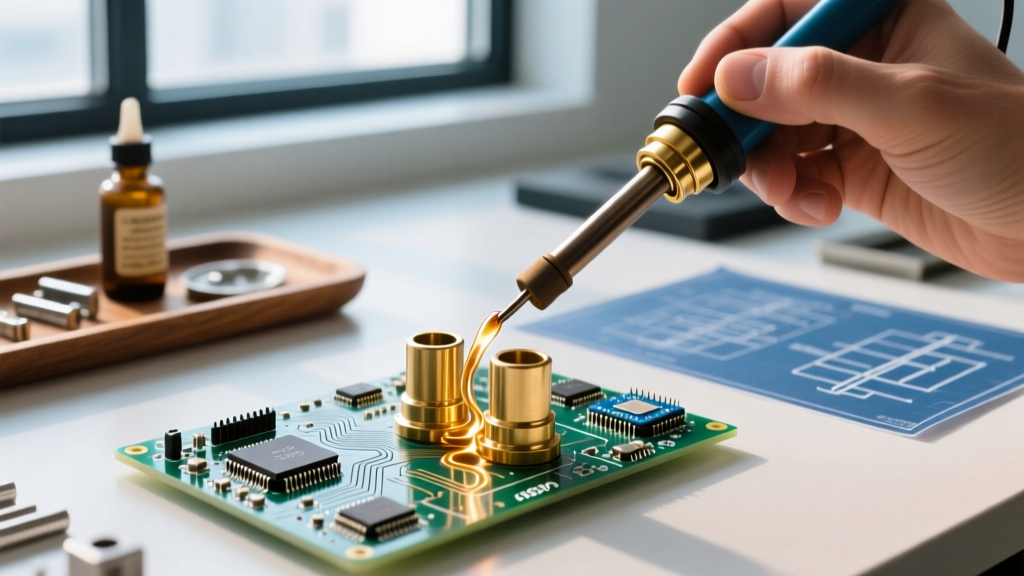
- Heat Application: Apply the flat of the chisel tip to the thickest part of the brass joint. Do not apply solder to the iron tip and carry it to the joint; this will result in a cold, oxidized blob. Heat the brass for 4–8 seconds until the flux sizzles violently.
- Solder Feeding: Touch the Stay-Brite 8 wire to the brass opposite the iron tip. If the brass is at temperature, capillary action will instantly draw the silver-bearing solder through the joint seam.
- Cooling and Cleaning: Remove heat and let the joint cool naturally. Do not quench with water, as thermal shock can crack the brittle intermetallic layer. Once cool, scrub with a wet brass-bristle brush to neutralize and remove the water-soluble flux residue.
Edge Cases and Failure Modes
Even with modern alloys, specific failure modes persist in brass to brass soldering:
- Zinc Fuming (Overheating): If you attempt to use an oxy-acetylene torch for what should be a soft-solder joint, the brass will glow red and emit white smoke. This is zinc vaporizing. The resulting joint will be porous and structurally compromised. Always use localized electric heat or precise induction heaters for soft soldering.
- Flux Inclusions: When soldering overlapping brass sheets, failing to allow the flux to outgas before the solder melts will trap corrosive salts inside the joint, leading to internal blistering over time.
- Dezincification Corrosion: In marine or high-humidity environments, using a non-silver, high-tin alloy without proper post-cleaning can lead to selective leaching of the zinc from the brass substrate immediately adjacent to the solder joint, eventually causing the brass to crumble.
By understanding the historical pitfalls of brass metallurgy and leveraging modern silver-doped alloys alongside precision temperature control, today's fabricators can achieve joints that rival the base metal in both strength and longevity. For further technical specifications on copper-zinc alloy joining parameters, refer to the guidelines published by the American Welding Society.