
The In-House vs. Outsourced Soldering Dilemma
Deciding whether to keep PCB assembly and rework in-house or outsource to professional soldering services is one of the most critical operational choices an electronics hardware company can make. In 2026, the landscape of electronics manufacturing has shifted dramatically. Component miniaturization (with 01005 imperial packages and 0.25mm pitch micro-BGAs becoming standard) and strict reliability requirements have pushed the limits of manual soldering and budget-friendly benchtop equipment.
This decision framework is designed for hardware engineers, procurement managers, and DIY-to-commercial transitioners. It moves beyond generic advice, providing a quantitative and qualitative matrix to determine exactly when professional soldering services yield a higher return on investment (ROI) compared to internal CapEx deployments.
Core Decision Matrix: Volume, Pitch, and Compliance
The choice to outsource is rarely binary. It depends on the intersection of production volume, component pitch, and the required IPC compliance class. Use the matrix below to identify your primary operational quadrant.
| Parameter | In-House / DIY Assembly | Professional Soldering Services |
|---|---|---|
| Volume | 1 to 50 boards (Prototyping) | 50 to 10,000+ boards (Pilot to Mass) |
| Component Pitch | ≥ 0.5mm pitch QFPs, standard SMT | ≤ 0.4mm pitch BGAs, 01005 passives |
| Inspection Req. | Visual / Basic Magnification | Automated Optical (AOI) & 3D X-Ray |
| IPC Standard | Class 1 (General) or Class 2 (Dedicated) | Class 2 or Class 3 (High Reliability) |
| Turnaround | Immediate (dependent on engineer time) | 3 to 14 days (standard expedited queues) |
Scenario Analysis: When to Pull the Trigger on Outsourcing
Scenario A: High-Mix, Low-Volume (HMLV) Prototyping
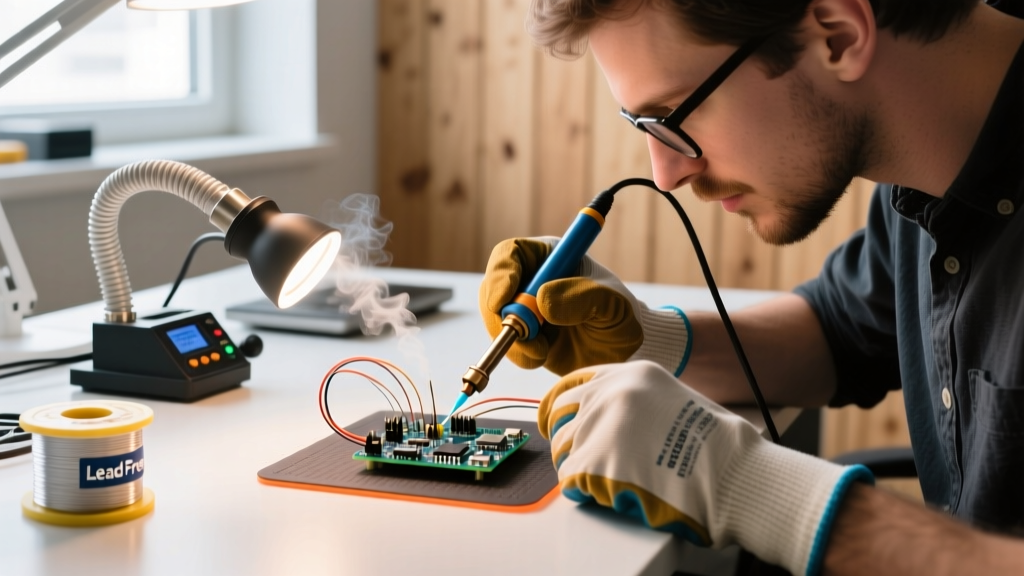
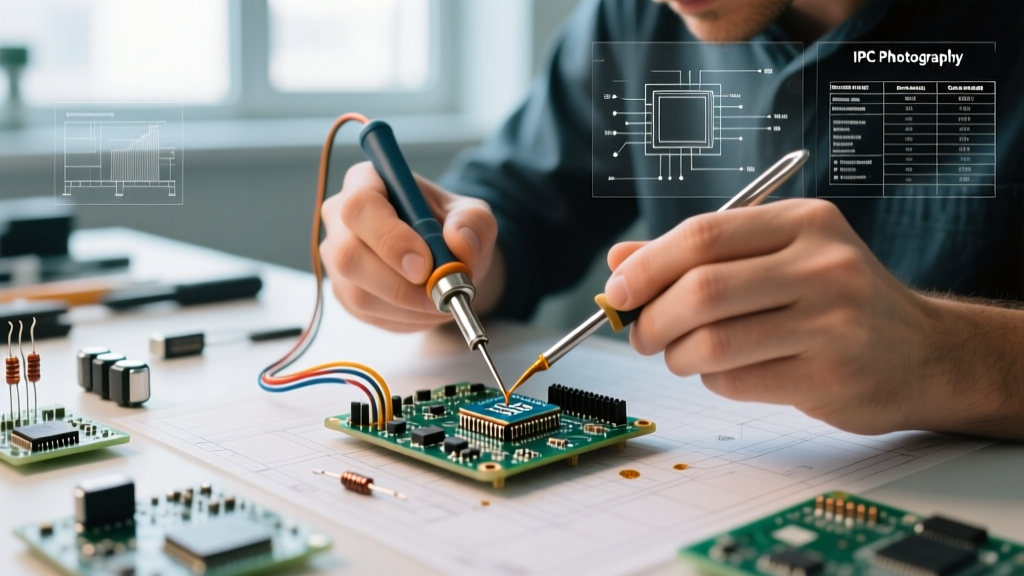
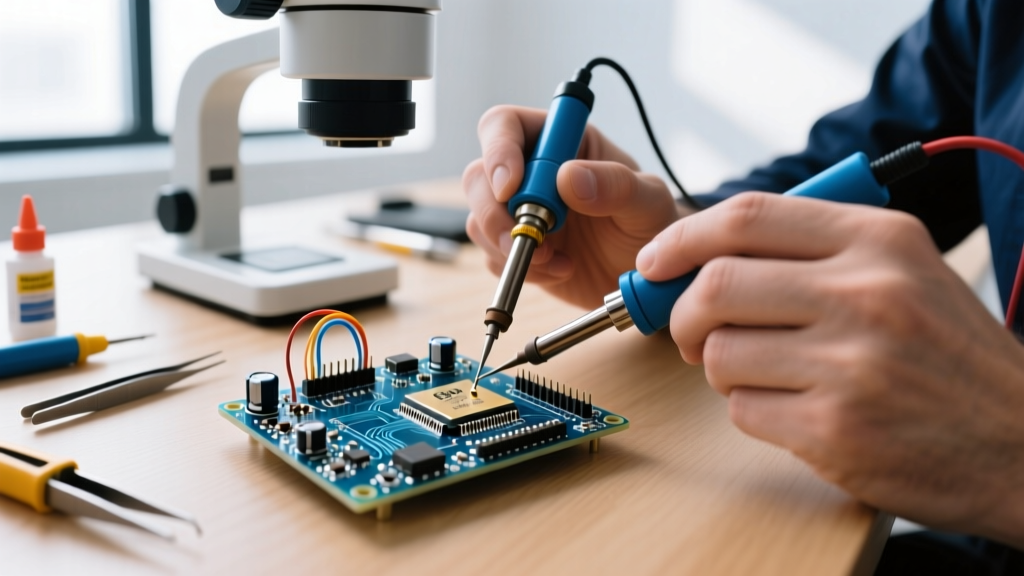
If you are iterating on a design and producing 10 to 30 boards per week with a mix of through-hole and standard surface-mount components (down to 0603 metric), in-house soldering remains viable. A well-equipped lab with a Hakko FX-951 or JBC CD-2BQE station, paired with a Quick 861DW hot air rework station, represents a CapEx of roughly $1,500. At this stage, the overhead of managing external soldering services—such as generating centroid files, sourcing stencils, and managing shipping logistics—outweighs the per-board cost savings.
Scenario B: Scaling to Pilot Production (50 - 500 Boards)
Once you cross the 50-board threshold, manual soldering becomes a severe bottleneck. An engineer spending 45 minutes hand-soldering a 200-joint board is burning high-value R&D hours. Professional PCBA (Printed Circuit Board Assembly) services charge setup fees (typically $150 to $300) and stencil costs ($50 to $120), but the per-joint cost for automated SMT placement and reflow drops to $0.01 - $0.03. At 100 boards, the break-even point heavily favors outsourced soldering services, freeing your engineering team to focus on firmware and system integration.
Scenario C: Specialized BGA Rework and Micro-Pitch Assembly
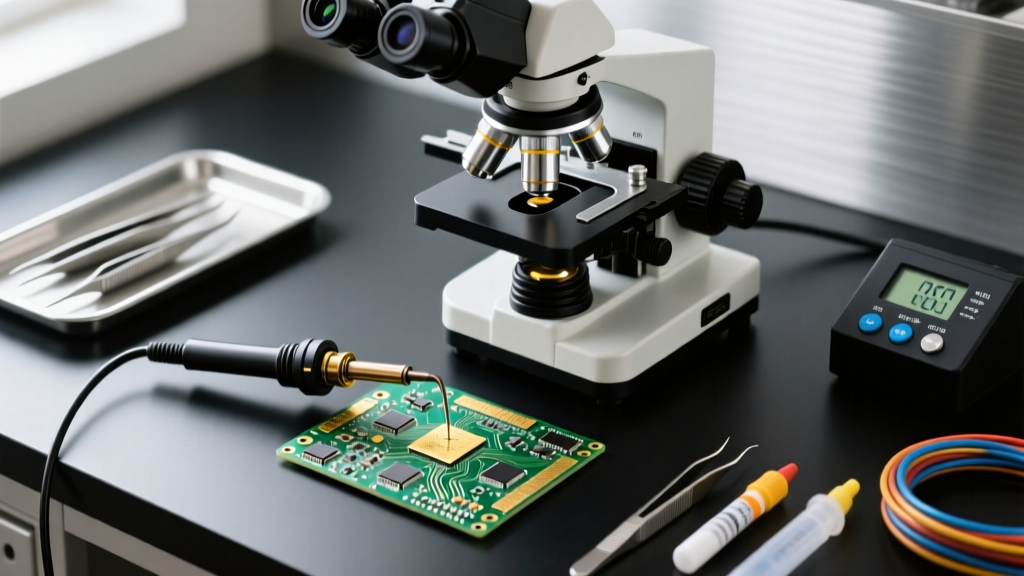
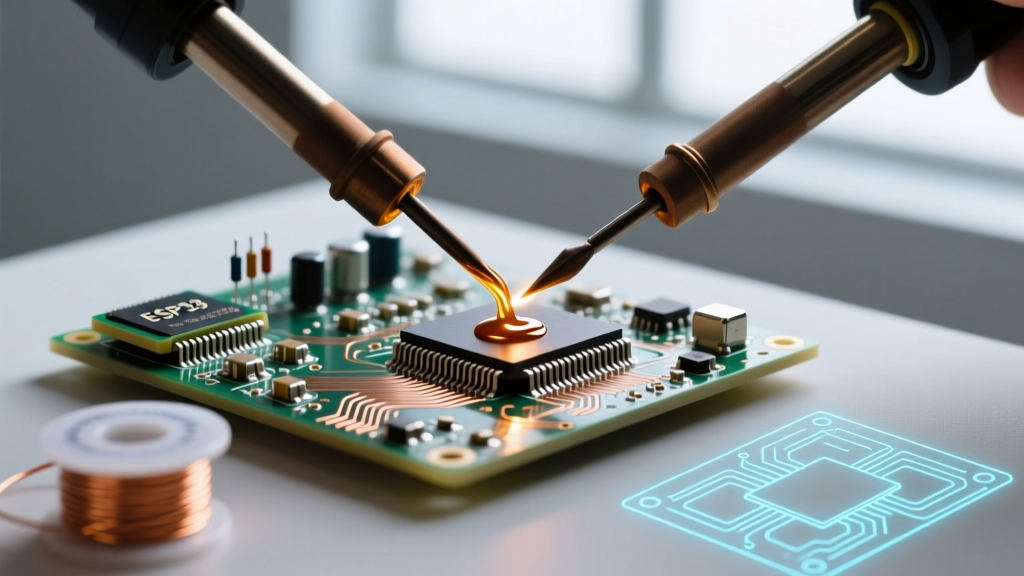
This is the most definitive trigger for outsourcing. If your design incorporates Ball Grid Arrays (BGAs) with a pitch of 0.4mm or smaller, or requires underfill and X-ray inspection, in-house assembly is practically unfeasible without massive capital. According to the Surface Mount Technology Association (SMTA), reliable 0.4mm pitch BGA placement requires closed-loop vision alignment systems and precision reflow profiling that budget equipment simply cannot achieve.
Financial Breakdown: CapEx vs. OpEx in 2026
Let us examine the hard numbers of bringing advanced soldering capabilities in-house versus utilizing a professional BGA rework and assembly service.
- In-House BGA Rework Station: A professional-grade machine like the Finetech Fineplacer or Jovy Systems JV-20 costs between $15,000 and $45,000. Add $8,000 for a high-resolution 3D X-ray inspection system (e.g., Nikon XT V 160) required to verify internal solder joint voiding, and your initial CapEx exceeds $50,000.
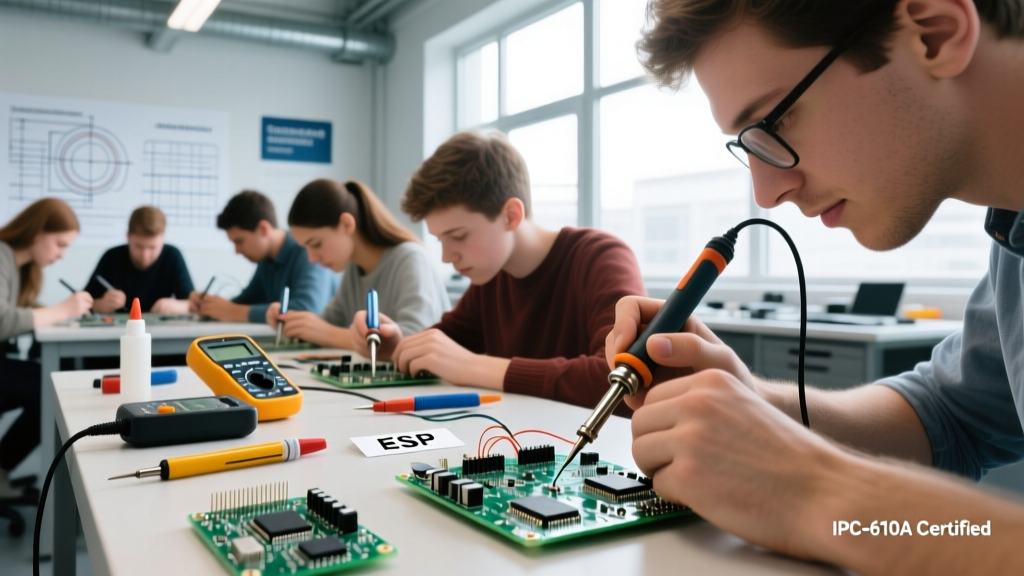
- Consumables & Training: BGA stencils ($150 each), specialized flux (e.g., Indium TACFlux), and nitrogen generators ($4,000) add to the ongoing OpEx. Furthermore, certifying an operator to IPC J-STD-001 standards costs roughly $1,200 per employee.
- Outsourced Service Costs: Professional soldering services typically charge $75 to $150 per BGA rework, depending on the pitch and whether underfill removal is required. You would need to process over 400 complex BGA reworks just to break even on the cost of a mid-tier in-house rework station, not including the X-ray equipment.
Expert Insight: The hidden cost of in-house BGA rework is the 'popcorn effect.' If your facility lacks proper moisture barrier bags (MBBs) and a dedicated baking oven to manage Moisture Sensitivity Levels (MSL), trapped moisture in IC packages will vaporize during reflow, destroying the component and the PCB pads. Professional services bake MSL 3 and 4 components at 125°C for up to 24 hours prior to reflow—a step frequently skipped in under-equipped labs.
Navigating Compliance and Quality Standards
When your hardware enters regulated markets (medical, aerospace, automotive), the decision framework shifts from pure economics to compliance. Professional soldering services are audited to IPC-A-610 Class 3 standards, which mandate strict criteria for solder fillet wetting, cleanliness, and voiding percentages.
For instance, in aerospace applications, BGA solder joint voiding must often be kept below 10%, whereas commercial Class 2 allows up to 25%. Achieving sub-10% voiding requires vacuum reflow ovens or highly tuned nitrogen-atmosphere convection profiles—capabilities that define top-tier professional soldering services but are entirely absent from standard in-house setups.
Step-by-Step Evaluation Checklist
Before signing a contract with a PCBA house or rework specialist, run your project through this 5-point evaluation framework:
- Audit the BOM for MSL Ratings: Identify all components with an MSL of 3 or higher. Ensure the service provider has documented baking and dry-box storage protocols.
- Verify X-Ray Capabilities: If your board has bottom-terminated components (BTCs) like QFNs or BGAs, require sample X-ray images showing voiding percentages and solder bridging checks.
- Assess Stencil Design Rules: A good service will review your Gerber files and suggest step-down stencil thicknesses (e.g., 3 mil vs 4 mil) to prevent solder bridging on 0.4mm pitch ICs.
- Request a First Article Inspection (FAI) Report: For production runs, mandate an FAI that includes dimensional checks, ICT (In-Circuit Testing) results, and functional testing data.
- Clarify Rework Liability: Ensure the contract specifies who bears the cost if a board is damaged during a BGA rework procedure. Top-tier services carry liability insurance that covers the cost of the bare PCB and surrounding components.
Frequently Asked Questions
How do professional services handle lead-free vs. tin-lead profiles?
Reputable services maintain completely segregated production lines and solder pots for RoHS-compliant lead-free (SAC305) and tin-lead (Sn63/Pb37) processes to prevent cross-contamination, which can cause brittle intermetallic joints and catastrophic field failures.
Is it worth outsourcing cable harness soldering?
For simple wire-to-board connections, in-house is fine. However, for high-frequency RF coaxial cables or complex aerospace harnesses requiring precise shielding terminations and heat-shrink management, specialized cable assembly soldering services provide the necessary pull-test certification and continuity mapping that in-house teams struggle to document.