
The Hidden Chemical Hazards of Hand Soldering
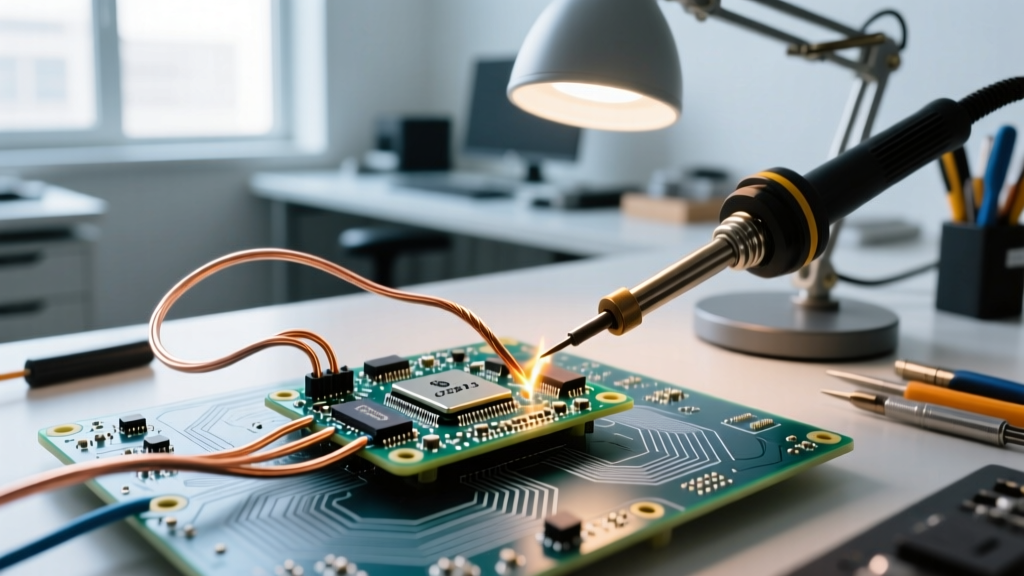
While modern electronics manufacturing relies heavily on automated reflow and wave soldering, hand soldering remains an indispensable skill for prototyping, rework, and low-volume production. However, the intimate nature of manual soldering exposes technicians to concentrated chemical and thermal hazards. According to the National Institute for Occupational Safety and Health (NIOSH), repeated inhalation of rosin-based (colophony) flux fumes is a leading cause of occupational asthma in the electronics assembly sector. The pyrolysis of flux at typical soldering temperatures releases volatile organic compounds (VOCs), aliphatic aldehydes, and hydrogen chloride gas, depending on the flux chemistry.
Furthermore, the transition to lead-free alloys like SAC305 (Tin-Silver-Copper) requires higher iron temperatures—typically between 350°C and 380°C (662°F to 716°F). These elevated temperatures accelerate flux volatilization, creating denser, more aggressive fume plumes than traditional Sn63/Pb37 (lead-tin) eutectic solder, which melts at a much lower 183°C (361°F).
Fume Extraction: Benchtop vs. Ducted Systems
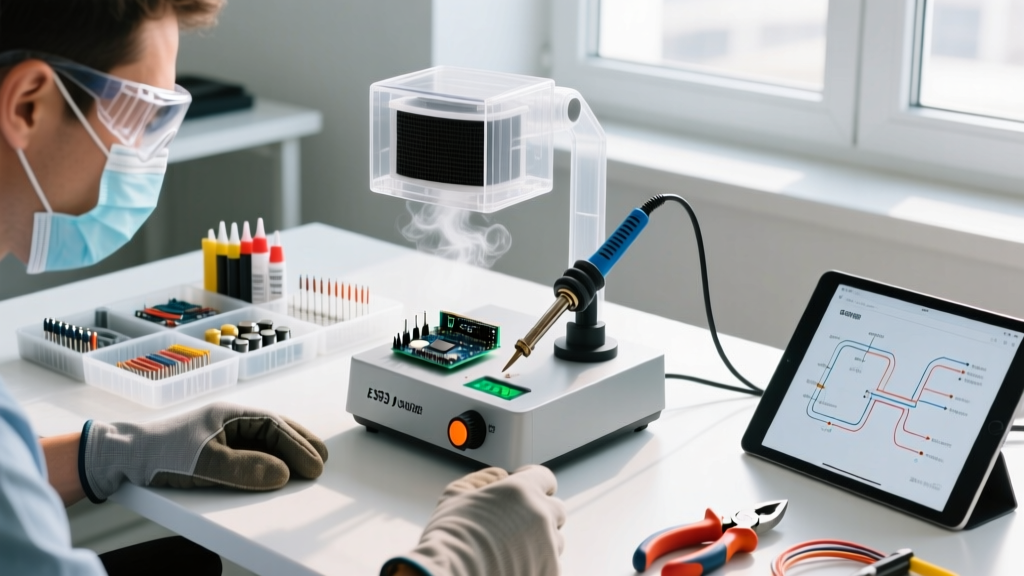
Relying on ambient room ventilation or a simple desk fan is a critical failure mode in workspace safety. Fans merely disperse harmful particulates and VOCs across the room, where they settle on workbenches and equipment. Effective hand soldering safety mandates source-capture fume extraction. In 2026, the market is divided into two primary categories: benchtop ambient filters and ducted source-capture systems.
1. Benchtop Ambient Filters (Entry-Level & Hobbyist)
Units like the Hakko FA-400 (approx. $165) or the Weller WFE 2D sit on the bench and pull air through a combination HEPA and activated carbon filter. While they capture large particulates and some odors, they suffer from a major limitation: carbon saturation. Once the activated carbon bed is saturated (usually within 3 to 6 months of daily use), VOCs experience 'breakthrough,' passing harmlessly through the filter while giving the user a false sense of security. These are acceptable for occasional hobbyist use but fail to meet industrial hygiene standards for 8-hour shifts.
2. Ducted Source-Capture Systems (Professional & IPC-Compliant)
For professional environments adhering to IPC-J-STD-001 safety and quality guidelines, articulated arm extraction is mandatory. Systems like the Pace Arm-Evac 150 (approx. $895) or the Metcal MX-AE10 (approx. $1,150) utilize a flexible capture arm positioned 2 to 4 inches from the solder joint. These units pull fumes directly into a multi-stage filtration bank (pre-filter, HEPA, and deep-bed gas filters) and exhaust clean air back into the room, or can be ducted outside. The capture velocity at the nozzle must exceed 100 feet per minute (FPM) to effectively overcome the thermal buoyancy of rising solder smoke.
| Extractor Model | Type | Airflow / Capture | Filter Tech | Est. 2026 Price |
|---|---|---|---|---|
| Hakko FA-400 | Benchtop Ambient | Low / Broad | Carbon + HEPA | $165 |
| Pace Arm-Evac 150 | Ducted Arm | High / Targeted | Multi-Stage Deep Bed | $895 |
| Metcal MX-AE10 | Ducted Arm | High / Targeted | HEPA + Gas Filter | $1,150 |
| BOFA AD Oracle 250 | Industrial Cabinet | Ultra-High / Multi-Station | Reverse Flow HEPA/Carbon | $2,800+ |
Thermal Safety: Managing 380°C Irons
A modern soldering station, such as the Weller WE1010NA or Hakko FX-951, can reach peak temperatures of 450°C (842°F) in seconds. Thermal burns are the most common acute injury in electronics labs, usually resulting from three specific failure modes:
- The 'Ghost' Grab: Reaching for a tool and accidentally brushing against the iron barrel, which lacks the thermal mass of the tip but still sits at 100°C+ near the heating element.
- Stand Toppling: Using lightweight, cheap iron stands that tip over when the cord is snagged. Always invest in heavy, weighted bases like the Weller WDH10T safety rest, which features a high-tension spring and a wide, low-center-of-gravity footprint.
- Solder Splatter: Moisture on a PCB pad or component lead flashing into steam upon contact with molten solder, causing micro-splatters of 220°C+ liquid metal. Always pre-bake moisture-sensitive PCBs before heavy rework.
Pro-Tip for Tip Longevity and Safety: Never leave a soldering iron idle at 380°C for more than 5 minutes. The flux inside the solder core will carbonize, creating a black, insulating crust on the tip. This forces the operator to press harder on the joint, increasing the risk of the iron slipping and burning the hand or damaging the PCB. Use the station's auto-sleep feature to drop the idle temperature to 150°C.
Lead Exposure: Ingestion vs. Inhalation
There is a pervasive myth that hand soldering with leaded wire (Sn63/Pb37) causes lead poisoning via inhalation. According to the Occupational Safety and Health Administration (OSHA), lead does not vaporize at soldering temperatures (lead's boiling point is 1,749°C). The primary vector for lead exposure in hand soldering is hand-to-mouth ingestion.
When you handle leaded solder wire, microscopic lead dust and flux residue transfer to your skin. If you eat, drink, or touch your face without washing your hands, you ingest the lead. To mitigate this:
- Wash with Cold Water First: Always wash hands with cold water and soap after handling leaded solder. Hot water opens the pores of your skin, potentially allowing lead dust to penetrate deeper into the epidermal layers.
- Ban Food and Drink: Enforce a strict zero-tolerance policy for beverages (especially coffee mugs) on the soldering workbench. Acidic drinks like coffee can leach lead dust off the rim of the mug if your hands contaminated the exterior.
- Use HEPA Vacuums for Cleanup: Never use compressed air to blow solder dross or clipped component leads off your desk. This aerosolizes lead particulates. Use a specialized ESD-safe HEPA vacuum, such as the Hakko 394, to capture debris.
Ergonomics and Visual Fatigue
Safety extends beyond burns and chemicals; long-term musculoskeletal and visual damage are severe risks in hand soldering. Staring at 0402 or 0201 imperial components (1.0mm x 0.5mm) under inadequate lighting leads to severe eye strain and cervical spine degradation.
Optical and Postural Interventions
- Lighting: Use high-CRI (Color Rendering Index > 90) LED ring lights with a color temperature of 5000K to 6000K. This mimics daylight and provides the highest contrast for inspecting solder fillets.
- Magnification: Ditch cheap plastic Fresnel lenses. Invest in an articulated stereo boom microscope like the Aven SPZV-50 or a high-quality illuminated magnifier lamp (e.g., Daylight D35108 Lumi). This allows you to maintain a neutral spine position rather than hunching over the board.
- ESD and Grip: Wear powder-free, ESD-safe nitrile gloves (e.g., Kimberly-Clark Purple Nitrile). Not only do they protect your skin from flux activators (which can cause contact dermatitis), but they also prevent oils from your skin from contaminating RF or high-impedance analog circuits.
Hand Soldering Safety & Compliance Matrix
Use the following matrix to audit your current workbench setup against professional safety standards.
| Hazard Category | Potential Injury / Failure | Required Mitigation / Gear | Avg. Cost (2026) |
|---|---|---|---|
| Flux Fumes (VOCs) | Occupational Asthma, Respiratory Irritation | Source-capture HEPA/Carbon Extractor | $800 - $1,200 |
| Thermal Contact | 2nd/3rd Degree Burns, PCB Scorching | Weighted Iron Rest, Silicone Mat (e.g., Hakko 599B) | $40 - $90 |
| Lead Ingestion | Heavy Metal Toxicity, Neurological Issues | Nitrile Gloves, Cold-water Handwashing, HEPA Vac | $25 - $150 |
| Visual Strain | Myopia, Chronic Cervical Pain | Stereo Boom Microscope, 5000K High-CRI Lamp | $150 - $900 |
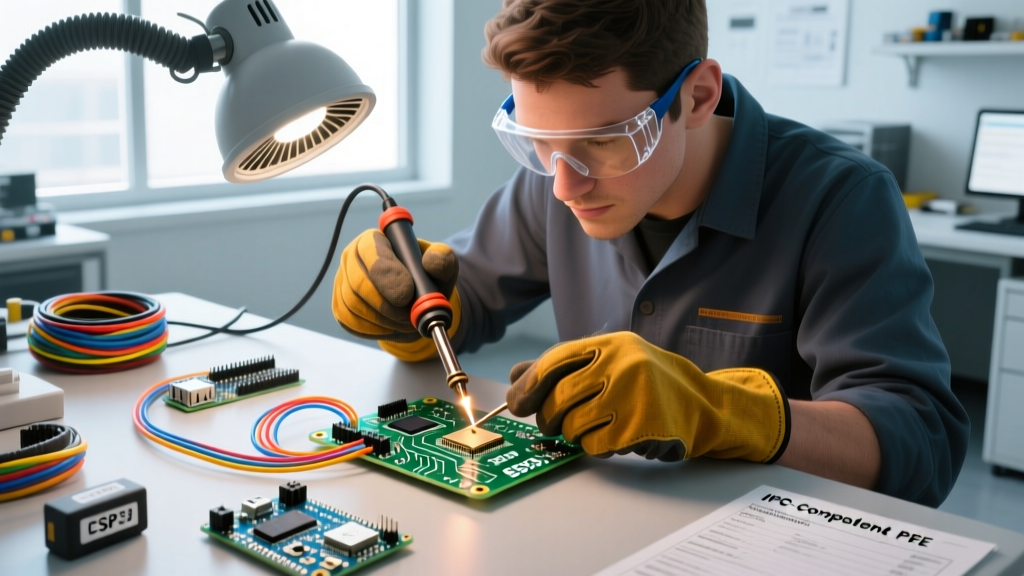
| Solder Splatter | Corneal Burns, Skin Blisters | ANSI Z87.1 Safety Glasses, Pre-baking PCBs | $15 - $30 |
Frequently Asked Questions
Can I just use a standard household fan to blow solder smoke away?
No. Blowing smoke away merely disperses rosin particulates and VOCs into the ambient room air, where they will eventually settle on your skin, clothes, and equipment. You must use a filter-based extraction system to actually capture and neutralize the chemical compounds.
How often should I replace the carbon filter in my fume extractor?
For a professional technician soldering 4-6 hours a day, the activated carbon filter should be replaced every 3 to 4 months. If you notice the distinct sweet or pine-like smell of rosin flux escaping the exhaust, the carbon bed is fully saturated and experiencing VOC breakthrough, requiring immediate replacement.
Is 'No-Clean' flux safe to breathe?
'No-Clean' refers to the fact that the residue left on the PCB after cooling is non-corrosive and electrically inert. It does not mean the fumes are safe to inhale. When heated to 350°C+, no-clean fluxes still off-gas volatile organic compounds and mild irritants. Always use fume extraction, regardless of the flux chemistry.