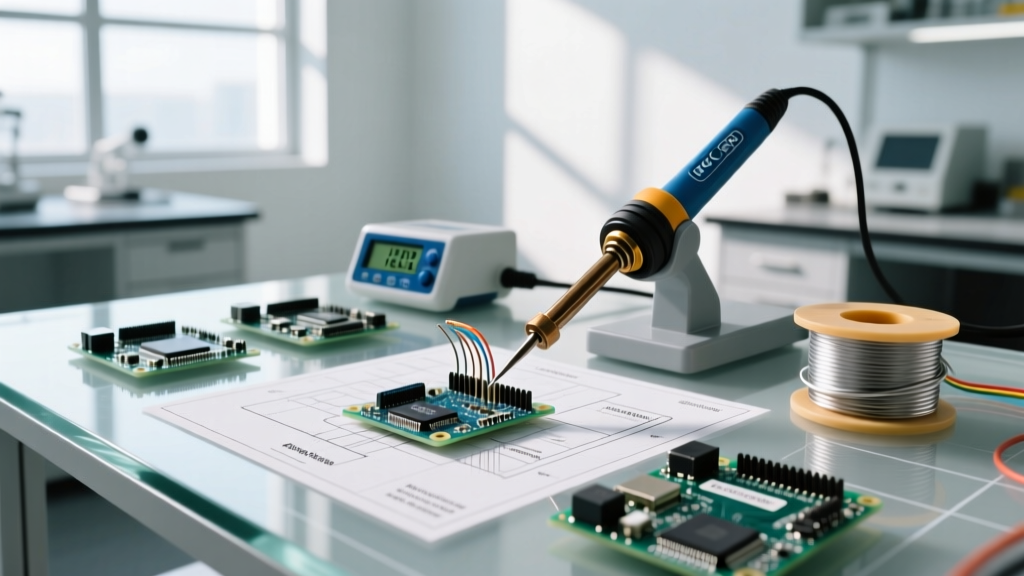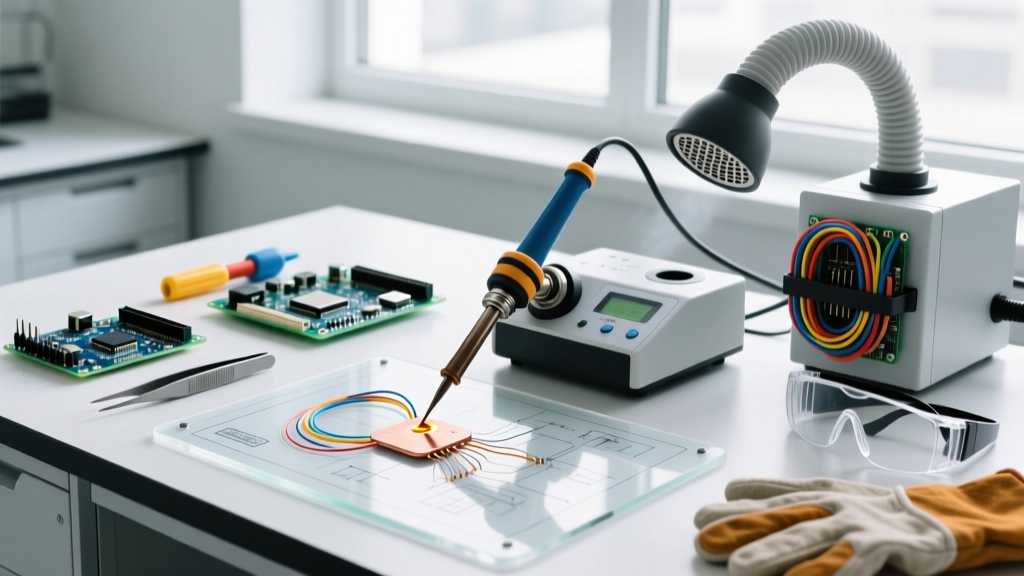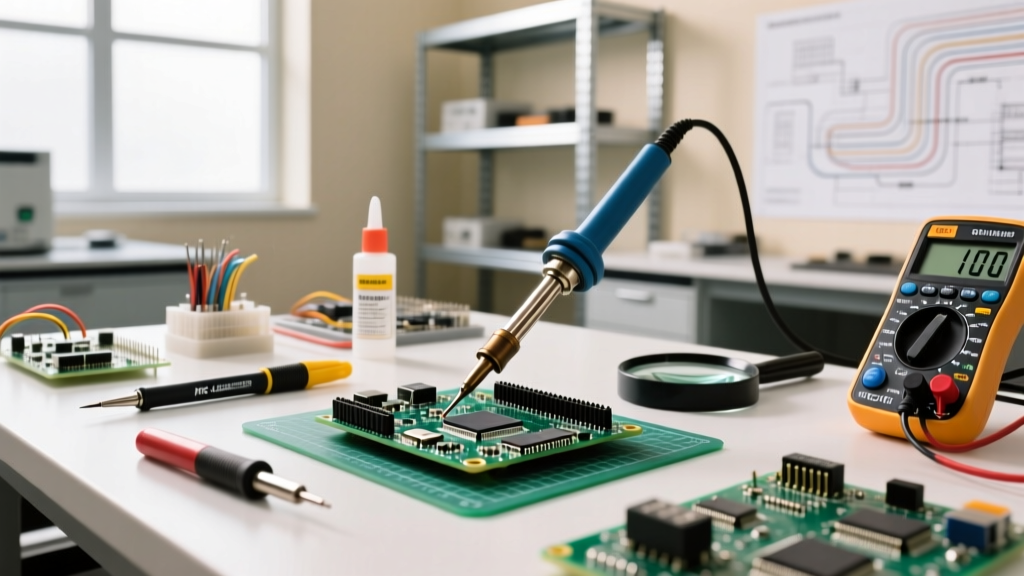

The Financial Reality of Electronic Component Solderability Testing in 2026
For electronics manufacturers, EMS providers, and high-volume DIY labs, skipping electronic component solderability testing is a financial gamble with compounding risks. As we navigate the 2026 supply chain landscape—characterized by extended shelf-life components, mixed metallurgy, and persistent counterfeit risks—the cost of poor quality (COPQ) has never been higher. A single batch of oxidized MLCCs or degraded QFN leads can cause catastrophic tombstoning or non-wetting on an SMT line, halting production and triggering expensive rework.
This comprehensive cost analysis breaks down the capital expenditure (CapEx), operational expenditure (OpEx), and hidden labor costs associated with solderability testing. Whether you are evaluating an in-house wetting balance setup or considering outsourced lab testing, this guide provides the exact financial frameworks needed to make an informed decision.
The Baseline: Quantifying the Cost of Poor Quality (COPQ)
Before analyzing the cost of testing equipment, we must establish the financial baseline of not testing. According to industry data tracked by the IPC standards body, solder-related defects account for over 40% of all PCB assembly rework.
- Line Stoppage Costs: An idled SMT line costs between $500 and $1,200 per hour in lost throughput and labor overhead.
- Rework Labor: Reworking a 0201 passive component costs roughly $15 in labor and materials. Reworking a 256-pin BGA with hidden solderability failures (like head-in-pillow) averages $120 to $180 per board.
- Field Failures: If a de-wetted joint passes AOI but fails in the field (common in high-vibration automotive or aerospace environments), warranty claims and recall logistics can easily exceed $50,000 per incident.
Expert Insight: Testing a reel of 5,000 capacitors via the dip-and-look method costs approximately $45 in labor and consumables. Catching a degraded batch before it hits the solder paste printer yields an immediate ROI of over 1,000% when factoring in avoided SMT downtime.
In-House Testing Equipment: CapEx and OpEx Breakdown
When bringing electronic component solderability testing in-house, facilities generally choose between three tiers of equipment. The right choice depends on your production volume and adherence to IPC J-STD-002G (the current benchmark for component lead solderability).
Tier 1: Visual 'Dip and Look' (Low Volume / Hobbyist)
This method involves dipping component leads into a static solder pot (typically SAC305 at 245°C) after applying an RMA flux, then inspecting the wetting under a stereo microscope.
- CapEx: $1,500 - $3,000 (Includes a temperature-controlled static solder pot like the Hakko FX-305 and a basic AmScope stereo microscope).
- OpEx: Low. Primarily solder bar consumption and flux.
- Limitation: Highly subjective. Fails to measure the speed of wetting, which is critical for high-speed SMT reflow profiles.
Tier 2: Meniscus / Wetting Balance Testers (Mid-to-High Volume)
The wetting balance method measures the actual force (in millinewtons) exerted on a component lead as it enters and exits a molten solder bath over time. This generates a precise wetting curve, measuring Time-to-Zero (T0) and Time-to-2/3-Fmax.
- CapEx: $14,000 - $18,500. The Metcal STS-250 remains the industry workhorse for this tier in 2026, offering automated dip speeds and integrated data logging for ISO compliance.
- OpEx: Moderate. Requires annual calibration ($800-$1,200), high-purity flux, and strict dross management.
- Advantage: Provides objective, quantifiable data required for aerospace, medical, and automotive IPC Class 3 assemblies.
Tier 3: Automated Robotic Solderability Systems (Enterprise)
Fully automated systems that handle tape-and-reel input, fluxing, dipping, optical inspection, and repacking without human intervention.
- CapEx: $45,000 - $85,000+ (e.g., advanced Nordson YES or PVA systems).
- OpEx: High maintenance, but drastically reduces QA labor costs.
2026 Equipment Cost Comparison Matrix
| Testing Tier | Primary Method | Est. CapEx (2026) | Annual OpEx | Best Suited For |
|---|---|---|---|---|
| Tier 1 (Manual) | Dip & Look / Globule | $1,500 - $3,000 | $2,000 | Prototyping, Hobbyists, Low-Mix |
| Tier 2 (Semi-Auto) | Wetting Balance (Meniscus) | $14,000 - $18,500 | $6,500 | EMS Providers, Medical, Auto |
| Tier 3 (Fully Auto) | Robotic Dip & Optical Scan | $45,000 - $85,000+ | $12,000+ | High-Volume Component Distributors |
The Hidden Costs: Consumables, Dross, and Labor
The purchase price of a wetting balance tester is only the beginning. To maintain IPC J-STD-002G compliance, your solder bath must remain free of metallic impurities (like copper leaching from component leads) and excessive oxidation.
Solder Bath Management and Dross
In 2026, SAC305 (Sn96.5/Ag3.0/Cu0.5) solder remains the standard for lead-free testing, costing approximately $45 to $55 per pound. A standard wetting balance solder pot holds 10 to 15 lbs of solder. When exposed to air at 245°C, SAC305 oxidizes rapidly, creating dross (a mixture of oxidized tin and trapped usable solder).
- Without Nitrogen Inerting: You may generate 0.5 lbs of dross per testing shift. At $50/lb, and factoring in the 80% usable solder trapped inside the dross, your effective material loss is roughly $200 per month.
- With Nitrogen Inerting: Adding a localized nitrogen shroud to the solder pot reduces dross generation by up to 90%, saving roughly $2,000 annually in solder costs, easily justifying the $3,500 CapEx of a localized N2 generator.
Flux and Cleaning Overheads
Testing requires a fresh, active flux to simulate production conditions. Using a standard ROL0 water-soluble or rosin-based flux (such as Alpha Metals NR330) costs about $80 per liter. However, the hidden cost is cleaning. Components tested for solderability must be cleaned of flux residue and re-tinned or discarded, as the test process compromises their original factory packaging. Budget $0.02 to $0.05 per component for post-test cleaning and repackaging labor.
Outsourcing vs. In-House: The Logistics Tax
Many mid-sized assembly houses opt to outsource electronic component solderability testing to ISO 17025-accredited third-party labs. While this eliminates CapEx, it introduces severe logistical risks.
According to supply chain analyses published on Circuit Insight, the average turnaround time for outsourced lot testing in 2026 is 5 to 9 business days. In a Just-In-Time (JIT) manufacturing environment, waiting a week for test results means your SMT lines must either pause or risk running unverified stock. If you run high-mix, low-volume production with frequent component changeovers, the 'logistics tax' of outsourcing will quickly eclipse the cost of purchasing a Tier 2 wetting balance system.
Edge Case: BGA and LGA Solderability Testing Costs
Standard dip-and-look or wetting balance methods are physically impossible for Bottom Termination Components (BTCs) like BGAs, LGAs, and QFNs. You cannot easily measure the wetting force of a solder sphere hidden beneath a silicon die.
Testing BGA solderability requires destructive cross-sectioning or advanced X-ray/CT scanning to check for oxidation and voiding potential.
- Destructive Cross-Sectioning: Outsourcing to a metallurgical lab costs $150 to $300 per sample, taking 48 hours.
- In-House 2D X-Ray: Systems like the Nikon XT V 160 cost upwards of $120,000.
Financial Strategy: Unless you are a dedicated semiconductor packaging facility, do not attempt to bring BGA solderability testing in-house. Rely on supplier Certificates of Compliance (CoC) and perform incoming moisture sensitivity level (MSL) baking and first-article reflow profiling instead.
Long-Term Storage and the Tin Whisker Threat
When evaluating the cost of testing, consider the long-term storage of components. The NASA Electronic Parts and Packaging (NEPP) program extensively documents the risks of matte-tin finishes, which can degrade solderability and grow tin whiskers over time. If your facility holds inventory for longer than 12 months, implementing a rolling solderability test schedule for aging stock is mandatory. The cost of testing 5% of your aging inventory annually is a fraction of the cost of scrapping a $10,000 backplane due to whisker-induced short circuits.
ROI Framework: When to Bring Testing In-House
Use this decision matrix to determine if purchasing a $15,000 wetting balance tester is financially viable for your operation in 2026:
- Calculate Monthly Outsourcing Costs: (Number of lots tested × $250 avg lab fee) + (Cost of SMT downtime waiting for results).
- Calculate Rework Costs: (Average monthly solder-defect rework hours × $65/hr burden rate).
- The Break-Even Point: If your combined Outsourcing + Rework costs exceed $1,200 per month, a Tier 2 in-house wetting balance system will pay for itself in under 14 months.
Frequently Asked Questions (FAQ)
Can I use my production selective soldering machine for dip-and-look testing?
While technically possible to dip a component into a selective soldering bath, it is highly discouraged. Production baths accumulate copper and iron impurities from PCB pads and fixtures. IPC J-STD-002G requires a pristine solder bath with strictly limited metallic contamination (e.g., Copper < 0.3%). Using a production bath will yield false failures due to poor wetting caused by bath contamination, not component degradation.
How often should I calibrate a wetting balance tester?
For ISO 9001 and AS9100 compliance, wetting balance equipment should be calibrated annually using certified NIST-traceable weights and force gauges. Expect to pay between $800 and $1,200 for third-party calibration services.
Does solderability testing damage the component?
Yes, the testing process is generally considered destructive to the component's original packaging and lead finish. The leads are exposed to flux and molten solder, altering their surface chemistry. Tested components must be used immediately in production or properly cleaned, re-tinned, and stored in nitrogen-purged dry cabinets.