
Beyond the Iron: Redefining What You Need for Safe Soldering
When beginners ask, "what do I need for soldering?", the conversation almost exclusively revolves around the heat source and the solder wire. While a reliable iron is critical, approaching your workspace from a professional safety perspective requires a fundamental shift in priorities. Soldering involves vaporizing chemical fluxes, handling molten metals at extreme temperatures, and manipulating sensitive electronics vulnerable to electrostatic discharge (ESD).
This comprehensive guide answers the question of what you need for soldering by focusing strictly on safety best practices, health preservation, and workspace integrity. We will bypass the generic advice and dive into the exact equipment specifications, industry standards, and real-world failure modes that separate a hazardous hobbyist desk from a professional, IPC-compliant soldering station.
1. The Core Heat Source: ESD-Safe and Temperature-Controlled
The most common mistake novices make is purchasing a cheap, ungrounded, unregulated soldering iron. These irons lack thermal feedback loops, meaning the tip temperature can spike uncontrollably, instantly vaporizing flux into harmful aerosols and destroying delicate PCB pads.
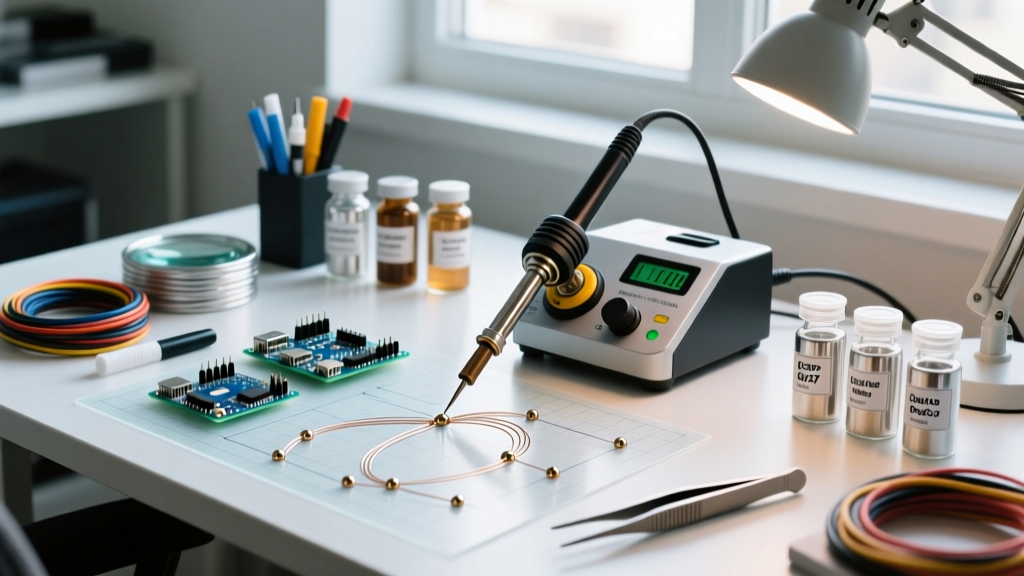
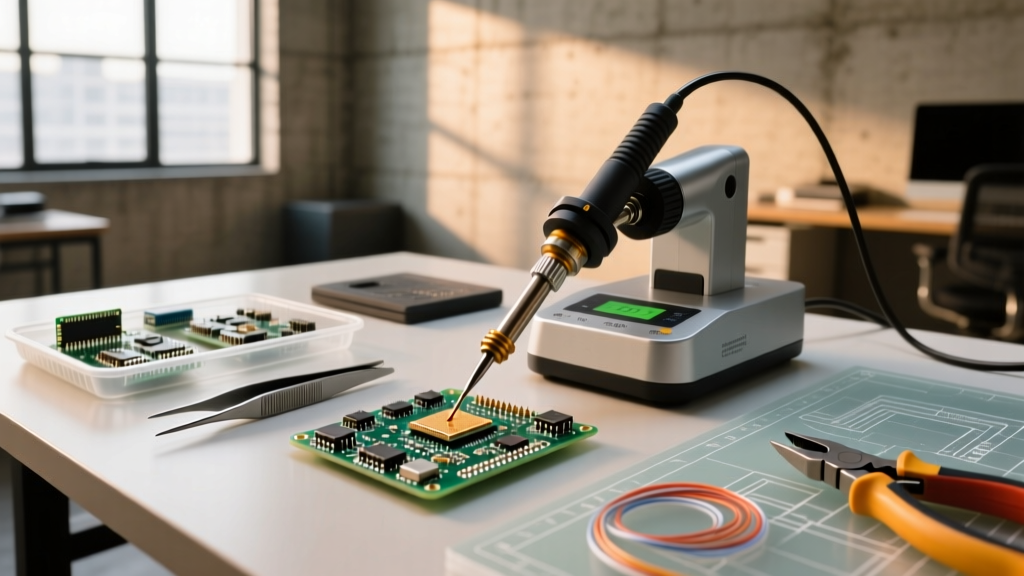
What to Buy: Professional ESD-Safe Stations
For a safe and effective setup, you need a temperature-controlled station with a grounded tip. Grounding prevents static buildup on the iron itself, which could otherwise discharge through a sensitive microcontroller and fry the silicon die.
- Hakko FX888D ($115 - $125): The industry workhorse. Features a digital PID controller that recovers heat in seconds and an inherently grounded tip design.
- Weller WE1010NA ($135 - $145): Offers 70 watts of power with rapid heat-up times and built-in ESD safety, complete with a zero-voltage switching mechanism to protect sensitive components.
Safety Note: Never modify a grounded 3-prong plug to fit a 2-prong outlet. Doing so removes the critical earth ground that protects both you from electrical shock and your components from ESD.
2. Fume Extraction and Respiratory Protection
Rosin-based fluxes (the standard in electronics soldering) release colophony fumes when heated. According to the UK Health and Safety Executive (HSE) and NIOSH guidelines, repeated inhalation of these fumes can cause occupational asthma and severe respiratory sensitization. A simple desk fan blowing fumes toward your face is not just inadequate; it is actively dangerous.
Fume Extractor Comparison Matrix
To answer what you need for soldering safely, you must invest in proper extraction. Here is how the primary categories compare for 2026 workspaces:
| Extractor Type | Example Model | Filtration Method | Best Use Case | Estimated Cost |
|---|---|---|---|---|
| Ambient / Benchtop | Hakko FA400 | Activated Carbon + HEPA | Light hobbyist use, occasional through-hole | $65 - $80 |
| Source Capture (Armed) | BOFA Print Pro 3 | Multi-stage HEPA + Deep Carbon | Daily professional use, heavy SMD rework | $800 - $1,200 |
| Ducted / External Vent | Custom Inline Blower | Exhausted outdoors (no filter) | High-volume production, leaded solder | $300 - $600 |
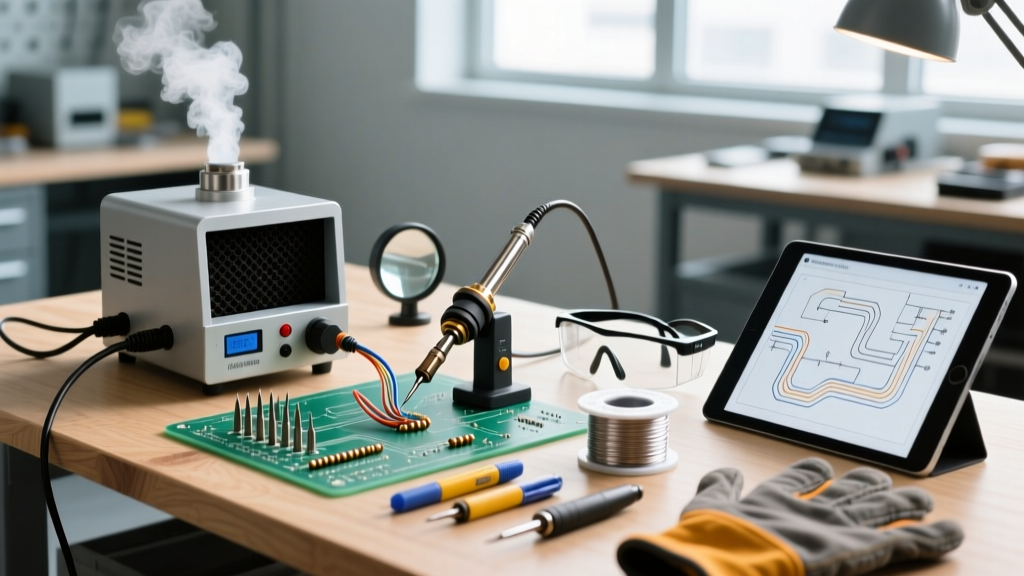
Actionable Advice: If you are using a benchtop unit like the Hakko FA400, position the intake nozzle no more than 6 inches (15 cm) from the solder joint. Ambient extractors lose over 80% of their capture efficiency if placed further away.
3. Lead vs. Lead-Free Solder: Thermal and Toxicity Profiles
Understanding the metallurgical differences between solder alloys is crucial for safety and equipment selection. The transition to RoHS-compliant lead-free solder has significantly altered workspace safety requirements.
Thermal Vaporization Risks
- Leaded Solder (Sn63/Pb37): Melts at 183°C (361°F). Typical iron setting: 220°C - 250°C. Flux vaporization is moderate.
- Lead-Free Solder (SAC305): Melts at 217°C (423°F). Typical iron setting: 260°C - 300°C. Crucial Safety Insight: The higher operating temperatures required for lead-free solder exponentially increase the vaporization rate of flux chemicals, making high-quality fume extraction an absolute necessity, not an optional accessory.
While lead-free solder eliminates the risk of lead ingestion (provided you do not eat at your desk and wash your hands), the increased thermal output demands better heat-resistant matting and more aggressive fume extraction.
4. Workspace Isolation and ESD Safety
A safe soldering environment must protect the user from burns and the electronics from electrostatic discharge. Human bodies can easily accumulate static charges exceeding 3,000 volts simply by walking across a carpeted room.
The ESD Mat and Grounding Protocol
You need a high-quality, dual-layer ESD (Electrostatic Discharge) mat. Do not buy cheap, single-layer conductive rubber mats, as they can actually cause rapid discharge events that damage components.
- Surface Resistivity: Look for a mat with a dissipative top layer ranging from 10^6 to 10^9 ohms/square. This ensures static dissipates slowly and safely.
- Grounding Cord: The mat must be connected to a true earth ground via a grounding cord that includes a built-in 1 megohm (1MΩ) resistor. This resistor is a critical safety feature that prevents lethal electrical shock if the mat accidentally contacts a live mains voltage source.
- Wrist Strap: For handling highly sensitive ICs, wear an ESD wrist strap connected to the same 1MΩ grounded point.
5. Personal Protective Equipment (PPE) and First Aid
Solder splashes, clipping wire leads, and accidental tip contact are inevitable in any soldering career. Proper PPE mitigates these risks from minor annoyances to severe injuries.
Eye Protection Standards
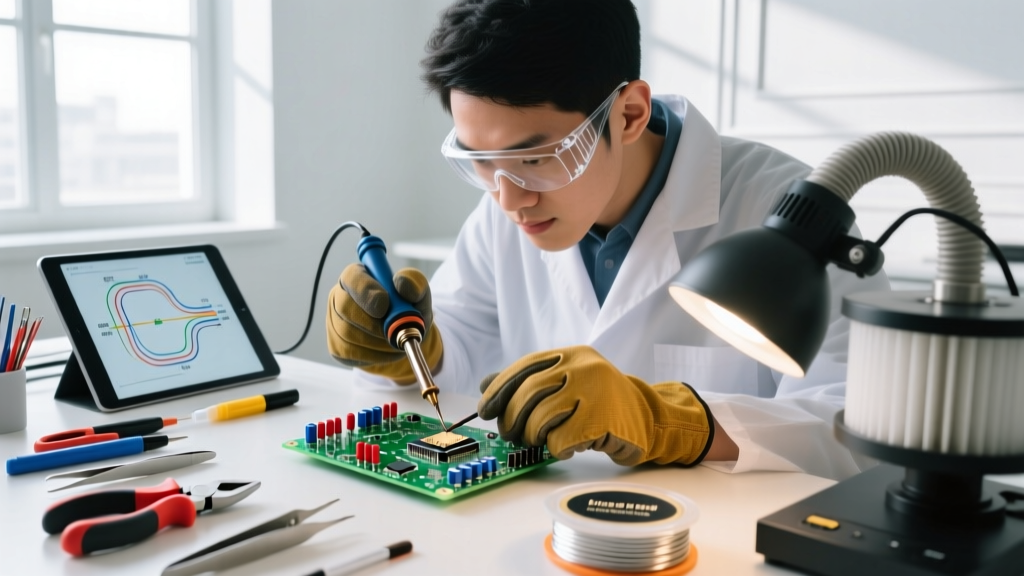
Standard prescription glasses are insufficient. You need safety glasses rated to ANSI Z87.1 standards (as outlined by the International Safety Equipment Association). When clipping component leads with flush cutters, wire fragments can travel at high velocities. ANSI Z87.1 ensures the lenses can withstand high-impact strikes without shattering.
Thermal Protection and First Aid
- Heat-Resistant Finger Guards: Silicone finger cots (rated for 200°C+) are essential when holding wires close to the solder joint, especially in tight automotive or aerospace harnesses.
- Burn Hydrogel: Keep a tube of Burnshield or a similar tea-tree oil-based hydrogel on your desk. Unlike standard first-aid creams, hydrogels rapidly draw heat out of the tissue and provide immediate cooling for the 250°C+ burns typical of soldering iron contact.
- Brass Tip Cleaner: Never use a wet sponge to clean your iron tip. The thermal shock causes micro-fractures in the iron plating, leading to tip degradation and potential flaking of hot metal. Use a dry brass wire sponge instead.
IPC Standard Reminder: According to IPC-A-610 and IPC-J-STD-001 guidelines, proper lighting and magnification are considered essential safety and quality tools. Poor visibility leads to prolonged heating times, which increases toxic fume output and the risk of PCB delamination. Invest in an AmScope SE400-Z or similar stereo microscope with integrated LED ring lighting to reduce eye strain and improve joint inspection accuracy.
The Ultimate Safety Checklist: What Do I Need?
To summarize, here is your definitive, safety-focused shopping list for a professional-grade soldering environment:
- Heat Source: ESD-safe, temperature-controlled station (e.g., Hakko FX888D).
- Extraction: HEPA/Carbon fume extractor positioned within 6 inches of the workpiece.
- Workspace: Dual-layer ESD mat with a 1MΩ grounded cord.
- PPE: ANSI Z87.1 impact-rated safety glasses.
- First Aid: Burnshield hydrogel and a dry brass tip cleaner.
- Vision: Stereo magnification with shadow-free LED illumination.
By prioritizing these safety and health elements over simply buying the cheapest iron available, you ensure a sustainable, injury-free, and highly productive soldering practice for years to come.